
Review · CAPPADOCIA TRIPS FROM ISTANBUL
8 Days MINI Group Tour Istanbul, Ephesus, Pamukkale, Konya, Cappadocia
Eight days, four icons, zero planning stress. This is a tight, small-group Turkey trip that strings together Istanbul, Cappadocia, Ephesus, and Pamukkale, with most tickets handled so you can spend your energy on the sights.
I especially like the way the tour mixes big-name sites with slower moments, like a thermal hotel swim window in Pamukkale and an evening in a Cappadocia cave hotel. Another highlight for me is the comfort of domestic flights plus an air-conditioned vehicle, so you are not stuck doing long overland hauls.
The one drawback is that the schedule moves. You also need to be ready for the practical Hagia Sophia setup, since live guiding is not allowed there after January 15, 2024, and you will rely on smart phone plus headphone audio.
Key points to know before you go
- Max 10 travelers means easier pacing and more personal guiding
- Domestic flights included (Istanbul to Cappadocia, Izmir to Istanbul) to save travel time
- Hotel variety that matches the regions: Istanbul city hotels, Cappadocia cave stays, and Pamukkale thermal properties
- Most entrance fees are handled with pre-paid tickets to reduce line-waiting
- Hagia Sophia audio rules require a smart phone and headphones plan
- Flexible replacements if a site is closed, with similar alternatives scheduled
Max-10 group pacing: what makes this tour feel easier
A lot of Turkey “best of” trips try to cram too much into too many buses. Here, the group cap at 10 changes the vibe. You still have a full itinerary, but you are not playing a constant game of wait for everyone. It tends to feel more like a guided walk with logistics handled in the background.
I also like that you have a licensed, professional guide doing the talking day after day, rather than hopping between random explanations. The tour includes pre-paid tickets in many cases, which matters in heavy-hitter places where lines can chew up your day.
One more practical plus: you get A/C transportation and private transfers at the airport. Even if you love travel chaos, Istanbul arrivals can be exhausting. Having a representative meet you at Atatürk Airport day one and handling the transfer is a real time-saver.
You can also read our reviews of more tours and experiences in Istanbul.
Istanbul power day: Blue Mosque, Hippodrome, Topkapi, Hagia Sophia, Grand Bazaar
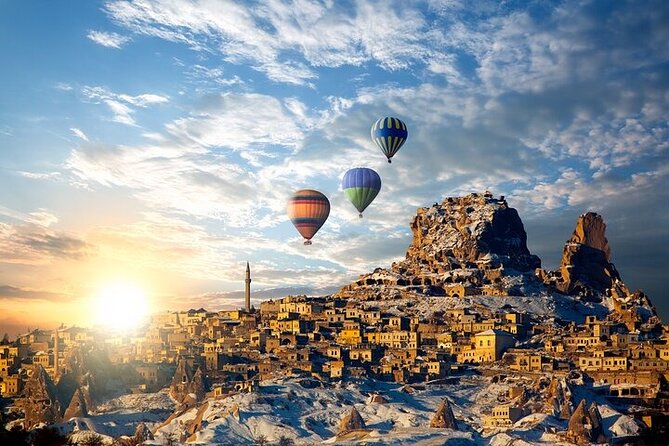
Your Istanbul experience is built around two classic goals: Ottoman grandeur and Byzantine roots, then a final push into the market world.
Day 2 starts after breakfast with the Blue Mosque. You get the core context quickly, including why the mosque is famous for Iznik tiles and how its design tied together devotion and politics. You are also on foot for the next stops, so the pace feels like walking through layers of old Istanbul.
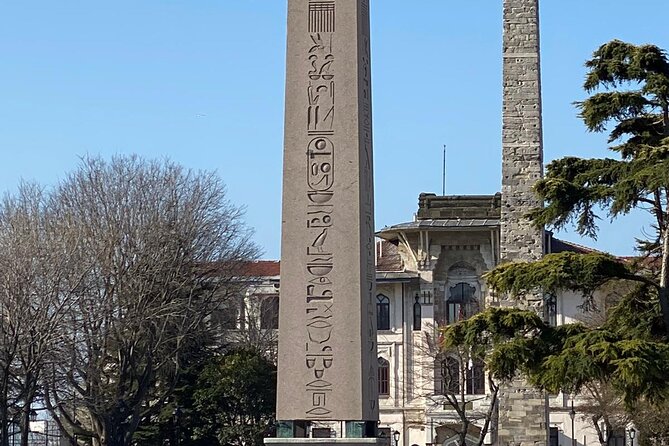
Next comes the Hippodrome. This is one of those places that sounds abstract until someone explains it was the setting for chariot races, plus later Byzantine unrest. It is a useful reminder that the city’s energy has always been loud and public.
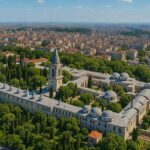
Then you move to Topkapi Palace. This is the kind of stop where “it was the residence” is only the start. You focus on the Ottoman sultan’s life, but also on the palace as an administrative and educational center, built between 1460 and 1478 by Sultan Mehmed II. You even visit the weapons section, which can be surprisingly eye-opening if you like seeing what empires actually owned and used.
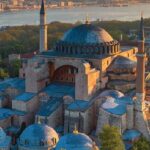
Right after Topkapi, it is Hagia Sophia. You will be walking distance away, so you avoid the wasted time that sometimes comes from scattered routes. The important update here: live guiding is not allowed inside Hagia Sophia after Jan 15, 2024. You need your smart phone and headphones to follow the audio setup. If you do not have headphones, you can buy them at the entrance for about 3.5 USD. I cannot stress this enough, because it directly affects how good the visit will feel.
Finally, you finish at the Grand Bazaar. This is not a random market stop. You get a sense of scale, since it is made of dozens of streets and well over a thousand shops, with huge daily foot traffic. You will likely see jewelry, pottery, spices, and carpets, but the real value is that the guide helps you understand what you are looking at so you can shop with confidence instead of guesswork.
Hagia Sophia audio rules: how to make this stop painless
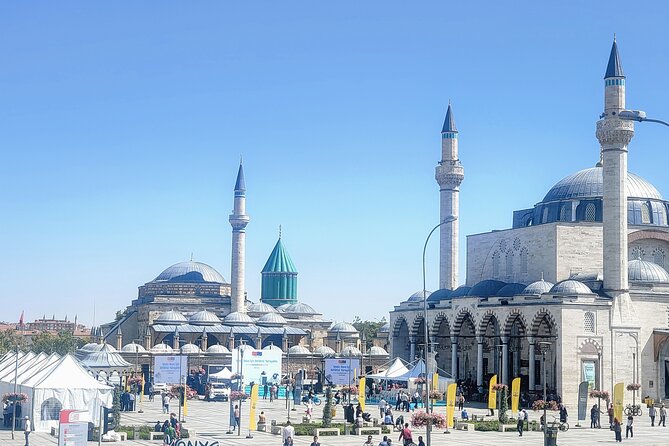
Because of the current Hagia Sophia restrictions, plan for audio. The good news is the system is straightforward: it works like an audio guide, but through your phone and headphones.
Here is how I recommend you prep:
- Bring wired or Bluetooth headphones that you know work with your phone.
- If your phone is offline-prone, download offline audio or make sure your phone has enough battery for the visit.
- If you need to buy headphones on site, know that it costs about 3.5 USD.
If you show up without the setup, you can still follow along using posted signage, but you will likely miss the smoother, guided flow. So think of this as a simple packing checklist item, not a surprise.
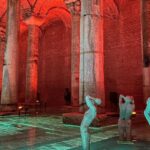
Also note timing rules around other big Istanbul sights. On Fridays, Blue Mosque is open only from 14:30 to 16:30, and on certain closure days the itinerary can swap in similar options, like Topkapi replaced by the Underground Cistern on Tuesdays. Your day stays balanced, but you should stay flexible.
Cappadocia by air: Fairy Chimneys, underground cities, and cave-hotel nights
The trip’s second act starts with an early airport transfer and a flight from Istanbul to Cappadocia (Kayseri is used, with the itinerary referencing Erkilet Airport). Once you land, your guide meets you and takes you straight into the region’s signature scenery.
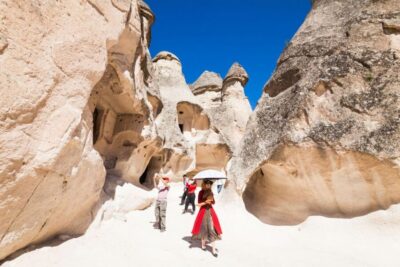
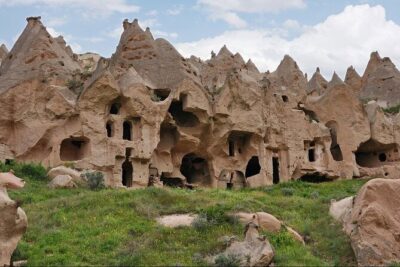
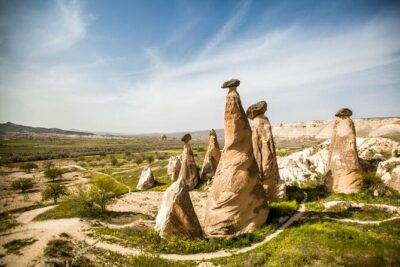
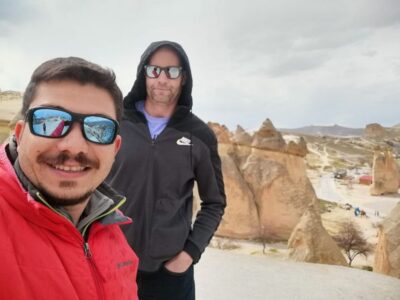
Cappadocia’s first stop is the Three Sisters Fairy Chimneys area in Ürgüp. You get the quick story behind the pigeon houses, carved into the rock formations, which helps you see the site as lived-in space, not just postcards.
Next you visit the Özkonak Underground City. This stop is one of the more technical-feeling ones, in a good way. You learn about multiple strata carved into volcanic rock, linked by tunnels, with ventilation piping that was used when the city was sealed during sieges. It is unique compared with other underground sites, and the guide’s explanation makes it easier to visualize what daily life could have looked like underground.
Your day then ends at your hotel. This is where the “mini group” idea really pays off. Cave hotel check-ins can be slow when everyone arrives at once. With fewer people, you are more likely to settle in smoothly and still enjoy the evening.
Day 4 continues with Cappadocia’s best-of mix:
- Pasabag for wind-carved fairy chimneys and the rock-cut look that makes Cappadocia famous.
- Avanos pottery workshop experience focused on terra cotta, tied to a tradition that goes back thousands of years.
- Göreme Open-Air Museum, where you see Byzantine rock-cut churches and frescoes from roughly the 10th to 13th centuries.
- Uçhisar Castle for panoramic valley views at the end of the touring portion.
A practical tip: bring a light layer. Cave and rock sites can change temperature fast, especially if you are coming from indoor museum sections to open-air lookouts.
Konya to Pamukkale: caravanserai stopovers and thermal time
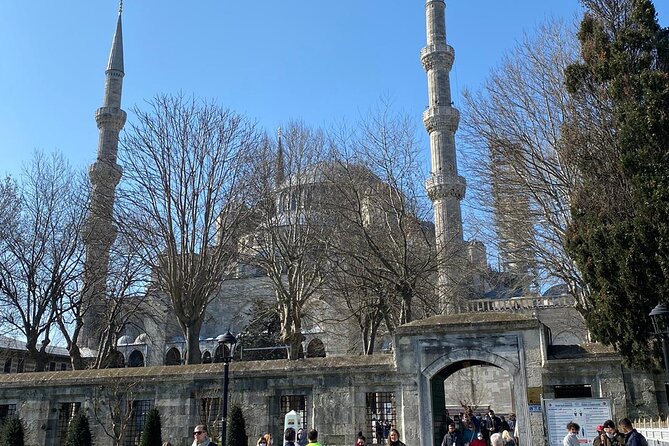
After Cappadocia, you move toward Pamukkale in a way that keeps the travel day from feeling like dead time.
On the way, you visit Sultanhan Caravanserai, a Seljuk-era roadside stop from the 13th century. It is the kind of place many people skip, but it gives you a sense of how travelers and goods moved across the region long before modern roads.
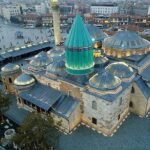
Then you head to Mevlana Museum in Konya, focused on the Mausoleum of Mevlana, the famed mystic. Even if you are not a deep study person, the setting helps you understand why Konya is such a spiritual draw. It also breaks up the day so you do not do only travel and only museums.
By the time you arrive in Pamukkale, your hotel check-in is part of the plan. You stay at a thermal property, with time to enjoy the thermal pools until 22:30. That late finish is one of the best practical features on the whole trip. You are not forced to fit soaking into a tiny daytime slot when your energy is already low.
Day 6 is the Pamukkale and Hierapolis core. You tour Hierapolis first, including the theatre, Apollo Temple, and the necropolis. Then it is time for the famous travertine terraces. The mineral springs create those white, stepped pools that look like cotton or snow, which is exactly where the name Pamukkale comes from. The guide’s framing helps you see the terraces as a natural process, not just a photo backdrop.
After all that walking and heat, a thermal hotel is not just a nice add-on. It is recovery built into your schedule.
Ephesus day plus Mary’s House: the ancient Aegean highlights
On Day 7 you work your way from a pilgrimage site to big archaeological drama.
The day starts with Meryemana, the House of Virgin Mary, located in the Aladag Mountains near Ephesus. The itinerary includes the tradition that Mary came to Ephesus with St. John in 37 A.D., lived there until her death, and that the site became a pilgrimage location in 1892, with a papal visit in 1967. Even if you approach religion historically rather than spiritually, it is still a meaningful stop because you see how belief shaped place and travel.
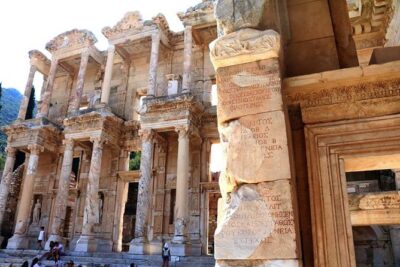
Next comes Ancient City of Ephesus. This is the main event, and you cover a lot of the key stops: marble streets, public buildings like the State Agora, Odeon, the Memnius Monument, Curetes Street, the Baths of Scholastica, Hadrian Temple, and the Celsus Library. You also see the gate of Mihridates and the Grand Theater that was expanded to around 24,000 spectators in the Roman era.
Here’s what I like about the way this tour handles Ephesus: you are not just seeing stones. You are moving through a story of empire, with the guide connecting who built what and why those civic spaces mattered.
Finally, you visit the Temple of Artemis, one of the Seven Wonders of the Ancient World. If you are the type who likes your world famous sites to be explained quickly, this is a satisfying way to cap the day.
Then the tour transitions to your flight logistics, with a transfer to Izmir airport and connection back toward Istanbul, followed by an overnight stay.
Hotel mix that actually fits the route: city comfort, cave nights, and thermal recovery
This trip includes 7 nights in 4-star and 5-star hotels, and the mix matches the regions instead of forcing one style everywhere.
In Istanbul, you stay at “special class” hotels, examples listed include Yasmak Sultan, Dosso Dossi, Innova, or similar. The idea is location and comfort so you can hit the big sights without wasting time.
In Cappadocia, you stay in a cave hotel, with examples like Melekler Evi Cave, Fresco Konakları, or Zeydem Suites Cave Hotel. These are not all the same, but the theme matters. You get a room experience that looks and feels local, not just a generic hotel block.
In Kusadasi, you use hotels like Carina Hotel or Efe Boutique, or similar. This gives you a practical base for Ephesus access.
And in Pamukkale, you stay in a thermal hotel such as Colossae Thermal or Pam Thermal, or similar. Given you have travertine terraces and then thermal pool time later, that is an efficient pairing.
Meals are also included: 7 breakfasts and 2 dinners. Drinks and other meals are not included, so you should expect to budget for your own lunch choices, especially on days with a full touring loop.
Price and logistics for $1,579: is it good value?
At $1,579 per person, this tour is not cheap, but it is also not just a sightseeing ticket.
What you are really paying for is the bundle of time-saving services:
- 7 nights of lodging in the listed hotel categories
- Domestic flights inside the country (Istanbul to Cappadocia, Izmir to Istanbul)
- Transfers by private vehicle, plus airport pickup and assistance
- A licensed guide across multiple days
- Entrance fees in many cases, with pre-paid tickets designed to skip lines
- Breakfasts and two dinners
- Air-conditioned transportation, no-smoking vehicles
If you were to piece this together yourself, the costs usually stack up fast once you factor in flights, hotel variety, and paid guides plus ticketing hassles. Here, the structure reduces the planning burden and the risk of missing timing windows.
The other logistics piece you should know is luggage. The included domestic flights note 15 kilos checked and 8 kilos cabin. If you travel with more than that, you could end up paying extra, so check before you pack.
Who this mini group tour suits best
This style works best if you want:
- Big Turkey highlights in one trip without building the entire plan
- A small group size so the pacing stays human
- Guided context at major sites like Topkapi, Hagia Sophia, and Ephesus
- A mix of walking and structured touring, with built-in hotel recovery time in Pamukkale
It is not the best match if you crave a fully independent schedule and want to choose your own ticket timing each day. Also keep in mind the tour asks for a moderate physical fitness level, since there is walking at multiple sites, plus stair and uneven surfaces at archaeological areas.
One more thought. This tour can include guides such as Leyla in Istanbul, Sinan on the next legs, and Orkan with the driver Murat on certain departures, based on past customer experiences. Since guides are a huge part of how smooth these days feel, that consistency is a big part of the appeal.
Should you book this Istanbul, Ephesus, Pamukkale, Konya, Cappadocia mini group tour?
I would book it if you want a focused “best of Turkey” route with flights, hotels, and guided tickets handled for you, and you like the idea of cave-hotel nights plus a real Pamukkale thermal pool break. The max-10 group limit is a meaningful quality upgrade, not just a marketing number.
I would hesitate if you are very sensitive to schedule density, or if you cannot manage the Hagia Sophia audio rule. Bring headphones, pack for walking, and assume some days run on a tight clock.
If you want, tell me your travel month and your preferred pace, and I can help you decide whether the current flow from Istanbul to Cappadocia to Pamukkale to Ephesus fits your style.
FAQ
How many people are in the group?
This tour is capped at a maximum of 10 travelers.
Are domestic flights included?
Yes. Domestic flights are included for Istanbul to Cappadocia and Izmir to Istanbul.
What luggage limits are included for the flights?
The tour notes 15 kilos for check-in and 8 kilos for cabin luggage on the domestic flights.
What types of hotels are included for the 7 nights?
The tour includes 7 nights in 4-star and 5-star hotels, with Istanbul city hotels, a cave hotel in Cappadocia, Kusadasi hotels, and a thermal hotel in Pamukkale.
Are entrance fees included?
Most entrance fees are included, and the guide will have pre-paid tickets to help skip the line at listed stops.
What meals are included?
The package includes 7 breakfasts and 2 dinners. Drinks and meals not listed in the included section are not included.
More Tours in Istanbul

More Tour Reviews in Istanbul
Not for you? Here's more nearby things to do in Istanbul we have reviewed
More Cappadocia Trips from Istanbul to consider.
 ★ 5.02 Day All Inclusive Cappadocia Tour from Istanbul with Optional Balloon FlightFrom $725429 reviews
 ★ 4.9From Istanbul: 2-Day All-Inclusive Cappadocia Guided TripFrom $709380 reviews
 ★ 4.72-Day Cappadocia Trip with Flights and Cave HotelFrom $328318 reviews
 ★ 5.02 Days Cappadocia from Istanbul with Cave Hotel+Optional BalloonFrom $330260 reviews
 ★ 4.5Cappadocia Dream: 2-Days Tour from Istanbul & Balloon Ride OptionFrom $590236 reviews
 ★ 4.6From Istanbul: Day Trip to Cappadocia with Flight & LunchFrom $188182 reviews
 ★ 5.04 Days Turkey Tour – Cappadocia, Ephesus and Pamukkale TourFrom $1,571138 reviews
 ★ 5.02 Days Cappadocia Tour From IstanbulFrom $725132 reviews
Other ways to explore Istanbul