
Review · CAPPADOCIA TRIPS FROM ISTANBUL
9 Days Istanbul Ankara Cappadocia Konya Pamukkale Ephesus
Nine days of Turkey, expertly stitched together. This is a high-value route that strings together Ottoman icons, Cappadocia rock scenes, and Ephesus ruins, all with the work handled for you. I especially like that museum entry fees are included and I also like the small group size (max 15) with real help from Mr. Adam’s team when plans change. The only real catch is the pacing, you cover a lot of ground, so it helps if you travel with stamina and clear expectations.
You’ll move fast, but you won’t feel dropped. You get pickup support, a mobile ticket, and a professional English and Spanish guide, plus a domestic flight from İzmir to İstanbul to make the Ephesus to Istanbul jump reasonable.
Key highlights worth clocking before you go
- All the big museum stops are covered with admission tickets included, so you are not scrambling for lines and last-minute payments
- Bosphorus boat time is built in, with the route passing major palaces and coastal landmarks
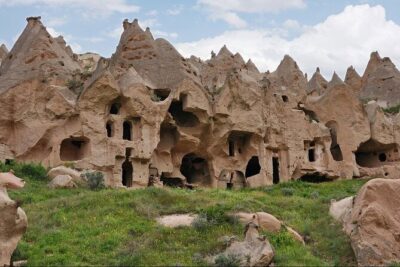
- Cappadocia mixes views and history, including an underground city stop plus Goreme churches
- Pamukkale is treated like more than a photo stop, with Hierapolis ruins on the same day
- Ephesus gets the guided walkthrough treatment, plus a separate stop at Virgin Mary’s House
- Mr. Adam’s team is praised for flexibility, especially when families need small schedule tweaks
Price and what you truly get for $3,280
At $3,280 per person, this tour is not “cheap,” but it is also not just sightseeing with a notebook and a map. The pricing makes more sense when you account for what is already inside: museum entry fees, airport and hotel transfers, accommodation, and a full set of guided days across multiple regions.
You also get meaningful meal coverage: 8 breakfasts, 5 lunches, and 4 dinners are included. That matters in Turkey because meals can add up quickly once you factor in drinks, snacks, and the “quick bites” that happen between major sites.
One more value point that often gets overlooked is the logistics smoothing. The package includes transfer from İstanbul to Ankara and a domestic flight from İzmir to İstanbul. Even if you like independent travel, that kind of routing help saves time and reduces the chances of a day going sideways.
You can also read our reviews of more tours and experiences in Istanbul.
Istanbul day, Topkapi and Hagia Sophia in one guided run
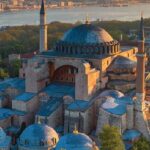
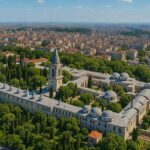
Istanbul is a lot in one city, so the tour is smart to anchor you with the landmarks that help you understand the whole story. On your Istanbul day, you start with Topkapı Palace, built under Sultan Mehmed II and home to Ottoman sultans for centuries. This is the kind of stop where having a guide helps, because the palace layout is huge and the significance is layered.
Then you hit the Hippodrome, tied to Byzantium and later reshaped by Septimius Severus. Even if chariot races are not your personal hobby, it is a useful reminder that Istanbul’s public life has deep roots.
The religious architecture is the next big theme:
- The Blue Mosque, built between 1609 and 1616 under Sultan Ahmed I, faces Hagia Sophia in Sultanahmet Square.
- Hagia Sophia follows, introduced as the third Hagia Sophia site in that long, stop-and-rebuild history, and explained through its multiple reconstructions and fire damage background.
Finally, you finish at the Grand Bazaar, which began as covered bazaars in the 15th century. This is a good place to practice patience. The bazaar is a real maze, and in a group setting it is better to focus on one or two browsing goals rather than trying to see everything.
Practical note: mosque interiors can have dress expectations. Bring something that helps you cover shoulders and knees fast.
Bosphorus Bridge and the boat ride that makes the city make sense
The Bosphorus day is where the tour shifts from “big buildings” to “big geography.” You stop at the Bosphorus Bridge, and you get a quick, useful explanation of how currents move between the Black Sea and the Sea of Marmara. It is not academic fluff, it helps you understand why the strait has always been important for fishing and trade.
Next is Misir Çarşısı, the Spice Market (Egyptian Bazaar). It is described as an annex next to the New Mosque complex, and the key takeaway is that this is not just a market stall loop. It is a pocket of Istanbul culture built around trade, spices, and long-running habits.
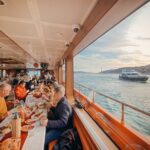
Then comes the Bosphorus boat tour. You get a real change of pace as you sail along Europe and Asia. The route description is specific: you pass Dolmabahçe Palace, then parks and imperial pavilions connected to Yıldız Palace, and you see the Çırağan Palace marble façade along the shore. The Ortaköy stop is also included in the route description, where artists display work every Sunday, and where the area is described as having a long history of neighboring religious communities.
This is also a smart time to reset your brain. Istanbul ruins and palaces can blend together. A boat ride breaks the day and gives your eyes something new to do.
The jump to Ankara, Anıtkabir as the anchor
You leave Istanbul and head to Ankara, and the tour treats Ankara as more than a stopover. You start with Anıtkabir, the mausoleum for Mustafa Kemal Atatürk, explaining the independence war and the founding of the Turkish Republic.
This stop is one of those “understand the country” moments. You can visit museums and monuments all day, but Anıtkabir gives a political and historical frame for why so many other places in Turkey feel shaped by 20th-century national identity.
Right after, you move to Anadolu Medeniyetleri Müzesi (Anatolian Civilizations Museum). It is set across Ottoman period buildings and is positioned as a journey from earlier periods, with Mahmutpaşa Bedesten and Kurşunlu Han as the container for the collection. The museum also mentions restored features such as virtual tours, animations, and replicas tied to Göbeklitepe, which suggests a guided-style way of understanding artifacts rather than raw storage-room viewing.
If you like history explained in plain terms, you are going to appreciate the museum approach. If you hate museums, you might still find this one worth it because it acts like a bridge between the ancient sites you will see later.
Cappadocia’s underground escape plus Goreme churches
Cappadocia is the kind of destination where photos are the entry point, but understanding is what makes it stick. Your Cappadocia day starts with Özkonak Underground City, described through the lens of early Christian communities escaping pressure, and carved into the rock after Byzantine pressure and Arab raids. You also get a reference to the Zeus temple idea in the description, which signals how layered this area’s identity can feel.
Next is Uçhisar Castle, framed as a natural shelter and watchtower with very long settlement history, including mentions of Hittite-period dating and early Christian importance later on. This is also where the viewpoint logic starts clicking. Cappadocia’s valleys are not random, they were lived in because the terrain offered protection and control.
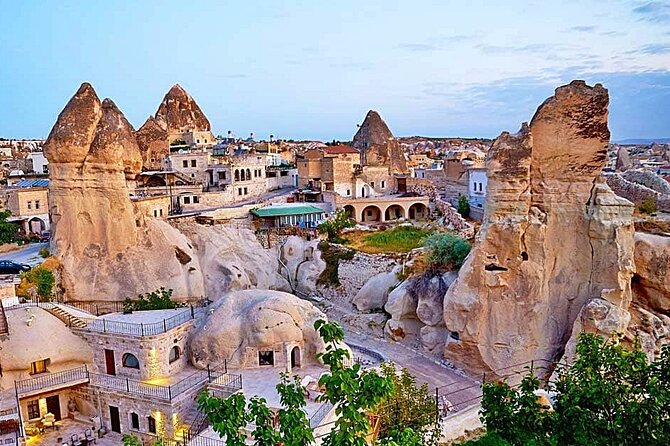
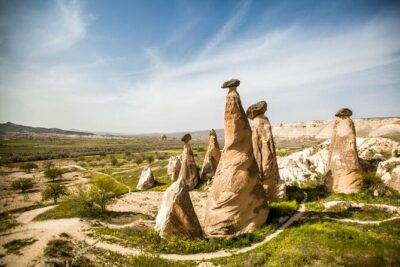
Then you move to Devrent Valley, known for the surreal fairy chimney shapes. You are given a clear idea of what to look for: animal-shaped chimneys, including the camel-shaped one mentioned as symbolic, plus possible human figures formed by nature’s sculpting.
You finish at Göreme Open Air Museum, the best-known Cappadocia church concentration in the description. It is presented as the crown jewel, with the best churches and monastic complexes in a compact area. In practice, the difference between seeing “old churches” and seeing these churches with context is huge. It is the difference between walking and understanding why rock-cut churches became a survival strategy.
Konya and the Mevlana Museum stop you can’t rush
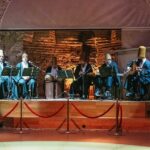
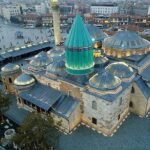
Konya brings a totally different tempo. You visit the Mevlana Museum (Mevlana Dergah), described through the mausoleum and the tomb of Mevlana, with the mausoleum dated to 1274. You also get an outline of the surrounding dervish lodge structures that were built later, including references to spaces like the semahane and other functional buildings like kitchens and fountains.
If you have any interest in why Turkish culture has such a strong spiritual thread, this stop does more than sightsee. It gives you language for the whirling tradition and the idea that spiritual practice shaped community spaces, not only ceremonies.
This is a good moment to slow down. The day is still full, but at least the atmosphere is reflective rather than scenic rush mode.
Pamukkale, Hierapolis, and the time pressure photo reality
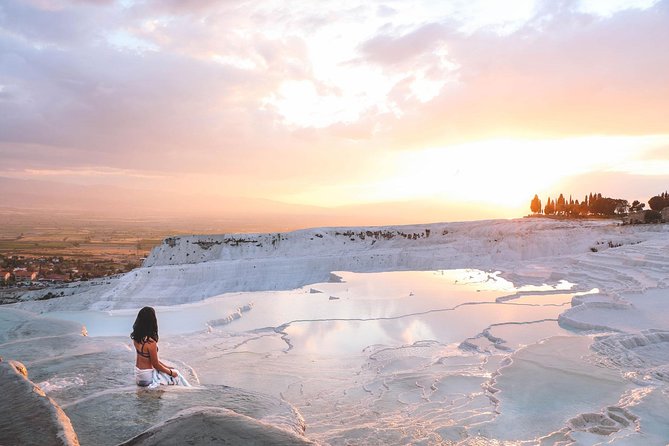
Pamukkale is famous for a reason. You spend time at Pamukkale Thermal Pools, where the white calcium pools cling to the side of a ridge. The tour includes a short visit window, and even if you are not planning to linger for long photos, it helps to know that the pools are the visual headline.
What gives this stop extra value is the add-on: Hierapolis & Pamukkale. You visit the theatre with historical context tied to Hadrian, plus renovations under Septimius Severus and the later golden-age period described. The key benefit here is that you are not just viewing a natural wonder, you are also seeing the remains of an ancient city that grew around it.
If you are planning your own schedule day-by-day, this combination is smart. Many people see Pamukkale and leave without connecting it to the ancient city story. Here, the connection is built in.
Ephesus on foot, then Virgin Mary’s House
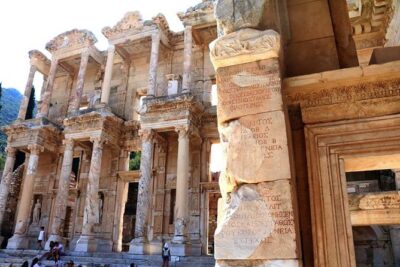
Ephesus is the kind of archaeological site where the size can feel overwhelming unless someone frames it for you. Here, you get a guided presentation of Ephesus as a once-important Greek city and Mediterranean trading center, plus its role as an early Christian evangelism hub.
Then you visit the Virgin Mary’s House in Selçuk. The description frames it as a place of religious significance believed to be Mary’s last residence. It is a short stop in time terms, but the emotional purpose is different from ruins. Ruins ask for imagination through stone. This place asks for quiet reflection through place and story.
If you want a balanced day, this pairing works. You get monumental ancient life in Ephesus, then a different kind of spiritual geography just outside the loud tourist route.
Tip: wear comfortable shoes. Ephesus involves walking on uneven stone and surfaces.
Your last Istanbul hours, and why a free day is useful
After Ephesus, you return to Istanbul for a more open block of time. You have a day that is explicitly free for you to decide between hotel downtime and revisiting Istanbul’s famous places.
That free day is not “extra fluff.” It is practical recovery time. After Cappadocia, Konya, Pamukkale, and Ephesus, you will likely want one calm block to clean up photos, do laundry, and maybe revisit a favorite area without racing a schedule.
For the final day, the tour includes departure support to the airport based on timing. That is exactly what you want after a long route, fewer surprises at the end.
Mr. Adam’s team support, the part that makes changes painless
A tour can be packed with sights, but the difference-maker is support. The reviews emphasize that Mr. Adam and the Adams Holiday team stayed on top of things, responded quickly, and were flexible with last-minute adjustments. That is not a small detail when you are traveling across multiple regions and time zones.
They are also praised for transparency about planning and details. In plain terms, you want to know what will happen, when you will move, and what is included. This kind of communication tends to reduce the stress that comes from switching hotels, flights, and long museum days.
There is also a family-friendly angle in the feedback. If you are traveling with kids, having a team that can keep the day flow workable is a real advantage.
What to expect from meals, tickets, and the small group size
This is a guided tour with a limit of 15 travelers. That smaller group size matters for two reasons. First, you get less waiting. Second, it is easier for the guide to manage pace, explain context, and keep everyone together.
The tour includes admission tickets for the major stops listed, and the package also mentions mobile tickets. In practice, that helps you handle the most time-sensitive items without chasing paper copies.
Meals are included in set counts, which helps planning. You will get breakfast daily coverage listed as 8 breakfasts, with additional lunches and dinners. Drinks are not included, so treat that as your personal budgeting lane.
Practical packing and pacing tips for this kind of route
You are moving through Turkey like a highlight reel, so pack for variety, not comfort extremes.
What I’d prioritize:
- Comfortable walking shoes for Ephesus and museum days
- A light layer for mosques and indoor spaces
- A basic day bag for water, snacks, and your phone
- Patience for short visits, especially for very popular sites
Also plan your energy like this. You will likely have days where you feel you are always between one place and the next. If you build your expectations around that, the tour feels smoother instead of exhausting.
Finally, take advantage of the guidance. Sites like Hagia Sophia, Ephesus, and Göreme are massive in meaning, not just size. A good guide helps you avoid the trap of thinking you saw everything when you only walked the perimeter.
Should you book this Istanbul Ankara Cappadocia Konya Pamukkale Ephesus tour?
Book it if you want a structured route that connects Turkey’s major highlights without you coordinating flights, transfers, and museum tickets. The biggest strengths are included admissions, the small group size, and the kind of support praised in the reviews, especially around flexibility.
Skip it if you need a slow travel style with lots of independent time at each stop. This tour is designed for momentum. The free Istanbul day helps, but the overall route still moves quickly.
If you are a first-timer who wants the classics plus a few deeper stops like underground cities and the Anatolian Civilizations Museum, this plan is a strong fit. If you are already a Turkey expert and crave total freedom, you might find the pace restrictive.
In other words, this is a well-run “see the map” tour. If that matches your travel personality, it is a smart way to do Turkey in one go.
FAQ
How many people are in the group?
The tour has a maximum of 15 travelers.
What languages are the guides available in?
A professional English and Spanish guide is included. The overview also notes that you can book the tour in 4 languages on Thursdays, and on Saturdays tours are only available in Spanish and English.
Are museum entry tickets included?
Yes. Museum entry fees are included, and admission tickets are listed as included for the main sites.
Is a flight included in the price?
Yes. The package includes a domestic flight from İzmir to İstanbul.
How many meals are included?
Breakfast is included 8 times, lunch 5 times, and dinner 4 times. Drinks and personal expenses are not included.
Do I get any free time in Istanbul?
Yes. There is a day in Istanbul with about 8 hours that you can use for your own plans or to relax at your hotel.
How far ahead can I cancel for a full refund?
You can cancel up to 3 days in advance of the experience for a full refund. If you cancel less than 3 days before the start time, the amount paid is not refunded.
More Tour Reviews in Istanbul
Not for you? Here's more nearby things to do in Istanbul we have reviewed

More Cappadocia Trips from Istanbul to consider.
 ★ 5.02 Day All Inclusive Cappadocia Tour from Istanbul with Optional Balloon FlightFrom $725429 reviews
 ★ 4.9From Istanbul: 2-Day All-Inclusive Cappadocia Guided TripFrom $709380 reviews
 ★ 4.72-Day Cappadocia Trip with Flights and Cave HotelFrom $328318 reviews
 ★ 5.02 Days Cappadocia from Istanbul with Cave Hotel+Optional BalloonFrom $330260 reviews
 ★ 4.5Cappadocia Dream: 2-Days Tour from Istanbul & Balloon Ride OptionFrom $590236 reviews
 ★ 4.6From Istanbul: Day Trip to Cappadocia with Flight & LunchFrom $188182 reviews
 ★ 5.04 Days Turkey Tour – Cappadocia, Ephesus and Pamukkale TourFrom $1,571138 reviews
 ★ 5.02 Days Cappadocia Tour From IstanbulFrom $725132 reviews
Other ways to explore Istanbul