
Review · PRIVATE
14 Days Private Turkey Tour From Istanbul
Turkey goes big when it stays private.
This 14-day Turkey tour is built for a no-crowd pace and private, English-speaking guiding, so you spend less time herding through lines and more time actually understanding what you’re seeing. I also like that it links famous icons in Istanbul with the Aegean and deep Anatolia, meaning you’re not stuck doing the same kind of sightseeing day after day.
One thing to think about first is domestic flights are not included. The plan uses internal hops (like Istanbul to İzmir, then to Antalya, then back to Istanbul), so your total trip cost depends on those flight tickets and your connection times.
If you want a smooth, guided itinerary with comfort included, the A/C Mercedes Sprinter and included lunches make daily logistics easier than the DIY version. The tradeoff is a fairly full schedule, so you’ll want to keep your mornings flexible and your energy for driving days.
Key things that make this tour worth a look
- Private guiding in English, with historic sites explained in a way you can actually follow
- A/C Mercedes Sprinter for airport transfers and day trips, so you’re not mixing taxis all week
- Major Turkey highlights across regions, from Ephesus to Cappadocia (not just Istanbul)
- Hands-on variety of sites, including ancient cities, museums, mosques, travertines, and underground churches
- Included lunches and admissions, which helps you budget without constant add-ons
The “private” part: what changes for you day to day
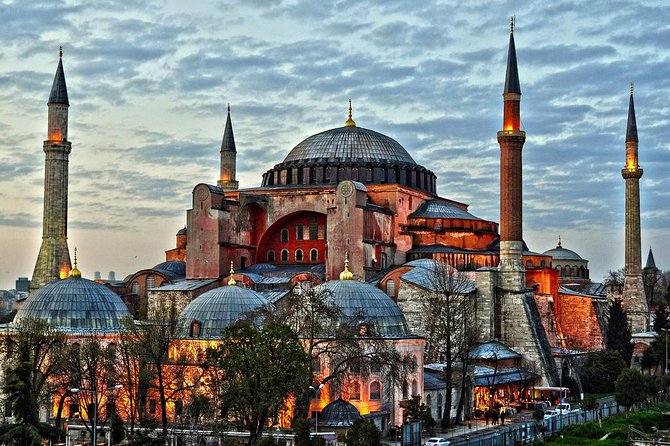
What I like most about a private tour like this is the control. You’re not stuck with the slowest group pace or the most chaotic timing. When the route includes heavy hitters like Hagia Sophia, Ephesus, Pamukkale, Aspendos, and Cappadocia cave churches, speed can be the enemy. Here, the driver and guide move your day in a practical order, with private guiding to help you connect the dots.
You also get convenience from the way the logistics are built in. Airport transfers are included, and you ride in an A/C Mercedes Sprinter for the tours and transfers. Add the mobile ticket mention and the fact that admissions are listed as included on the itinerary, and your biggest day-to-day planning job becomes simple: show up, wear comfortable shoes, and stay hydrated.
The “private” value is especially real when your schedule includes multiple regions. Istanbul to Selçuk (for Ephesus), then to Pamukkale, then down to Antalya and up to Konya, then over to Cappadocia is not a casual routing. This is the kind of trip where having one team handle driving and timing helps more than you’d expect.
You can also read our reviews of more private tours in Istanbul

Days 1 to 3 in Istanbul: Sultanahmet icons, cisterns, and market walks
Your Istanbul days focus on the historic core, and it’s a solid mix: grand monuments, big museums, and two classic bazaar-style walks.
Hippodrome, Blue Mosque, Hagia Sophia, Topkapi Palace
You start with the Hippodrome, an ancient Roman-era stage where you can see major monuments including the Obelisk of Thutmosis III, the German Fountain, the Serpent Column, and the Obelisk of Constantine. Even if you don’t know the details, seeing these stone leftovers in one place helps you understand how powerful this area was.
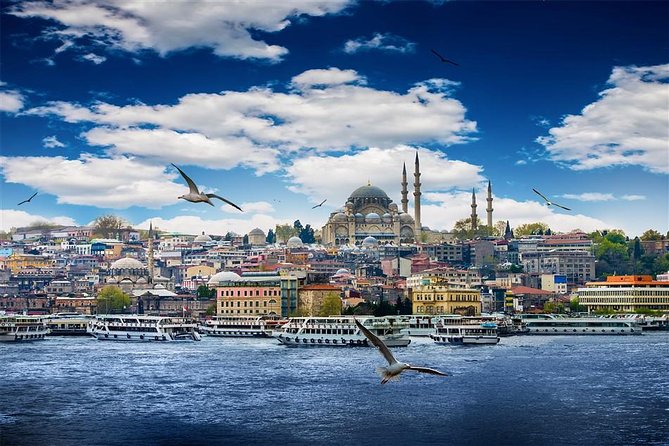
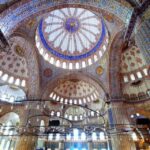
Then you move to the Blue Mosque (built in 1616 under Ottoman Sultan Ahmet I). This is one of those sites that rewards timing and calm attention. You’ll also want to expect it to take a real chunk of the day because it’s not just looking from outside, it’s time inside.
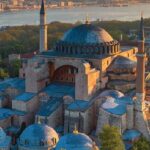
Next is Ayasofya (Hagia Sophia), built in 537 by Justinianus. The experience here comes from scale and atmosphere. Whether you’re a museum person or not, the building itself does the storytelling, and you get context from your private guide.
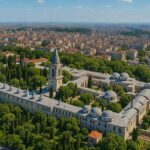
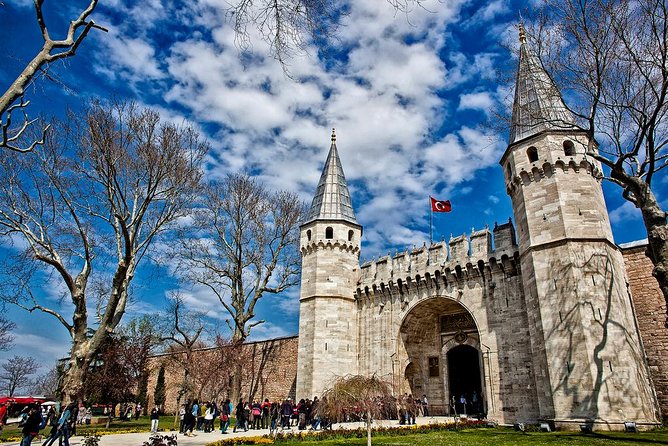
Finally you visit Topkapi Palace, the Ottoman seat of power for five centuries. Topkapi can feel endless if you treat it like a checklist. In a private setup, you can let your guide steer the visit toward what matters most and keep you from running out of stamina too early.
Basilica Cistern and the Istanbul Archaeological Museums
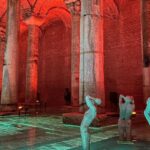
Day 3 balances the big religious sites with something more atmospheric: the Basilica Cistern. It was built around the same era as Hagia Sophia, and you can see the heads of Medusa, brought from older temples in Constantinople. It’s one of those “you feel the history” stops, because the cistern turns a lesson into an environment.
After that, the Istanbul Archaeological Museums cover Hellenistic-period art and Roman treasuries linked to the Ottoman era’s territories. If you like seeing how empires collect, move, and repurpose artifacts, this is a smart pause between mosque and palace.
Grand Bazaar Jewelers and the Spice Market
The day ends with shopping zones: the Grand Bazaar Jewelers area and Misir Çarşısı (Spice Market). This is a nice shift from museums and monuments. You’ll get a taste of everyday Istanbul life, plus the quick reward of having a reason to slow down, ask questions, and browse.
One practical note: markets add noise and foot traffic. If you’re sensitive to crowds or shopping pressure, you may want to set expectations early and keep your browsing time tight.
Ephesus and Selçuk: why this Aegean stretch is the heart of the trip
Ephesus is one of Turkey’s biggest draws, and this tour doesn’t rush the story. You fly from Istanbul to İzmir, then drive to Selçuk and get your first Ephesus time right after arrival, depending on flight schedules.
Ancient City of Ephesus and the Ephesus Museum
Ephesus gets you the drama of a world-class ancient city: ruins that feel like they still hold breath. You’ll also visit the Selçuk Ephesus Museum, which is a smart companion stop. Seeing artifacts in a museum setting helps you interpret what you’re walking through outside, instead of treating it all like random stone.
Temple of Artemis, St John’s Basilica, and the Virgin Mary House
After lunch, you go to the Temple of Artemis, one of the Seven Wonders of the ancient world. It’s not a fully intact site, so the value comes from understanding what the original temple represented and why it mattered here.
You then visit Saint John’s Basilica (Saint John Kilisesi), tied to Justinianus and the story of early Christianity. Your guide’s job here is key, because it helps you connect the basilica to the wider religious history of the region.
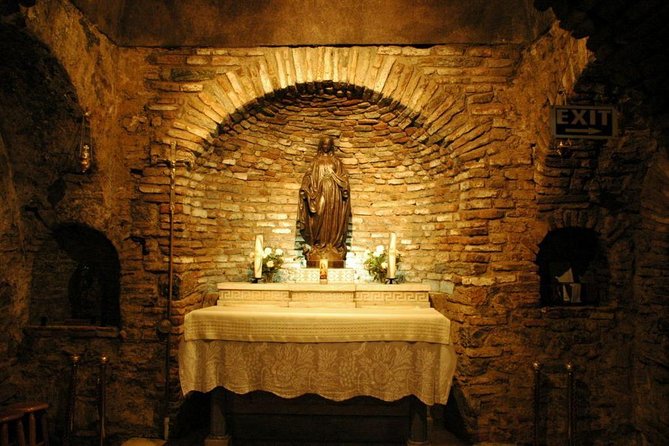
Finally comes Meryemana (The Virgin Mary’s House). This is a short stop, but it’s emotionally meaningful for many visitors. For you, the best part is often that it breaks the “big ruins all day” feeling and adds a calmer, quieter note.
A small consideration: the Ephesus area includes several different sites in one day. If you’re the kind of person who likes long, slow hangs at one place, plan to enjoy the change of scenery rather than expecting one location to get your full attention.
Priene, Miletus, and Didyma, then Pamukkale’s Cotton Castle
This middle chunk is where the tour becomes more than just famous names. It’s a sequence of ancient cities and religious prophecy, followed by a natural wonder that looks almost unreal.
Priene Antik Kenti and Milet Antik Kenti
You start with Priene, an Ionian city established in the 7th century B.C. It was shaped by being a port city and later affected by silt from the Meander River. That kind of geographic history matters because it explains why ancient places rise and fade in very specific ways.
Then you move to Miletus, tied to philosophers like Thales, Anaximenes, and Hekaistos. This stop adds a different flavor to the ancient-city day. It’s not just temples and theatres, it’s thinking and ideas associated with the city.
Didyma and the Temple of Apollo
After lunch, you visit Didyma, including the Temple of Apollo, where prophecies were given. Even if you don’t remember myth details, the function of the oracle is what makes the site stick. It turns a ruin into a way of life, because people came here for answers.
Hierapolis and Pamukkale’s travertines (Cotton Castle)
On Day 6 you drive to Hierapolis & Pamukkale, described as a healing center in the ancient world. You’ll hear how people carried tombs to the region, which explains why Necropolis (cemetery) became associated with Hierapolis.
The highlight here is travertine, including the Cotton Castle formed by calcium and travertine. This is one of those places where your guide’s context helps, but your eyes do most of the work. It’s a natural structure that looks engineered, but it isn’t.
The main drawback is physical. Travertine terrain and walking across viewpoints can be tiring. If you’re coming in from a flight day, treat this as a “move smart” day and pace yourself.
Antalya to Konya: Perge, Aspendos, and Mevlana Museum
The route heads south to Antalya, then moves inland toward Konya. This section is a good reminder that Turkey is not only Istanbul and ruins, it’s also Roman entertainment and living spiritual tradition.
Antalya Archaeology Museum and Perge Ancient City
You begin with the Antalya Archaeology Museum, praised in the itinerary notes as one of the best with statues mostly found in Perge. The sarcophagia section is singled out for having a large number of examples in Turkey. That matters because it helps you see how art and burial practices connect.
Then you visit Perge Ancient City, excavated by Turkish archaeologists at the beginning. If you’re used to Greek and Roman ruins, Perge feels more “human-scale” than some of the huge urban leftovers. It’s often the kind of site that surprises people who expected only big-name ruins.
Aspendos Ruins: the Roman theater
After lunch, you stop at Aspendos Ruins, home to a Roman theater built in the 2nd century A.D. It had seating capacity for 15,000 people. The best part of a theater stop is the way it lets you picture events happening here, not just imagine what a building used to be.
Mevlana Museum in Konya (Sufism and whirling dervishes)
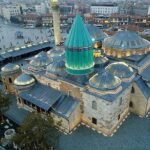
Next, you travel from Antalya to Konya over the Taurus Mountains. The route itself is part of the experience, and then you visit the Mevlana Museum, described as the center of whirling dervishes and Sufism. It’s a shift from Roman stone to spiritual ideas, with a more reflective tone.
This is also where the tour gives you an overnight in Konya, which is the right move. It’s easier to handle spiritual sites with a calmer rhythm than to slam another late-day drive right after.
Cappadocia approach: caravanserai, fairy chimneys, and cave-church sites
The Cappadocia days are where the trip becomes pure drama. You go from Silk Road stops to unreal landscapes and cave dwellings.
Sultanhan Caravanserai, then an orientation in Cappadocia
On the way, you visit Sultanhani Kervansarayi, a caravanserai where travelers stayed overnight during the 12th century. This stop is valuable because it frames Cappadocia not as isolated wonder, but as a stop in a network of movement, trade, and survival.
After lunch, you arrive in Cappadocia and get orientation for what you’ll see in the next two days. That matters. When you get an initial map in your head, the photography stops and viewpoints later make more sense.
Devrent Valley and Pasabag’s fairy chimneys
Day 11 starts with Devrent Valley (also called Imagination Valley), known for fairy chimney formations. Then you head to Pasabag, where fairy chimneys are described as resembling those in Hobbit and Smurfs style stories. Even if you don’t think about that comparison while you’re there, it’s a handy mental image for how the shapes can look whimsical.
Avanos pottery stop and Goreme Open Air Museum
You also have a stop at a local pottery shop in Avanos, where the itinerary notes that details are shared about how people survived and created art dating back to the Hittite period. Even if you only catch a slice of that explanation, pottery is one of the best ways to turn “ancient” into something you can hold.
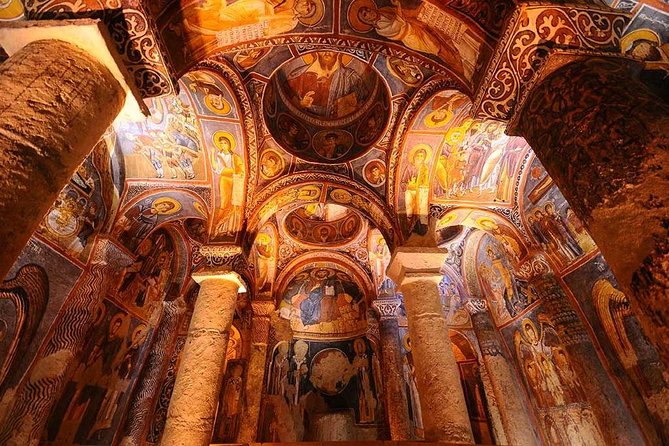
Then comes Goreme Open Air Museum, built around cave churches including some of the cave churches mentioned as part of the 530 cave churches in Cappadocia. This stop is about context. The caves are not random, they reflect how people lived, worshiped, and carved faith into stone.
Uchisar Castle and the best photo pauses
You get viewpoints and photo moments at Uchisar Castle, Pigeon Valley, and Goreme Panorama. This is where you’ll feel the tour’s logic: big landscape views are placed between shorter stops, so you don’t burn out before you get the payoff.
One practical thought: these are photo-driven breaks, so expect “pause and move” timing. Bring layers and plan for quick changes in wind and sun, since Cappadocia can feel different from one valley edge to another.
Kaymakli Underground City and Greek village history in Sinasos
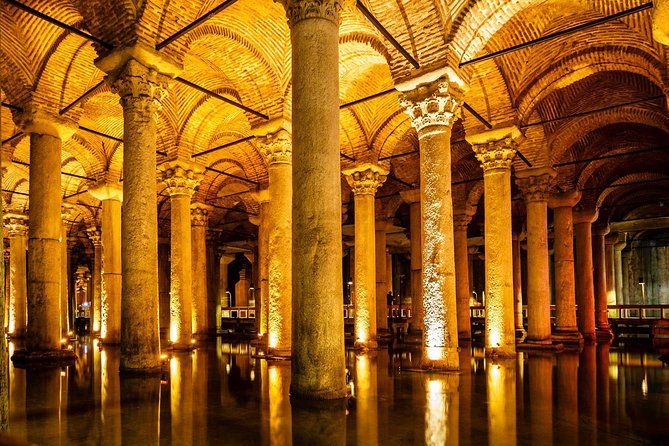
Day 12 is a blend of culture and survival stories, with an emphasis on underground protection.
Sinassos (Sinasos Kilisesi) and village history
You visit Sinassos, described as a Greek village. The itinerary notes the goods exchange between Greece and Turkey between 1924 and 1927, and that the village has been partially inhabited by Macedonian Turks since then. It’s a reminder that the stones and the churches are part of a larger human timeline, not just an ancient curiosity.
Kaymakli Underground City: Christians protecting themselves
Then you go to Kaymakli Underground City. This is the core “survival architecture” moment. The tour describes it as a place where Christians protected themselves and defended from persecutions and invasions for centuries.
This stop works best when you treat it like more than a set of tunnels. It’s a system made for fear, food, storage, and staying hidden. Your guide’s ability to explain the function makes the underground spaces feel less like a maze and more like a planned response.
You also get time at a restaurant stop (Aravan Evi Restaurant) and a visit to Ayvalı described as untainted village.
Back to Istanbul: easing out after Cappadocia
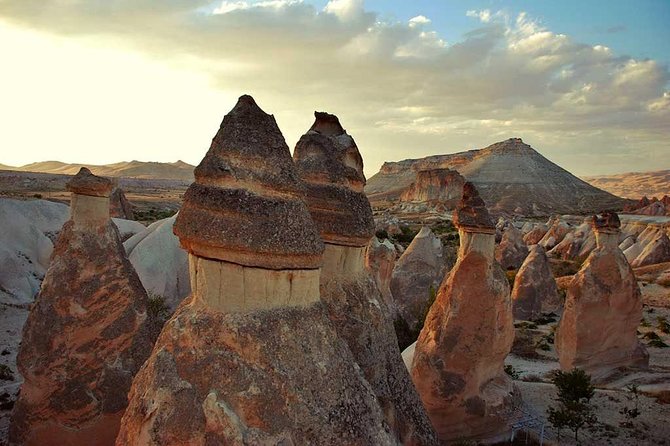
On Day 13, the day is intentionally flexible. You check out depending on flight time, then fly back to Istanbul. After landing, you get picked up again and taken to your hotel. Then you have leisure rest of the day.
Your final day includes an airport transfer depending on departure. This last stretch is a good design choice. After Cappadocia, you need decompression time. Not every tour gives you that.
Price and logistics: what $4,000 per person really buys
At $4,000 per person for 14 days, this is not a budget tour. Private travel costs money, and you’re paying for the structure: private guiding, private vehicle time, included admissions, and included airport transfers.
What helps value here:
- Airport transfers and private A/C Mercedes Sprinter are included
- Private English-speaking guiding is included
- Lunch is included (the itinerary lists lunch 11 times)
- Local taxes and VAT are included
- The tour is private, meaning your group is the only one in your experience
What can raise your true cost:
- Domestic flight tickets are not included, even though the itinerary uses them between regions (Istanbul to İzmir, Antalya to Konya, and back to Istanbul)
- Dinners and drinks at meals are not included
- Personal expenses are not included
So who gets the best deal? People who want a single, coherent plan and do not want to coordinate day-by-day transportation while also trying to see ancient cities and landscapes. If your travel style is “I want to see everything, but I also want it explained,” this format fits.
Should you book this private 14-day Turkey tour?
Book it if you want major sites in multiple regions without juggling trains, drivers, and language. The private guiding and comfortable vehicle make a big difference on a route this spread out. It’s also a good fit if you like variety, because you get Istanbul monuments, ancient Aegean cities, Pamukkale’s travertines, Roman theater culture in Antalya, Sufism in Konya, and Cappadocia’s fairy chimneys and underground churches.
I would think twice if you’re watching every dollar closely, because the tour price is only part of the equation once you add domestic flights and meals not included. Also, it’s a full schedule, so if you need slow mornings and long free evenings, you might find certain driving-and-sight days a bit tight.
If you do book, use what has worked for other travelers in the experience quality: look for clear English explanations and lean on the guide name that’s come up positively, like Mustafa in Cappadocia, and the planning support associated with Edip Ozcan Arslan. That kind of communication matters when you’re spending two weeks crossing Turkey.
If you want a well-organized, private way to see Turkey’s biggest contrasts, this one is a strong match.
More Private Tours in Istanbul

More Tours in Istanbul
More Tour Reviews in Istanbul
Not for you? Here's more nearby things to do in Istanbul we have reviewed


More Private to consider.
 ★ 4.8Bosphorus Dinner Cruise & Show with Private TableFrom $3444,561 reviews
 ★ 5.0Best of Istanbul 1, 2 or 3-Day Private Guided Istanbul TourFrom $1008,922 reviews
 ★ 4.6Private Turkish Bath, Massage, and Spa in Old CityFrom $533,225 reviews
 ★ 4.5Bosphorus Dinner Cruise with Show and Private TableFrom $302,021 reviews
 ★ 5.0Private Transfer from Istanbul Airport to Fatih, Beyoglu and BesiktasFrom $601,793 reviews
 ★ 4.8Private Turkish Bath, Sauna, and MassageFrom $591,306 reviews
 ★ 4.6Acemoglu Historical Turkish Bath w/Private OptionsFrom $421,190 reviews
 ★ 5.0ISTANBUL BEST: Iconic Landmarks Full Day PRIVATE Guided City TourFrom $801,032 reviews