
Review · EPHESUS TRIPS FROM ISTANBUL
3 Days Ephesus, Pamukkale, Priene, Miletus and Didyma Tour from Istanbul
Three days in western Turkey, packed with ancient sights. You’ll move from Ephesus’s Roman grandeur to Pamukkale’s white terraces, with smart timing and comfort built in.
I love the way this tour mixes big-name sites with calmer stops like Priene, so the story of the region feels complete. I also like the small group size approach, which makes it easier to adjust on the fly, like when you want extra time to linger.
One caution: the schedule is full, so you need moderate walking stamina, especially around Ephesus and the Terrace Houses, plus you’ll use domestic flights.
Key things I’d circle before you book
- Early Ephesus start from the Upper Gate, so you walk downhill through calmer streets.
- Small group cap of 15, which helps keep the day organized and flexible.
- Terrace Houses step inside is a highlight, but the ticket is not included and there are stairs.
- Didyma’s Temple of Apollo is huge, and the dark tunnel walk adds drama.
- Pamukkale “Cotton Castle” is a must-do, with barefoot time on the thermal terraces.
- Cleopatra Pools swimming costs extra, even though you can enter the area for free.
Day 1: Istanbul to Izmir, then straight into Ephesus
This is the kind of trip that starts early and stays useful all day. In Istanbul, you’re picked up from your hotel lobby well before your flight, then you fly to Izmir and get transferred to Selcuk to meet your guide. The key value here is time. Instead of losing your first day to logistics, you’re already lining up your first ancient stop.
Once you’re in Selcuk, you’ll get the guided day rhythm: meet the group, hit the site while it’s still manageable, take a break for food, then end with a proper hotel night in Kusadasi. That matters because the next two days are also packed.
More Istanbul tours and experiences for the shortlist



Virgin Mary’s House near Koressos, a quiet opener before the crowds
You start at the House of the Virgin Mary, on Mt. Koressos. The plan is simple and thoughtful: you visit before the busiest tourist flow, with about 45 minutes on site. You can spend the time at your own pace, soak in the peaceful setting, and even light a candle and leave a note at the wishing wall.
This is not a history lecture stop. It’s more of a reset button, so you’re not rushing straight from airports into dust and monuments. If spirituality or personal reflection matters to you, this brief pause adds real balance to the trip.
Ephesus from the Upper Gate, Celsus, the theatre, and the Experience Museum
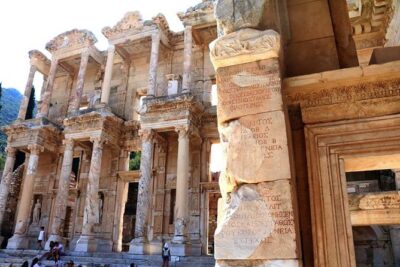
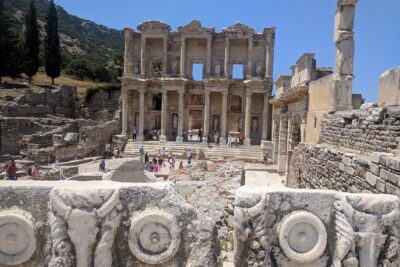
Then you get the payoff: Ephesus. The walking route is designed to feel natural, starting from the Upper Gate and moving downhill through marble streets. You’ll spend about 3 hours here, including admission, and you’ll cover the must-see anchors like the Celsus Library, the Temple of Hadrian, and the Great Theatre, where St. Paul once preached.
Here’s what I like about this approach: going downhill helps your legs feel less punished while you still get dramatic views and big architectural moments. Also, your time allocation means you’re not sprinting. You can actually look up at columns, notice street layers, and take in how the city connects.
Terrace Houses: a “museum under a roof” moment, with stairs to earn it
Next comes the Terrace Houses, described as a museum-like look at the private villas of the Ephesian elite. You’ll have about 45 minutes and you’ll walk on glass walkways over mosaic floors and preserved frescoes. But pay attention to the practical part: the ticket for this stop is not included, and you’ll need to walk up steps inside the structure.
If you’re the type who likes domestic details, this is one of the most memorable parts of the whole experience. If stairs are a problem for you, you’ll want to plan ahead. Even if you can do it, go in with realistic expectations for a bit of climbing.
The Ephesus Experience Museum: use tech to make ruins make sense
After you’ve seen the bones of the city, the Ephesus Experience Museum helps you visualize what it may have looked like at its height. You get about 30 minutes, and admission is included. It uses 360-degree screens and 3D audio with sensory effects, so it’s easier to connect the names you heard earlier to the spaces you’re standing in.
This stop can feel like a modern “bonus” rather than a distraction, especially if you prefer understanding ruins instead of just photographing them. It also gives your feet a breather before the day’s final stops.
Selcuk lunch break and the Temple of Artemis, plus that layered history photo
By midday, you’ll stop in Selcuk for Turkish cuisine at a selected local restaurant, with about an hour of free time. Lunch is not included, so budget for food, but this is a good chance to try the classic cold appetizers (meze) and then something hot for the main course.
Then you end the day at the Temple of Artemis area. Only a single column remains, but it’s still powerful because it shows how enormous this sanctuary once was, once described as four times larger than the Parthenon. You’ll also get a neat photo angle where you can see multiple eras in one frame: the pagan temple remains, the Isa Bey Mosque, and the Basilica of St. John.
After that, you drive to Kusadasi and check into a 4-star hotel. The evening is free, which is smart. You’ll have time to walk the promenade or plan a simple seafood dinner by the Aegean.
Day 2: Priene first, then Miletus, then Didyma’s Temple of Apollo
Day 2 is where the tour really earns its name. You’re not just seeing Ephesus again in a different outfit. You’re moving along the coast and into sites that often get fewer visitors, but give a sharper picture of Ionian life.
Your day starts with a drive to Priene, then continues to Miletus, then ends at Didyma, with the Temple of Apollo as the final and biggest set piece.
Priene Antik Kenti, the “Pompeii of Anatolia” feeling without the chaos
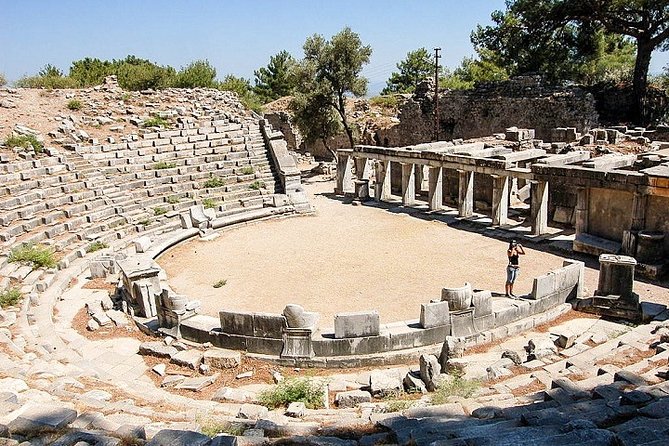
Priene is often called the Pompeii of Anatolia, and for good reason. You’ll walk the ancient grid streets laid out centuries ago, with about 1.5 hours here including admission. The setting also helps: Priene feels quieter than Ephesus, surrounded by pine trees and set on steep slopes.
You’ll visit landmarks like the Bouleuterion (Senate House) and stand near the Temple of Athena, which was funded by Alexander the Great. If you like getting your bearings in a site, Priene’s layout is satisfying. You’ll likely feel like you can understand where things go as you move.
Miletus Antik Kenti: philosophers, a grand theatre, and Paul’s farewell speech
Next is Miletus, about an hour here with admission included. In the ancient world, it was a major maritime power, and it also connects to Western philosophy through Thales. You’ll see the Grand Theatre rising over the plains and get time at the Baths of Faustina.
If you’re interested in biblical connections, this is also where St. Paul delivered a farewell speech to the elders of Ephesus (Acts 20). Even if you don’t read scripture as history, it’s a good reminder that people kept coming back to these places for centuries.
Didyma lunch with views, then the Apollo Oracle temples
After Miletus, you’ll reach Didyma for a restaurant stop. You get about an hour here with time to eat, and many places offer views of the Temple of Apollo. Fresh seafood is common in this coastal area, but the menu also includes Turkish favorites like pide and kebab.
Then you tackle the real finale: the Temple of Apollo in Didyma. This site is not a normal city ruin. It’s described as a sacred oracle center, second only to Delphi. You’ll spend about an hour, with admission included.
The temple’s scale hits you fast. Massive columns make you feel small in a good way. You’ll also walk through dark tunnels to reach the inner sanctuary, where you’ll see the famous Head of Medusa sculpture. That moment, combined with the setting, is why this final stop tends to be a “last day wow.”
After Didyma, you drive back through cotton fields and olive groves and return to Kusadasi for late afternoon.
Day 3: Pamukkale and Hierapolis, from necropolis gates to Cleopatra Pools
Day 3 shifts from city ruins to geology and thermal water. You get picked up from your Kusadasi hotel and drive about 2.5 to 3 hours to Pamukkale. Along the way, you’ll pass through the Meander Valley and see cotton fields, fig orchards, and Turkish villages.
This drive has a practical benefit. It softens the hard edge of three straight days of stone. It’s also when you’ll get a clearer sense of why these sites are all connected by geography, not just tour planning.
Hierapolis necropolis and Roman Baths museum, with theatre views
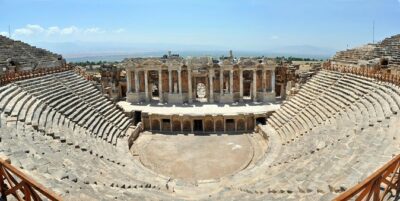
In Hierapolis, you start with the Necropolis, one of Anatolia’s largest ancient cemeteries. You’ll have about 2 hours, including admission, walking through the monumental Frontinus Gate and visiting the well-preserved theatre with panoramic views of the white terraces below.
Then you move to the Hierapolis Archaeology Museum. It’s inside restored Roman Baths, and you’ll have about 30 minutes. You’ll see sarcophagi, statues, and friezes, including pieces found in Hierapolis and nearby Laodicea. The highlight is the Hall of Statues, featuring mythological figures and gladiator reliefs.
This is the part of the day that makes Pamukkale feel more than a photo stop. It links the thermal landscape to the people who built, lived, prayed, and buried there.
Cleopatra Pools, free entry area, swimming costs extra
Next is the Cleopatra Pools. This is a “legend + reality” stop. You’ll see submerged ancient marble columns that fell into the water after an earthquake. You can enter the pool area for free, but swimming requires an extra ticket, which is not included.
If you want to swim, plan for that additional cost in advance so you don’t get surprised. If you don’t, it still works as a cool contrast to the next stop.
Pamukkale Thermal Pools: barefoot cotton terraces you will remember
Finally, you get the main event: the Pamukkale thermal terraces. You’ll spend about 45 minutes here with admission included. The tour encourages barefoot walking on the warm white limestone terraces, formed over millennia by calcium-rich thermal springs.
This is the stop that gives people goosebumps for a good reason. It feels like walking on clouds, and the sight of the terraces from different angles is hard to duplicate anywhere else. Bring practical socks or flip-flops for the rest of the site after the terraces, because you’ll be barefoot for the walk itself.
Lunch and the flight back to Istanbul from Denizli Cardak
After the terraces, you stop for lunch in Pamukkale town at a selected restaurant with about an hour of free time. Lunch is not included, so treat it as a recharge break, not a budget miracle.
Then you drive to Denizli Cardak Airport (about an hour) and fly back to Istanbul. You’re dropped at the departure gate, then you’re met on arrival and taken back to your hotel door. That “airport to hotel” wrap-up is a quality-of-life detail that keeps the last day from feeling like airport limbo.
Price and value: what your $1,017.48 covers, and what it does not
At $1,017.48 per person, this tour is priced like a comfort-first, guide-led route with multiple admissions and two nights of local hotel accommodation. You also get all transfers in an air-conditioned vehicle, a professional guide, and breakfast for two mornings.
What’s not included matters for value. Domestic flight tickets are not included, and you may also pay extra for two specific items: the Terrace Houses entrance in Ephesus and swimming at Cleopatra Pools. Since these are optional upgrades or extra-fee segments, you can still do the tour without blowing your budget, but you should plan for those costs.
So is it good value? If you want a structured route that covers Ephesus plus the usually-skimmed sites like Priene, Miletus, and Didyma, and you don’t want to handle trains, car rentals, and site ticket math, this price starts to look reasonable. If you already have flights locked in and you prefer to roam with zero structure, a cheaper self-guided plan could make sense.
What small-group flexibility feels like in real life
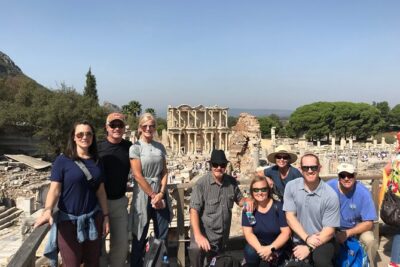
One of the most praised parts of this tour is the way guides handle the day. Names like Güfte and Yavuz come up for a reason. They’re described as patient, organized, and willing to adjust based on what you care about, including small detours like extra time for shopping if the group wants it.
You’ll also notice how the guide approach changes the feel of a stop. Ephesus can become just columns and crowds if nobody explains what you’re seeing. Here, you get context tied to the buildings, and that helps you walk away with more than photos. There are also stories of lunch stops that come with little extras like breezes, water sounds, and even live music, which makes the day feel more human than just scheduled.
Practical tips so you enjoy every day
- Wear shoes you trust for ancient stone. Ephesus and Hierapolis mean uneven surfaces.
- Plan for stairs. Terrace Houses require steps inside the structure, and you’ll want to be comfortable with that.
- Budget lunch on your own. Breakfast is included, but lunch and dinner are not.
- Bring a light layer. Coastal weather and temple sites can feel cooler than the city.
- If you want to swim at Cleopatra Pools, treat that as an add-on cost you should decide early.
Should you book the 3-day Ephesus, Pamukkale, Priene, Miletus and Didyma tour?
I think you should book it if you want a guided “best-of western Turkey” route with real variety. Ephesus alone is already a major draw, but the added stops at Priene, Miletus, and Didyma make the trip feel complete instead of repetitive. The Pamukkale and Hierapolis pairing also gives you a day that changes pace, and the thermal terrace time is genuinely worth planning around.
I would skip or reconsider if you strongly dislike fast schedules or you know stairs are a problem. The trip is not slow travel. It’s efficient, and you’ll be on your feet for a lot of the day.
If you can handle that, and you’re okay arranging domestic flights separately, this tour is a solid, high-value way to see a big chunk of Anatolia without turning your vacation into a logistics project.
FAQ
What sites are included in the tour?
You’ll visit the House of the Virgin Mary, Ephesus, the Terrace Houses (entrance not included), the Ephesus Experience Museum, the Temple of Artemis area, Priene, Miletus, Didyma, the Temple of Apollo, Hierapolis, the Hierapolis Archaeology Museum, Cleopatra Pools, and the Pamukkale Thermal Pools.
Are entrance fees included?
Many site admissions are included, including Ephesus, the Ephesus Experience Museum, Priene, Miletus, the Temple of Apollo, Hierapolis, the museum, and Pamukkale Thermal Pools. The Terrace Houses entrance fee in Ephesus is not included, and swimming at Cleopatra Pools requires an extra ticket.
Is accommodation and breakfast included?
Yes. You get accommodation in local hotels, plus breakfast for two mornings.
Are domestic flights included?
No. Domestic flight tickets are not included. The provider can help you book flights that fit the tour schedule, and transfers to and from the airport are included.
How big is the group, and what language is the tour in?
The tour has a maximum of 15 travelers. It is offered in English, and a professional tour guide is included.
What happens if the weather is bad?
The tour requires good weather. If it’s canceled due to poor weather, you’ll be offered a different date or a full refund.
More 3-Day Experiences in Istanbul

More Tours in Istanbul



More Tour Reviews in Istanbul

Not for you? Here's more nearby things to do in Istanbul we have reviewed




More Ephesus Trips from Istanbul to consider.
 ★ 5.04 Days Turkey Tour – Cappadocia, Ephesus and Pamukkale TourFrom $1,571138 reviews
 ★ 5.0Ephesus Day Trip from Istanbul incl Domestic FlightsFrom $475128 reviews
 ★ 5.06 Days Turkey Tour Cappadocia, Pamukkale, Ephesus, Gallipoli TroyFrom $2,122109 reviews
 ★ 4.0Daily Ephesus & House of Virgin Mary from Istanbul – Small GroupFrom $86095 reviews
 ★ 5.07 Days Best of Turkey Tour: Istanbul-Cappadocia-Ephesus-PamukkaleFrom $1,71391 reviews
 ★ 4.55-Day Aegean Tour – Gallipoli, Troy, Ephesus, Kusadasi, PamukkaleFrom $1,54386 reviews
 ★ 5.0Istanbul, Ephesus, Pamukkale and Cappadocia 8 Day PackageFrom $1,05083 reviews
 ★ 5.0Private 4 Days Turkey Tour from Istanbul to Cappadocia, Ephesus, PamukkaleFrom $1,90080 reviews
Other ways to explore Istanbul