
Review · ISTANBUL DOLMABAHCE PALACE TOURS
Dolmabahçe Palace and Sunset Tour on Luxury Yacht
Two Ottoman palaces meet golden-hour sail. This half-palace, half-cruise format makes Istanbul feel personal fast, with Dolmabahçe Palace guided narration and then a calm sunset ride. If you’re lucky, you get Celil as the guide, and his explanations turn big rooms and big names into something you can actually picture.
I also love the onboard treats and the pace. Cookies, baklava, lemonade, fruit plates, and Turkish tea come with the cruise, and you’re not rushing between stops.
One thing to watch: Dolmabahçe Palace admission is not included, so you’ll need to budget for the entrance ticket separately.
Key Highlights You’ll Actually Feel
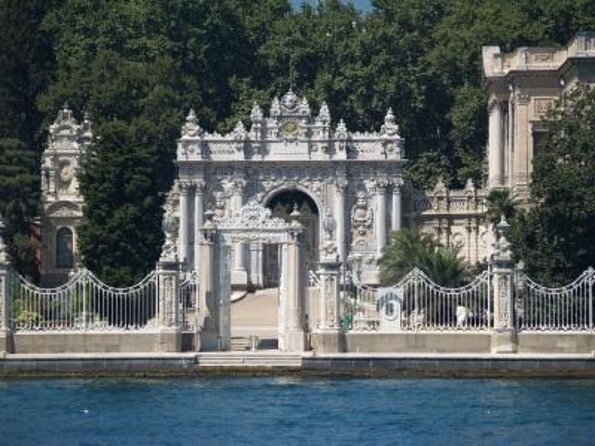
- Dolmabahçe Palace, guided for context: administrative power, ceremony, and the place where the beloved leader passed away
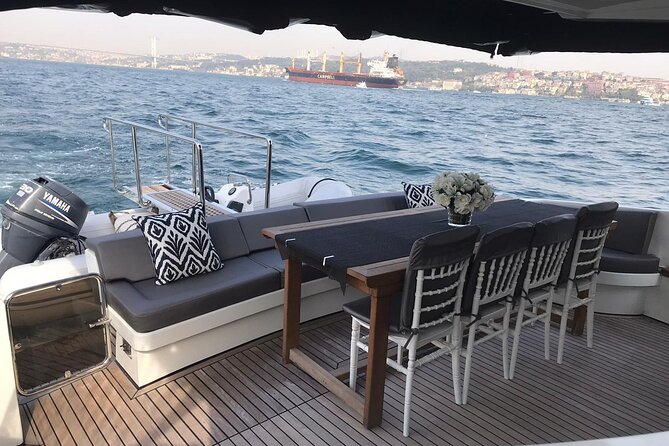
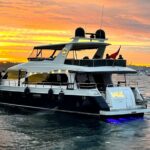
- Bosphorus sunset from a luxury yacht: you glide past famous waterfront landmarks instead of standing in crowds
- Included sweet stop snack kit: cookies, baklava, Turkish tea, lemonade, fruit plates, and water
- Lots of big sights in one route: Ortaköy, both bridges, Rumeli Hisarı, Anadolu Hisarı, and more
- Small group size (max 20): easier conversation, less chaos, better photo timing
- English tour, with experienced guidance: clear stories as the boat passes key heritage sites
Dolmabahçe Palace With a Guide, Not Just a Ticket
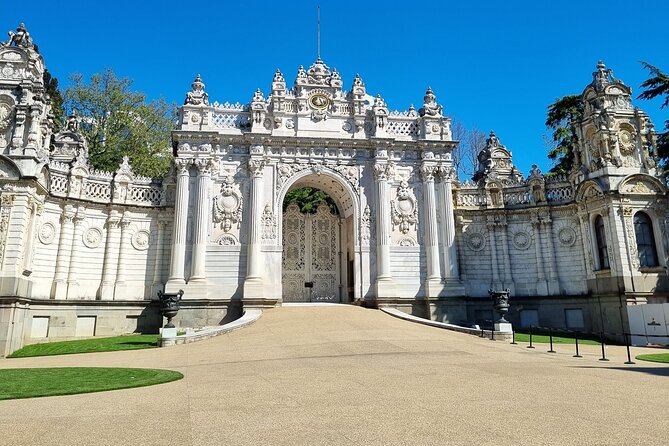
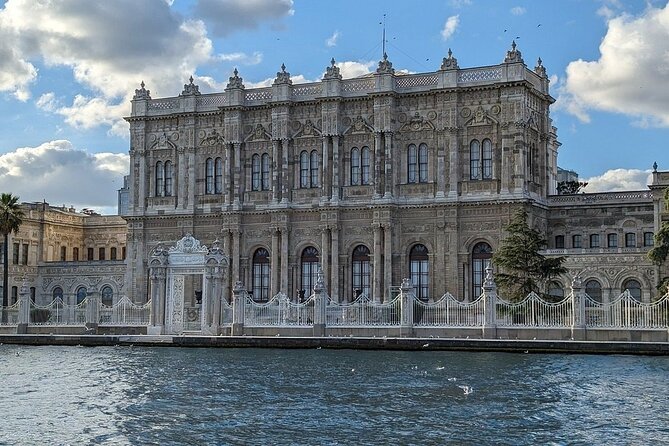
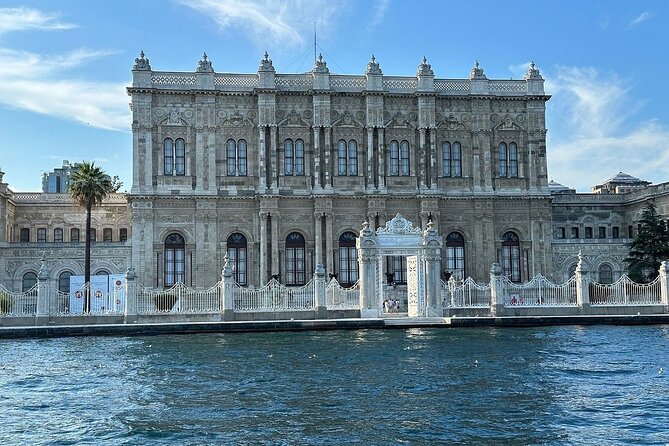
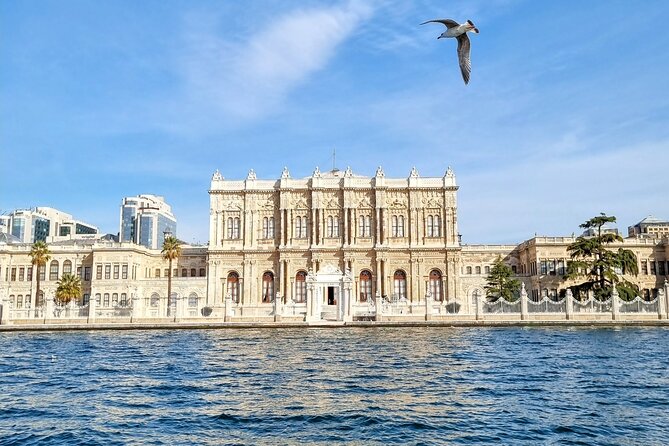
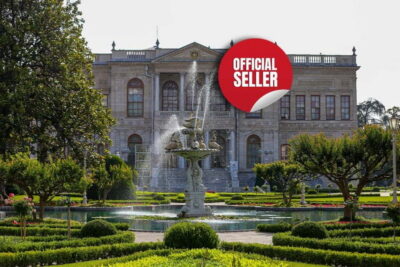
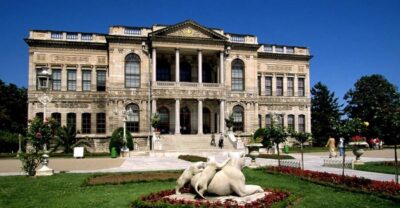
Dolmabahçe Palace is the heavy hitter in this experience, and it works because it’s guided for meaning, not just facts. You get about 3 hours inside the palace area with a professional guide explaining it as an Ottoman palace, the former administrative center of the Ottoman Empire, and the specific spot tied to where a beloved leader passed away. That last detail matters, because it changes how you look at the rooms. Suddenly, it is not only ornate architecture, it is a place with emotional weight.
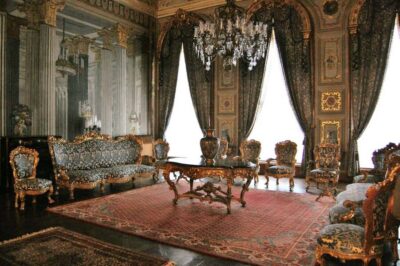
The palace portion is also built for flow. You move through grand halls, opulent furnishings, and the palace gardens, with explanations stitched in along the way. If you’ve ever visited a major museum and felt like you were just reading labels, this is the antidote. The guide’s job is to help you connect what you see, to why it was built and what it meant.
Important practical note: Dolmabahçe admission is not included. So when you buy this tour, you’re paying for the guide and the overall experience, then adding the palace entry ticket separately. That’s normal for many tours, but you should treat it as part of the true cost.
You can also read our reviews of more boat tours in Istanbul
What the Yacht Portion Feels Like: Luxury, With Stories and Snacks
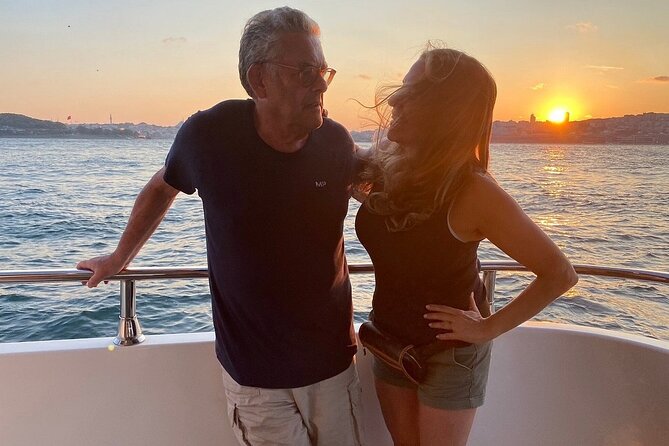
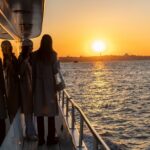
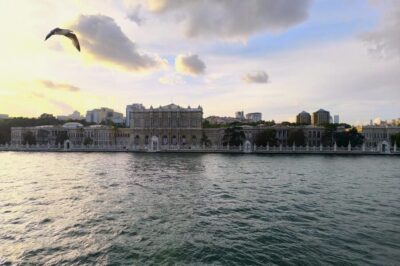
The cruise is where the day loosens up. Instead of walking more and more streets, you settle in and let Istanbul slide by. The tour passes city highlights along the Bosphorus as the sun starts lowering, which is exactly the kind of timing that makes waterfront views feel cinematic without needing a special viewpoint hike.
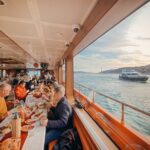
The “luxury” part is practical. You get restroom access on board, and you’re not rationing your comfort during the ride. And you get a snack-and-drink setup that keeps you satisfied without turning the day into a meal hunt. Included items include cookies, baklava, lemonade, Turkish tea, fruit plates, and water.
Alcohol is not included, so if you want a wine or a beer, you’ll need to handle that separately. This can be a positive for some people, because you stay focused and not tipsy while you’re learning stories about landmarks.
One more detail I like: you’re not just cruising for photos. The guide explains the story behind the heritage sites as you pass by. That is the difference between watching scenery and actually understanding what you’re looking at.
Çırağan Palace, Ortaköy, and the Bosphorus Mood Shift
After Dolmabahçe, the route starts turning into classic Bosphorus Istanbul. You pass Çırağan Palace first, and it’s the kind of landmark that rewards attention because the details sound almost like fiction.
Çırağan was commissioned by Sultan Abdulaziz and designed by Sarkis Balyan. It was built on the site of an earlier wooden summer palace from 1800, created by Selim III. During construction, the wooden structure and nearby Besiktas Mevlevihane were destroyed. Construction finished in 1871, and the palace is made of marble, covering about 80,000 square meters.
The palace story also has sharp turns. After Abdulaziz was deposed, he was imprisoned there for years with his family. Murat V was later deposed and imprisoned there as well, for 29 years with his family. In 1908, after the Second Constitutional Monarchy, it was used as the House of Parliament, until damage from a fire in 1910. Later it became part of the Besiktas Sports Club era and even served as Seref Stadium for a time. In the early 1990s, it was restored and reopened as a luxury hotel.
That sequence makes it more than a pretty building from the water. It becomes a symbol of Istanbul’s shifts, from empire administration to political change to modern luxury.
Then comes Ortaköy, and the vibe changes again. Ortaköy is a neighborhood on the European side in Beşiktaş, stretching along slopes meeting the coast. The Ortaköy bazaar is described as lively most hours of the day, with an “intellectual market,” souvenir shops, cafés, bars, and restaurants.
For your planning, remember that on a yacht cruise you mostly experience Ortaköy from the shoreline and waterfront angles, not by wandering inside. Still, seeing Ortaköy from the water gives you a strong sense of where the social life happens, especially as the city lights start to warm up near sunset.
Bosphorus Bridge Footings and Bebek’s Ottoman-to-Modern Contrast
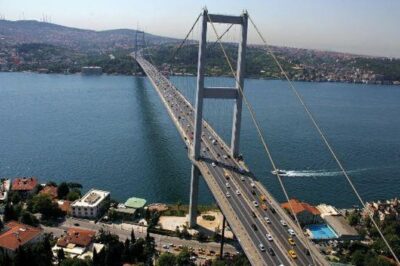
You also pass by the Bosphorus Bridge area. The foot of the bridge is located in Ortaköy on the European side and in Beylerbeyi on the Anatolian side. It’s one of the two suspension bridges on the Bosphorus, and it provides key connection between the sides, along with ferries and the later Fatih Sultan Mehmet Bridge.
From a practical perspective, bridges on a sunset cruise are photo gold. They create strong lines across the water, and they help you understand the geography quickly. Even if you know Istanbul only from maps, the bridges tell you where everything sits.
Then the route shifts toward Bebek, another European-side neighborhood with Ottoman roots. Bebek is described as a historic residential area, with waterside mansions and views across the Bosphorus. You’ll also hear the word Bebek tied to the translation baby, which is said to reference the neighborhood’s position. Today, it’s known for historical buildings like Bogazici University and for upscale dining along the waterfront.
On the cruise, you’re not walking streets in Bebek, but you’re seeing how Istanbul balances wealth, history, and view corridors. It’s an “Istanbul on a postcard” kind of perspective, but without the effort of getting there at peak crowd times.
Rumeli Hisarı, Built for Control of the Strait
Rumeli Hisarı, also called Rumeli Hisari, is where the cruise starts feeling very strategic. This fortress sits in Sariyer on the Bosphorus coast road and was built directly across from Anadolu Hisarı.
The big story: construction began in 1453 on the order of Sultan Mehmed the Conqueror, placed at the narrowest point of the Bosphorus. Construction completed in an impressively short span of three months. Before the conquest of Istanbul, it was used to protect against naval attacks. After the conquest, it shifted roles into an inspection point for maritime traffic.
That meaning helps you read the water. When you understand that this narrow stretch mattered for ships, inspections, and defense, the fortress doesn’t become a random wall. It becomes a tool of power and control, planted at exactly the kind of geography that shapes a city’s future.
If you’re into architecture, Rumeli Hisarı is one of the landmarks that makes the cruise feel more than scenic. It gives you a “why this location” lesson you can carry into the rest of the day.
More Istanbul tours and experiences for the shortlist




Fatih Sultan Mehmet Bridge: Modern Engineering in the Skyline
You pass the Fatih Sultan Mehmet Bridge, Istanbul’s second bridge spanning the Bosphorus. Construction began in 1986 and the bridge opened on 3 July 1988. It’s described as the 14th largest steel suspension bridge in the world.
Functionally, it carries a significant portion of trans-Bosphorus traffic. Visually, it becomes an unforgettable part of the Istanbul skyline, and sunset makes that skyline even more dramatic.
This is a good moment to think about Istanbul’s time layers. The route includes fortresses built for medieval defense, palaces tied to Ottoman power, and then a modern steel structure carrying cars and buses across the water. It’s the same strait, changing purposes.
Anadolu Hisarı and the Outside-Walls Museum Experience

On the Asian side, you get Anadolu Hisarı. It sits in Beykoz at the narrowest point of the Bosphorus and was built in 1395 by Beyazit I. The fortress is described as having a citadel and exterior castle walls.
After the conquest of Istanbul, it lost much of its strategic importance and became a military hospital. Over time, settlement formed around the castle, with waterfront houses and old mansions spread among the ruins.
Here’s the museum angle that’s useful for your expectations. Restoration work lasted from 1991 to 1993, and the area was converted into a museum. But it is not open to the public in the full sense. Today, the open-air museum exists with outer walls you can visit, yet the road passes through the area. On the cruise, you’ll see it mainly from the water, which is still worthwhile because you can match what you see to the descriptions of walls and layout.
If you hate feeling rushed, this part is calm. You get the architecture cues from the shoreline without trying to manage a quick on-foot sightseeing mission.
Kucuksu Palace and Beylerbeyi Palace Under the Bridge
Between the fortresses and the final tower legends, you pass two Ottoman summer palace stories.
First is Kucuksu Palace, a small Ottoman summer palace ordered by Sultan Abdulmecit. The design is attributed to architect Nikogos Balyan. Kucuksu was loved for its Bosphorus view and was used by Sultans for relaxation. In the Republican period, the palace opened as a museum, helped by the quality of furniture, paintings, carpets, and the fine details.
Next comes Beylerbeyi Palace, meaning Lord of Lords. This is an Ottoman summer palace complex built in the 1860s on the Bosphorus shores, and it sits right under the Bosphorus bridge. It was designed by Sarkis Balyan and mixes elements of renaissance and baroque styles, plus other influences from both East and West.
Beylerbeyi is described with specific structure and rooms: a two-store main building of stone on a high basement, on about 2,500 square meters. The south side is Imperial Mabeyn, and the north side is Valide Sultan’s Apartment. It has six halls, 24 rooms, and one hamam plus one bathroom. Even if you cannot experience the interior from the boat, these details help you recognize what you’re seeing when the palace walls come into view.
Maiden’s Tower Legend and the Galata Tower View Angle
Then the skyline legends take over.
The Maiden’s Tower (Kız Kulesi) appears as a distinctive feature of the Bosphorus skyline. It stands on a tiny island about 200 meters from the shore of Üsküdar. The tower is tied to legends, and the most popular one is the oracle story about a sultan’s daughter. The oracle foretold she would be killed by snake bite on her 18th birthday. The sultan tried to prevent it by having the tower built and putting the daughter there in secrecy. On her 18th birthday, she received a basket of fruits, and a snake hidden inside bit her, leading to her death in her father’s arms.
This is exactly the kind of story that makes a landmark feel alive. On a sunset cruise, when the tower silhouette lines up against the water, the legend becomes a mood, not just a bedtime story.
After that, the route also includes the tower known for panoramic viewpoints: the Galata Tower. Built by Genoese in 1348, it’s described as a nine-story tower measuring 66.90 meters and once the tallest building in the city. In Ottoman times, it served different purposes such as a fire observatory and even a jail.
One of the most striking historical points: in 1632, Hezarfen Ahmet Çelebi glided from the top of Galata Tower across the Bosphorus to Üsküdar using self-constructed wings. The tower’s conic roof was destroyed during a storm in 1875, then restored in the 1960s with the wooden interior replaced by concrete. Today, it is open to public and has a restaurant and café on the upper floor.
On the yacht, you likely experience these towers as silhouettes and skyline anchors. Still, knowing the background helps you enjoy what you see rather than just checking items off a list.
Timing, Comfort, and the Small-Group Advantage
This experience runs about five hours. That time window matters because it’s long enough for a real palace visit and a meaningful sunset sail, but short enough that you do not burn an entire day in transit.
The maximum group size is 20, and I find that matters for two reasons. First, it keeps the guide interaction from turning into a shouting match. Second, it helps everyone stay together when the boat changes angles to pass by each landmark.
You also get a mobile ticket and an English guide. That makes the experience easier to manage if you’re navigating Istanbul on your own.
Comfort tips that follow from the tour notes: it is not recommended for people with vertigo, and it’s not recommended for those prone to sea-sickness. If you know you react to boats, take that warning seriously. A Bosphorus sunset is beautiful, but your body has to enjoy it too.
Price Value: When $78.10 Makes Sense
At $78.10 per person, this tour is priced as a combined product: a guided palace experience plus a luxury yacht sunset ride with included snacks and drinks. The key value question is the one you should ask yourself about any “bundle” tour, what’s included and what’s not.
Here, snacks and drinks are included: cookies, baklava, lemonade, Turkish tea, fruit plates, and water. That’s not a small thing when you’re spending a few hours on the water. You also get restroom access on board, and you get an experienced guide accompanying you.
The admission to Dolmabahçe is not included. So yes, your true spend will be higher than the sticker price. But if you want a guided palace visit plus a structured Bosphorus sunset, this tends to work out as good value compared with piecing together a palace tour and a separate cruise.
Should You Book This Dolmabahçe Palace and Sunset Yacht Tour?
I’d book this if you want two Istanbul experiences in one day: a guided look at Dolmabahçe Palace paired with a sunset sail passing key Bosphorus landmarks. It’s a smart option for first-time visitors who want context, and for people who prefer seeing multiple sights without walking between them.
I’d hesitate if you already know you want to spend long hours inside buildings besides Dolmabahçe, or if your budget does not allow for the separate palace entry admission. And if you get sea-sick or you have vertigo, skip it. The Bosphorus ride is part of the point, so discomfort would ruin the value.
If you’re comfortable with those tradeoffs, this is one of the more efficient ways to experience the Ottoman waterfront, with enough story to make the views stick.
FAQ
How long is the tour?
The tour is approximately 5 hours.
What does the tour cost per person?
The price is $78.10 per person.
Is the tour in English?
Yes, the experience is offered in English.
Is entry to Dolmabahçe Palace included?
No. Dolmabahçe entry/admission is not included, so you will need to pay separately.
What snacks and drinks are included on board?
Included snacks and drinks are cookies, baklava, Turkish tea, lemonade, fruit plates, and water.
Is alcohol included on the yacht?
No. Alcoholic beverages are not included.
Where do I meet the tour, and where does it end?
The start is at Saat Kule Kafeterya Vişnezade, Meclis-i Mebusan Cd. 38 A, 34357 Beşiktaş/İstanbul. The tour ends at Kabataş pier, at Dentur, Mavi Marmara Ömer Avni, 34427 Beyoğlu/İstanbul.
How many people are on the tour?
The tour has a maximum of 20 travelers.
Is it recommended if I have vertigo or get sea-sick?
It is not recommended for people with vertigo or for people prone to sea-sickness.
Is free cancellation available?
Yes. You can cancel up to 24 hours in advance for a full refund.
More Boat Tours & Cruises in Istanbul

More Tours in Istanbul

More Tour Reviews in Istanbul
Not for you? Here's more nearby things to do in Istanbul we have reviewed

More Istanbul Dolmabahce Palace Tours to consider.
 ★ 4.6Dolmabahce Palace & Harem Fast-Track Entry with Audio GuideFrom $47966 reviews
 ★ 4.7Dolmabahce Palace and Harem Skip-the-Line TicketFrom $62751 reviews
 ★ 4.7Dolmabahce Palace & Harem Skip-the-Line EntryFrom $47488 reviews
★ 4.5Dolmabahce Palace & Harem Skip-the-Line EntryFrom $55401 reviews
★ 4.7Dolmabahce Palace & Harem Skip-the-Line EntryFrom $47488 reviews
★ 4.5Dolmabahce Palace & Harem Skip-the-Line EntryFrom $55401 reviews
 ★ 3.5Istanbul Boat Cruise and Dolmabahce Palace & Two ContinentsFrom $15680 reviews
 ★ 3.5Dolmabahce Palace Tour in IstanbulFrom $9052 reviews
 ★ 5.0Bosphorus Cruise with Dolmabahce Palace and Istiklal Street TourFrom $25036 reviews
 ★ 3.9Dolmabahçe Palace and Uskudar Guided TourFrom $35435 reviews
Other ways to explore Istanbul