
Hagia Sophia is one of those Istanbul sights. With skip-the-ticket-line entry plus a phone-based audio guide, you can spend more time looking up at the dome and less time stuck in queues. You get the building’s big story as you walk, from Byzantine cathedral to Ottoman mosque and to its current role as a functioning mosque today.
Two things I really like: the audio guide content works offline, so you are not hunting for signal in a stone building, and the visit is self-guided, which means you can slow down for mosaics or speed through the parts you have already seen.
One drawback to consider: you still have to go through security checks, so skip-the-line does not mean zero waiting. Also, it is non-refundable, so if tech access fails on your device, you cannot count on changing plans later.
Key highlights worth planning for
- Skip-the-ticket-line entry helps you avoid the long main queues and start your visit sooner
- Offline audio guide includes narration, text, and maps, so you can keep moving even with poor data
- Self-guided pace fits solo travel, couples, and families who hate getting rushed
- Byzantine and Ottoman artistry shows up everywhere, especially in the dome and mosaic areas
- Security comes first and cannot be skipped, so build in a little buffer
Hagia Sophia, where your ticket saves time
Istanbul’s Hagia Sophia has a pull you feel even before you reach the doors. This ticket package is designed for the practical reason most people come: you do not want to lose your best photo-light and walking time to paperwork and lines.
The big promise here is straightforward. Your ticket is meant to let you bypass the ticket queue, then start your walk through the main visiting area with a self-guided audio guide on your phone. The duration you should plan for is about 1 to 2 hours, depending on how long you pause at the mosaics and the dome.
One more practical point: you are not walking into a quiet museum. There are mandatory security checks for everyone. You may still see a line at the entrance, but you are not repeating the same ticketing process that slows down many visitors.
More Istanbul tours and experiences for the shortlist



What you actually get: audio, offline maps, and your entry ticket
After your reservation is confirmed, the supplier (Cosmic Tickets & Audios) sends you an email with two key items: your entry ticket and an activation link for the audio guide. That activation link is your on-ramp to the content.
This is a self-guided experience, so there is no live guide included. Instead, the audio guide is available in multiple languages and is designed for phone use if you select the audio guide option. The content is also built to work without internet: you get offline access to audio narration, text, and maps.
In practical terms, offline audio is a lifesaver at Hagia Sophia. Between stone walls, crowds, and unpredictable connectivity, signal can be unreliable. Offline means you can keep following along without babysitting your phone’s data settings.
There is also a small extra included: 1 GB of complimentary internet with your purchase. The listing frames it as an added benefit, not a requirement, since the audio and maps are available offline.
Using the audio guide without getting stuck
The concept is great: you press play, and the building’s story walks you through what you are seeing. It covers how Hagia Sophia was a Byzantine cathedral, later became an Ottoman mosque, and is now a functioning mosque today.
Audio like this is most useful when it helps you interpret what you are looking at. Here, you can expect the guide to connect the visual details to the eras that shaped the space. That matters because Hagia Sophia looks like one place, but it reflects multiple cultures layered on top of each other.
My practical advice: before you head inside, check that your activation link works and the audio loads at least once. Then, when you arrive, keep your phone charged and your brightness reasonable. You do not need fancy settings, just enough battery to get through your 1 to 2 hour visit.
Entering the mosque and navigating security
Even with skip-the-ticket-line entry, the first reality is that security checks are mandatory. This is not optional, and it is not something the ticket can erase. Plan for a brief wait at the entrance.
If you are traveling with kids, pay attention to document needs. One strong tip that came through in feedback: bring the child’s passport or ID. The booking may also ask for a kids ticket even if the cost seems like it should be unnecessary. Getting the right ticket for children ahead of time can prevent last-minute confusion.
Also, build in a little slack in your schedule. Hagia Sophia is popular, and security flow is not in your control. If you are trying to hit another timed attraction right after, choose a buffer.
The dome and mosaics: where you should spend your minutes
This ticket’s itinerary is simple because Hagia Sophia is the itinerary. Your main stop is the Hagia Sophia Grand Mosque visiting area.
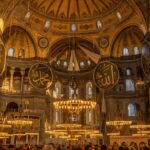
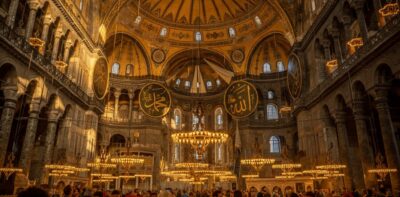
Here is the payoff. The space is famous for the grand dome and the intricate Byzantine mosaics, and you also see Islamic calligraphy panels. The building is essentially a visual handshake between two empires.
When you start using the audio guide, it helps to think like this: do not treat the mosaics as decorations. Treat them as clues. The guide is there to connect the art to the eras, so you understand why certain sections feel Byzantine while others feel Ottoman.
If you like architecture, the dome is your anchor. Look up early. Let your eyes adjust. Then come back to it again later. In a place like this, your second look often makes the first look click.
You can also read our reviews of more guided tours in Istanbul



The Christian to Ottoman transition, explained as you walk
A lot of people come to Hagia Sophia for the famous visuals. But the real reason this audio guide can be worth it is the way it frames the changes over time.
You get an on-the-spot explanation of Hagia Sophia’s transformation. You also get the sense that this is not a sealed-off relic. It has shifted roles across centuries and is still a functioning mosque today.
That matters because it changes how you should interpret what you see. Some details might look like pure art at first glance, but they carry meaning tied to religious use and historical change. The audio narration aims to keep that connection clear without turning your visit into a classroom.
How to pace your 1 to 2 hour visit
Because this is self-guided, you control the pace. I like that flexibility. You can focus on the dome and major mosaics, then stop early if you need a break, or spend closer to 2 hours if you want slower reading and more pauses for photos.
A simple pacing plan:
- Start with the dome area and let the audio set the context
- Move into mosaic-heavy zones next, listening for the era connections
- Save calligraphy and key transition moments for the later part of your visit, so the story feels stitched together
If you are short on time, do not try to cover everything in one go. Hagia Sophia rewards repeat looking, not speed-walking.
Price and value: what $42.94 buys you
At $42.94 per person, you are paying for two things: (1) reduced friction getting in and (2) an offline audio guide that takes the edge off what can otherwise feel like a jumble of impressive rooms.
Is it good value? Usually, yes, if you will actually use the audio guide and if you care about time. Skip-the-ticket-line can be the difference between seeing the building at a comfortable pace and losing momentum to queues.
Is it overpriced? Only if you will not use the audio or you are the type who enjoys waiting. If you are happy to go slowly anyway, a simpler ticket might do the job for you.
One more value angle: because the content is offline, you are not paying for the guide with your data plan stress. You can focus on the building.
The tech risk: when tickets or audio do not activate
I always like to be honest about risk with any ticket-and-app style product. This one includes activation by email, and the audio is meant to download or work offline after activation.
There has been at least one report of trouble where the tickets and audio guide did not work as expected, leading to buying new tickets onsite. The vendor and the booking platform also did not respond quickly, according to that account.
You cannot eliminate that risk. But you can reduce it:
- Make sure the email arrives, and save the activation link somewhere accessible
- Test the audio activation link before you reach the entrance
- Carry a charged phone, and consider a power bank if you are staying out all day
And one more reality check: the experience is non-refundable and cannot be changed, even if you run into problems. That makes it even more important to handle activation early.
Who this is best for (and who should skip it)
This experience fits independent travelers who want structure without being tethered to a group. It is also a good fit for people who prefer a steady pace and want to read and listen as they go.
You will likely like it if:
- You want skip-the-ticket-line entry to start faster
- You plan to use a self-guided audio guide in your own rhythm
- You want offline content to avoid connectivity headaches
You might reconsider if:
- You strongly prefer a live guide and want Q and A
- You are traveling with limited phone access or you expect not to be able to activate links
- You are the kind of planner who hates any tech step before arriving
Quick etiquette and practical tips for your visit
The listing emphasizes that Hagia Sophia is a functioning mosque. That means you should dress and behave with respect.
Also, think about practical comfort. Even in 1 to 2 hours, you will likely do plenty of standing and walking. Bring layers if you run hot and cold easily, and keep your phone secured while you move through crowds.
The most underrated trick is to plan for security first, then treat everything after as bonus time. Skip-the-ticket-line helps, but it does not remove the security step.
Should you book this skip-the-line audio ticket?
Book it if you want a faster start and you will actually use the offline audio guide to understand what you are looking at. At this price, the value comes from time saved and the convenience of content that works even without internet.
Hold off or book more cautiously if you are worried about tech activation. Because the product is non-refundable, you do not want a last-minute phone issue to derail your day.
If you do book, do it with one simple mindset: get the email, activate before you arrive, and charge your phone. Then you will spend your time where it counts, looking up at the dome, studying the mosaics, and making sense of how the Christian and Islamic eras layered together in one unforgettable building.
FAQ
What is the price for the Hagia Sophia skip-the-ticket line entry ticket?
The price is $42.94 per person.
How long does the Hagia Sophia visit take with this ticket?
Plan for about 1 to 2 hours.
Does this ticket include skip-the-ticket-line entry?
Yes. It includes skip-the-ticket-line access to enter the Hagia Sophia visiting area.
Will I be able to skip the security lines?
No. Security checks are mandatory for all visitors and cannot be skipped, though the wait should be brief.
What is included with the ticket besides entry?
You get a self-guided audio tour device for multiple languages, an activation link, and access to the Hagia Sophia Grand Mosque visiting area.
Is the audio guide available offline?
Yes. The audio guide includes offline access to audio narration, text, and maps, so you do not need internet to use it.
Do I need a live guide for this experience?
No. The experience is self-guided, and a live guide is not included.
Is food or transportation included?
No. Food and drinks, and transportation are not included.
Where will I get my entry ticket and audio activation link?
After confirmation, you will receive an email with your entry ticket and the activation link for the audio guide.
Are service animals allowed?
Yes, service animals are allowed.
More Guided Tours in Istanbul
More Tickets in Istanbul
More Tour Reviews in Istanbul


Not for you? Here's more nearby things to do in Istanbul we have reviewed









More Istanbul Hagia Sophia Tours to consider.
 ★ 3.7Hagia Sophia Skip-the-Line Ticket & Museum OptionFrom $334,958 reviews
 ★ 4.8Blue Mosque & Hagia Sophia Guided Tour w/ TicketsFrom $393,600 reviews
 ★ 4.3Hagia Sophia Skip-the-Line Ticket and Audio GuideFrom $352,246 reviews
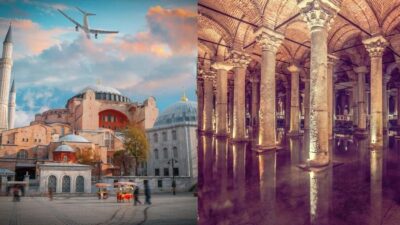 ★ 4.6Basilica Cistern & Hagia Sophia Combo TicketFrom $711,990 reviews
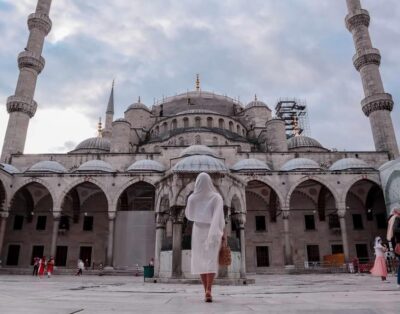 ★ 4.7Blue Mosque, Hagia Sophia, & Basilica Cistern TourFrom $581,806 reviews
 ★ 4.4Hagia Sophia Skip-the-Line Ticket with Audio TourFrom $421,767 reviews
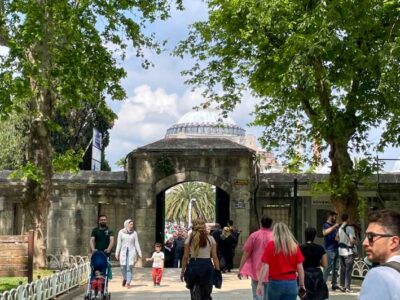 ★ 4.3Blue Mosque, Basilica Cistern, & Hagia Sophia TourFrom $781,634 reviews
 ★ 4.3Hagia Sophia Skip-the-Ticket Line & Audio GuideFrom $411,469 reviews
Other ways to explore Istanbul