
Review · GALLIPOLI & TROY TRIPS FROM ISTANBUL
Full-day Gallipoli Tour
Gallipoli hits harder when it is explained clearly. This full-day tour through the Gallipoli Campaign pairs an English live guide with key landing and battle sites, plus the Gabatepe Museum where you can see relics up close. I love that it is built around real geography, not just the famous movie moments.
The second big plus is the small group size, limited to 14, so you can ask questions without feeling lost in a crowd. The main drawback to plan for is the long day, with a return that can run late, especially if traffic piles up after dinner cruise departures.
Key Points You Should Know
- Small group, up to 14 people, which keeps the pace steady and questions practical
- Anzac Cove and Brighton Beach landing-area viewing with battlefield context
- Lone Pine Ridge ties the memorial sites to what soldiers actually faced
- Gabatepe Museum shows weapons, ammunition, photographs, and private items from the campaign
- Skip the ticket line, so you spend more time on sites and less waiting
- Lunch included, but you should budget separately for drinks
Why Gallipoli is more than screen scenes
The Gallipoli Campaign is one of those World War I stories people think they already know. You may have seen the famous movie version, but the real sites are sharper, more specific, and honestly more sobering. What makes this tour worth your time is how it keeps coming back to cause and consequence, from the initial landing attempt to the later evacuation.
This is not a tour that just points. You are guided from one pivotal location to the next, and the guide explains the strategy and the fallout. The battle began on April 25, 1915, when the Allies tried to take the Gallipoli Peninsula for safe access toward Constantinople, today Istanbul. The idea was simple on paper: if they could take Istanbul, it could push Turkey out of the war and help Russia against the Central Powers, mainly Germany and the Austro-Hungarian Empire.
If you care about history, you will leave with more than names and dates. You will understand why the shoreline and ridge lines mattered, and how quickly a plan could turn into a death spiral once the troops hit the ground.
More Istanbul tours and experiences for the shortlist

Getting out of Sultanahmet: pick-up, pacing, and a 16-hour reality
Most Gallipoli day trips live or die on logistics. This one starts with hotel pick-up from the centrally located Sultanahmet area in Istanbul, with a centrally arranged schedule that varies by your hotel location. The tour includes drop-off back at your hotel, and it uses an air-conditioned vehicle for the drive through the Marmara Region.
The time commitment is the part you should respect. Duration is listed at 16 hours, so even though it is a single day, it is not a quick outing. You will be out early, moving between sites, and then ending with the museum. You are also meant to fit in lunch, which helps, but the day still runs long.
On days when traffic thickens around major waterfront areas, the return can feel slow. If you are the type who hates arriving at night, plan your expectations now. You may want to keep dinner plans light for that evening and pick a flexible schedule for anything the next morning.
The drive through Turkey sets up what you will see
A good battlefield tour does something subtle before you even step onto the ground. It frames the terrain so the stops make sense in sequence. After pick-up, you drive through the Turkish countryside toward Gallipoli, and that time in the car is not wasted. It acts like a moving preface to the campaign.
This is also when the guide can get you oriented on the big picture. You know the aim from the start, and you begin to connect the dots between the Allies’ strategic goal and what they actually ran into on the peninsula. Once you reach the shorelines and ridges, the tour stops feel less like scattered snapshots and more like a single story with turns you can physically see.
Because you are traveling in a small group (up to 14), the pace tends to be controlled. That matters on long-distance tours. You are not sprinting from one stop to another, and you are less likely to lose the thread if you step away for a moment.
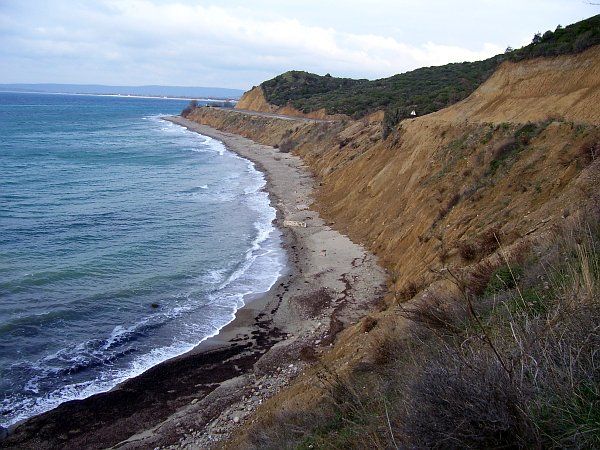
Anzac Cove and Brighton Beach: landing sites where strategy turned tragic
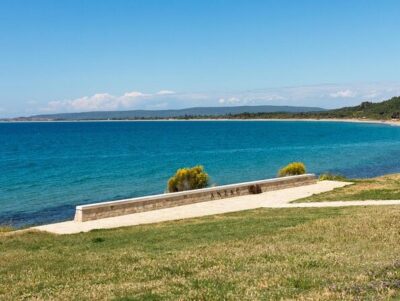
The heart of this day is the set of locations tied to the Allied landings. The tour focuses on the most important sites of the Gallipoli Campaign, and two of the key stops are Anzac Cove and Brighton Beach.
Anzac Cove is where the Allied forces made their initial beach landing. This is also where the tour makes an important point: the landing itself became a costly mistake. The guide walks you through the strategic logic of the early push and then shows you how conditions on the ground undermined it. Standing in a landing area changes how you read the history. You can picture how troops would have had to move, how vulnerable they would have been, and why a plan could fail so quickly.
Brighton Beach adds another layer. It reinforces the idea that the Allies were trying to create momentum early, but the campaign quickly turned into hard, grinding fighting rather than a clean breakthrough. You do not just see the coast. You see the battlefield math, where distance, elevation, and movement routes matter.
One reason I like tours that include these areas is that they help you understand why the conflict dragged on. Gallipoli becomes a lesson in how geography can overpower even a well-planned operation.
Lone Pine Ridge: memorial sightlines and the film-meets-reality effect
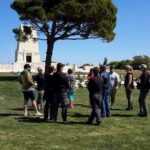
Next comes Lone Pine Ridge, one of the most famous Australian memorial sites connected to the fighting. The tour ties this stop directly to how many people first learned about Gallipoli through pop culture, including the connection that Mel Gibson started on the movie Gallipoli.
But the key is what you take away from seeing Lone Pine in person. The ridge is not just a viewing point. It is a reminder of how intense the fighting was, and it marks where many Australian soldiers lost their lives.
What you should expect from the guide at this stop is an explanation that goes beyond cinematic impressions. A strong guide makes you notice the ground, the way a ridge can channel movement, and why certain positions are worth fighting for. You start to see why the campaign became a battle of holding and taking terrain rather than achieving a quick strategic win.
If you want a meaningful experience, this is the moment to slow down. Take in the memorial surroundings and let the story connect back to those earlier landing beaches. That link, between shore and ridge, is where the Gallipoli Campaign stops feeling like a chapter and starts feeling like a sequence of real decisions made under pressure.




The December 1915 evacuation: when the campaign changes direction
A good Gallipoli tour has to address the ending, not just the drama of the landing. This tour includes context around the fact that in December 1915 the Allies were forced to evacuate. By then, thousands of British, Australians, and New Zealanders, along with Turkish soldiers, had lost their lives.
This stop matters because it shifts your understanding. The campaign is often remembered for early attempts and dramatic moments, but the evacuation is the part that tells you how the situation actually evolved. When an operation ends in withdrawal, it is usually not a single bad day. It is the cumulative effect of losses, failed objectives, and conditions on the ground.
The guide’s role here is crucial. You want the explanation to connect back to the original goal, the attempt to reach Constantinople, and the broader war context involving Russia and the Central Powers. When you get that chain clear, the evacuation becomes more than a date. It becomes the campaign’s real outcome.
Gabatepe Museum: relics that make the story tangible
The final major stop is the Gabatepe Museum, where you can see artifacts from the campaign. This is often where people feel the tour shift from “places” to “people,” because the objects are so specific.
According to the tour description, the museum includes weapons, ammunition, photographs, and private items of soldiers. Those categories matter because they cover different angles of the war experience. Weapons and ammo point to what fighting looked like. Photos help you picture faces and units. Private items are the most emotional category because they hint at the daily life behind the statistics.
You do not need to be a museum person to find this stop valuable. For many visitors, it is the bridge between battlefield geography and human reality. You walk through the sites and then return to a room where the campaign becomes physical.
Price and logistics: is $185 good value for this 16-hour day?
At $185 per person for a 16-hour full-day tour, the value question is fair. Here is what you are getting for the money: hotel pick-up and drop-off, entrance fees, an English live guide, an air-conditioned vehicle, and lunch.
That bundle matters because it removes the most time-consuming parts of planning. You are not arranging your own transportation or managing ticket lines for multiple sites in one day. You also get the advantage of a guide to connect the locations into a coherent story.
What is not included is beverages, so you should plan to buy drinks separately. That is normal for tours, but it is also a small cost you should not ignore when you are comparing day-trip prices.
The limited group size is also part of the value. Small group tours often cost more, but you usually feel it in the flow of the day. It is easier to hear explanations and ask questions during stops like Anzac Cove, Brighton Beach, and Lone Pine Ridge.
If you want a low-effort, story-driven day focused on the Gallipoli Campaign’s key sites, this pricing can make sense.
Timing tips for a long day, especially on the return drive
Because the day runs around 16 hours, you should treat this as a full commitment, not a light sightseeing slot. Lunch is included, which helps keep you going, but you still need to manage your energy across multiple stops.
Here is my practical advice: eat with purpose, not with leisure. The day benefits from keeping transitions smooth, especially if you want enough time at each site. If you linger too long during lunch, you can end up feeling rushed later.
Also, plan for late arrival risk. Even with a smooth tour, return traffic can slow things down, and port-area congestion around dinner cruise schedules can make it worse. If your next plan involves a strict early night or early morning reservation, build in buffer time.
A small group can speed things up inside the tour, but it cannot fully control the city’s external traffic. The best you can do is go in knowing the day is long, and then protect your schedule for the evening.
Who this Gallipoli tour is best for
This tour fits best if you want guided, structured history tied to real locations. You will enjoy it most if you care about World War I context and you want the story explained in an organized way across Anzac Cove, Brighton Beach, Lone Pine Ridge, and Gabatepe Museum.
It also suits people who prefer not to drive themselves, or who do not want to wrestle with transfers and separate tickets. If you are traveling solo or as a couple, a small group day like this can feel more intimate than large coach tours.
If you are traveling with very small kids or you hate long travel days, this may feel heavy. The duration is long, and the schedule includes multiple site stops.
Should you book the full-day Gallipoli tour?
I think you should book it if your priority is a focused Gallipoli Campaign experience with an English guide, transportation from the Sultanahmet area, and time at both major battle sites and the Gabatepe Museum.
Skip it or consider alternatives if you dislike long days and tight viewing windows, because this is a true 16-hour commitment. And if you need an early return for a packed evening schedule, plan extra buffer.
Overall, the strongest reasons to choose this tour are the combination of guided context at the key landing and ridge sites, and the chance to see campaign relics at the museum. If you want Gallipoli to make sense as a connected story, this does the job.
FAQ
What sites does the full-day Gallipoli tour include?
You will visit historical sites of the Gallipoli Campaign, including Anzac Cove, Brighton Beach, Lone Pine Ridge, and the Gabatepe Museum.
How long is the tour?
The duration is listed as 16 hours.
Where does hotel pick-up happen?
Pick-up is included from centrally located Sultanahmet area hotels in the Old City of Istanbul. Pick-up time can vary based on your hotel location.
What language is the tour guide?
The live tour guide is English.
Is lunch included?
Yes, lunch is included. Beverages are not included.
Is there a skip-the-line benefit?
Yes, the tour includes skipping the ticket line.
How large is the group?
It is a small group limited to 14 participants.
Is free cancellation available?
Yes, free cancellation is available up to 24 hours in advance for a full refund.
Are there any dates when the tour does not operate?
There are no departures between 22 and 26 April.
Can the itinerary change?
Neon Tours can change the itinerary due to unexpected circumstances such as museum closures, holidays, strikes, or weather conditions.
More Full-Day in Istanbul

More Tours in Istanbul




More Tour Reviews in Istanbul
Not for you? Here's more nearby things to do in Istanbul we have reviewed





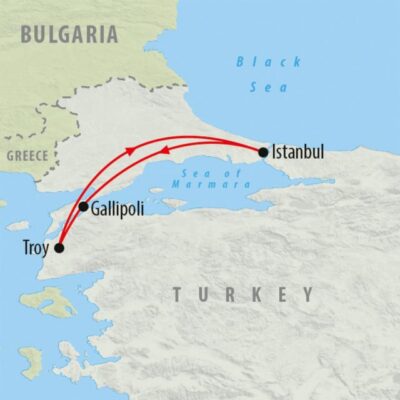
More Gallipoli & Troy Trips from Istanbul to consider.
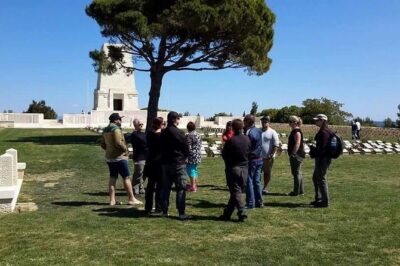 ★ 5.0Istanbul to Gallipoli Full Day Tour with Lunch and TransfersFrom $157567 reviews
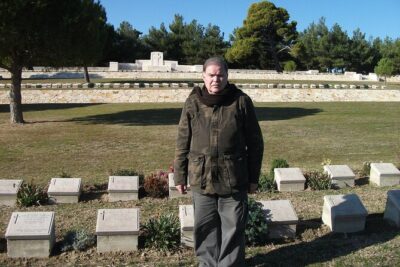 ★ 4.9Gallipoli Full-Day Tour from IstanbulFrom $154468 reviews
 ★ 4.9From Istanbul: Gallipoli and Anzac Full-Day TourFrom $159345 reviews
 ★ 4.7Troy: Full-Day Tour from IstanbulFrom $169312 reviews
 ★ 4.5Gallipoli Day Trip from IstanbulFrom $240147 reviews
 ★ 5.0Istanbul to Gallipoli, Canakkale and Troy. 2 Day Tour with HotelFrom $387144 reviews
 ★ 4.5Istanbul to Truva Troy Guided Day Tour with Lunch and TransfersFrom $172134 reviews
 ★ 5.0Troy Full-Day Guided Tour incl. Transfer, Ferry Tickets w/LunchFrom $151126 reviews
Other ways to explore Istanbul