
Review · AUDIO TOURS
Istanbul: Chora Church (Kariye Camii) & Digital Audio Guide
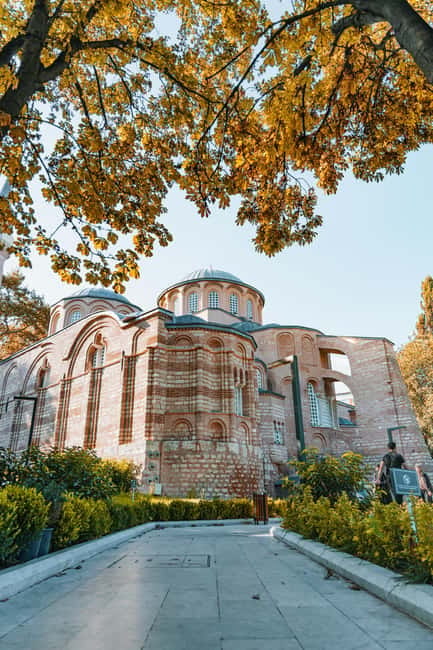
A place where walls tell stories. The Chora Church, Kariye Camii, is one of Istanbul’s best stops for Byzantine mosaics and frescoes, plus a digital audio guide that helps you read the scenes. It is a self-entry experience at the address on your voucher, so you can go at your own pace inside.
I love two things most: the sheer artistry of the mosaics and frescoes, and the way the building itself feels designed for these images (Greek cross layout plus a domed feel). The audio guide format also works well if you want to move slowly and focus only when a specific scene catches your eye.
One thing to watch is that this is not a live guide. You will rely on your charged smartphone and the app, and dress rules apply, so plan your timing and clothing before you arrive.
Key Things You Should Know Before You Go
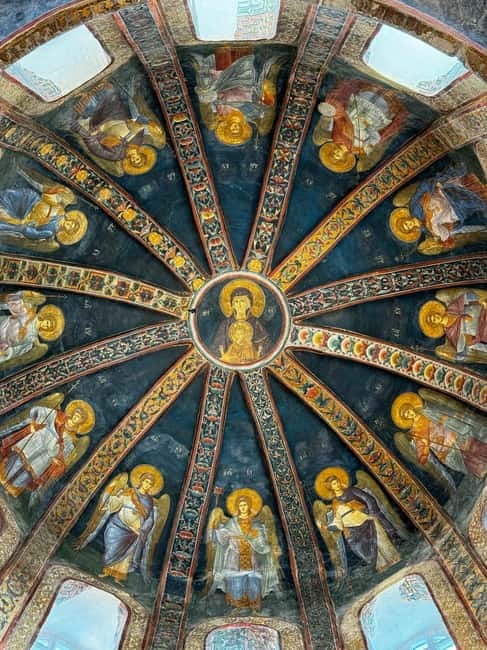
- Byzantine mosaics and frescoes are the main event, with biblical scenes you can follow using the app
- Greek cross with a domed layout changes how the interior feels as you look around
- Christian to Ottoman to museum history is central to what you are seeing, not just a footnote
- Self-entry means you control pace, but you must set up the digital audio guide yourself
- Phone and photo rules matter, including no flash photography and phone silence during your visit
Kariye Camii: what makes Chora Church so worth your time
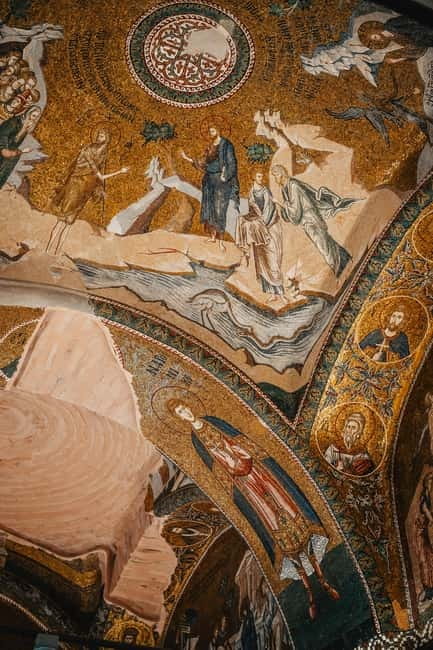
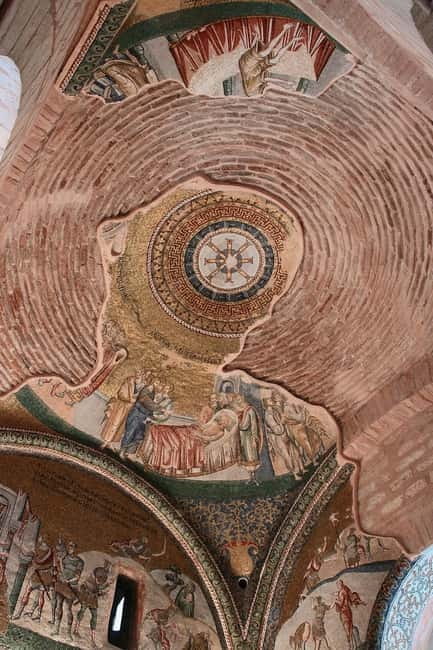
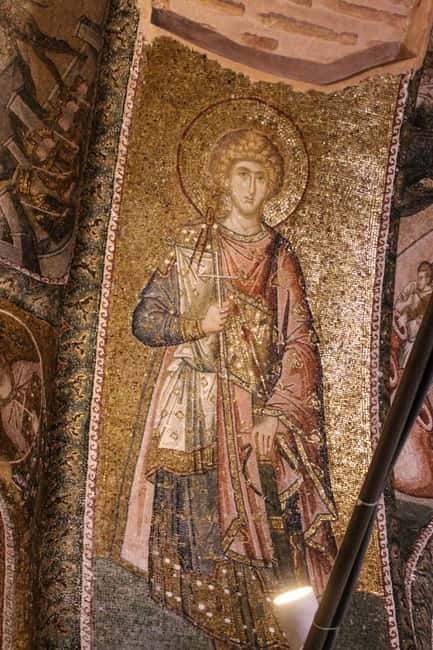
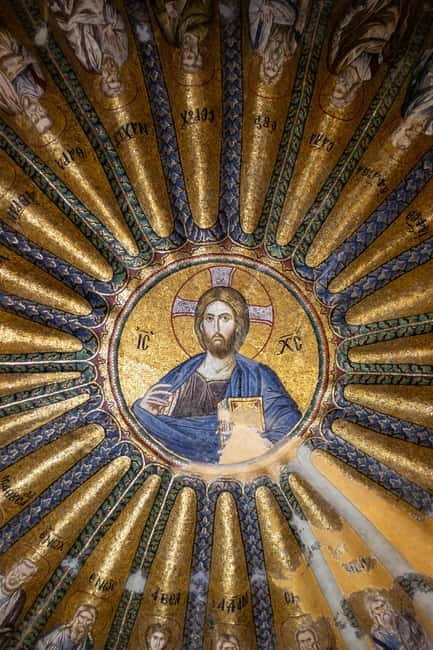
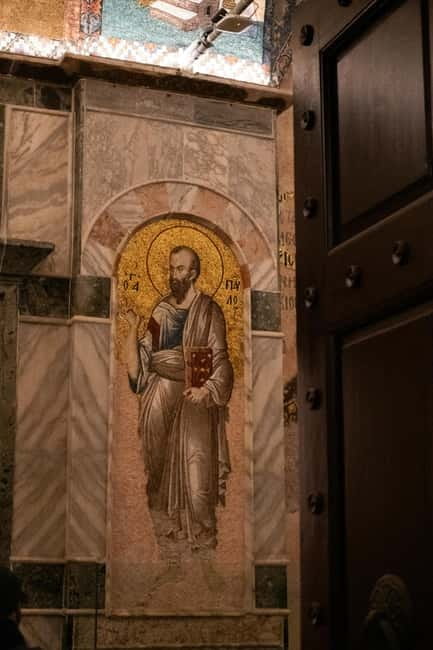
Kariye Camii is the place to go when you want religious art that feels intensely specific, not generic. The whole draw is the way the interior walls tell biblical stories in mosaic and fresco form, with scenes from the life of Christ and the Virgin Mary.
What surprised me, even from reading about it beforehand, is how much the experience depends on preservation. You are not just seeing old artwork, you are seeing artwork that has stayed clear enough that the details still feel legible once you are inside.
This is also one of those Istanbul sites where the building’s identity has changed over time. Built as a Byzantine church in the 4th century, it later became a mosque, and today it operates as a museum. That layered story helps you read why the place feels both historical and spiritually charged.
You can also read our reviews of more guided tours in Istanbul


Your ticket and digital audio guide, the practical way to do it
This experience includes entry to Kariye Camii and a multilingual digital audio guide app. No live guide comes with your ticket, so the app is your on-site “explainer,” not a bonus.
You get the download link one day before your tour date, and it also appears on your voucher. That is the kind of detail that saves frustration. If you wait until the last minute to download, you risk arriving with a half-broken plan and a very quiet phone.
Plan to bring a charged smartphone. You also need to keep an eye on the rules about phone use: you should silence your phone during your visit and only use it in designated informational areas. That means you will want the audio working first, then treat your phone like an audio device, not a camera.
If you like freedom, this setup is great. You can pause, backtrack, and spend extra time on the scenes that actually hold your attention, rather than moving on because a group schedule says so.
Finding the entrance on your own at Derviş Ali, Kariye Cami Sk. No:18
There is no meeting point for this activity. You enter on your own at the provided address: Derviş Ali, Kariye Cami Sk. No:18, 34087 Fatih, Istanbul.
That is convenient, but it also means you should arrive with a little orientation. If you tend to get turned around, give yourself buffer time before opening hours.
Your activity ends back where you entered, so your day remains simple. You are not committing to a fixed tour route with a handoff to another provider. Once you are done, you are free to keep exploring nearby at your own pace.
A self-guided route through Chora Church, step by step
Because this is a self-entry ticket, your “itinerary” is more like a sequence of moments. Here is how I would structure it so you actually get value from the time.
1) Enter and start the audio before you lose the big picture
Before you focus on small details, get oriented. The audio guide is meant to help you connect what you see with what the scenes represent, so start early rather than waiting until you are standing in front of something you do not understand.
This matters because the mosaics and frescoes are the core experience. If you wait too long, you might admire them as beautiful decoration without fully grasping the story content.
More Istanbul tours and experiences for the shortlist



2) Notice the architecture: Greek cross plus domed layout
One of the highlights is the church’s unique architectural design, described as a blend of Greek cross and domed layout. Even if you do not know architecture terms, you will feel it.
A Greek cross plan often helps guide your eye toward the center spaces, and domed elements tend to create a sense of height and enclosure. In practical terms, that means you will likely find yourself looking up more than you expect, especially when the audio points you toward ceiling or upper-wall scenes.
3) Move scene to scene, not wall to wall
The interior is filled with biblical iconography, including scenes from the life of Christ and the Virgin Mary. Rather than trying to see everything in one rushed sweep, pick a handful of scenes and stay with them long enough for the audio to do its job.
You will get more meaning per minute this way. And yes, you will still see plenty, because the whole place is designed for visual storytelling.
4) Pay attention to what preservation makes possible
The exceptional part of Kariye Camii is how well the mosaics and frescoes have been preserved. When art survives like this, it changes the way you experience it. Colors and details hold up better than you might expect, and the scenes feel clearer once you slow down.
This is a strong reason to choose a time when you are not rushing to catch a train. If you walk in hungry for a quick photo stop, you will miss what makes these artworks special.
5) Finish by tying the art to the building’s historical shifts
The site is tied to its Byzantine monastery roots: it was built as part of the monastery of St. Saviour in Chora, a place devoted to both worship and theological study. You might not see “monastery life” in a literal way, but the concept helps explain the seriousness of the art program.
Then the later conversion into a mosque and its current museum role become easier to understand. The place is now a fusion of Byzantine and Ottoman influences, and seeing that shift helps you appreciate the art in context, not in isolation.
Byzantine mosaics and frescoes: what to look for inside
The mosaics and frescoes are the headline for a reason. These are not just pretty religious pictures. They are visual storytelling, built to communicate key scenes and figures through symbolic composition and careful iconography.
Here is what you should train your eye on:
- Scenes from the life of Christ: Look for sequences of moments rather than single stills. The audio guide can help you connect which moment you are seeing, which makes the images feel less random.
- Scenes involving the Virgin Mary: The artwork often centers her in a way that signals importance in Christian iconography. The value here is in how the images “hold” you, not how fast you pass by.
- Intricate details and color use: The description emphasizes brilliant use of color and intricate detailing. Once you are in, you can see why this site is considered among the finest examples of Byzantine art.
- How the building frames the art: The blend of Greek cross and domed layout matters because it changes viewing angles. If you only look straight ahead, you might miss parts of the visual narrative the architecture is pointing you toward.
I will also say this plainly: a good audio guide makes sites like this make sense. Without it, you can still enjoy the art. With it, you are more likely to feel the “why” behind what is portrayed.
Christian to Ottoman to museum: the story you can sense while you look
Kariye Camii’s timeline shapes your experience. It started as a Byzantine church in the 4th century, then it was converted into a mosque, and it now functions as a museum.
You will not need a full lecture to get value from that. The practical benefit is that it gives you a frame. When you notice certain artistic choices, or when you sense a shift in the feel of the space, you can connect that to the building’s changing role.
The monastery connection is another helpful lens. The church was part of the monastery of St. Saviour in Chora, associated with worship and theological study. That matters because it explains the seriousness behind the art. This is not decoration added later. It is part of a culture where images helped teach, remember, and reflect.
Finally, knowing it is now a museum helps you understand why you are there to appreciate art and history together. That fusion of Byzantine and Ottoman influences is one of the reasons this is such an “Istanbul” experience.
Timing tips: open daily, but Friday and prayer closings can affect you
You should plan around the opening schedule. The church is open every day from 09:00 to 18:00, except Fridays. That alone makes Friday tricky.
There is also a mosque-closure rule: it will be closed 15 minutes before and during prayer times between 09:00 and 18:00. You do not get exact prayer times in the info provided, so treat this as a reason to arrive with buffer time and expect brief interruptions.
If you are the type who loves a tight schedule, you might feel it here. If you are flexible and okay with a short pause, it is manageable.
My practical suggestion: aim for earlier in the day if you can. You will feel calmer, and you reduce the chance that you arrive right when closures happen.
Dress code and on-site rules, so you do not get tripped up
This is where your visit can go smoothly or get annoying. The site has dress expectations: women are required to cover their heads and shoulders, and both men and women must cover their knees before entering.
I strongly recommend carrying something simple in your bag if you are unsure. A light scarf and a layer you can manage quickly can save you from improvising at the entrance.
Photo and phone rules are also part of the reality. Flash photography is not allowed. You also should silence your phone during your visit and use it only in designated informational areas.
Other restrictions in the info include no food or drinks, no luggage or large bags, and no weapons or sharp objects. Pets are not allowed, though assistance dogs are permitted.
Those rules are not meant to ruin your time. They exist to keep the space respectful and the artwork protected. If you follow them, you get the best chance at a quiet, focused visit.
Price and value: is $34 a good deal for Chora Church?
At $34 per person, the value depends on what kind of art experience you want.
If you care about art history and you plan to spend time inside, this ticket is likely fair. You are paying for direct entry plus a multilingual digital audio guide app, and the main reason you are here is the preserved mosaics and frescoes.
If you only want a quick look and you hate audio-guided learning, the value might feel weaker. Since this is not a live guided tour, you will not get a person explaining the scenes to you in real time. You will have to engage with the app and do your own pacing.
I like that the audio guide is included, because it turns the experience from “pretty interior” into “I understand what I am seeing.” And because the experience is self-paced, you can linger on the parts you love.
Also, ticket validity is listed as valid 1 day. So you should choose a day you can realistically use.
Who this experience fits best (and who may want a different option)
This is a good fit if you love:
- Byzantine art, religious iconography, and preserved historical interiors
- Self-guided travel, where you control pace
- Using a digital guide rather than relying on a group schedule
It might be less ideal if you:
- Want a live human guide for context and questions
- Do not want to use your smartphone during the visit
- Struggle with dress code rules and prefer no-hassle sites
Still, even if you are not an art expert, this is one of those places where the visuals do a lot of the work. The audio just helps you catch the meaning faster.
Should you book the Kariye Camii digital audio ticket?
I would book it if you want an art-forward Istanbul stop with entry included and a multilingual audio guide built in. The mosaics and frescoes are the reason to go, and the preservation quality is exactly what makes your time count.
Skip or reconsider if you arrive late, you refuse to use your phone for audio, or you only want a fast walk-through. Also, plan your clothing and keep the Friday and prayer-time closures in mind.
If you line up your basics, you get a memorable experience. Not because it is loud or flashy, but because the place is built for seeing, pausing, and understanding the stories painted in stone.
FAQ
Is there a meeting point for this activity?
No. There is no meeting point. You enter the attraction on your own at the provided address.
What is included with the ticket?
The ticket includes entry to Kariye Camii (Chora Church) and a multilingual digital audio guide app.
Do I need to bring anything?
You should bring a charged smartphone. The digital audio guide is accessed via a downloadable app link sent before your visit.
Is this a guided tour with a person?
No. This is not a live guided tour. You explore independently.
What are the opening hours?
The church is open every day from 09:00 to 18:00 except Fridays. The mosque portion is closed 15 minutes before and during prayer times between 09:00 and 18:00.
Where is the entrance address?
Derviş Ali, Kariye Cami Sk. No:18, 34087 Fatih, Istanbul.
Are flash photos allowed?
No. Flash photography is not allowed.
What are the rules about food, luggage, and pets?
Food and drinks are not allowed, luggage or large bags are not allowed, and pets are not allowed (assistance dogs allowed).
What is the dress code?
Women must cover their heads and shoulders. Men and women must cover their knees before entering.
What time window is the ticket valid for?
The activity is valid for 1 day. Starting times depend on availability, so you should check available start times when you book.
More Self-Guided Tours in Istanbul
More Guided Tours in Istanbul


More Tour Reviews in Istanbul


Not for you? Here's more nearby things to do in Istanbul we have reviewed







More Audio Tours to consider.
 ★ 4.8Daytime or Sunset Sightseeing Cruise & Audio GuideFrom $814,430 reviews
 ★ 4.6Basilica Cistern Fast-Track Entry and Audio GuideFrom $447,521 reviews
 ★ 4.1Topkapi Palace & Harem Museum Ticket & Audio GuideFrom $613,977 reviews
 ★ 4.6Bosphorus Sightseeing Cruise Tour with Audio GuideFrom $82,694 reviews
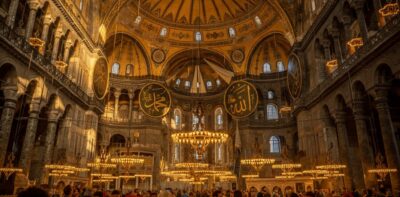 ★ 4.3Hagia Sophia Skip-the-Line Ticket and Audio GuideFrom $352,246 reviews
 ★ 4.4Hagia Sophia Skip-the-Line Ticket with Audio TourFrom $421,767 reviews
 ★ 3.9Bosphorus Cruise w/Audio Guide and Sunset OptionFrom $141,758 reviews
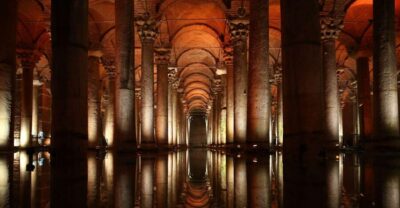 ★ 4.6Basilica Cistern Skip-the-Line Entry & Audio GuideFrom $711,477 reviews
Other ways to explore Istanbul