
Review · ISTANBUL DOLMABAHCE PALACE TOURS
Istanbul: Dolmabahce Palace & Harem Skip-the-Line Entry
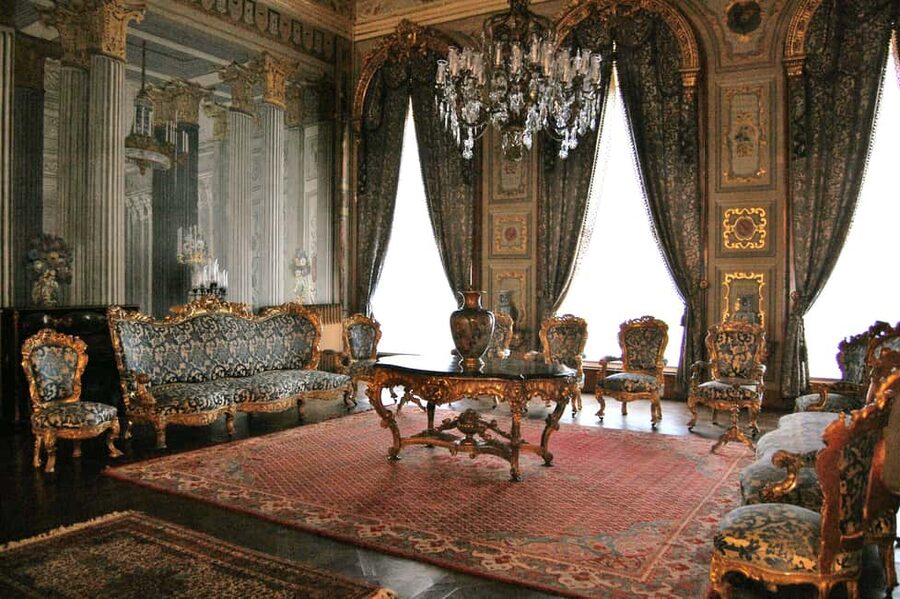
Dolmabahce moves faster when lines are gone. I really like the skip-the-line e-ticket setup paired with a 25-language audio guide, so you can keep your own rhythm instead of waiting for a group. Another big win for me is what you get to see: Dolmabahce is famous for its Baccarat and Bohemian chandeliers, plus the gold work that covers major parts of the interior.
If you choose the optional private guide, you might get a standout explainer like Ilke or Furkan, who have been praised for making the Ottoman story click. My only caution is that this is still a museum visit with a mandatory security check, and at least a couple of people ran into QR code or ticket desk issues that slowed things down a bit.
Key Takeaways Before You Go
- Skip-the-line ticket, but plan time for security checks and possible desk help.
- 25-language audio guide is included, but it is delivered by link, not handed to you on site.
- Dolmabahce’s chandeliers and gold ceilings are the real stars, and they reward slow looking.
- Harem access can vary depending on opening status on the day you arrive.
- Two hours is a workable window if you have a simple plan for what to see first.
Two Hours at Dolmabahce: A Pace You Can Actually Manage

Dolmabahce Palace and the Harem section are both big, but the tour window is short on purpose: about 2 hours. That time frame works best if you treat it like a smart highlight loop, not a deep scholarly mission. You’ll likely spend part of that time inside the palace’s main areas, then move on to the Harem where the layout can feel a bit like a maze of rooms.
The practical value here is freedom. With audio, you can slow down when the ceiling details are worth it, then speed up when a room is more “look, then go.” If you hate timed tours that herd you along, this format is usually a good fit.
One more reality check: you are in a real working museum with rules. You cannot bring that “I will study every inscription” energy and finish everything. Instead, you’ll get the best experience by picking a few themes and following them.
More Istanbul tours and experiences for the shortlist

Entering Smoothly: QR Codes, Security, and When Lines Still Appear
Your entry ticket comes as QR codes by separate email, and the audio guide link is also tied to your ticket access. The key thing I’d tell you is to have your phone charged and your email ready before you reach the front gate. When QR codes work, entry can feel efficient. When they do not, you can lose time while staff sort it out.
Also remember that everyone must go through a mandatory security check. Even with skip-the-line, this part is not something the supplier can magic away. If you’re visiting on a busy day or during peak hours, give yourself cushion.
A couple of experiences reported that the “skip-the-line” part was not always fully automatic at the entrance, with some people needing to stop at an information desk to get an actual ticket. That means the fastest scenario is when your QR code scans cleanly and the desk process is minimal. The slower scenario still might not ruin your day, but you should not plan a tight connection right after.
Dolmabahce’s Statement Rooms: Chandeliers and Gold That Feel Almost Unreal
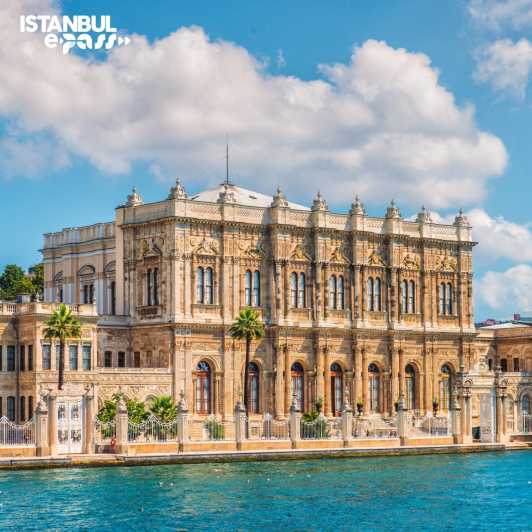
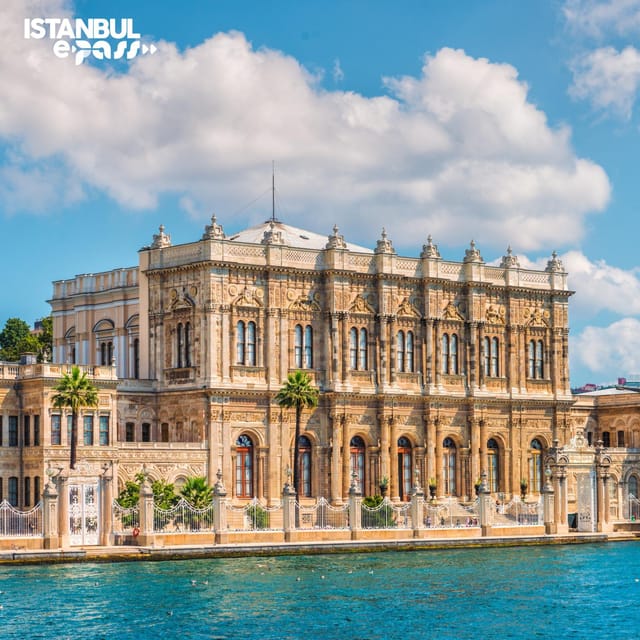
Dolmabahce is the largest palace of the Ottoman sultans, and it shows. Sultan Abdülmecid I ordered the palace’s construction, and it opened in 1856, so you are stepping into a later, more ornate chapter of Ottoman court life. The building itself is only half the story. The other half is what it holds inside.
This is where I’m especially happy with the audio-guided approach. The palace is packed with visual moments, and the sound track helps you “name what you’re seeing.” The most famous feature is the chandelier collection. Expect Baccarat pieces and Bohemian chandeliers, including the biggest Bohemian chandelier ever. They are not just pretty. They make the rooms feel like a set built for display, power, and ceremony.
Then there is the gold. The ornate ceilings and the overall decoration can be overwhelming if you wander without context. With audio, you can focus your attention on a couple of themes at a time, like ceiling work and room-to-room transitions, and you’ll understand why this palace looks different from others you might have seen in Istanbul.
Practical note: photos inside are not allowed. That changes how you experience the place. Instead of capturing everything, you’ll rely on memory, so it helps to go slowly through the rooms that matter most to you.
Atatürk’s Legacy in a Palace: Why This Museum Feels Like a Timeline
Here’s what makes Dolmabahce more than a beautiful building. It served as the last headquarters of the empire and stayed in use until 1922. After that shift, the story turns toward the modern Turkish era, including Mustafa Kemal Atatürk and the founder’s legacy.
The reason I think this matters to your experience is simple: Dolmabahce can help you connect two Istanbul narratives that often feel separate. One is Ottoman imperial life. The other is the early Republic era and the leaders who shaped the country’s direction. Even in a self-guided format, the audio guide is designed to connect these dots, so you’re not just staring at décor without knowing why it belongs in history.
When you walk from room to room, try to pay attention to the sense of time. You are not touring a “single moment.” You’re moving through a palace that reflects changing power and changing tastes over decades.
Dolmabahce vs Topkapi: What to Compare While You Walk
You’ll hear the comparison often, because Dolmabahce and Topkapi represent different ideas about rule, design, and daily court life. The audio guide helps you notice those differences, especially in architecture, style, and furniture.
This is valuable because it turns your visit into a brain exercise, in a good way. Instead of thinking Dolmabahce is only “fancier Topkapi,” you start asking different questions. How does the building’s look reflect its era? How does the interior feel compared with what you’ve seen at Topkapi? Where do you sense the shift from one kind of palace culture to another?
If you’re also planning Topkapi later, this helps you avoid confusion. You’ll have a clearer memory of what each palace is trying to do.




The Harem Section: What You Can Expect and When It Might Differ
After the main palace areas, you move into the Harem section. This is where the tour becomes more intimate in feeling, but it is also where planning needs flexibility. In at least one reported case, the Harem was not open during the visit, even though the ticket included that section.
So here is the honest approach: build your expectations around the palace first. Treat the Harem as a bonus if it is operating normally the day you go. If it is open, you’ll have a fuller sense of court life and household space. If it is closed, you’ll still get the core Dolmabahce experience, which is the major draw for most people.
There is also a timing factor. People have noted there’s a cafe right before the Harem entrance, which can be a relief if you need a cool drink. That small break can make the final stretch feel less rushed, especially if your entry took longer due to security or desk issues.
Audio Guide in 25 Languages: The Best Way to Use It
The audio is included and available in 25 languages. The list includes English, German, Russian, Persian, Arabic, French, Italian, Chinese, Dutch, Spanish, Hindi, Romanian, Ukrainian, Korean, Turkish, Bulgarian, Polish, Swedish, Japanese, Indonesian, Greek, Hungarian, Portuguese, and Urdu, plus Croatian.
Two things to understand so you get the most out of it:
- The audio guide cannot be obtained inside the palace. You need the link sent with your tickets.
- It is built to work like a self-paced companion, not like a live escort who pauses for your questions.
In practice, that means you should think of the audio guide as a “room decoder.” When you enter a major space, listen to the first few minutes to learn what the room is and why it matters. Then look around with that context. You’ll notice more, and you won’t waste time guessing.
Some visitors found the audio guide enjoyable, calling it a good support for exploring independently. If you prefer a quieter pace, this format is easier than trying to squeeze everything into a strictly guided path.
If You Want a Private Guide, Here’s the Real Constraint
This entry experience includes audio, not a live guide. A private guide is listed as an additional option. That matters because palace rules can affect what your guide is allowed to do inside.
Several experiences describe that guides were either not allowed to walk along inside the palace or were limited in how they could accompany their group. One practical takeaway: do not assume that a private guide means you can stay together through every room with continuous commentary. A guide may provide an intro, then you might still do most of the exploring on your own using audio.
If you want the best of both worlds, you can use a private guide for the big-picture framing, then lean on the audio for the in-room details where the palace experience becomes very specific.
Photo Rules and Practical Comfort: Small Things That Change Your Visit
The palace has a clear rule: photos inside are not allowed. That’s frustrating if you travel like a camera operator, but it can actually improve the experience. It nudges you to look at what you’re seeing rather than screen-recording your way through it.
Also, expect crowds to move like traffic. Even if lines are shorter at the entrance, people still converge in the same rooms. Your best strategy is to follow the audio’s order rather than random wandering. You’ll spend less time circling the same hallway while everyone else does the same.
And do not forget the setting. There is mention of a cafe right before the Harem area, which can help if you need a quick reset before the final portion.
Price and Value: Is 55 Dollars Worth It?
At about $55 per person for a roughly 2 hour experience, you’re paying for three specific things:
- Skip-the-line e-ticket for the Dolmabahce Palace and Harem area access
- A 25-language audio guide included in the experience
- The convenience of arriving with QR codes and a prepared audio plan, rather than improvising on the spot
When this is good value: if you dislike waiting and you like having context without being locked into a guide’s script. Audio is especially worth it here because the rooms are visual and detailed, and the right narration helps you understand why the palace looks the way it does.
When it may feel pricey: if you mainly want to wander with no commentary, you could technically do it more cheaply by buying basic tickets and using any self-guided materials you already have. Also, if your QR code doesn’t scan smoothly, or if the ticket desk process adds time, the “skip-the-line” benefit may feel less dramatic.
My balanced take: for most people, $55 is reasonable for an organized entry that prevents wasted time and gives you a high-quality audio narrative during a short visit.
Who This Experience Fits Best
This Dolmabahce Palace and Harem skip-the-line entry is a strong match if you:
- Want a self-paced visit with structure
- Prefer audio interpretation in your own time
- Plan to see Dolmabahce in a short window and want to keep momentum
It might be less ideal if you:
- Need a live guide to explain every room while you walk
- Expect the skip-the-line part to eliminate all waiting, including security and any ticket desk moments
- Are visiting on a day when the Harem area is unexpectedly closed
Should You Book This Skip-the-Line Entry?
I’d book it if you want Dolmabahce’s signature interiors without spending your Istanbul time in queues. The combination of e-ticket access and a 25-language audio guide is the core value, and the palace’s chandeliers and gold ceilings are exactly the kind of sights that reward a guided narrative.
If you’re flexible, arrive with your QR codes ready, and treat the Harem as a potential bonus depending on day-of access, this becomes a smooth, satisfying visit. If you hate anything tech-related, or you are visiting under tight scheduling pressure, then plan extra cushion because QR code issues or the mandatory security check can change how fast you move through the first steps.
FAQ
Is the Dolmabahce Palace Museum open on Mondays?
No. The palace is closed only on Mondays.
How long does the visit take?
The experience is listed as about 2 hours, depending on starting times and how you move through the palace areas.
What do I get with the ticket?
You get skip-the-line entry ticket access for the Dolmabahce Palace and Harem section, plus an audio guide available in 25 languages.
Do I need to use a paper ticket?
No paper tickets are mentioned as required. Entry is handled via QR codes sent by email.
Where do I find the QR codes for entry?
You receive the entry ticket QR codes via a separate e-mail from the supplier.
Can I get the audio guide at the palace?
No. The 25-language audio guide is provided via a link with your tickets and cannot be obtained at the palace.
Is a live guide included?
No. A live guide is not included in this option. A private tour guide is listed as optional and additional.
Are photos allowed inside the palace?
No. Photos inside the palace are not allowed.
What languages are available for the audio guide?
The audio guide language list includes English, German, Russian, Persian, Arabic, French, Italian, Chinese, Dutch, Spanish, Hindi, Romanian, Ukrainian, Korean, Turkish, Bulgarian, Polish, Swedish, Japanese, Indonesian, Greek, Hungarian, Portuguese, Urdu, and Croatian.
Is the Harem always open?
Not necessarily. One experience indicates the Harem was not open during their visit, so day-of access can vary.
More Skip the Line in Istanbul

More Tour Reviews in Istanbul


Not for you? Here's more nearby things to do in Istanbul we have reviewed









More Istanbul Dolmabahce Palace Tours to consider.
 ★ 4.6Dolmabahce Palace & Harem Fast-Track Entry with Audio GuideFrom $47966 reviews
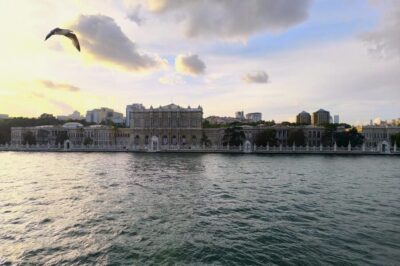 ★ 4.7Dolmabahce Palace and Harem Skip-the-Line TicketFrom $62751 reviews
 ★ 4.7Dolmabahce Palace & Harem Skip-the-Line EntryFrom $47488 reviews
 ★ 3.5Istanbul Boat Cruise and Dolmabahce Palace & Two ContinentsFrom $15680 reviews
 ★ 3.5Dolmabahce Palace Tour in IstanbulFrom $9052 reviews
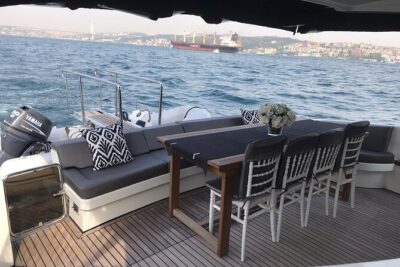 ★ 5.0Dolmabahçe Palace and Sunset Tour on Luxury YachtFrom $7849 reviews
 ★ 5.0Bosphorus Cruise with Dolmabahce Palace and Istiklal Street TourFrom $25036 reviews
 ★ 3.9Dolmabahçe Palace and Uskudar Guided TourFrom $35435 reviews
Other ways to explore Istanbul