
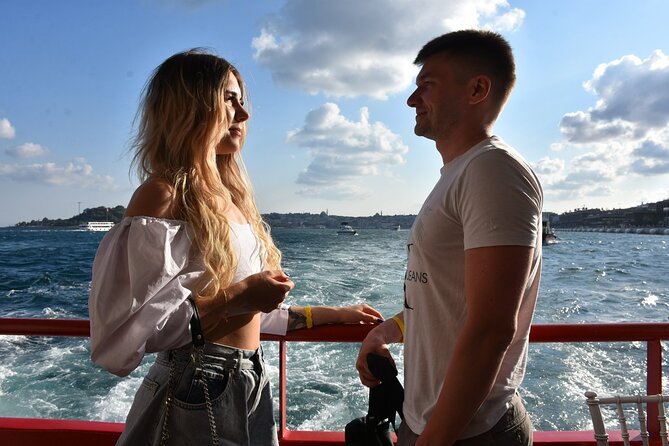
Review · ISTANBUL BOSPHORUS CRUISES
Bosphorus Sightseeing Cruise Tour with Audio Guide
A boat ride sounds simple, until you see Istanbul from the water. This Bosphorus cruise is built around views plus a GPS-based audio guide in 11 languages, so you can follow the landmarks as the shoreline glides by.
I especially like the nonstop scenery, from the old skyline near the Golden Horn to Ottoman palaces along the Bosphorus. I also like the practical perks for the price: unlimited Turkish tea and Nescafé, plus Wi-Fi and a restroom on board.
One thing to consider is the audio quality and crowding. The live speaker is limited (mostly safety and general info), and wind or where you sit can make it harder to hear. Bring your own headphones and plan to get a decent spot early.
Key Things to Know Before You Board
- Bring headphones: the boat relies mainly on a smartphone audio guide for the real narration
- Pick your seating: front/top spots tend to work better for views and sound
- You get more than scenery: the audio tour connects European and Asian Istanbul landmarks
- Tour pacing is easy: it is a relaxed cruise, not a step-off-and-explore day
- Expect a wide range of sights: palaces, forts, bridges, and the Maiden’s Tower on one route
- Value is the point: at about $12.07 for ~2 hours, it is a good first-pass overview
Why This Bosphorus Cruise Feels Like a Smart First Step
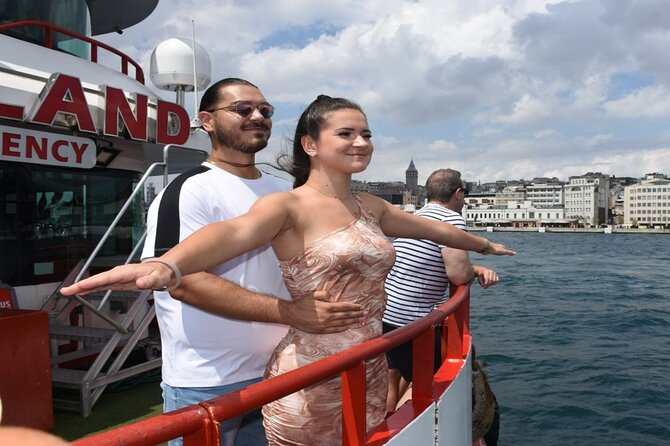
Istanbul from land can be overwhelming fast. Roads, crowds, and constant construction make it hard to decide what matters today. On the water, the city lines up like a map. You get a moving panoramic view, and the shoreline tells the story in the order it was built.
This cruise works because it is designed for “see it, understand it a bit” travelers. You are not stuck in a long museum line or waiting for timed entries. You are on the Bosphorus with time to breathe, take photos, and notice details you would miss from street level.
You also get a built-in way to learn without hiring a private guide. The audio tour runs on your smartphone and uses GPS, so the narration tracks what you are passing instead of forcing you to match a printed guidebook to a blur of buildings.
You can also read our reviews of more boat tours in Istanbul
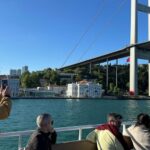
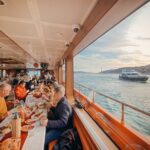
Price and Time: What $12.07 Buys You (And What It Does Not)
At about $12.07 per person and roughly 2 hours on board, this is priced like an efficient overview. That is the trade-off. You are paying for access to the Bosphorus and basic historical context, not for a full-on guided tour with a host mic narrating every landmark.
The cruise is also not a short “just a taste” spin. Reviews often describe it as enough time to settle in, grab tea, and get a good run of photo moments. At the same time, you should not expect extended stops or time onshore at major sights. This is a ride, with information timed to your route.
If your goal is to get your bearings fast, this is one of the best value ideas in Istanbul. If you want deep commentary and long Q&A, you will likely prefer a smaller guided format.
Smartphone Audio Guide: How to Use It Without Frustration
Here is the key detail: the cruise uses a multilingual audio guide on a smartphone as the main explanation. Live loudspeaker narration is limited to general information and safety.
That means your setup matters. You will need:
- Your own headphones
- A fully charged smartphone
- Access to the audio guide website (no app download)
- GPS working while you are on the boat deck
To get the best experience, I recommend doing one quick test on land before you board. Open the website, confirm audio plays, and adjust volume. Then once you are on the water, stay near the deck area where you can both see clearly and keep your phone’s signal stable.
A practical note about the audio itself: the guide is linked to where you are on the Bosphorus. If you feel the narration is out of sync, the issue is usually one of these basics, phone battery, headphones volume, or weak GPS while you are moving around.
The Golden Horn Start: Galata Bridge and Tower in One Glide
Many Bosphorus cruises treat Istanbul’s skyline like a single backdrop. This one starts you with landmark context right away.
First up is the Galata Bridge over the Golden Horn. It connects historic and modern districts and is known for a two-layer vibe: fishermen on top and seafood restaurants underneath. From the boat, that structure reads like a busy hinge in the city.
Then you pass the Galata Tower, the Genoese landmark built in 1348. It is about 67 meters tall and has long served as a watchtower. Even if you do not go inside, it is a satisfying “this is the old city’s line” marker as you head toward larger monuments.
This part of the trip is also where I think the cruise earns its keep for first-timers. You can look, orient yourself, and start predicting what you will see next, without standing in a ticket line.
Hagia Sophia and Topkapi, Seen From the Bosphorus Angle
As the route continues, the shoreline imagery gets dramatic. You get views connected to three of the biggest Istanbul names: Hagia Sophia, Topkapi Palace, and the surrounding monumental district.
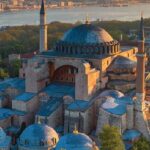
Hagia Sophia’s story is the reason it keeps appearing in Istanbul tours. Built as a Byzantine cathedral in 537, it later became an Ottoman mosque, and now it is a mosque again. From the water, the massive dome and the scale of the complex do a better job than any single photo.
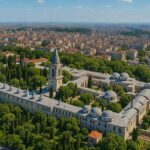
Next is Topkapi Palace, where Ottoman sultans lived and ruled for nearly 400 years. It sits high enough to read as an authority statement, and from the Bosphorus the palace feels both close and separate, like a world you can observe but not touch.
What I like about seeing these from the sea is perspective. From the street, you might focus on one doorway, one facade, one detail. From the water, you understand the layout, the geography, and why these buildings dominate the skyline.
You can also read our reviews of more guided tours in Istanbul

Dolmabahçe Palaces and the European Shore Power Line
Once the cruise reaches the European Bosphorus stretch, the architecture goes from “historic landmarks” to “imperial scenery.”
You will pass the Dolmabahçe Palace, which functioned as the Ottoman Empire’s main administrative center from 1856 to 1922. It was built in 1856 and mixes European and Ottoman design styles. The palace sits right along the water, so it looks like it is leaning toward the ships.
Nearby is the Dolmabahçe Mosque, completed in 1855. Its design blends traditional Ottoman mosque layout with Western influences, which makes it a good contrast point after viewing the palace.
Along the same stretch, you will also see Çırağan Palace, another Ottoman imperial palace on the Bosphorus from the 19th century. And if your timing lines up with the skyline’s best lighting, this is where photos start looking like postcards.
A couple of additional “watch for it” sights along the European shoreline include Beşiktaş Stadium (Vodafone Park) in Beşiktaş and Cihangir Mosque in the Cihangir neighborhood. The mosque is from the 16th century, linked to Sultan Süleiman the Magnificent’s reign, and it is known for a calm feel and Bosphorus views.
This European segment is where the cruise feels most worthwhile for people who want to understand the city as an empire at a crossroads, not just a list of famous buildings.
Ortaköy to Arnavutköy: Cafes, Views, and Neighborhood Contrast
Some of the most enjoyable parts of Istanbul are not museums. They are streets and waterfront corners where people actually hang out. That is why I like the cruise segment covering Ortaköy, Kuruçeşme, and Arnavutköy.
Ortaköy is known for cafes, galleries, and Bosphorus views. It is the kind of place where you would stroll for an hour if you had more time.
Kuruçeşme reads upscale and relaxed at the same time, with stylish dining along the water and a strong view line outward.
Then Arnavutköy adds a different mood. It is famous for narrow lanes, old wooden houses, and traditional Ottoman architecture. Even though it is close to the center, it can feel village-like once you slow down.
You also pass Bebek, another upscale Bosphorus area with parks and waterfront homes. Near Bebek is the Consulate General of the Arab Republic of Egypt, which is one of those “this is a world city” details that pops up in a moving view.
If you are the type who likes to plan a second stop later, this is the segment that gives you leads.
Bridges and Forts: The Bosphorus Route Becomes a Strategy Game
The Bosphorus is not just pretty water. It is a historic chokepoint, and the fortifications show that clearly.
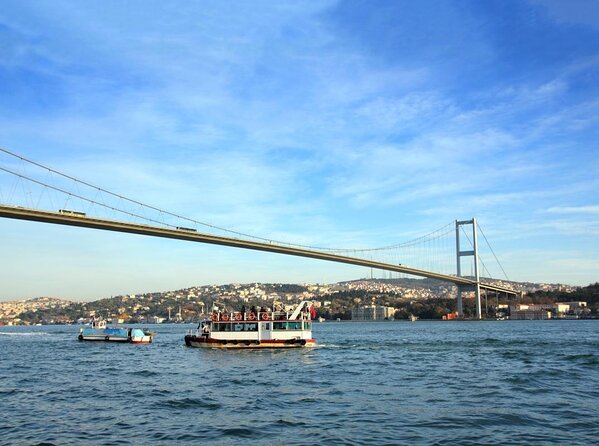
You will pass the Bosphorus Bridge, officially called the 15 July Martyrs Bridge, plus the Fatih Sultan Mehmet Bridge, also known as the Second Bosphorus Bridge. Those spans help you understand modern Istanbul’s scale and engineering, especially when compared to the shoreline density.
Then the cruise shifts into fortress territory with Rumeli Fortress (Rumeli Hisarı) on the European side. It is a historic castle overlooking the Bosphorus, and it gives the coastline a sharper, defensive silhouette.
On the Asian side, you see Anatolian Fortress (Anadoluhisarı). With both fortresses in view across the strait, the story becomes physical. It is easier to grasp why the Bosphorus mattered when you can literally compare the two sides.
When you travel this way, it is not only about names. It is about feeling the geography. You start to think in sightlines and distance, not just landmarks.
The Asian Shore Highlights: Küçüksu to Beylerbeyi and Maiden’s Tower
The Asian side is where the cruise delivers its big finishing act.
On the Asian shoreline you will see Küçüksu Pavilion, an Ottoman-era palace built in the 19th century as a summer retreat for sultans. It is the kind of building that looks charming from a distance because it signals leisure rather than power.
You will also pass Kandilli, described as historic and peaceful, plus Kuleli Military High School. The school is a historic military institution overlooking the Bosphorus.
Then comes Istanbul yalı, the name used for historic waterfront mansions along the Bosphorus. Even if you do not memorize every facade, the idea is important: these homes were built at the edge of political life, not tucked inland.
Next you reach Beylerbeyi Palace on the Asian side. It is Ottoman-era and again reinforces the theme of waterfront leadership.
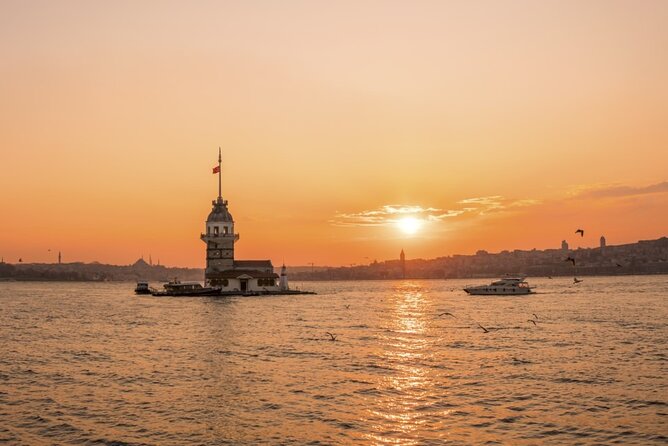
As you keep going, you will pass the neighborhoods Kuzguncuk and Üsküdar, then close with Maiden’s Tower (Kız Kulesi). It is a small tower on a tiny islet at the Bosphorus entrance. From the cruise, it often becomes the emotional photo moment, because it is isolated and instantly recognizable.
This is a great section for anyone who wants Istanbul’s two continents to feel connected. The Bosphorus is the connector, and the skyline keeps proving it.
Seating, Sound, and Photo Tips That Change Everything
This is the part that determines whether you have a smooth ride or a frustrating one.
First, try to sit where you can hear. One clear tip is to choose the front on the boat if you are relying on audio. Some seats at the far back can be harder to hear because of engine noise.
Second, go into this expecting a mix of sound sources. The primary narration is through your phone, but you might still catch parts through the onboard system. Wind and crowding can make the onboard audio less clear outdoors.
Third, be smart about crowd flow. The cruise can fill up quickly, especially on the upper deck. If you want outside deck viewing, get there early at the meeting point.
For photos, pick your side based on what you most want to capture. One practical tip from experience is to sit on the left side if you want the darker look of landmarks like Hagia Sophia when the light changes on the return. Even if you do not get perfect timing, you will still have good chances because the boat keeps moving.
Included Perks: Tea, Wi-Fi, and the Onboard Comfort Basics
I like that the cruise includes unlimited free Turkish tea and Nescafé. That makes it easy to settle in without doing a separate stop for a drink.
The boat also has Wi-Fi on board and a restroom. Wi-Fi reception may be limited as you move along the water, but it is there, so you can use it when signals allow.
If you are sensitive to comfort, consider this your warning label. Some toilet reports are not great, but there is still a restroom on board. Plan for the basics, not luxury.
Who This Bosphorus Cruise Suits Best
This tour fits you best if you want:
- A low-stress way to see Istanbul’s major waterfront landmarks in about 2 hours
- A budget-friendly overview that helps you plan the rest of your trip
- A ride with some context, delivered by a GPS smartphone audio guide in English plus other languages
- Time to relax with tea and take photos without museum fatigue
It may not fit you as well if you want nonstop, high-volume live narration from a guide on a mic. It is a cruise with audio support, and the quality depends on headphones, wind, and where you sit.
If you know you want one neighborhood in-depth, you will get more value pairing this with a land day later. Use the cruise to identify what you want to revisit.
Should You Book This Bosphorus Cruise?
Yes, I think you should book it if you want a first-pass connection between Europe and Asia with good value and enough sightseeing to get oriented. The audio guide format works especially well for people who like to learn at their own pace, landmark by landmark.
Skip it or consider a different style of tour if you hate smartphone-based audio, if you need a louder live host to follow along, or if you are strongly bothered by crowds. For many people, the boat is packed enough that comfort will depend on how early you arrive and how patient you are with shared space.
If you do book, do one thing that pays off immediately: bring headphones and aim for a better seating spot near the front and deck areas.
FAQ
How long is the Bosphorus sightseeing cruise?
The cruise runs for about 2 hours.
How much does it cost?
The price listed is $12.07 per person.
What language is the audio guide offered in?
The tour includes an audio tour guide in 11 languages, and English is offered.
Do I need to download an app for the audio guide?
No. The audio guide requires no app download. You access it through the phone’s browser at the audio guide website.
Do I need my own headphones?
Yes. To use the audio guide, you need your own headphones.
Is Wi-Fi available on board?
Yes, Wi-Fi is available on board, though signal strength can vary.
Is tea or coffee included?
Yes. Unlimited free Turkish tea and Nescafé are included.
Is there a restroom on board?
Yes, there is a restroom on board.
Where do I meet the tour?
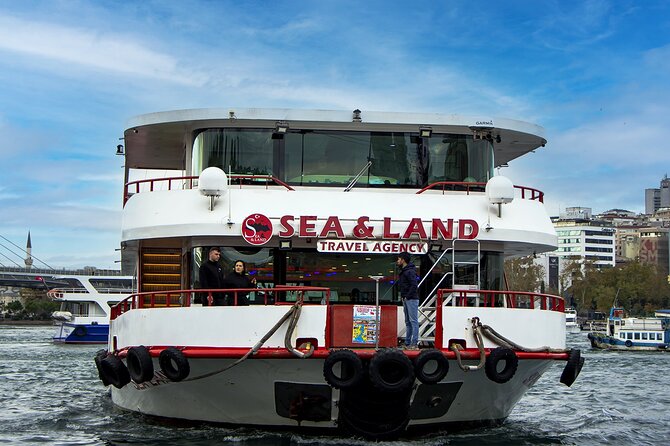
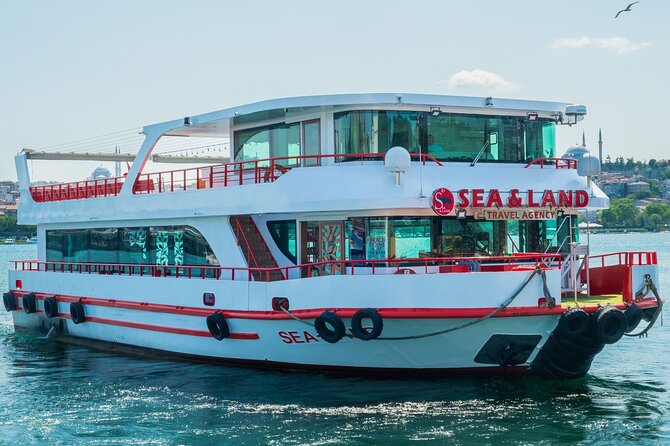
The meeting point is SeaLand Travel Agency (Eminönü) at Rüstem Paşa, Ragıp Gümüşpala Cd. No:8/2, 34116 Fatih/İstanbul, Türkiye.
What is the cancellation policy?
You can cancel for a full refund if you cancel up to 24 hours in advance. If you cancel less than 24 hours before the start time, the amount paid is not refunded.
What happens if weather is bad or the minimum number of travelers is not met?
The experience requires good weather. If canceled due to poor weather, you will be offered a different date or a full refund. If canceled because the minimum number of travelers is not met, you will be offered a different experience or a full refund.
More Boat Tours & Cruises in Istanbul

More Tours in Istanbul

More Tour Reviews in Istanbul
Not for you? Here's more nearby things to do in Istanbul we have reviewed

More Istanbul Bosphorus Cruises to consider.
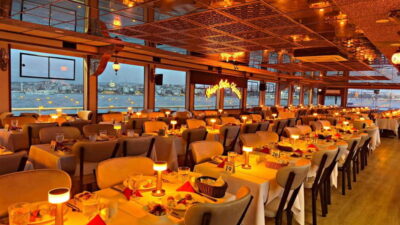 ★ 4.8Bosphorus Dinner Cruise & Show with Private TableFrom $3444,561 reviews
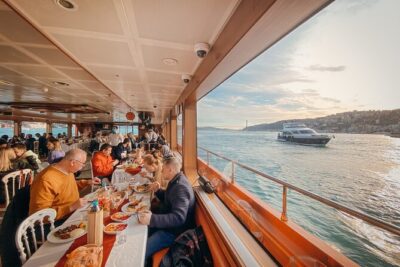 ★ 4.8Bosphorus Dinner Cruise with Turkish Night ShowFrom $3410,127 reviews
 ★ 5.0Perfume Making Workshop with Bosphorus ViewFrom $282,985 reviews
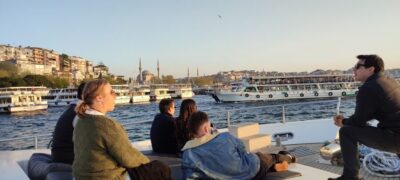 ★ 4.9Bosphorus Sunset Cruise on Yacht with Live GuideFrom $192,845 reviews
 ★ 4.8Bosphorus Sunset Cruise with Drinks & SnackFrom $82,716 reviews
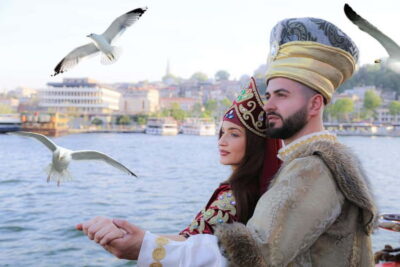 ★ 4.6Bosphorus Sightseeing Cruise Tour with Audio GuideFrom $82,694 reviews
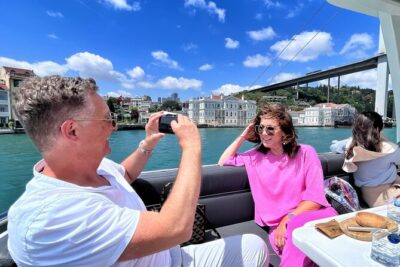 ★ 5.0Bosphorus Yacht Cruise Experience: Visit the Asian SideFrom $602,251 reviews
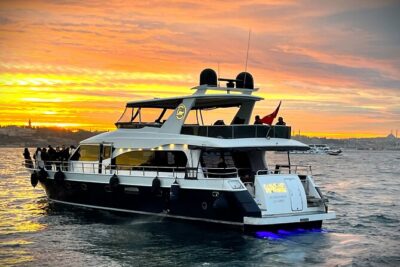 ★ 5.0Bosphorus Sunset Yacht Experience: Istanbul’s BestFrom $482,181 reviews
Other ways to explore Istanbul