
Review · CAPPADOCIA TRIPS FROM ISTANBUL
Cappadocia, Antalya, Pamukkale and Ephesus 6-Day Tour
Five icons in six days, and it works. This trip strings together UNESCO scenery, Mediterranean downtime, mineral-white terraces, and major Greco-Roman ruins, all with a tight plan and clear handoffs. I like how the pacing keeps moving without turning each stop into a dash-for-the-exit.
What I really like most is the combination of Istanbul pickup plus domestic flights and included lodging. It’s designed so you spend your limited vacation time seeing places, not negotiating transport. The other big win is the structure: breakfast and lunch are included for five days, which helps you budget and keeps hunger from hijacking the schedule.
One thing to consider: entrance fees are not included, and several days include paid sites. If you hate surprise add-ons, you will want to estimate site costs early and carry some extra cash.
Why this itinerary feels efficient (and what to watch for)
- Istanbul to multiple regions without long road marathons: Domestic flights are included, which saves time.
- Cappadocia beyond the main viewpoints: You get valleys, a cave museum stop, and a look underground.
- Antalya mixes old town and waterfalls: You’re not just seeing one beach scene.
- Pamukkale is treated as a full day, not a quick photo stop: Travertines plus ancient remains.
- Ephesus gets the big highlights in one downhill walk: Magnesia Gate to major monuments with a guide’s route.
- Small group size (max 15): Easier to hear the guide and keep the flow.
Istanbul Pickup and Included Flights, So Your Days Start Easy
This tour begins with pickup from central Istanbul hotels, ports, and airports, which matters more than it sounds. Istanbul traffic can be chaotic, and starting on the right side of the day makes the rest of the schedule feel sane.
The other logistics advantage is that accommodation and domestic flights are included. Even if you are the type who enjoys trains and buses, six days across four major areas adds up fast. Built-in flights reduce the odds you’ll lose hours to delays or complicated connections.
You also get mobile tickets and a plan that keeps you in an organized rhythm. That’s especially helpful for a route that includes early walking portions at ruins and layered sightseeing days in Cappadocia and Ephesus.
Price and value: what $1,259 really means
At $1,259 per person, you are paying for the work of stitching together multiple regions: transfers, lodging, and domestic flights. Where you may feel the cost more is on the front end of budgeting because museum and site entrance fees are not included.
So I see the value like this:
- If you’re the kind of traveler who hates planning day-to-day transport and ticket queues, the bundled structure is the point.
- If you love doing things on your own and picking exact timing at each site, you might find cheaper routes. But you’ll trade that flexibility for added planning.
One more detail: it’s commonly booked about 43 days in advance. That timing can help if you want to lock in your dates without waiting too long.
More Istanbul tours and experiences for the shortlist

Day 1 Cappadocia: Fairy Chimneys, Goreme Caves, and Avanos Pottery
Day 1 is a classic Cappadocia introduction, but it hits several layers instead of one single “wow” viewpoint.
Fairy Chimneys and Devrent Valley views
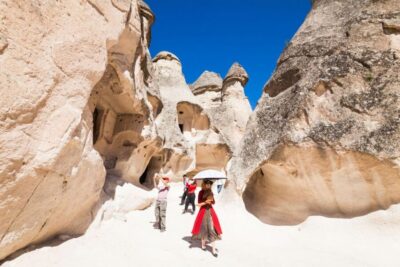
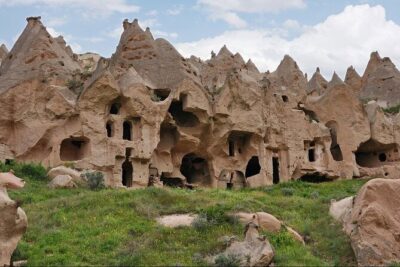
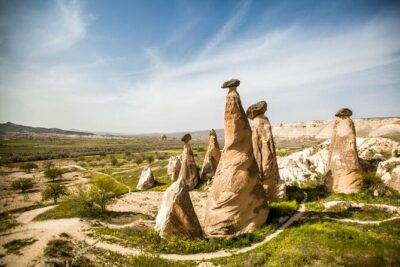
You start with Cappadocia in general, then move into Devrent Valley, which is known for unique Fairy Chimneys. It’s a good first hit because the formations can look like different shapes depending on the angle. It also helps you get your visual language for later stops.
Then you go to Fairy Chimneys itself, with an explicit focus on mushroom-shaped pinnacles. This is the area that makes Cappadocia famous, and it’s worth slowing down for a few minutes to compare the shapes rather than just taking one photo.
Goreme Open-Air Museum, cave churches, and early Christianity
Next is the Goreme Open-Air Museum, described as a cave city created by early Christians in the 11th century to protect faith and daily life. You’ll see historic cave churches, and this stop changes the mood from “science-fiction rocks” to “people lived here.”
A practical tip: cave churches and museum settings often mean uneven steps and indoor dim light. Wear something you can move in easily, and don’t count on every surface being smooth.
Avanos pottery workshop, a more hands-on Cappadocia moment
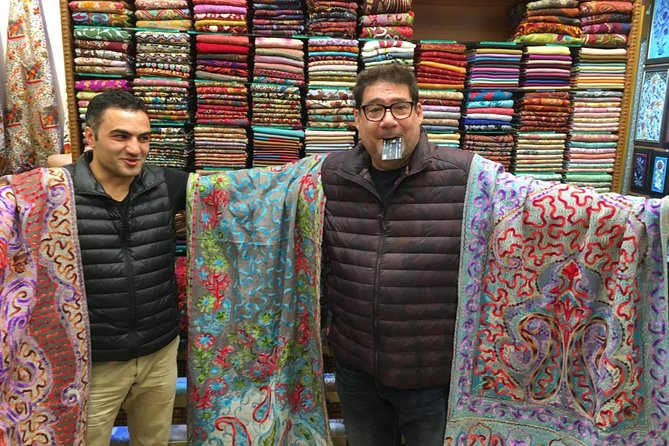
To balance the rock scenery, you finish with an Avanos pottery workshop. You get Turkish traditional pottery craft in Avanos Village, and it gives the day a human, tactile feel. Even if you only watch, it helps you understand that Cappadocia is not only about formations. It’s also about skills and local production.
Possible drawback for Day 1: you’ll be on and off several viewpoints and sites. If you dislike walking between areas, pack a steady pace mentality and take breaks when you can.

Day 2 Cappadocia Valleys and the Underground City at Derinkuyu
Day 2 is when Cappadocia stops feeling like a highlight reel and becomes more of an adventure.
Red Valley and the best-known chimney clusters
You start with Red Valley, famous for scenery and a strong collection of fairy chimneys. This is the kind of valley where light matters. Early or late sun can change the tone of the rock colors, so if your timing feels a bit early or a bit late, don’t panic, just watch the shadows.
Cavusin and Pigeon Valley for different types of walking time
Then you visit Cavusin, described as having long valleys with distinctive formations and a mystic ambiance. It’s a good contrast to the more famous, more immediate view areas.
After that, you go to Pigeon Valley, which is ideal for walking, trekking, and hiking. It’s also noted for sight and open land, plus the chance of organized nature sports. Even if you do not hike hard, this stop gives you space to stretch your legs and see how the valley system connects.
Derinkuyu Underground City: the big switch from above-ground to below
You end with Derinkuyu Yeraltı Sehri (underground city), described as wide, enchanting, and among the best-known examples of an underground settlement. It’s part of a UNESCO World Heritage Site, and it’s where the region’s history gets more tangible.
What to expect: you’ll be going down into enclosed spaces. That can be cool relief in warm weather, but it can also feel tight depending on the route and crowd level. If you get claustrophobic, consider bringing layers and taking your time.
Possible drawback for Day 2: the mix of valley walking and underground touring can stack fatigue. This is one of those days where “moderate physical fitness level” is not a slogan. It matters.
Day 3 Antalya: Quick Start in a City That Can Swing Between Seasons
Day 3 shifts gears to the Mediterranean with Antalya. The description notes that the city experiences three out of four seasons like spring, while another is summer, with the fun detail that skiing is possible in the morning and swimming in the afternoon.
You’re given about an hour here, so think of it as a positioning stop rather than a full sightseeing day. It helps you get your bearings before the deeper Antalya sights on Day 4.
Why this small stop helps: when a tour is moving across countries and climates, a short arrival day reduces the chance you start rushing. You get acclimated to the rhythm of the new region.
Day 4 in Antalya: Lower Duden Waterfalls, Kaleici, and Tünektepe Views
Day 4 gives you the Antalya combo that makes sense for most visitors: water, old town, and high views.
Lower Duden Waterfalls and the park-like atmosphere
You go to Lower Duden Waterfalls, where the area around the waterfall is shaded and cooling, described like a tropical oasis with cascading water and bird sounds. This is one of the stops that can feel like a natural reset button. Even if it’s busy at the entrance, the waterfall area gives a different soundscape and a break from stone-heavy sightseeing.
Kaleici (Old Antalya) plus Hadrian’s Gate and harbor time
Next is Kaleici, the old town. You’ll see Ottoman-style houses, views of the water, and key sights like Hadrian’s Gate. The plan also includes a short boat trip (about one hour) and leaving the castle area, which adds variety beyond walking streets.
Tünektepe Teleferik Tesis, the 618-meter perspective
Finally, you head to Tunektepe, a hill of 618 meters west of Antalya. The ride and the approach through pine forests are described as part of the experience, and once you reach the top you get observation terraces and food options, including a restaurant that rotates around its axis.
This stop is less about “history museum time” and more about orientation. You can look down at the city layout and connect the coastline with the neighborhoods you’ll pass later.
Possible drawback for Day 4: it’s more active than Day 3. If you’re sensitive to heights or crowds at viewpoint areas, plan calmer pacing and take snack breaks.
Day 5 Pamukkale and Hierapolis: Travertines, Thermal Pools, and Ancient Ruins
Day 5 is where the tour turns white and ancient.
Hierapolis and the cotton castle travertines
You start with Hierapolis and Pamukkale, with the travertines known as Pamukkale, the Cotton Castle. You’re also pointed toward ancient elements such as remains of the Roman city, plus sarcophaguses mentioned later in the day’s thermal pools stop.
There’s an interesting cultural note in the description: it mentions the Bible’s Luke-warm church called Laodecia, and it also includes an odd local claim about a homeland of a famous rooster protected by the state. Even if you treat those as fun facts rather than deep study, they add character to the stop.
Pamukkale Thermal Pools: the visual and the walk
Then you go to Pamukkale Thermal Pools. You’ll see waterfalls and travertines and also walk among sarcophaguses and Roman remains. The main reason this works on a tour is that it hits both sides of the Pamukkale appeal: the iconic mineral terraces and the archaeological context.
Practical note about thermal water expectations
The tour does not state anything about time spent in water or bathing rules, just that the thermal pools and visual travertines are part of the plan. So I’d go prepared for walking and observation first. If you want to actually soak, you might find you need to follow local access rules on site.
Possible drawback for Day 5: expect uneven ground around the ruins and terraces. Comfortable walking shoes matter more than cute sandals.
Day 6 Ephesus and Meryemana: From Magnesia Gate to Artemis
Day 6 is the big-ticket ancient history day.
Ephesus Ancient City: a guide-led downhill route
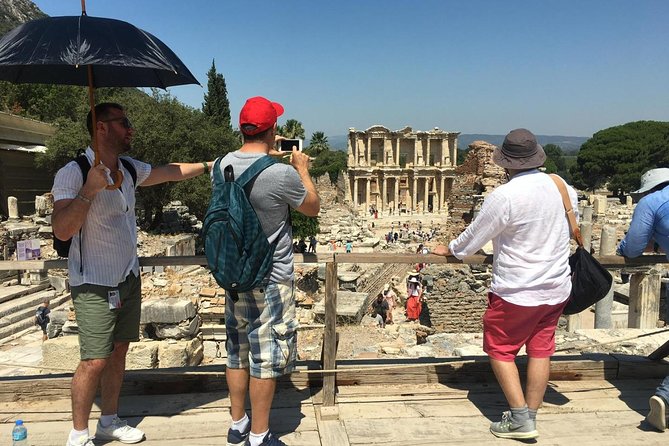
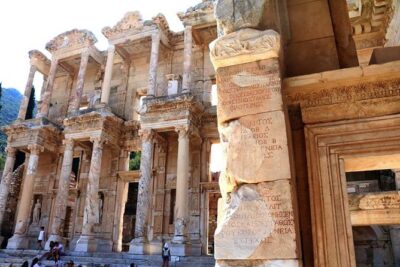
At Ephesus, the plan begins through Magnesia Gate with a slow, downhill walk guided through major structures: Odeum, Celsus Library, Temple of Hadrian, Fountain of Trajan, and the Great Theater.
This route is valuable because Ephesus is so spread out that an organized route helps you avoid the common problem of seeing a few random structures and leaving unsure what matters most. Here, the plan is built around the key stops.
Meryemana (Virgin Mary’s House) and St. John’s Basilica
Next is Meryemana (The Virgin Mary’s House). The description says this is where Mary spent her last day, and it also connects the area with the Basilica of St. John, believed to be where St. John spent last years and where he is buried on Ayosolug Hill’s southern slope.
This stop provides a spiritual counterpoint to the Roman civic space you saw at Ephesus. It’s not the same kind of sightseeing, and it gives the day a different pace.
Temple of Artemis: one of the seven wonders
Then you visit the Temple of Artemis, described as one of the seven wonders of the ancient world. Even with less structure standing today, the scale and significance are why this stop still matters on a highlights route.
The ride back: ending in Istanbul after Izmir Airport
After Ephesus stops, you go to Kusadasi earlier in Day 5 (short stop), and on Day 6 the plan ends after you transfer to Izmir Airport to fly back to Istanbul. The tour ends upon arrival.
Possible drawback for Day 6: it’s a lot of important sites in one day. If your feet get tired, this is where having good shoes and a steady pace helps.
What You Should Budget For If Entrance Fees Are Not Included
Because entrance fees are not included, the tour price isn’t the full travel bill. The itinerary contains multiple sites where you should expect paid entry, including Cappadocia sites like the cave museum areas and valleys, and major charges in Pamukkale and Ephesus.
So how do you handle it without guesswork?
- Treat the headline price as the cost of planning plus transport plus meals.
- Then set aside extra for museum and site tickets across several days.
If you want to avoid last-minute stress, you can do your homework early by listing the stops that typically charge entry. The tour descriptions explicitly label which ones have admission included and which do not, which is useful for estimating.
Who This Tour Fits Best, and Who Might Prefer Another Plan
This is best for you if:
- you want maximum highlights in a short trip window
- you like the idea of English availability and guided structure
- you prefer a small group up to 15 so the day feels manageable
- you care about having breakfast and lunch handled for five days
It may not be ideal if:
- you dislike paying extra on arrival for tickets and want every cost fully wrapped
- you struggle with walking on stone uneven ground and downhill ruin paths, especially on Day 6
Given the mention of moderate physical fitness, I’d treat this as doable for most people who can handle regular walking, but not for someone who wants a fully seated itinerary.
Should You Book This Cappadocia, Antalya, Pamukkale and Ephesus Tour?
I’d book it if you want a well-built highlights circuit with fewer transport headaches. The biggest reason is the blend of Istanbul pickup, included flights and lodging, and daily planning that keeps you moving among real “wow” sites: Cappadocia’s chimney world, Antalya’s old town and waterfalls, Pamukkale’s mineral terraces, and Ephesus’s essential monuments.
The main reason to pause is the budget reality: entrance fees are extra, and you’ll face several paid sites. If you can plan for that, the value looks strong for the amount packed into six days.
If you like your travel days organized, your photos coming with context, and your meals and transfers handled, this tour fits your style.
FAQ
Is pickup included for this tour?
Yes. Pickup is offered from central Istanbul hotels, ports, and airports.
How long is the tour?
The tour runs for 6 days (approximately).
Are meals included?
Yes. Lunch is included for 5 days, and breakfast is included for 5 days.
Is the tour in English?
Yes. The tour is available in English.
Are entrance fees included?
No. Entrance fees to museums and sites are not included.
What is the group size?
The tour has a maximum of 15 travelers.
More 6-Day Experiences in Istanbul

More Tours in Istanbul

More Tour Reviews in Istanbul

Not for you? Here's more nearby things to do in Istanbul we have reviewed



More Cappadocia Trips from Istanbul to consider.
 ★ 5.02 Day All Inclusive Cappadocia Tour from Istanbul with Optional Balloon FlightFrom $725429 reviews
 ★ 4.9From Istanbul: 2-Day All-Inclusive Cappadocia Guided TripFrom $709380 reviews
 ★ 4.72-Day Cappadocia Trip with Flights and Cave HotelFrom $328318 reviews
 ★ 5.02 Days Cappadocia from Istanbul with Cave Hotel+Optional BalloonFrom $330260 reviews
 ★ 4.5Cappadocia Dream: 2-Days Tour from Istanbul & Balloon Ride OptionFrom $590236 reviews
 ★ 4.6From Istanbul: Day Trip to Cappadocia with Flight & LunchFrom $188182 reviews
 ★ 5.04 Days Turkey Tour – Cappadocia, Ephesus and Pamukkale TourFrom $1,571138 reviews
 ★ 5.02 Days Cappadocia Tour From IstanbulFrom $725132 reviews
Other ways to explore Istanbul