
Review · 2-DAY EXPERIENCES
Gobekli Tepe & Mountain Nemrut Tour-2 Days 1 Night From Istanbul
Two ruins, one fast timeline of humanity. I love how this trip strings together Göbekli Tepe and Mount Nemrut in just two days, with expert guiding and the kind of timing that gets you to the key sights while the light is right. The itinerary also keeps you moving in a smart order, so you spend less energy figuring out logistics and more energy noticing details.
My second favorite part is how the smaller stops on Day 1 actually make the big sites easier to understand, especially the Commagene context around Adıyaman. One thing to consider: the driving is often winding and the schedule is full, so if you get motion sickness, plan for it before you leave and bring what helps.
Key highlights at a glance
- Flights and transfers built in, so you are not stuck with a long overland haul from Istanbul
- Nemrut at sunset with both East and West terraces for different photo angles
- Karakus Tumulusu details that explain the funerary monument and symbols like the eagle-topped column
- Urfa museums plus covered bazaar time, so you see more than just ruins
- Göbekli Tepe and Balikligol together, linking early ritual history with Urfa’s Abraham traditions
- Small group size (max 15) with English-speaking guidance
Flights, timing, and what a 2-day version really means
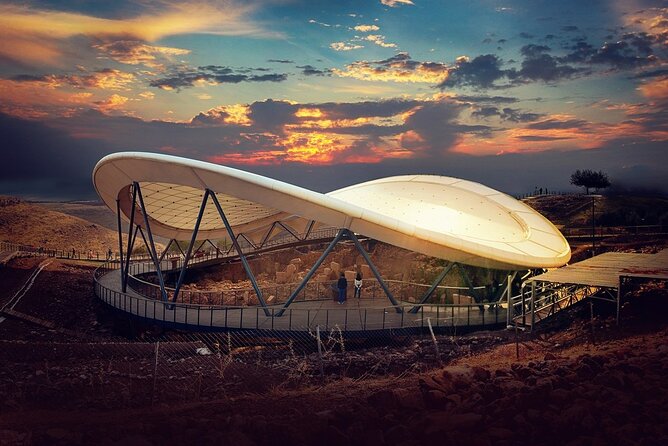
This is a two-day, one-night style tour that uses domestic roundtrip flights to move between Istanbul and eastern Turkey quickly. On paper it sounds efficient, and in practice it matters. You gain daylight for Nemrut and still reach Urfa for Göbekli Tepe without the kind of all-day bus slog that can wear you down.
The schedule starts early, with pickup beginning around 8:00 am and a transfer to the airport before your flight departs. Expect a full rhythm: airport, flight, car time, guided site time, lunch, then more sites, then another breakfast and another set of museums and religious landmarks. It is not a slow sightseeing cruise, but it is a focused way to cover a lot of history.
You also get a mobile ticket and English guidance, and the group stays small, capped at 15 travelers. Small group size is not about comfort fluff here. It usually means better flow at sites and fewer bottlenecks.
You can also read our reviews of more evening experiences in Istanbul
Day 1: Adıyaman to Nemrut, with Commagene stops that set the stage
Day 1 centers on the Adıyaman region and the Commagene kingdom, which helps you read Mount Nemrut like more than a pile of statues. You transfer from Istanbul toward the airport, then fly to Adıyaman. After landing, you meet up and head out for a local lunch before the day’s archaeology.
Your first set of stops includes Karakus Tumulusu, Cendere Bridge, and Arsemia Antik Kenti. These might feel like “warm-up” sights on a tight schedule, but I like them because they give you names, symbols, and context. When you finally reach Nemrut, the story clicks faster.
Time on Day 1 totals around a full afternoon and evening. The pace can feel brisk, but it is realistic for these distances and the fact that Nemrut is timed for sunset. The upside is that you get your best light, not just a random visit time.
Karakus Tumulusu: a funerary monument with symbols you will spot later
Karakus Tumulusu is the kind of stop that rewards attention. This site is a funerary monument linked to Queen Isias and multiple princesses of Commagene. The monument was built by Mithridates II of Commagene in the late 1st century BCE, and the story is tied to the word Karakuş, meaning black bird.
What makes it memorable is the visual design. The tumulus is surrounded by groups of three Doric columns, and the columns are topped with steles and reliefs featuring animals like a bull, lion, and eagle. There is also mention of an inscription pointing to a royal tomb holding three women.
You will likely spend about an hour here, and that is enough time to get the main symbols into your brain. If you enjoy architecture and iconography, this is a strong payoff early in the day.
Cendere Bridge and Arsemia: Rome meets Commagene, and you get the names right
Next up is Cendere Bridge (Cendere Köprüsü), a late Roman bridge near the ancient city of Arsameia (today Eskikale). It crosses the Cendere Çayı, a tributary in the wider Kâhta Creek system. Even if you just see it from a quick viewpoint, you are still looking at a road-era crossing with real geographic meaning.
A fun detail is that the bridge was described and pictured in 1883 by archaeologists Osman Hamdi Bey and Osgan Efendi. That helps you see it as more than a relic in the landscape. It is part of how modern archaeology first started noticing southeastern Turkey.
Then you move to Arsemia Antik Kenti, once the summer residence of the Commagene kings. The site has a major relief showing Heracles (or possibly Artagnes, a Persian deity Greeks associated with Heracles) shaking hands with King Mithridates of Commagene around 50 BCE. Nearby, you can find a major Greek inscription, described as among the greatest in Anatolia.
You will usually have about an hour here. That timing is important. It is not enough to read every line of an inscription, but it is enough to understand the major scene and why this region mattered.
Mount Nemrut: sunrise-sunset timing, huge statues, and the reality of damage
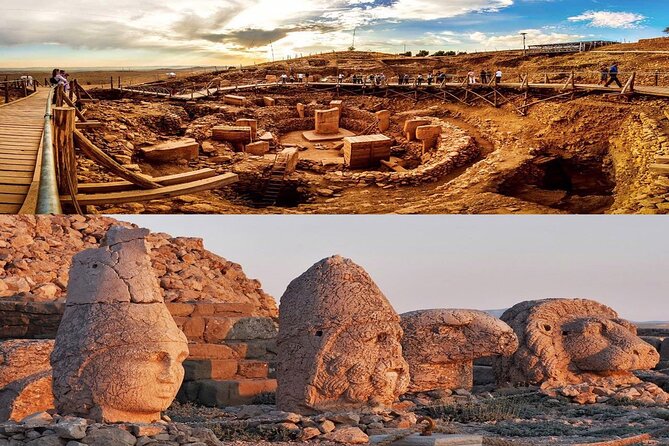
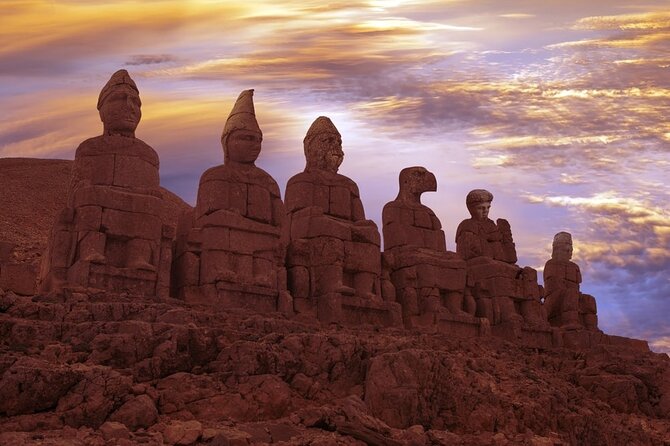
Mount Nemrut is the big draw, and the tour leans into it properly. You arrive at the summit area in time to see sunset, with access to both East and West terraces. That matters because you get different angles and different lighting on the statues and stone fragments.
Nemrut itself sits at roughly 2,134 meters elevation. At the top, you are looking at a tomb sanctuary associated with King Antiochus I Theos of Commagene. The statues are listed as 8 to 9 meters tall, including figures of Antiochus himself, two lions, two eagles, and divine figures connected to Greek, Armenian, and Iranian traditions.
One practical thing to keep in mind: the heads of many statues are now missing and scattered. That is described as happening at some stage, and one shared experience notes the area has been affected by an earthquake. In other words, what you see today is still powerful, but it is also clearly shaped by time and natural events.
The tour gives you time not just for the guided explanation, but also for photos and taking in the nearby valleys after the main viewing. If you care about photography, aim to stand where your guide suggests for the best light, then do your own exploring once the group is organized.
More Istanbul tours and experiences for the shortlist

Day 2 starts in Şanlıurfa: museums, mosaics, bazaar time, and holy sites
After breakfast, the focus shifts to Şanlıurfa, a city layered with history. You visit Urfa Archaeology Museum and Aleppo Bahce Mosaic Museum, and you will also learn how collections link back to areas like Harran and the Göbeklitepe region.
I like this museum pairing because it gives you “stuff to look at” while your brain is still primed for ancient sites. One of the highlights is the continuity in what you see: stone carvings, context for early ritual life, and artifacts connected to the broader region.
Then you explore religious and cultural sites connected to Abraham. You are taken to Aynzeliha, described as a lake with millions of domesticated fish. The tour also includes the cave where the prophet was born, and time to walk through the covered bazaar and the surrounding streets. There is also lunch included, with kebabs mentioned.
This portion is not just a history lesson. It is your chance to taste the city’s rhythm: the bazaar lanes, the food breaks, and the way pilgrims and locals move through the same spaces.
Göbekli Tepe: why the scale and age feel unreal
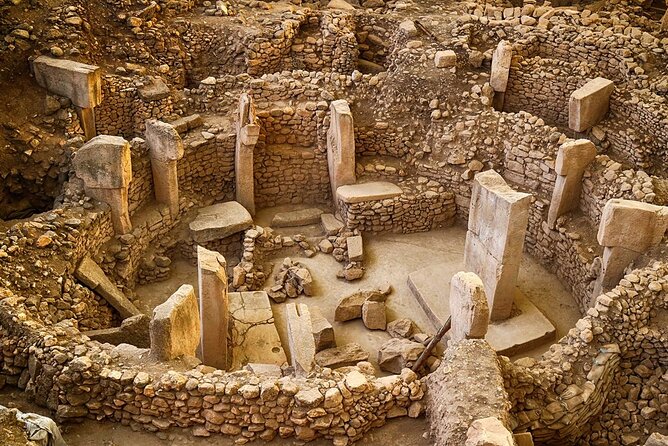
Göbekli Tepe is the stop that tends to steal the show. The tour frames it as one of the world’s most important archaeological sites, dating back as far as 12,000 years. The key point for your understanding is that it was built before writing or pottery, and it is believed to be the oldest ritual complex yet known.
You get around two hours here, which is a practical window. It is long enough to notice the animal carvings and the layout, and short enough that you do not lose the day to endless staring.
If you have ever read about early human life as simple “hunting and gathering,” Göbekli Tepe scrambles that comfort. This place suggests organized ritual behavior much earlier than people used to imagine. Even if you are not an archaeology nerd, your brain will feel the shift.
The biggest value of having a guide is not that they dump facts at you. It is that they help you interpret what you are seeing right there in front of the carvings and stones.
Balikligol: Abraham’s cave and the fish lake tradition
After Göbekli Tepe, the tour continues to Balıklıgöl. This stop includes Abraham’s cave and the Pool of Prophet Abraham, described as the place where Abraham was thrown into the fire by Nimrod.
Balıklıgöl is also where the fish-lake tradition comes to life. The tour already mentions Aynzeliha earlier, and Balıklıgöl builds on it with the specific Abraham landmarks. The result is a clear theme across the day: early ritual sites, then later religious memory tied to Urfa.
You have about 1.5 hours here, enough time to see the pool area, get a feel for why this place is still meaningful, and enjoy the shift from big archaeology into living tradition.
Price and value: what you are paying for and what you get
At $1,189.57 per person, this is not a cheap tour. But it is also not just a couple of guided site tickets. The value case here is the combination of domestic roundtrip flights, airport transfers, museum tickets, and included lunches.
When you price out flights, museum entries, and private transfers on your own, the total often jumps quickly in this region. This tour tries to solve that by packing the transport into the package, so you spend less time managing connections and more time being present at the sites.
It is also worth noting that the tour is capped at 15 travelers. For long days and tight schedules, that small number can make the difference between a group that moves well and one that slows everything down.
What you should weigh is whether the packed format fits you. If you prefer slow travel, you might find two days stressful. If you want a high-impact route with the most famous stops, it fits the brief.
Comfort and practical tips you should plan for
This is a moderate physical fitness trip. You should expect walking around outdoor sites and moving between viewpoints.
Two practical realities stand out from the information you get with this type of itinerary:
- Windy, curvy roads in the region can trigger motion sickness. Bring what works for you.
- Sunset at Nemrut means you dress for temperature shifts. Even in warm months, higher elevation can feel different than the town below.
Also, the tour uses a strong timing strategy around weather. It runs with the understanding that good weather is needed. If weather is poor, the tour can be canceled and you should be offered another date or a refund.
Finally, because pickup is offered from locations within the operator’s specified area, double-check that your hotel is in their coverage. If it is not, you might need to arrange an alternative meeting point.
Who this tour is ideal for, and who should skip it
This tour is a great match if you want:
- Big-name sites without the hassle of planning flights and transfers yourself
- A mix of archaeology and religious-cultural landmarks
- English guidance and a small group pace
- A version of the route that fits into a short time window
It may not be the best fit if you:
- Need lots of free time at each site
- Hate early starts and tight transitions
- Are very sensitive to road motion on curvy highways
If you are a first-time visitor to this part of Turkey, it is also a solid way to get your bearings fast across Urfa and the Commagene region.
Final take: should you book this Mount Nemrut and Göbekli Tepe combo?
If your priority is seeing Mount Nemrut at sunset and visiting Göbekli Tepe with solid guidance, I think this is a strong booking. The included transport is the backbone of the value, and the smaller Day 1 stops help you understand why Nemrut matters.
I would book it if you are comfortable with a packed two days and you plan ahead for motion sickness on winding roads. I would pause if you want a slower, more relaxed trip where you can linger endlessly at viewpoints and museums.
One more small note: several experiences highlight guides like Sercan and Kerem for making the story clear and for adding helpful local touches. That kind of guiding style makes a difference when you are covering a lot of sites in a short window.
FAQ
What is the duration of the tour?
The tour runs for 2 days (approx.) with an overnight in the region.
Does the price include flights?
Yes. It includes domestic roundtrip flights.
Are airport transfers included?
Yes. All airport transfers are included.
What meals are included?
The tour includes breakfast and lunch (2). Dinner is not included.
What sites are included in the ticket package?
Included admissions cover Mount Nemrut, Karakus Tumulus, Arsemia Ancient City, Sanliurfa Archaeology and Mosaic Museum, Göbekli Tepe (Potbelly Hill), and Balikligol.
Is pickup from Istanbul area hotels available?
Pickup is offered if you reserve from locations within the operator’s specified pickup area.
How big is the group?
The maximum group size is 15 travelers.
What languages is the tour offered in?
The tour is offered in English.
Is the tour physically demanding?
It says travelers should have a moderate physical fitness level.
What is the cancellation policy for a full refund?
You can cancel up to 3 days in advance for a full refund, and changes made less than 3 days before the start time are not accepted.
More Evening Experiences in Istanbul

More Tours in Istanbul

More Tour Reviews in Istanbul
Not for you? Here's more nearby things to do in Istanbul we have reviewed

More 2-Day Experiences to consider.
 ★ 4.11 or 2-Day Hop-On-Hop-Off Bus Tour TicketFrom $62863 reviews
 ★ 4.71 or 2-Day Private Guided Tour with Hotel TransferFrom $188438 reviews
 ★ 5.02 Day All Inclusive Cappadocia Tour from Istanbul with Optional Balloon FlightFrom $725429 reviews
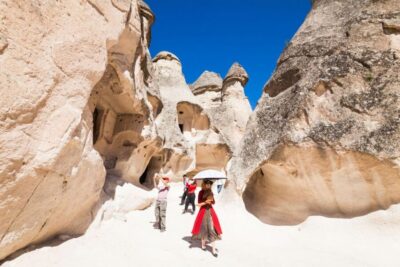 ★ 4.9From Istanbul: 2-Day All-Inclusive Cappadocia Guided TripFrom $709380 reviews
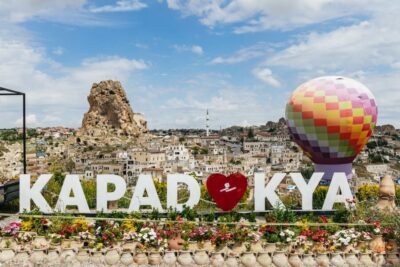 ★ 4.72-Day Cappadocia Trip with Flights and Cave HotelFrom $328318 reviews
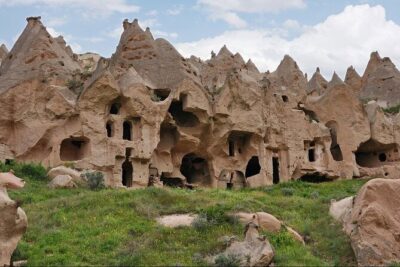 ★ 5.02 Days Cappadocia from Istanbul with Cave Hotel+Optional BalloonFrom $330260 reviews
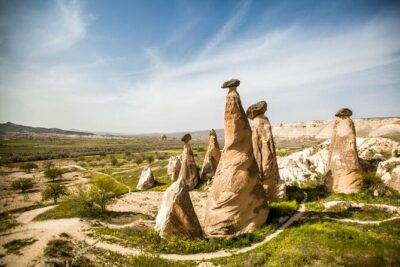 ★ 4.5Cappadocia Dream: 2-Days Tour from Istanbul & Balloon Ride OptionFrom $590236 reviews
 ★ 5.0Istanbul to Gallipoli, Canakkale and Troy. 2 Day Tour with HotelFrom $387144 reviews
Other ways to explore Istanbul