
Review · ISTANBUL BASILICA CISTERN TOURS
Istanbul: Cistern of Theodosius Entry Ticket and Audio Guide
A place like this makes Istanbul feel even older. You get fast entry to the 1,600-year-old Cistern of Theodosius plus a clear audio guide so you can move at your pace.
What I like most is how easy it is to get in, and how the narration helps you notice details you’d otherwise miss. One thing to keep in mind: QR or ticket pickup can sometimes be a bit glitchy, so arrive with your confirmation handy.
Quick reasons to book this Cistern entry
- Skip-the-line entry: You go straight in, then get a QR code at the entrance for quick access.
- Self-paced audio guide: A narrated walk-through keeps you oriented without a group schedule.
- Real engineering details: Columns, vaults, and thick plastered walls that were built to hold water.
- Byzantine and Ottoman layers: The cistern started under Emperor Theodosius II and was later expanded.
- A calmer alternative to bigger cisterns: It often feels less crowded, with time to actually look around.
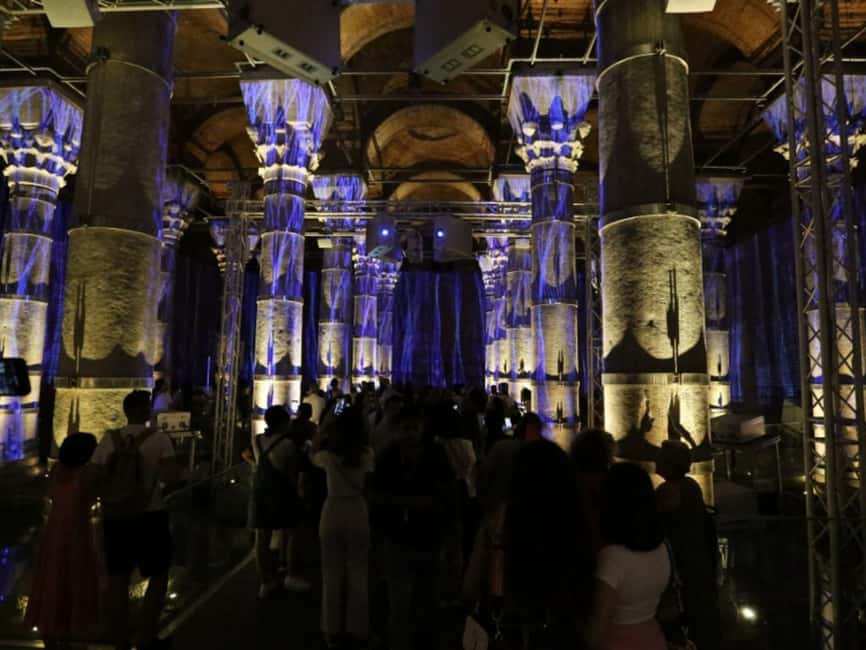
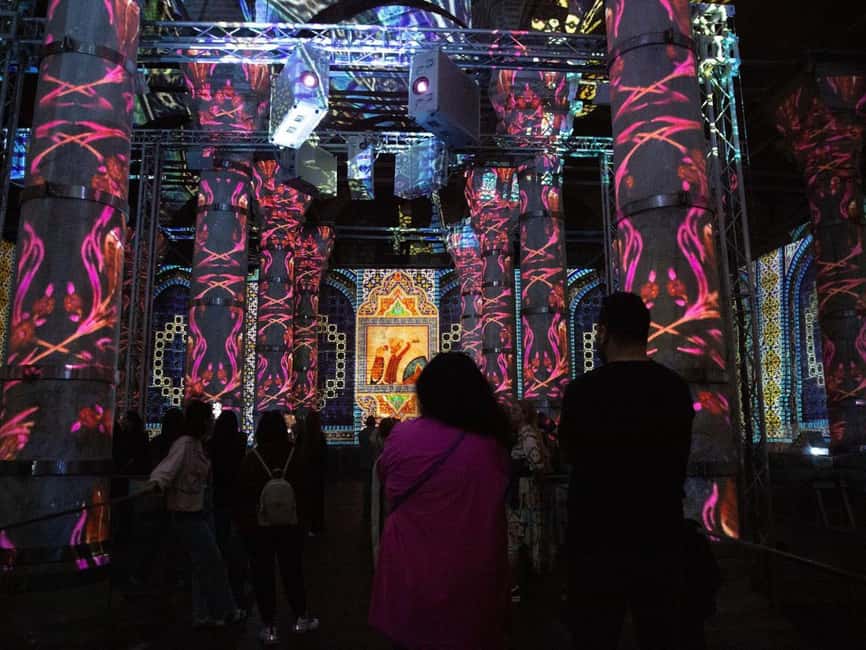
- On-site light moment: A light show on location has turned into a standout for many visitors.
Cistern of Theodosius basics: what you are walking into
The Cistern of Theodosius sits beneath Istanbul’s streets, and that contrast is part of the magic. One minute you are dealing with modern city noise, the next you are in a cool, echoing stone space built for water storage.
This is not a fancy underground museum set up for one specific route. It is an ancient structure, and your job is simple: look up, look around, and let the audio guide help you connect the shapes to the purpose. It is known in places as the Serefiye Cistern, so you might see both names on directions.
The site is tied to the reign of Emperor Theodosius II, around 408 to 450 AD, with later Ottoman expansion. That long timeline matters because it explains why the cistern feels both orderly and old in a very practical way, like it was designed to last.
More Istanbul tours and experiences for the shortlist



Skip the ticket line with a QR code at the entrance
This ticket format is built for one thing: getting you inside with less waiting. Instead of standing in a slow-moving queue, you use the entry setup to bypass the line and reach the cistern faster.
At the entrance, you will get your QR code, which is meant to speed up your access. That is especially helpful in Istanbul, where the time you spend in a line is usually time you will wish you had back later.
There is one caution worth taking seriously. At least a few people have had trouble receiving their ticket even after buying online in advance. So, I’d plan like this is a technology moment, not a guarantee: keep your booking confirmation ready on your phone and be prepared to show it if anything acts up.
Your self-paced audio guide: how the narration helps you look smart
You are not paying for a guided tour here. Instead, you get an audio guide that explains what you are seeing as you walk, so you can stop when you want and move on when you are ready.
I like this format because the cistern rewards slow attention. If you only have one pass through the space, you want the moments that make it special, like the way the columns line up, the overall ceiling form, and the reason the walls were treated to stop leaks. A narration track that stays clear and fact-based makes those details click.
The audio guide also connects the cistern to later stories in Istanbul, which helps the visit feel less like random architecture and more like part of the city’s continuous engineering. It can be especially useful when you do not have a guide standing next to you translating the site in real time.
What 1,600 years of water engineering looks like
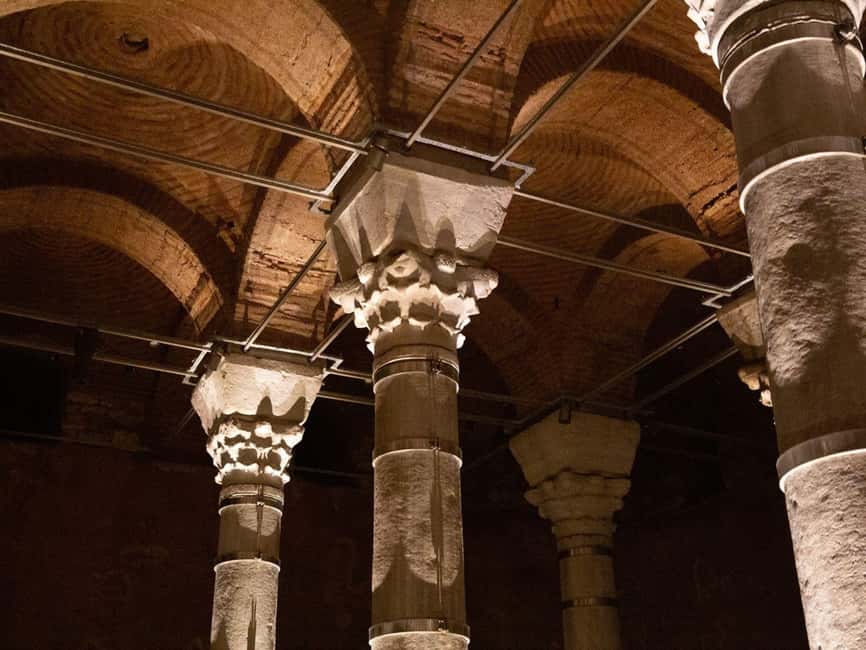
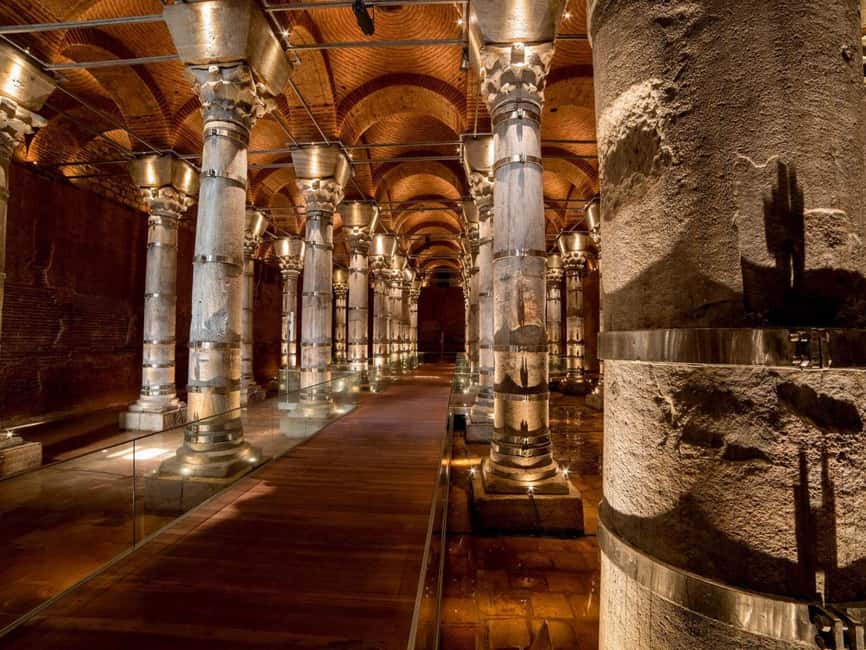
The cistern is about 24 by 40 meters and its ceiling reaches roughly 11 meters high. Those numbers are not just trivia. They help you understand the scale: this was built for functional storage, not for decoration.
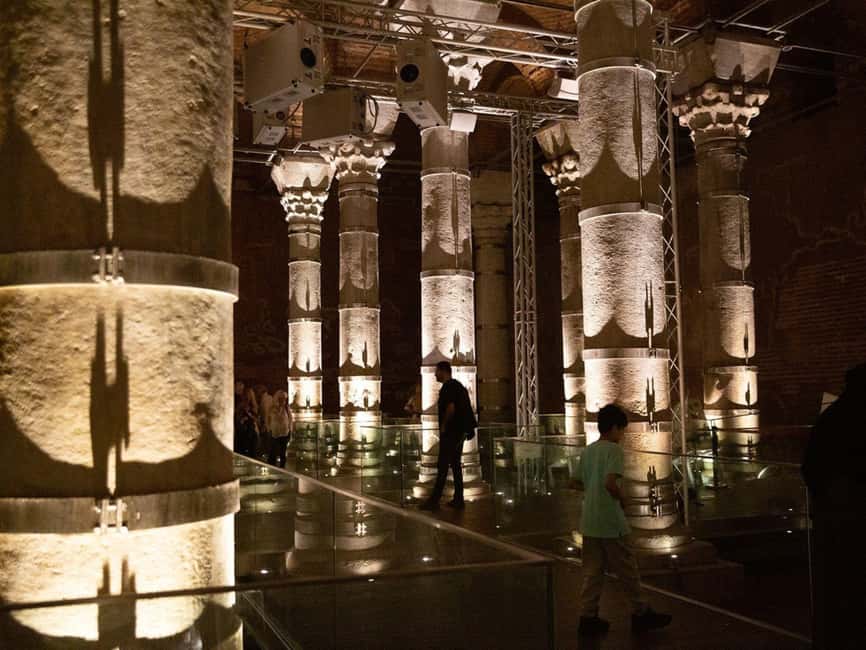
Inside, you will notice 32 columns made of Marmara Island marble. Marble sounds fancy, but the key point is that these columns support the structure and define the rhythm of the interior. Even if you cannot name every feature, you can still feel how deliberate the layout is.
The walls were coated with watertight plaster to prevent leaks. That is a very practical detail that changes how you see the stone. It tells you the cistern was designed to keep water inside for the long haul, even when conditions were not ideal.
You’ll also find features like thick walls and curved corners built to withstand pressure, and a ceiling system described as 45 sail vaults. Together, these design choices explain why the space can feel both sturdy and strangely graceful.
Theodosius II to Ottoman expansion: why the cistern has layers
This cistern was originally built during the reign of Emperor Theodosius II, with construction placed between 408 and 450 AD. Think of it as the Byzantine side of Istanbul’s underground world.
Later, Ottomans expanded it. That matters because it means you are not just looking at one era’s design logic. Even if you cannot spot every change with your eyes alone, the overall structure and continued use reflect how different rulers managed the city’s water needs.
Why was water storage such a big deal? The cistern was designed to store water for Istanbul, especially during shortage or siege. If you connect that purpose to the engineering details you see, the cistern becomes more than an attraction. It becomes evidence of how serious city planning was.
You can also read our reviews of more guided tours in Istanbul



The archaeology around the cistern you might not expect
The story does not stop at the water tank. The area around the cistern went through major changes over time. One notable piece in the surrounding narrative is the Arif Pasa Estate, built in the late 18th or early 19th century, which once housed municipal offices.
Then, in 2010, demolition of nearby buildings uncovered the cistern. Restoration followed, and an archaeological park was created around it. So when you visit now, you are not only stepping into the Byzantine structure itself. You are walking into a site that was reintroduced to Istanbul through modern archaeology.
The audio includes a segment that links the cistern’s story to later periods, including the founding of the Turkish Republic. Even if you are not a history deep-dive person, that kind of connection helps you understand why the cistern still gets attention long after the original water storage job was done.
How long to plan, and how to fit it with other Istanbul stops
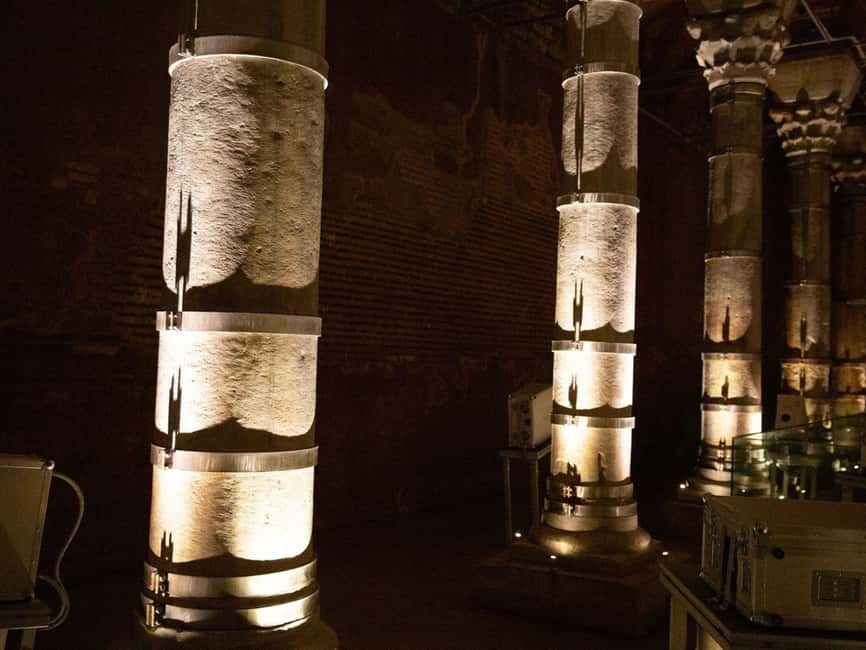
The activity is set for 1 day, and it is designed for you to explore at your own pace. That matters because cisterns are not like guided walking tours where you only get one tight window. You can take a moment, turn around, and come back to notice something you missed.
You can also plan this as part of a bigger plan. The format is described as flexible enough to explore all four sites connected to the broader pass. I read that as practical time management advice: you are not locked into a strict schedule inside the cistern, so you can stack other nearby attractions more realistically.
If your day includes a lot of walking, I suggest doing the cistern early or mid-morning when you still have energy for the guided-looking part of your visit, then use later hours for sunnier sights.
Crowds and comfort: why this cistern can feel calmer
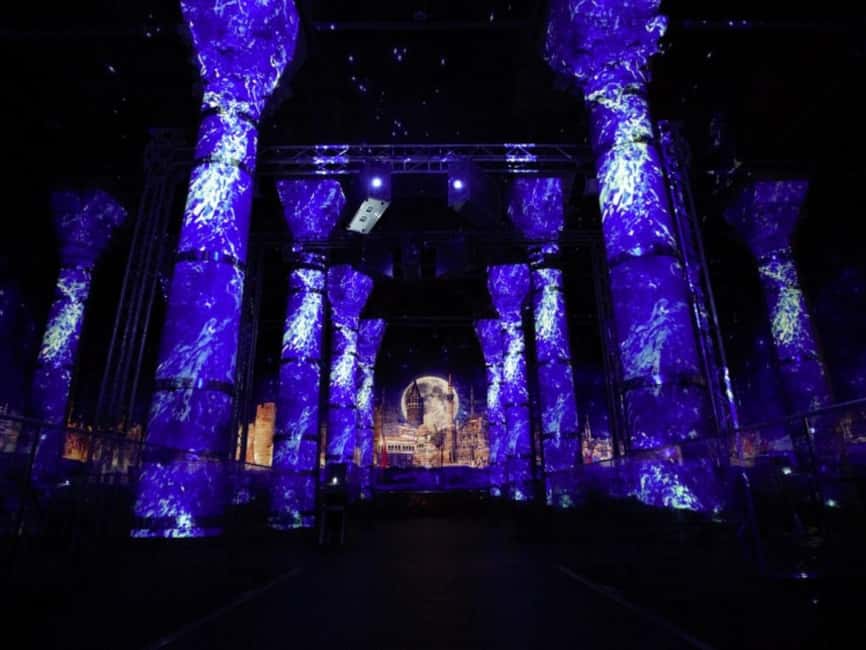
One big reason people choose this cistern over more famous underground sites is the vibe. The feedback around it points to a quieter experience, with visitors appreciating that they could enjoy the space without getting boxed in by a mass of people.
That difference matters because the cistern is made for looking. If you are constantly stopping and starting because of tour groups, the architecture is harder to appreciate. With a self-paced ticket and entry setup, you can often find a rhythm that lets you actually see.
Temperature is not listed in the details you provided, so I won’t promise anything. But underground spaces generally feel cool compared to street level, which makes it a nice break during warmer parts of the day.
The light show moment: a modern twist in an ancient room
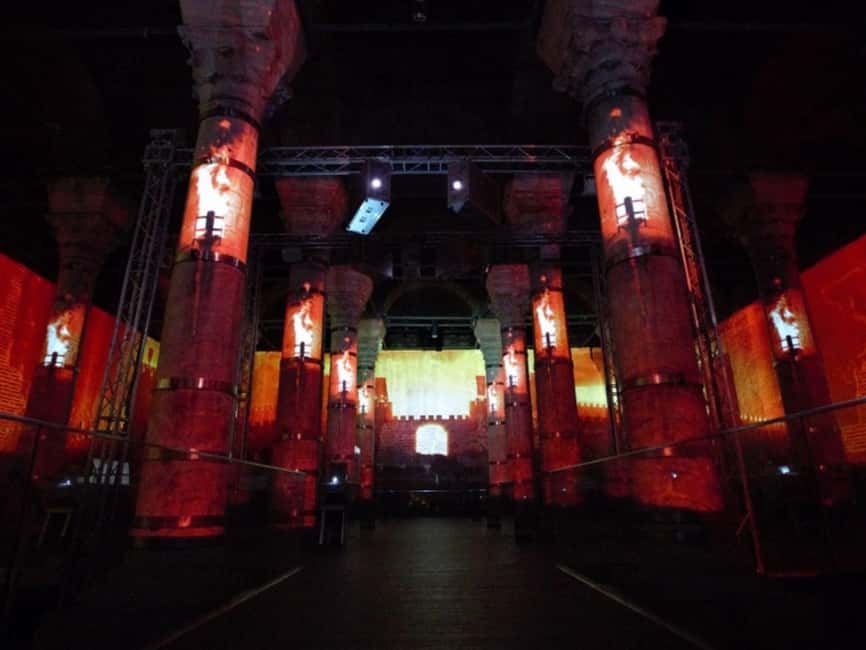
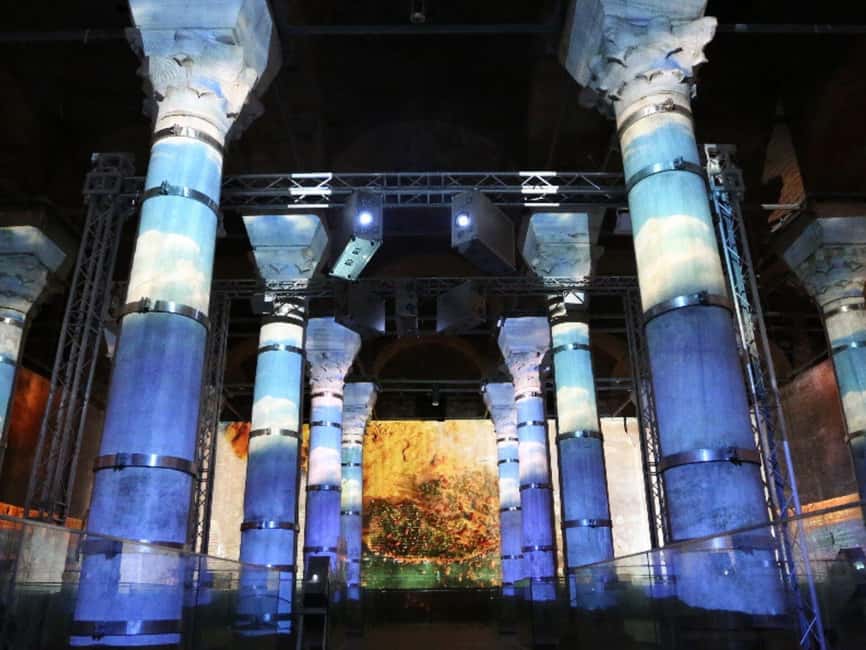
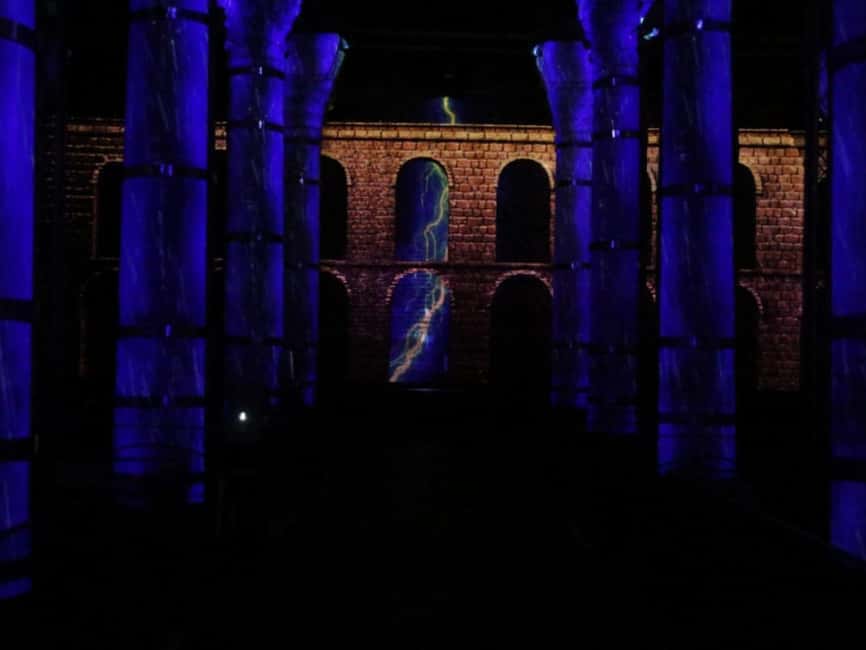
There is a light show element at the site, and it has earned strong praise for its impact. If you like when modern presentation helps you notice shapes and shadow lines, this is the kind of moment that can make a cistern feel cinematic without turning it into a theme park.
I’d treat it like a bonus rather than the whole reason you go. The real draw is the engineering and the columns and vaults. The light moment simply helps those features pop in your memory after you leave.
When the light show happens, try not to rush toward the exit. Give yourself a few minutes to re-orient. You will usually see details differently once lighting changes.
Price and value: is $30 for an entry plus audio guide worth it?
At $30 per person, you are paying for entry and an audio guide, not a guided tour. That pricing structure is about value through flexibility.
Here’s the math that matters. This ticket includes the basics you need to experience the cistern, and it gives you the support of narration so you do not need a specialist standing next to you. You also get the benefit of skip-the-line entry and a QR code workflow designed for faster access.
What you are not paying for is a live guide, and you are also told that a 3D show is not included. If you were hoping for a full multimedia presentation package, that is the one mismatch to watch.
Still, for many visitors, the ability to explore on your own and avoid waiting is exactly what makes the price feel fair. You are essentially buying time and context, not just access.
Who should book this cistern ticket?
This fits best if you like history that is easy to follow. You do not need a lecturer, because the audio guide is doing the teaching in a format that lets you pause, replay, and move when it suits you.
It also works well if you are traveling without a tour group or if you prefer flexible pacing. A cistern visit is one of those sights where the best experience usually comes from lingering, not from sprinting.
If you specifically want a live guide answering questions on the spot, this is not that. It is self-paced, and the tour structure relies on the audio rather than a person.
Should you book this Cistern of Theodosius entry ticket?
I think it is a smart booking if you want fast entry and a clear, self-guided explanation of what you see. The combination of skip-the-line access and an audio guide is exactly the kind of practical setup that turns a short stop into a real visit.
Book it if you like quieter sightseeing, appreciate architecture, and want a less crowded alternative to the most famous cisterns. I’d also book it if you enjoy when modern lighting effects highlight ancient spaces.
Skip it only if you were mainly hoping for a guided tour experience or if you specifically want a 3D show included. In this package, you are getting the cistern plus narration, and that is where the value is.
If you go, do yourself a favor and take your time. This is one of those Istanbul stops where looking slowly is the whole point.
FAQ
What is included with the Cistern of Theodosius ticket?
The ticket includes entry to the Cistern of Theodosius and an audio guide for the cistern.
Is this ticket a guided tour?
No. You explore at your own pace with the included audio guide.
Can I skip the ticket line?
Yes. The experience is described as skip-the-line entry.
How do I access the ticket on site?
You receive a QR code at the entrance for quick access.
How long is the experience valid for?
It is valid for 1 day.
Is the 3D show included?
No. The 3D show is listed as not included.
How long will I spend at the cistern?
The duration is listed as 1 day, and the visit is designed for you to explore at your own pace.
Where is the Cistern of Theodosius located?
It is in the Marmara Region of Turkey (Istanbul).
Is there free cancellation?
Yes. Free cancellation is available up to 24 hours in advance for a full refund.
More Guided Tours in Istanbul
More Tickets in Istanbul


More Tour Reviews in Istanbul


Not for you? Here's more nearby things to do in Istanbul we have reviewed










More Istanbul Basilica Cistern Tours to consider.
 ★ 4.6Basilica Cistern Fast-Track Entry and Audio GuideFrom $447,521 reviews
 ★ 4.6Basilica Cistern Skip-the-Line Entry TicketFrom $442,270 reviews
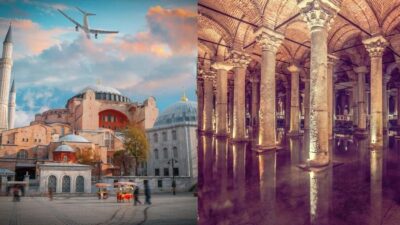 ★ 4.6Basilica Cistern & Hagia Sophia Combo TicketFrom $711,990 reviews
 ★ 4.7Blue Mosque, Hagia Sophia, & Basilica Cistern TourFrom $581,806 reviews
 ★ 4.3Blue Mosque, Basilica Cistern, & Hagia Sophia TourFrom $781,634 reviews
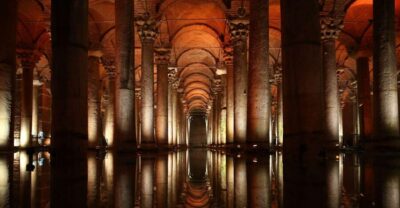 ★ 4.6Basilica Cistern Skip-the-Line Entry & Audio GuideFrom $711,477 reviews
 ★ 4.9Topkapi, Hagia Sophia and Basilica Cistern TourFrom $1171,430 reviews
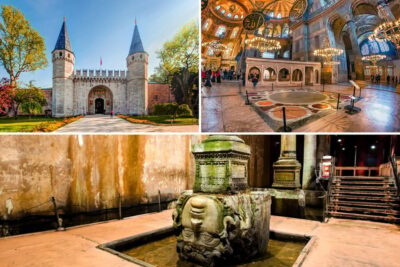 ★ 4.6Basilica Cistern &Topkapi Palace &Hagia Sophia Combo TicketsFrom $1571,306 reviews
Other ways to explore Istanbul