
Review · ISTANBUL HAGIA SOPHIA TOURS
Istanbul: Hagia Sophia & Basilica Cistern Tour with Tickets
Two Istanbul icons, one smooth guided run. You’ll see Hagia Sophia and the Basilica Cistern in a tight 2 to 2.5 hour format, with priority admission and an expert guide keeping the story straight as you move. It’s one of the smartest ways to hit the big stuff without burning half your day in lines or confusion.
I especially like the included skip-the-line tickets. You get them pre-arranged, plus headsets so the guide’s explanations land even in crowds. I also like that guides here are consistently praised for clear English or German and for pointing out details you’d probably miss on your own, like the Medusa heads and the layered building clues inside Hagia Sophia.
One consideration: this tour asks for a bit of physical effort and strict rules. The Basilica Cistern has 50 steps down and then up with no lift, and you’ll also go through airport-style security plus mosque dress requirements like a headscarf for women and shoulders and knees covered.
Key things to know before you go
- Priority admission tickets for both Hagia Sophia and the Basilica Cistern, so you spend less time stuck at ticket lines
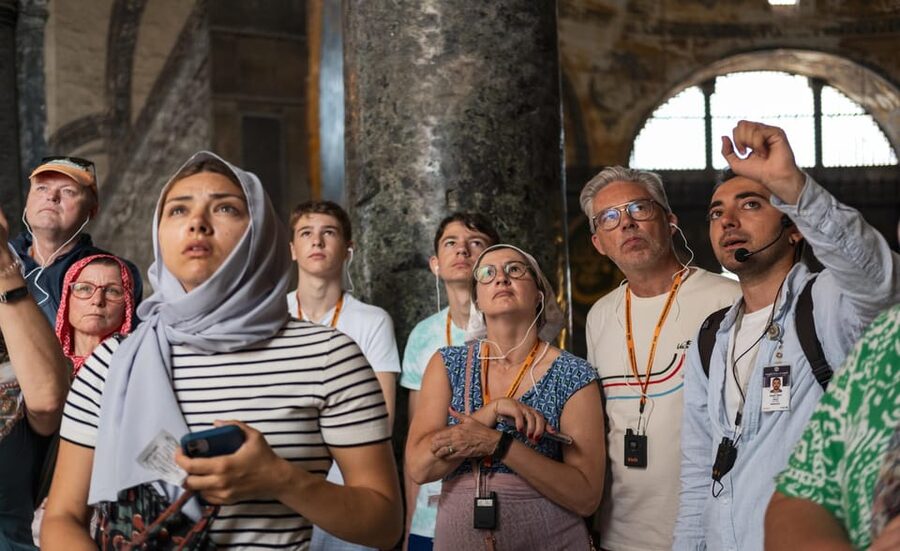
- Headsets to hear your guide well on indoor and crowded sections
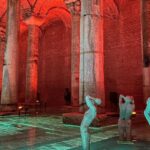
- Basilica Cistern highlights include the wooden walkways over the water and the famous upside-down Medusa heads
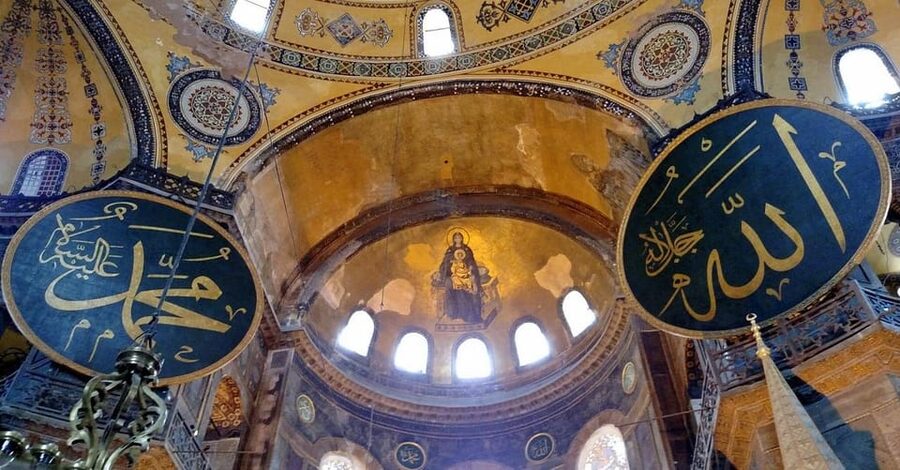
- Hagia Sophia focus on how it shifted from church to mosque, plus what to look for in mosaics, Roman columns, and the dome
- Dress and security rules (headscarf, no shorts, shoulders and knees covered, security screening)
- Backup plan if needed: if the Basilica Cistern is closed, the tour visits Şerefiye (cistern of Theodosius) or Binbirdirek (cistern of Philoxenos)
The smartest combo: Hagia Sophia plus the Subterranean Palace
If your time in Istanbul is short, this pairing makes a lot of sense. Hagia Sophia is the headline, the building that instantly tells you you’re in a city where empires left their fingerprints. The Basilica Cistern is the curveball, a cool, shadowy underground space with Roman engineering and Byzantine imagination.
What makes this tour feel efficient is the structure. You start with the Basilica Cistern first, then move to Hagia Sophia while the crowds are still manageable. The route also makes it easier to connect the themes. You go from the underground “palace” of water and pillars, to the soaring “why did they build it like that” moment of Hagia Sophia.
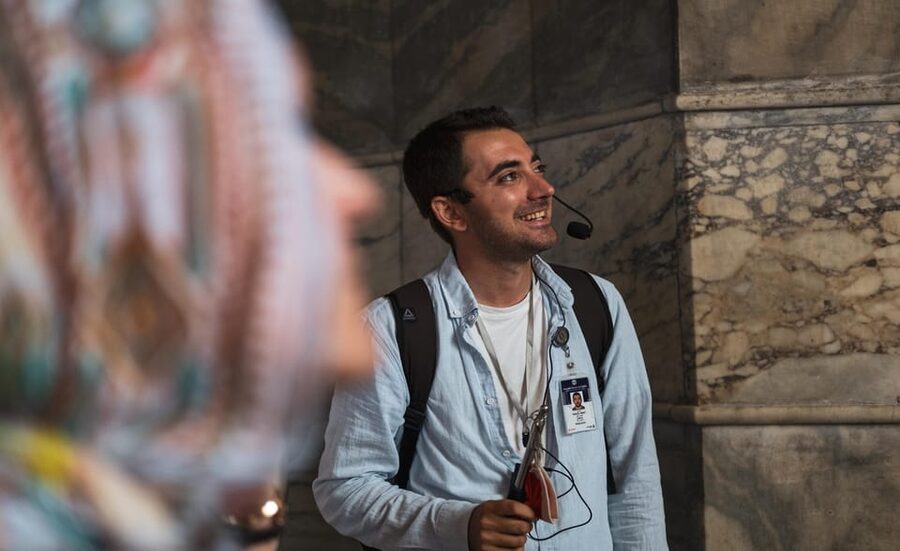
And because this is a small group with a licensed local guide, you get the kind of explanations that help you actually see what you’re looking at. Guides mentioned in recent accounts include people like Mert, Furkan, Emre, and Fahrud, and the consistent thread is that they explain clearly, keep things moving, and call out the best visual details at the right time.
More Istanbul tours and experiences for the shortlist


Meeting points and timing: how not to waste your day
You’ll meet your guide in the Sultanahmet area, with two starting options depending on what you booked. If you’re not on a cruise, the meeting spot is listed as Sultanahmet Clock Tower Square, Ersoy Bufe (meeting point can vary). If you are on a cruise, there’s a Galataport option, where your guide meets you and then you take the tram to the historic old town.
Here’s the practical part that matters: timed entry. Your tour includes pre-arranged tickets, so the organizer needs everyone in the right place, at the right time. You’re asked to arrive 15 minutes early because entry times are scheduled, and it’s not possible to join after the tour has commenced.
Also, plan for security. The tour notes airport-style security, which can get long in high season and during holidays. This is one reason the priority tickets are valuable. You may still wait for security, but you should lose less time at the attraction counters.
Basilica Cistern: wooden walkways, Medusa heads, and what the pillars mean
The Basilica Cistern, often called the Subterranean Palace, is a different kind of Istanbul thrill. It’s not about height. It’s about layers of sound, cool air, and the geometry of the space.
You start with a guided segment of about 45 minutes. You’ll learn the basic backstory and architecture, including how Byzantine builders shaped the cistern into something that feels almost ceremonial. Then comes the part that makes your photos look good, even when you’re just standing still: you’ll walk on wooden walkways over the water. It’s one of those setups where you can see more than you think you can, because you’re elevated above the surface and oriented toward the main features.
Look for the famous upside-down Medusa heads. They’re a recognizable detail, but the guide context is what turns them from a postcard moment into a story you can repeat. You’ll also spend time taking in the underground pillars and the way the cistern’s design channels light and creates a quiet, almost cinematic feel.
One important practical note: the cistern is reached via stairs. The tour information says there are 50 steps down and then up and there is no lift. If stairs are tough for you, this is the moment to be honest with your own limits. Even if you’re fine walking, the combination of stairs plus security plus indoor crowds can add up.
Hagia Sophia inside: church-to-mosque details you can actually spot
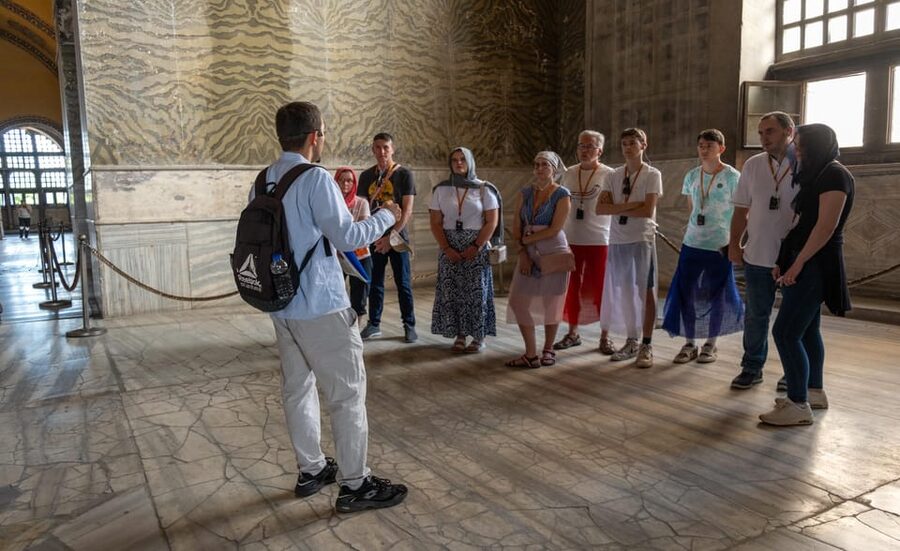
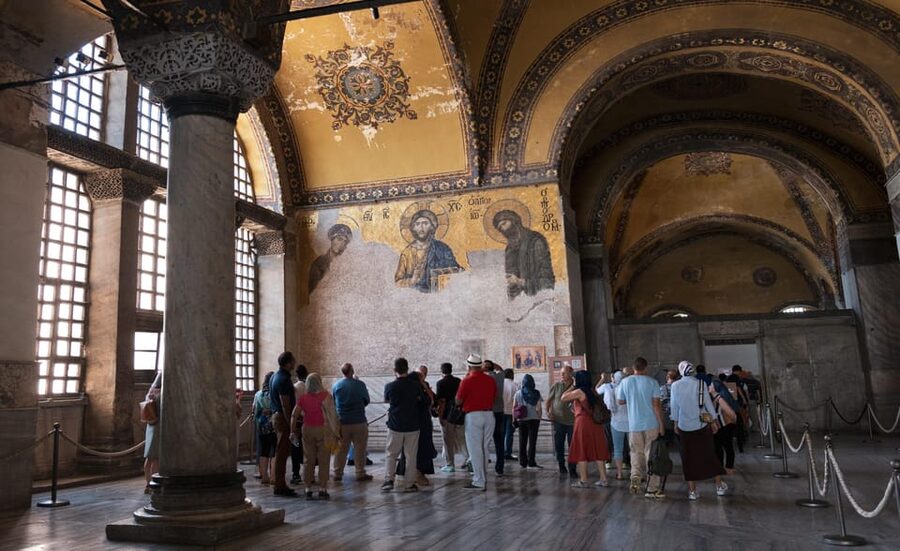
Then you head to Hagia Sophia with pre-reserved admission, about 1 hour of guided time inside. This building is famous for a reason, but the guide’s job is to make that fame legible in real life.
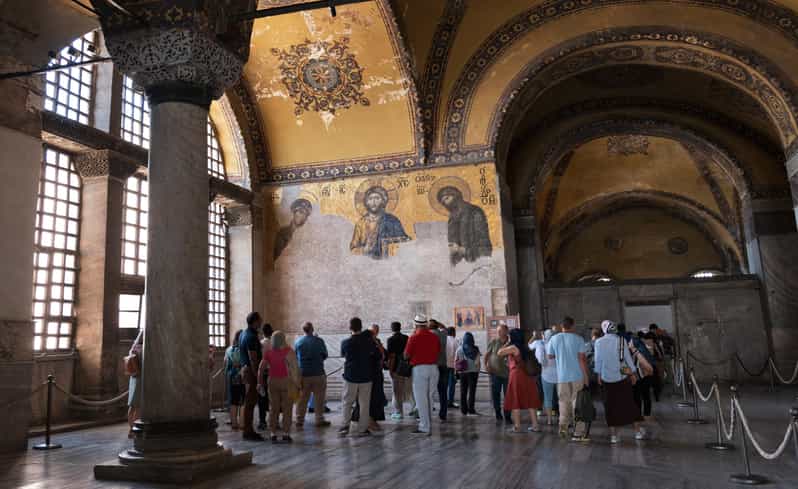
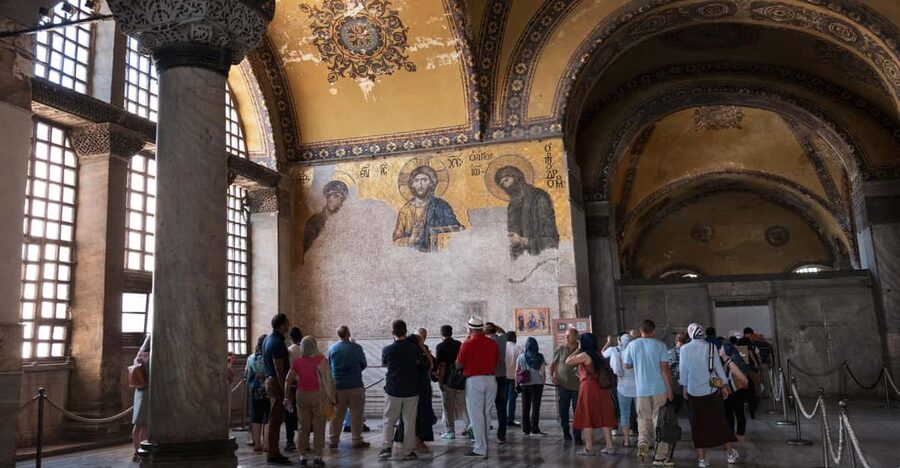
You’ll be shown how it functioned as a major Greek Orthodox site, then what changed after the Ottoman conquest of Constantinople, when it became a mosque. The key is that Hagia Sophia doesn’t erase its past. You can still sense the earlier church identity through the scale and some of the visual language.
When you’re inside, focus on a few categories the guide will likely bring up:
- The vast dome and how it creates that “floating” effect
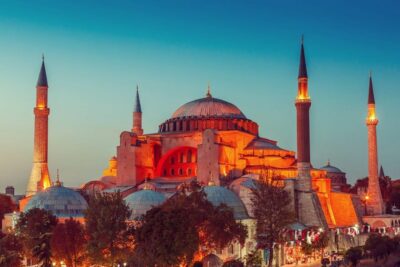
- Minarets, which signal the mosque era clearly from the outside, and frame how the space is read
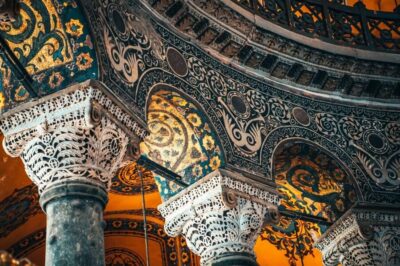
- Mosaics, paintings, and Roman columns, where the mix of elements becomes a clue to different eras
There are also details tied to the Ottoman period. For example, the tour description notes that İznik tiles were added over time, and the guide should help you understand where to look and why the choices mattered. You’ll also hear about the creation of the Virgin Mary mosaic and the meaning of where Ottomans chose to bury sultans in the courtyard.
Because Hagia Sophia is an active place of worship, you’ll need to respect the rules. Women should wear a headscarf, and both men and women should have clothing that covers shoulders and knees. The tour explicitly says no shorts, no short skirts, and no sleeveless shirts. If your outfit is off, you may need to fix it quickly.
Finally, security can be picky. One recent account mentions that the site can turn people away for inappropriate clothing. That’s another reason arriving with the right gear matters.
The Hippodrome and your last steps to Sultanahmet Square
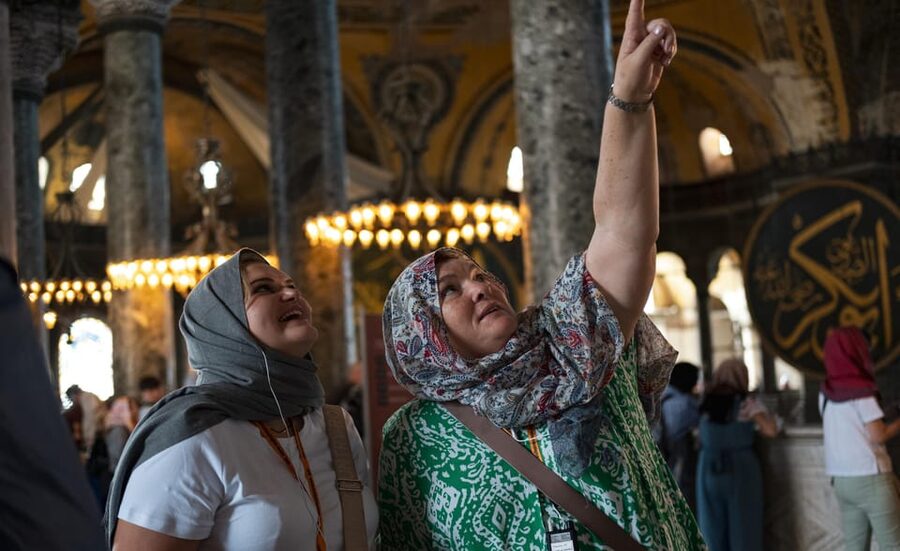
After Hagia Sophia, the tour finishes around Sultanahmet Square, with a short guided segment of about 15 minutes. You’ll also get a walk linked to the area’s Byzantine past, including the Byzantine Hippodrome.
This part is useful if you want more than a museum checklist. The Hippodrome area helps you understand why this neighborhood wasn’t just religious power. It was also everyday civic life, where the city gathered, watched, and argued through public spectacle. The tour mentions learning about obelisks and why the Hippodrome mattered for daily life.
If you’re the type who likes to connect landmarks into a bigger map in your head, that short walking time can make the whole visit feel more coherent. You end with enough context to handle the next stage yourself: wandering back through the streets of Sultanahmet with better instincts for what you’re seeing and why it’s there.

Price and value: what you actually get for $141
At $141 per person, this is not the cheapest way to do Istanbul’s top sights. But you are paying for three things that usually cost time and stress if you DIY it.
1) Tickets are included, and the tour promises priority admission to skip the longest lines at the ticket office. In Istanbul, time is often the true currency. When lines stack up, a “budget” plan gets expensive fast in frustration.
2) You get a real guide with headsets. Hagia Sophia and the Basilica Cistern are both easy to walk through, but hard to understand without help. A strong guide saves you from staring at random details and guessing.
3) You get a timed, small-group flow. This matters because both sites are popular and the tour stays compact, around 2 to 2.5 hours.
If you’re short on time, want an efficient path, and prefer not to deal with ticket logistics and crowds alone, this price starts to look reasonable. If you’re the kind of traveler who enjoys long unscripted hours and you’re happy to figure everything out on your own, then the value may feel less obvious.
When Hagia Sophia or the Cistern won’t cooperate
Big historic sites can have interruptions. This tour comes with a built-in heads-up for two situations.
- Hagia Sophia may be closed unannounced due to high-level state visits. That means the plan can shift depending on conditions.
- If the Basilica Cistern is closed, the tour says you visit Şerefiye (cistern of Theodosius) or Binbirdirek (cistern of Philoxenos) instead.
You should treat this as helpful contingency, not a guarantee. But it does mean you’re less likely to end up with a completely disrupted day.
Comfort, rules, and who this tour fits best
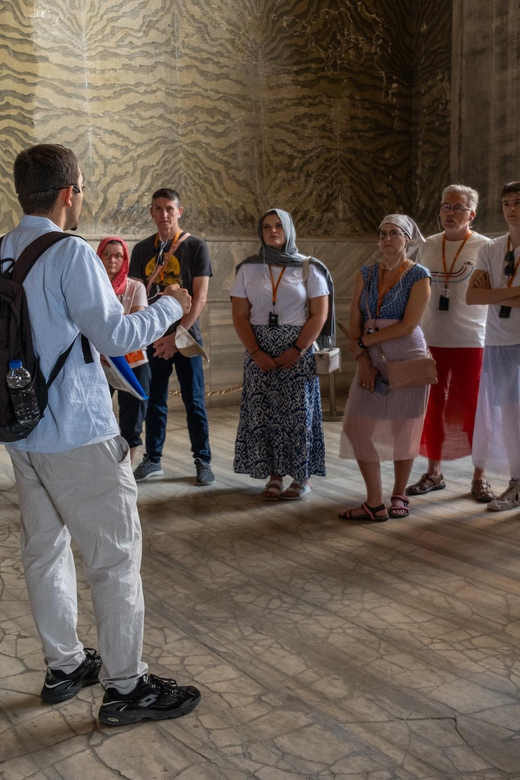
This is a classic “top sights, short time” tour. That’s a plus if you want focus. It’s also why certain visitors might not find it comfortable.
Not suitable for:
- Children under 7
- People with mobility impairments
- Wheelchair users
The stairs at the Basilica Cistern are the big reason. No lift, 50 steps down and then up, and the walkways require normal mobility. If you’re unsure, you’ll want to judge your own comfort with stairs and indoor crowds before booking.
Dress and behavior matter too. The sites are religious spaces. The tour asks for a headscarf for women, plus covered shoulders and knees for everyone. It also notes you’ll go through airport-style security, so arrive with patience and the right clothing.
One small but meaningful detail: you’ll have headsets, which usually improves the experience in busy rooms. You won’t miss explanations because you’re standing slightly off to the side.
And based on recent guide stories, I like that these tours tend to be attentive to real needs. One account describes a guide taking care when someone felt unwell due to heat stress, helping them find a coffee shop nearby while the other participant continued. That kind of calm practicality is a good sign in a city that can be intense in summer.
Should you book this Hagia Sophia and Basilica Cistern tour?
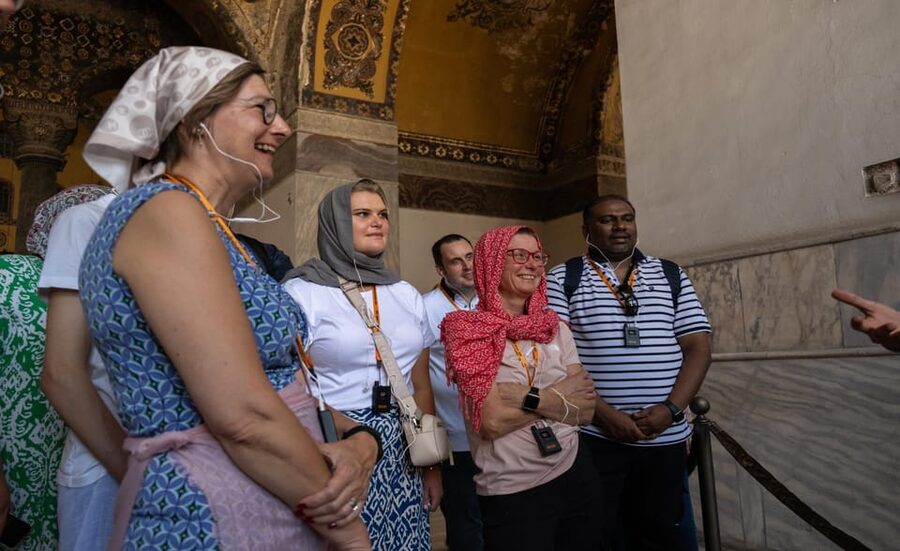
Book it if:
- You want both Hagia Sophia and the Basilica Cistern in a tight window
- You’d rather pay for priority tickets than gamble on line time
- You enjoy getting a guide to point out what to look for in mosaics, tiles, pillars, and cistern details
- You appreciate headsets and a structured small-group pace
Skip it or consider something else if:
- You can’t do stairs comfortably. The Basilica Cistern has 50 steps down and up with no lift.
- Your clothing doesn’t already match mosque rules. You’ll need shoulders and knees covered, and women need a headscarf.
- You’re traveling with kids under 7 or you need wheelchair accessibility. This tour is not designed for that.
If you want a fast, guided hit of Istanbul’s most famous layers, this is a strong way to do it. You’ll walk away with a mental map of how Byzantine and Ottoman eras shaped what you’re seeing, not just a pile of photos.
FAQ
What is the duration of the tour?
The tour runs about 2 to 2.5 hours.
What is included in the price?
The tour includes priority admission tickets for Hagia Sophia and the Basilica Cistern, a professional local guide, about 2 hours guided time total, and headsets.
Where do I meet my guide?
Meeting point can vary depending on your option. Options listed include Galataport Clock Tower Square, Ersoy Bufe (and the Galataport option is for cruise guests).
Do I need a headscarf?
Women should wear a headscarf when entering the mosque. The tour also notes headscarf is what to bring.
Are there dress code rules inside?
Yes. The tour says you must not wear shorts, short skirts, or sleeveless shirts. Clothing should cover shoulders and knees for both men and women.
Is the Basilica Cistern accessible for everyone?
No. The tour notes it has 50 steps going down and then up with no lift, and it is not suitable for wheelchair users or people with mobility impairments.
What happens if the Basilica Cistern is closed?
If the Basilica Cistern is closed, the tour visits Şerefiye (cistern of Theodosius) or Binbirdirek (Cistern of Philoxenos) instead.
More Tickets in Istanbul
More Tours in Istanbul



More Tour Reviews in Istanbul


Not for you? Here's more nearby things to do in Istanbul we have reviewed






More Istanbul Hagia Sophia Tours to consider.
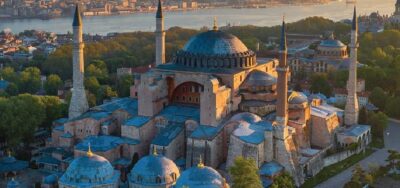 ★ 3.7Hagia Sophia Skip-the-Line Ticket & Museum OptionFrom $334,958 reviews
 ★ 4.8Blue Mosque & Hagia Sophia Guided Tour w/ TicketsFrom $393,600 reviews
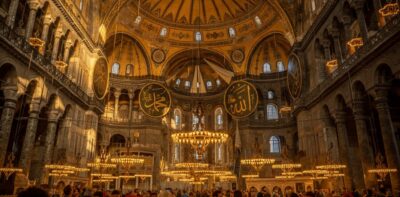 ★ 4.3Hagia Sophia Skip-the-Line Ticket and Audio GuideFrom $352,246 reviews
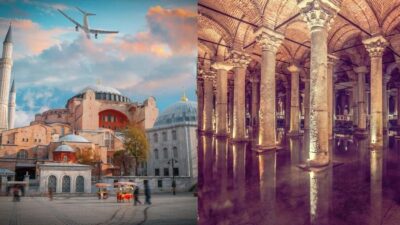 ★ 4.6Basilica Cistern & Hagia Sophia Combo TicketFrom $711,990 reviews
 ★ 4.7Blue Mosque, Hagia Sophia, & Basilica Cistern TourFrom $581,806 reviews
 ★ 4.4Hagia Sophia Skip-the-Line Ticket with Audio TourFrom $421,767 reviews
 ★ 4.3Blue Mosque, Basilica Cistern, & Hagia Sophia TourFrom $781,634 reviews
 ★ 4.3Hagia Sophia Skip-the-Ticket Line & Audio GuideFrom $411,469 reviews
Other ways to explore Istanbul