
Review · ISTANBUL WALKING TOURS
Istanbul Sightseeing Walking Tour
First steps through Istanbul’s top sights. In about 3 hours, you move from the Basilica Cistern to the Blue Mosque, then end in the Eminönü area with a guide who explains what you’re seeing along the way.
I like two things right away: the small group size (up to 8) and the fact that the route is built to help you understand old Istanbul’s layout, not just tick off attractions.
One possible drawback: the schedule is tight, so it can run shorter than the typical 3 hours, and the meeting spot can be a little tricky if you’re delayed.
Key things I’d watch for before you go
- Small group pace (max 8): easier questions and less crowd chaos than big buses.
- Admission noted as free at major stops: the tour info lists “Admission Ticket Free” for each sight on the walk.
- First-time friendly route: you’ll cover the classics, plus side streets between them.
- English guidance: the tour is offered in English, which makes the explanations actually useful.
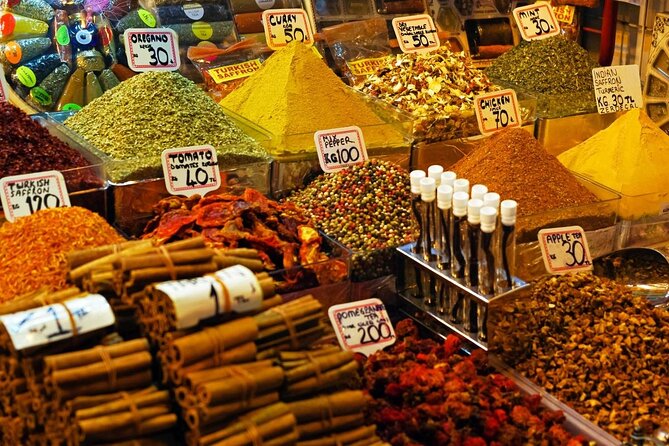
- Spice Market finish: you end in a great browsing zone, with free time to keep going on your own.
Why this Old City walk is such a good first morning
Istanbul can feel like a puzzle box when you land, all hills, angles, domes, and names that sound similar. This kind of walk is built for that first-day confusion. You start in the Fatih area, then work through the sights around Sultanahmet and the older core, finishing in the Eminönü food and shopping district.
What makes it especially handy for newcomers is the way the tour connects places with stories. You don’t just stand in front of buildings. You learn what they were, what changed over time, and why you should care. That’s how you start building a mental map fast, so later you can wander confidently instead of following only signage.
The pacing matters too. Many stops are short, around 10 minutes each, with one longer stop for the Spice Market. That doesn’t mean it’s rushed, it means you get a clear hit list without losing your whole day to one location.
You can also read our reviews of more walking tours in Istanbul

Price and group size: what $60 buys you in real life
At $60.07 per person for about 3 hours, you’re paying mainly for two things: an English-speaking professional guide and a small group experience. The guide is the value play here. In Istanbul, where history layers over itself, a guide helps you read the details you would otherwise walk past.
It also helps that the tour info shows admission as free for the main stops listed, so you’re not piecing together multiple ticket rules mid-day. (That said, always keep an eye out at each site, since policies can vary by day and current conditions.)
With a maximum of 8 people, you’re unlikely to get the “herding cats” feeling. You can ask questions, pause for photos, and actually hear explanations. If you’re traveling solo or as a couple, this format is a strong fit.
Where you’ll meet, and why timing affects everything
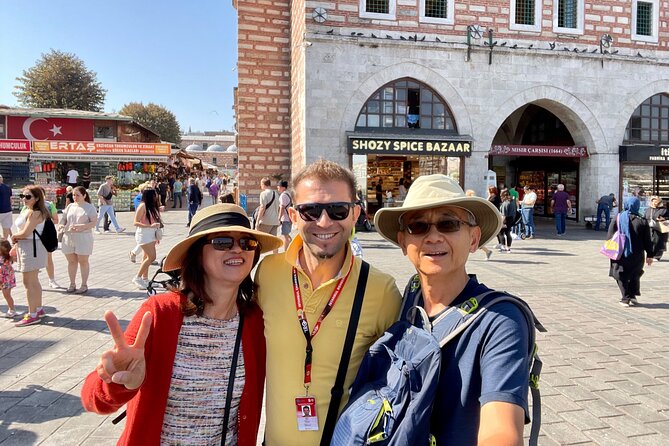
The tour starts at Foodie-ist Cafe and Brasserie, in Fatih, near Muhterem Efendi Sk. From there, you work your way through the historic core and eventually end at Egyptian Bazaar, near Rüstem Paşa, in the same Fatih area. The good part is that you don’t get trapped at the end. You’re told you’re free to continue your sightseeing after the Spice Market finish.
The main practical caution is simple: arrive early. One person had trouble locating the meeting point after traffic delays, and there’s no safety net in that story. If you’re depending on a taxi driver who might not find the exact pin, use Google Maps in advance, screenshot the location, and give yourself buffer time.
Also note the duration is approximate. A shorter tour isn’t a deal breaker, but it changes your expectations. If you want a long, slow walk with lots of hanging out in one place, this format may feel brisk.
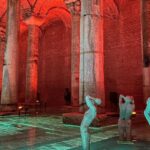
Basilica Cistern: Medusa, mythology, and a spy-movie wink
Basilica Cistern is the kind of place that rewards even a quick stop. The tour frames it with two kinds of attention: the mystery of the space and the small, specific things you can spot once someone points them out.
You’ll learn about the cistern’s purpose and the Greek-myth connection tied to the Medusa heads. You’ll also hear the fun cultural reference that links the scene to the James Bond film From Russia with Love. That kind of cross-connection is more than trivia. It helps you remember the cistern as a story location, not just a cool underground room.
A drawback to consider: because your time here is listed as about 10 minutes, it’s a “see, understand, move” style stop. If you’re the type who wants to photograph every angle and linger, arrive with a clear plan for what you want to capture, or be ready to do follow-up exploration later on your own.
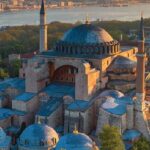
Hagia Sophia Grand Mosque: the dome you recognize, explained the right way
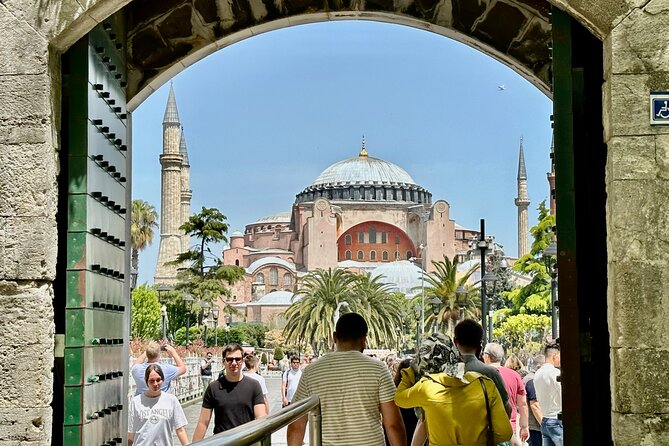
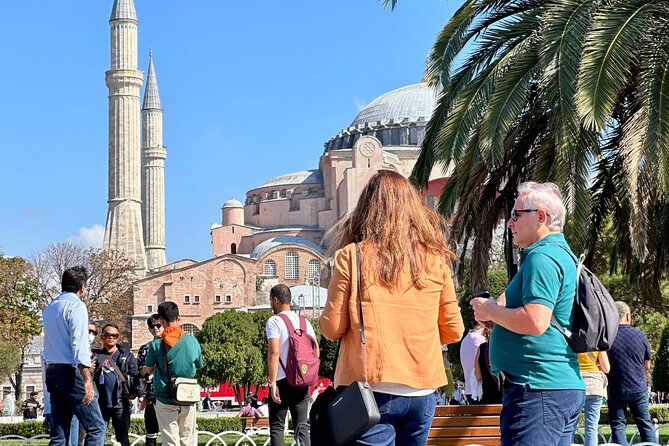
Hagia Sophia is one of those buildings you think you know, even before you see it. The dome looks familiar from photos, but in person it has a scale that’s hard to translate.
This stop centers on the dome as an architectural masterpiece, and it also gives you the key historical context: it was once the world’s largest cathedral. That’s important, because it makes your visit feel like you’re reading layers, not just viewing a single era.
Your time here is short, so don’t aim for a deep architectural sketch lesson in one visit. Instead, use this stop to spot the biggest shapes, understand why people are always pointing upward, and learn the overall “how it changed” story so that if you revisit later, you’ll know exactly what to look for.


Walking through Istanbul’s empires in the historic core
After Hagia Sophia, the tour shifts into orientation mode. You’re told Istanbul is the only city on two continents, and you get a quick reminder of how it became the capital for Roman, Byzantine, and Ottoman power.
This matters because Istanbul’s neighborhoods don’t feel separate on a map. They feel continuous in real life. One street bends into another, one wall sits next to another period, and buildings borrow styles across centuries. Without this kind of framing, it’s easy to treat it like one giant tourist zone.
A practical benefit here is that you’ll learn how the old city connects conceptually. That helps with routing later when you’re choosing which direction to walk after the tour ends.
Caferağa Medresesi: Turkish classical arts you can actually see
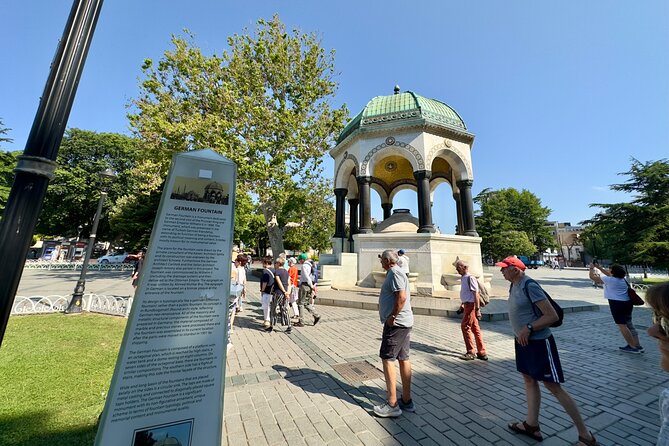
Caferağa Medresesi is a very different stop than the big monuments. Instead of scale, it’s focused on craft and culture. The tour presents it as a former medrese, now known as a center of Turkish classical arts.
You’ll be in the orbit of traditional handicrafts taught and produced on site, including calligraphy, ceramics, and jewelry. The key value is that you get a sense of how tradition survives in modern Istanbul, not as a museum-only concept but as a living practice tied to teaching and making.
Because this is a short stop, you shouldn’t expect a full workshop experience. But you will leave with better questions. If you see a calligraphy piece later, you’ll have context for why it’s not random decoration. It has a cultural job.
Ottoman lanes, photo breaks, and Topkapı Palace context
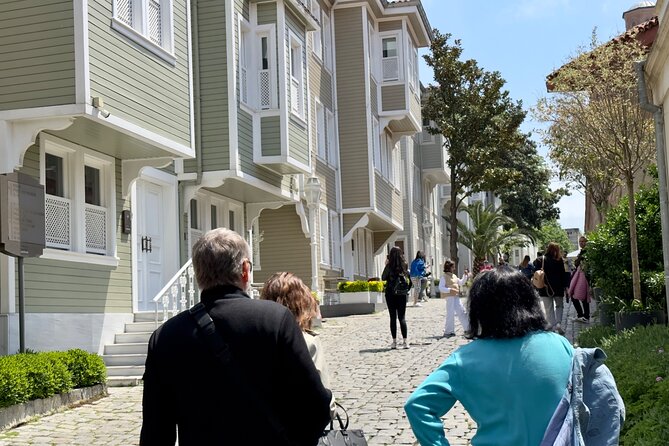
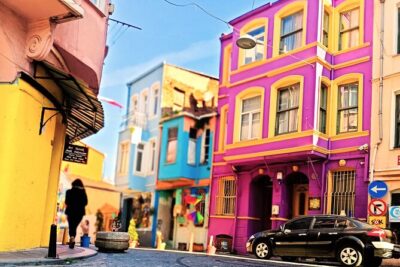
The tour includes a walk through Sogukcesme Sokak, described as a small street with beautiful Ottoman-era houses. This is exactly the kind of “blink and you miss it” street that big tours skip. It helps you see Istanbul as lived-in history, not only monuments.
Then comes the Sultanahmet Square break, which is a smart chunk of pause time for photos of Hagia Sophia and the Blue Mosque. In Istanbul, a short break matters. Your eyes need a reset, and your feet need it too.
Topkapı Palace is next, and you’ll learn it as the Ottoman sultans’ residence and administrative headquarters. Even if you don’t go deep into palace interiors during this quick stop, the explanation changes how you perceive the area. You start thinking in terms of power, governance, and daily court life, not just stone and courtyards.
Blue Mosque: what to notice when time is short
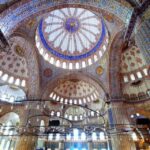
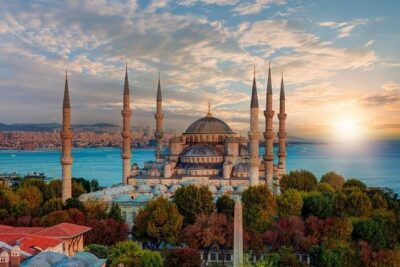
The Blue Mosque, or Sultan Ahmed Mosque, gets a lot of attention for good reason. You’ll be told what to look for: five main domes, six minarets, and eight secondary domes with traditional Ottoman architecture. The tour frames it as the last great mosque of the classical period.
This is where an English guide can really change your experience. When someone points out features clearly, you can spot them instead of staring and hoping. One of the most praised parts of the tour is the chance to admire stained glass and tiles while the guide explains meaning behind the details.
Also, timing matters with the Blue Mosque. The visit is short, so it’s best used as your early orientation. Think of it as a “first look with context.” Later, if you want a slower return when you’re less rushed, you’ll know exactly what drew your attention the first time.
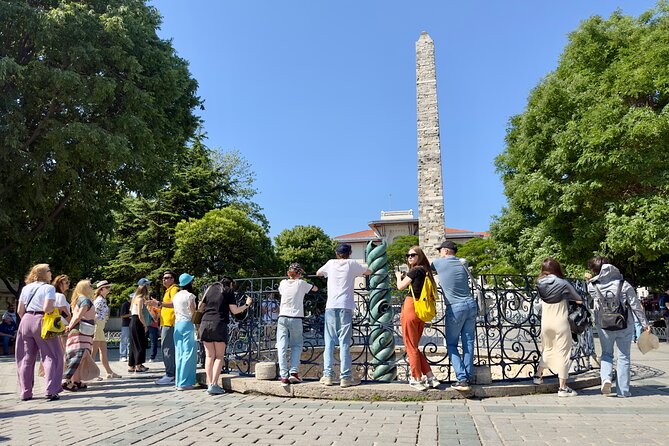
Hippodrome monuments: Serpent Column, obelisk, and Wilhelm II
The Hippodrome stop is where the walk turns a little cinematic. You’re guided to the former chariot-racing venue of Byzantine times, with ruins and stories that help the space make sense.
You’ll see the Serpent Column, which is also known as the Serpentine Column, Plataean Tripod, or Delphi Tripod. That list of names is useful, because it signals how the monument’s identity traveled and was reframed over time.
Then comes the Walled Obelisk, a Roman monument in obelisk form at the southern end of the ancient chariot-racing track. The tour also includes a note that a beautiful monument in this area was constructed as a present from German Emperor Wilhelm II in 1898. That kind of detail is a reminder that Istanbul’s monuments have new chapters even in modern history.
This stop is great for photos, but also for your understanding of Constantinople as a performance city. Not just religion and palaces, but public spectacle.
Tahtakale and Eminönü: shopping streets that end up useful later
After the ancient monuments, you’ll move into the shopping zone at Tahtakale District. The tour describes it as a place to shop and find a wide range of items at reasonable prices. This is the kind of area where wandering works better after you’ve learned the basic route layout from the earlier stops.
Next, Eminönü Square is presented as a cluster of restaurants, café culture, and shops. Even if you don’t eat on the spot, knowing this area as a food hub helps you plan for evenings.
The practical trick here is to keep your energy for the final market. Tahtakale can tempt you into browsing too hard. If you want to shop, set a simple goal like spices and snacks, then save bigger decisions for another walk later.
Misir Çarşısı Spice Market: the finish that actually feels rewarding
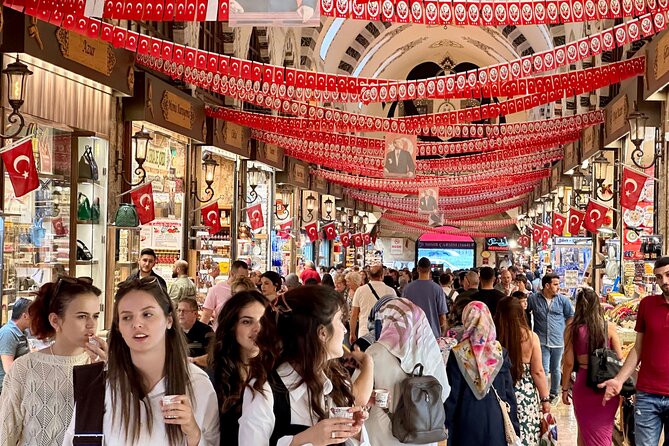
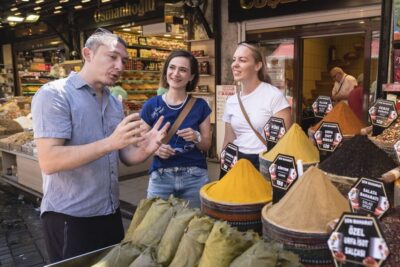
The last big stop is Misir Çarşısı, also known as the Spice Market. Your tour time here is longer, about 20 minutes, which makes a difference. You’ll be guided into the bustle of spice lanes, with herbs, nuts, Turkish Delight, and all the stall energy that makes this area famous.
This is a great way to end a first tour because the market is not just a museum experience. It’s sensory, social, and practical. You can buy small gifts, taste snacks later, and bring home flavors that Istanbul is known for.
A heads-up: 20 minutes means you won’t see everything. Use the time to get oriented, note which stall style you like, and maybe pick up a small selection. Then treat the rest of your visit as browsing at your own pace after the tour ends near the Egyptian Bazaar area.
Who should book this walking tour, and who should skip it
This works best if you:
- are in Istanbul for the first time and want fast orientation around Sultanahmet and Eminönü
- like guided context, especially for big-ticket sites like Basilica Cistern, Hagia Sophia, and the Blue Mosque
- prefer a small group format that keeps questions possible
You might want to skip or supplement it if you:
- want lots of deep time inside one major site
- dislike moving from stop to stop quickly
- need a long, unstructured street wandering day, because this route is designed as an organized highlights loop
Should you book this Istanbul walking tour
I think this is a smart choice when you want to understand Istanbul in small, digestible pieces. The best reason to book is the combination of an English guide, short stops across the core landmarks, and a finish in the Spice Market so your first day has both meaning and momentum.
Book it if you’re trying to get your bearings and decide what you want to see again. If you’re already comfortable navigating the old city, you may still like the guide for the stories, but you might not need the full route.
If you do book, plan for brisk movement, arrive early at the meeting point, and treat the tour as your “map builder.” Then let the rest of your Istanbul day belong to you.
FAQ
How long is the Istanbul Sightseeing Walking Tour?
It runs for about 3 hours.
What’s the group size limit?
The tour has a maximum of 8 travelers.
Is the tour offered in English?
Yes, the tour is offered in English.
What is included in the price?
The tour includes a professional guide and a small group.
Where does the tour start and where does it end?
It starts at Foodie-ist Cafe and Brasserie in Fatih. It ends after the Spice Market in Eminönü, near the Egyptian Bazaar.
Is hotel pickup and drop-off included?
No, hotel pickup and drop-off are not included.
More Walking Tours in Istanbul


More Tours in Istanbul



More Tour Reviews in Istanbul

Not for you? Here's more nearby things to do in Istanbul we have reviewed




More Istanbul Walking Tours to consider.
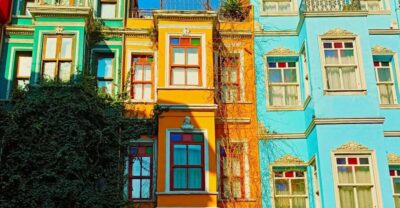 ★ 4.9Fener Balat Half-day Guided Walking TourFrom $201,711 reviews
 ★ 4.5Istanbul Highlights Small-Group Walking Guided TourFrom $1551,346 reviews
 ★ 4.9European and Asian Side Guided Foodie Walking TourFrom $1351,038 reviews
 ★ 5.0Half day Fener-Balat Walking Tour in TurkiyeFrom $20308 reviews
 ★ 4.7Colorful Fener & Balat Walking Tour w/Expert GuideFrom $18234 reviews
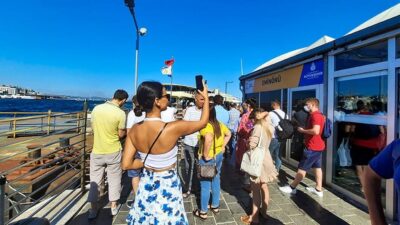 ★ 4.4Asian Side Walking Tour with Ferry RideFrom $29224 reviews
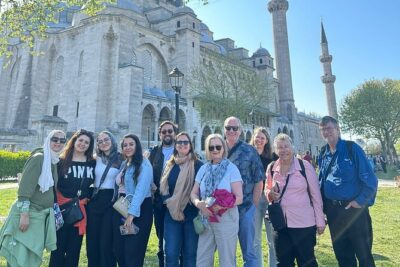 ★ 5.0Old Town Of Istanbul Orientation – Tip Based Walking TourFrom $18181 reviews
★ 4.4Istanbul Highlights Small-Group Walking Guided TourFrom $150179 reviews
★ 5.0Old Town Of Istanbul Orientation – Tip Based Walking TourFrom $18181 reviews
★ 4.4Istanbul Highlights Small-Group Walking Guided TourFrom $150179 reviews
Other ways to explore Istanbul