
Review · ISTANBUL TOPKAPI PALACE TOURS
Private Topkapi Palace and Harem Tour with Skip Line Entry
Topkapi works like a time machine, and it is a big one. I love the skip-the-line entry because you spend less time stuck at the gates and more time inside, plus the Harem’s intricate tilework is the kind of detail that you miss on your own. One thing to keep in mind: this is a palace complex with lots of walking and indoor stairs, so it is not a great fit if mobility is limited.
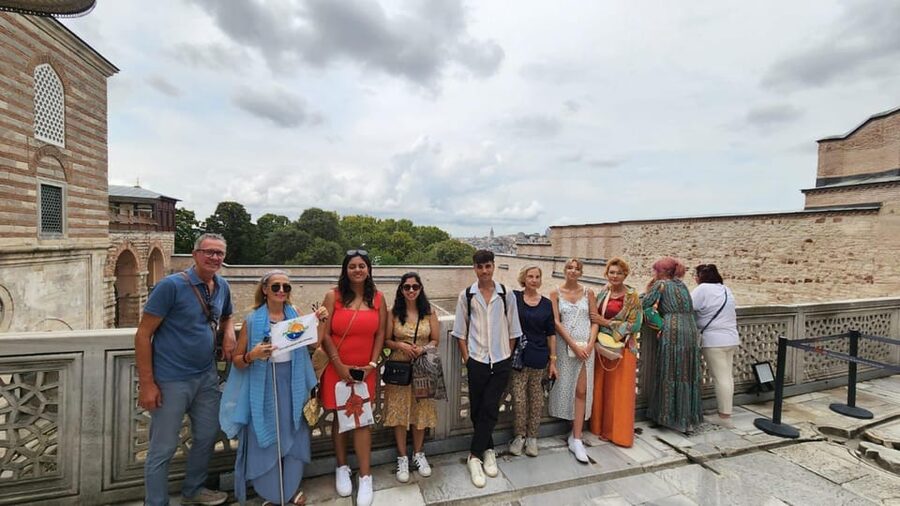
You meet at Orient Market in Sultanahmet, then you head to the Seraglio Point, the promontory above the Golden Horn, the Bosphorus, and the Sea of Marmara. From there, your guide helps you connect the dots between the courtyards, the palace administration spaces, and the private areas where the sultan’s family lived.
If you want Ottoman court life explained in plain terms, without feeling rushed or lost, this private group format is a strong choice. You will still have to follow the museum rules (no flash, no big bags), but the payoff is getting to see major highlights like the Topkapi Dagger, the Spoonmaker’s Diamond, and the Pavilion of the Holy Mantle in one smooth run.
Key things that make this tour worth your time
- Skip the ticket line so you get more museum minutes and less waiting
- Harem tilework and rooms that you can actually understand with a guide’s context
- Treasury showpieces including the Topkapi Dagger and the Spoonmaker’s Diamond
- Private quarters focus, with the sultan’s family apartments and Harem Courtyard
- Holy Mantle Pavilion and other religiously tied spaces that explain court authority beyond décor
- Seraglio Point setting, with views over the Golden Horn, Bosphorus, and Sea of Marmara that give you scale
Getting into Topkapi fast, starting at Orient Market
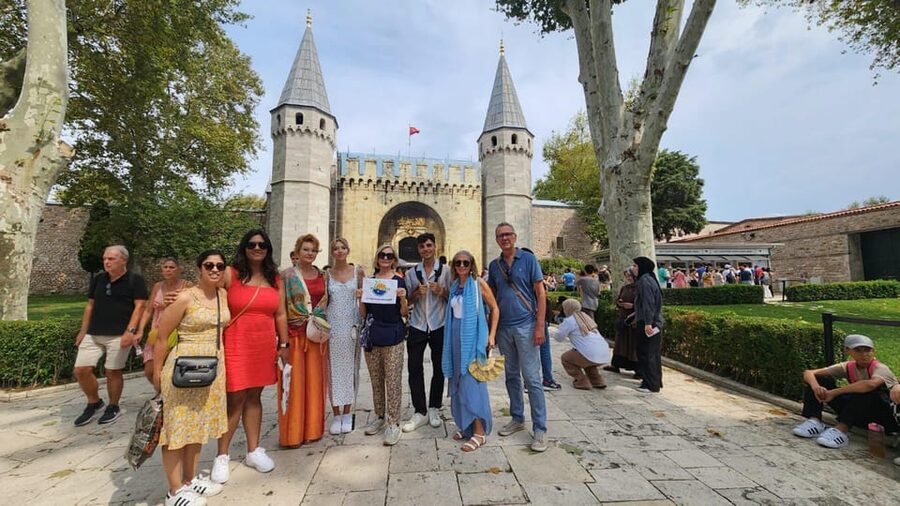
The day begins at a real landmark: Orient Market at Sultanahmet. Your guide meets you in front of ORİENT MARKET and holds a MANOLYA TOURS flag or umbrella, which makes it easier to spot the group without playing guessing games.
Why this matters: Topkapi is famous, which means it can be slow at the entry points. This tour includes skip-line entry, so you avoid the worst of the bottleneck effect. That is especially useful if you are on a tight schedule in Istanbul, or if you do not want your tour time eaten by standing around.
Once you’re on your way, you’re headed to the Seraglio Point. This is not just a random museum location. It is an elevated promontory overlooking the waterway mix that shaped the Ottoman capital: the Golden Horn, the Bosphorus, and the Sea of Marmara. Even a short look in that direction helps you grasp why this complex became the core of power.
You can also read our reviews of more private tours in Istanbul



Seraglio Point to the palace gate: why the courtyards matter
Topkapi Palace stretches across a sequence of courtyards and buildings that reflect how the empire ran. The palace was the primary residence of Ottoman sultans for nearly 400 years, and it served as an administrative center until the 19th century. If you skip the “where and why” and just jump into the rooms, you can end up with beautiful interiors and no sense of how the place functioned.
That’s where a guided pace helps. You start at the First Courtyard, which is open to the public. This area includes gardens and the Imperial Gate, your first big visual clue that the palace was not one single building, but a whole functioning complex.
Next comes the Second Courtyard, where you begin to see how the court operated day-to-day. Your guide points out the Imperial Council Hall, the Library of Ahmed III, and the Palace Kitchens. Even if you are not a “palace person,” these stops make the palace feel less like a fantasy set and more like a workplace for state power and domestic life.
Practical note: you will be moving between levels and rooms. Comfortable shoes are a must. Also, bring water when you can. You cannot fix foot fatigue inside a palace that expects visitors to walk.
First and Second Courtyard highlights: Ahmed III, kitchens, and decision-making
In the First and Second Courtyards, I like how the tour gives you a simple narrative. You go from the formal approach, to the spaces tied to governance, and then you move toward the private sections where family life and authority overlap.
Here is what you can look for as you go:
- Imperial Council Hall: This is where the empire’s thinking became policy. If you pay attention to how rooms are arranged and how spaces connect, you get a better feel for court flow.
- Library of Ahmed III: Libraries in palaces are never just about books. They signal education, prestige, and the kind of knowledge the court valued.
- Palace Kitchens: Kitchens are not glamorous, but they are essential. When you see them in context, you appreciate how the palace ran at full scale, not just for occasional ceremony.
These courtyard stops also create breathing room. You get moving, but the walking is structured. That matters because once you reach the Harem, the experience becomes more detailed and more crowded.
Entering the Harem: tilework, private rooms, and court family life
The Third Courtyard is your gateway into the Harem, the private quarters of the sultan’s family. This is the emotional center of the tour for many people, and I get why. The Harem is where the palace shifts from administration to personal life, and your guide helps you see the layers rather than treating it like a single attraction.
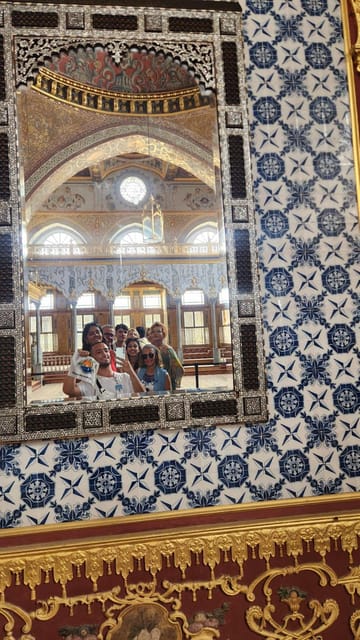
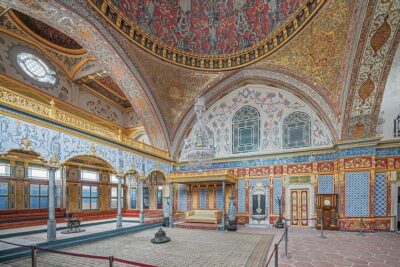
As you enter, you focus on two things at once: beauty and function. The Harem’s intricate tilework and opulent rooms are visually stunning, but the real value is that the tour explains what you’re looking at while you’re looking at it. That keeps the whole section from becoming just “pretty walls,” which is a risk in Istanbul if you rely only on photos.
In the Harem area, you will visit key parts of the living spaces, including:
- Sultan’s Apartments (the family side of power)
- Queen Mother’s Apartments
- Sultan’s Consorts’ Apartments
- Harem Courtyard
- The Circumcision Room
The “why it matters” version: the Harem is not just decor. It’s a controlled world where family structure, ritual, and hierarchy shaped daily life. Even if you only catch the main points from your guide, you end up with a more grounded understanding of how the Ottoman court operated.
And yes, you will want to slow down for the tilework. The patterns and colors are meant to be seen up close, and they hold up even if you have seen a lot of Istanbul interiors already. Just remember: you cannot use flash photography inside the museum.
Sultan’s private quarters: more than one room, more than one story
One of the smartest parts of this tour is how it treats the private quarters as a system. You do not just pop into a room and move on. You move through the Queen Mother’s Apartments and the Sultan’s Consorts’ Apartments, so you see that the Harem had distinct zones tied to roles and relationships.
If you care about historical context, this structure helps you sort what you’re seeing. Different spaces imply different forms of influence inside the family and the court. A guide’s job here is to keep that straight while you are inside a complex that can feel confusing if you are trying to self-navigate.
My practical advice: don’t plan to rely on your phone camera to do the remembering for you. Take a few notes in your head. For example, as you move between sections, ask yourself what role that space seems to represent: family authority, domestic life, or ceremonial tradition. When you do that, the tour sticks.




Treasury time: the Topkapi Dagger and Spoonmaker’s Diamond
After the Harem sections, you shift to the palace Treasury, which is where the tour delivers its famous visual hits. This is one of the best parts for people who love artifacts, but it also works if you are more of a “rooms and atmosphere” person, because the objects are so distinctive.
You will see:
- The Topkapi Dagger
- The Spoonmaker’s Diamond
These are the names you have likely heard in some form before. The key is that, in person, they feel like statements. A treasury is where power becomes visible and portable. Even without a detailed background lesson, you can sense the court’s taste for rare materials and symbolic objects.
What your guide adds is the connective tissue. You learn what these pieces represent inside the palace system, not just how they look. That is the difference between checking off a must-see and actually understanding why it matters.
If you want to photograph artifacts, remember that the museum prohibits flash. Use your phone’s natural light mode and keep your distance if the room is crowded.
Pavilion of the Holy Mantle: religious relics inside palace power
One of the most important stops is the Pavilion of the Holy Mantle, a space that houses religious relics. This is where Topkapi stops feeling like architecture and starts feeling like a statement about legitimacy.
In Ottoman court settings, religion and authority are tightly linked. By seeing this pavilion as part of the palace route, you understand why it’s not separated into a corner “for religious people.” It sits in the palace flow because the court was making a public case for spiritual and political leadership.
Even if you do not know the full background, you can feel the intention of the space. A guide helps you interpret the cues while you are there. That makes the stop more than a checkbox, it becomes one of the places where the tour feels most purposeful.
The Circumcision Room and other ceremonial spaces
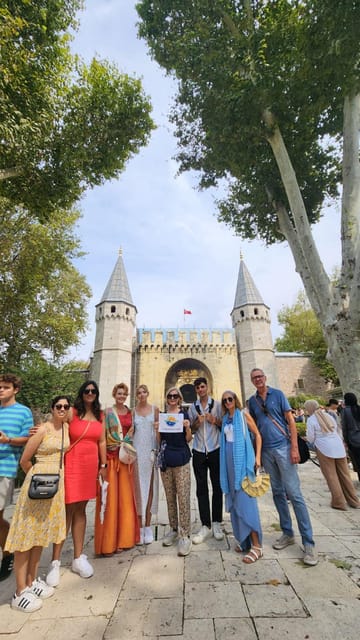
You will also visit the Circumcision Room. On a self-guided visit, you might glance at a room like this and wonder what the details mean. With a guide, you get the “court life needs ritual” context in a way that does not overload you with dates.
The value here is understanding that palace life included ceremonial milestones. These were not random events. They helped shape dynastic storytelling and reinforced hierarchy within the family and court.
If you are the type of visitor who enjoys ceremony and symbols, this part can become a highlight. If you are not, it still works because it ties into the broader picture of private quarters and power.
Queen Mother’s Apartments and consorts: seeing hierarchy in space
The Harem sections keep moving across distinct living areas. The Queen Mother’s Apartments and the Sultan’s Consorts’ Apartments are part of that deliberate structure.
This is where I found the tour most helpful for making sense of palace hierarchy. When you see multiple spaces, you start to understand that the Harem was not one single lifestyle. It was a set of roles, each with its own boundaries and significance.
Again, the guide’s explanations help you avoid the common problem of getting overwhelmed. Topkapi can feel like a maze if you rush. A private-group format means the guide can pace you so the rooms turn into a story, not a scramble.
Practical stuff you should plan for inside Topkapi
This tour is about 3 hours of experience time, though the guided tour portion is listed as 3.5 hours. Either way, you should plan on a half-day chunk that includes walking, entry, and time inside multiple sections.
A few practical reminders based on the rules:
- Bring comfortable shoes, because this is a lot of floors and stair steps.
- Bring water when you can.
- No flash photography inside the museum.
- No backpacks allowed. Large bags and backpacks must be checked at the entrance.
- A hat can help if you are waiting outside before entry.
Also, this tour is marked as not suitable for wheelchair users and not suitable for people with mobility impairments. If that affects you, this is one of the cases where you should think hard about alternatives.
Price and value: what $136 buys you, and why skip-line matters
At $136 per person, this tour is not the cheapest way to see Topkapi. The value comes from what is bundled into that price, and from how long you actually spend inside the palace.
Included items are the big levers:
- A professional English licensed tour guide
- Skip the Line Entry
- Entrance tickets to the Topkapi Palace Museum and the Harem section
So you are paying for expertise plus access. If you have ever visited big-ticket sites where the waiting line eats your energy, the skip-line piece matters more than it sounds.
The private-group aspect also changes the feel. You are not forced to follow a huge stream of people while trying to listen. It tends to make the courtyards and Harem sections more readable, because the guide can keep your group on the same narrative thread.
If you enjoy palace interiors, artifacts, and religious-relic context, $136 can feel like a fair trade for a focused, guided route that hits top highlights without you needing to figure out everything on your own.
Who should book this tour, and who might want another option
This tour suits you if:
- You want the Topkapi Palace main path plus the Harem in one guided run
- You like seeing famous objects like the Topkapi Dagger and Spoonmaker’s Diamond with context
- You prefer a private group and an English guide rather than going solo
It may not be your best match if:
- You need wheelchair-friendly access, since it is not suitable for wheelchair users
- You have limited tolerance for walking and stair steps
- You plan to bring a backpack, since backpacks are not allowed and larger bags must be checked
If you fall into a “not sure” category because of mobility, I’d prioritize checking your comfort level with museum walking in general before committing.
Should you book the Private Topkapi Palace and Harem tour?
I think you should book this tour if your goal is simple: see Topkapi’s biggest palace storyline, plus the Harem tilework and treasury highlights, with less guesswork. The skip-line entry, the English licensed guide, and the fact that tickets for the palace museum and Harem section are included make it a practical way to spend a few hours in Sultanahmet.
If you are sensitive to crowds, fatigue, or mobility barriers, then think twice. This is a walking-heavy palace complex, and the rules (no flash, no backpacks) mean you should pack smart.
If that sounds manageable for you, this is a solid, efficient choice that turns a famous place into something you can actually understand while you’re there.
FAQ
How long is the Topkapi Palace and Harem private tour?
The tour duration is listed as 3 hours, and availability shows different starting times. The guided tour portion is also listed as 3.5 hours.
Where do we meet for the tour?
You meet in front of ORİENT MARKET at Sultanahmet. Your guide holds a MANOLYA TOURS flag or umbrella at the meeting point. The activity ends back at the same meeting point.
What is included in the $136 price?
The price includes a professional English licensed tour guide, skip the line entry, entrance tickets to Topkapi Palace Museum, and entrance tickets to the Harem section.
Are flash photos allowed, and can I bring a backpack?
Flash photography is not allowed inside the museum. Large bags and backpacks must be checked at the entrance, and backpacks are not allowed.
Is this tour suitable for wheelchair users or people with mobility impairments?
No. The tour is listed as not suitable for wheelchair users and not suitable for people with mobility impairments.
Can I cancel, and do I need to pay right away?
Free cancellation is available up to 24 hours in advance for a full refund. You can also reserve now and pay later, so you can keep your travel plans flexible.
More Private Tours in Istanbul



More Tours in Istanbul




More Tour Reviews in Istanbul


Not for you? Here's more nearby things to do in Istanbul we have reviewed










More Istanbul Topkapi Palace Tours to consider.
 ★ 4.1Topkapi Palace & Harem Museum Ticket & Audio GuideFrom $613,977 reviews
 ★ 4.8Topkapi Palace and Harem Guided Tour with TicketFrom $551,726 reviews
 ★ 4.9Topkapi, Hagia Sophia and Basilica Cistern TourFrom $1171,430 reviews
 ★ 4.6Basilica Cistern &Topkapi Palace &Hagia Sophia Combo TicketsFrom $1571,306 reviews
 ★ 4.1Topkapi Palace & Harem Tour Skip-the-Line TicketFrom $731,112 reviews
 ★ 4.2Topkapi Palace and Harem Ticket with Audio GuideFrom $79786 reviews
 ★ 5.0Istanbul Highlights! Blue Mosque, Hagia Sophia, Topkapı and More!From $175618 reviews
 ★ 4.0Topkapi and Harem Tour with Skip-the-Line TicketFrom $79372 reviews
Other ways to explore Istanbul