
Review · MUSEUMS
Turkish and Islamic Arts Museum: Entry Ticket & Audio Guide
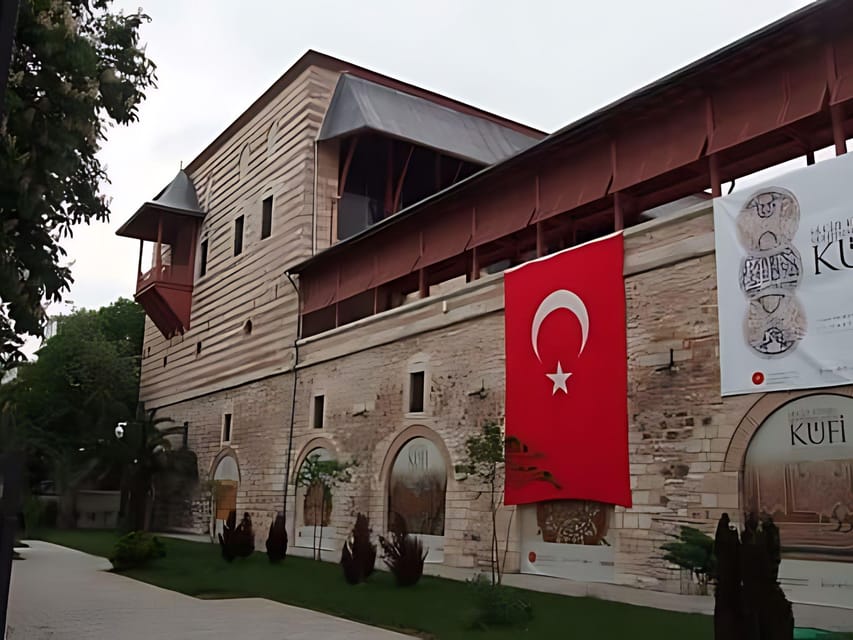
A trip to Istanbul’s Islamic Art Museum is a fast way to understand craft, faith, and history side by side. It’s housed in the historic Ibrahim Pasha Palace, and you get a 25-language audio guide to set your pace.
I love how clearly the collection is organized around what you came for, especially carpets and rugs with patterns you can actually study. I also like the chance to see devotional objects, including a fragment linked to the Prophet Muhammad’s beard and a footprint.
The main drawback to plan around is timing, the audio guide link comes by email, and trying to download it at the last minute can run into phone security issues if you are on weak or no Wi-Fi.
Key Highlights You Can Act On
- Skip-the-line QR entry helps you start faster, even though a security line still applies
- Ibrahim Pasha Palace setting gives the museum a real historic frame, not just “inside a building”
- Carpet and rug galleries let you focus on Seljuk and Ottoman-style design details
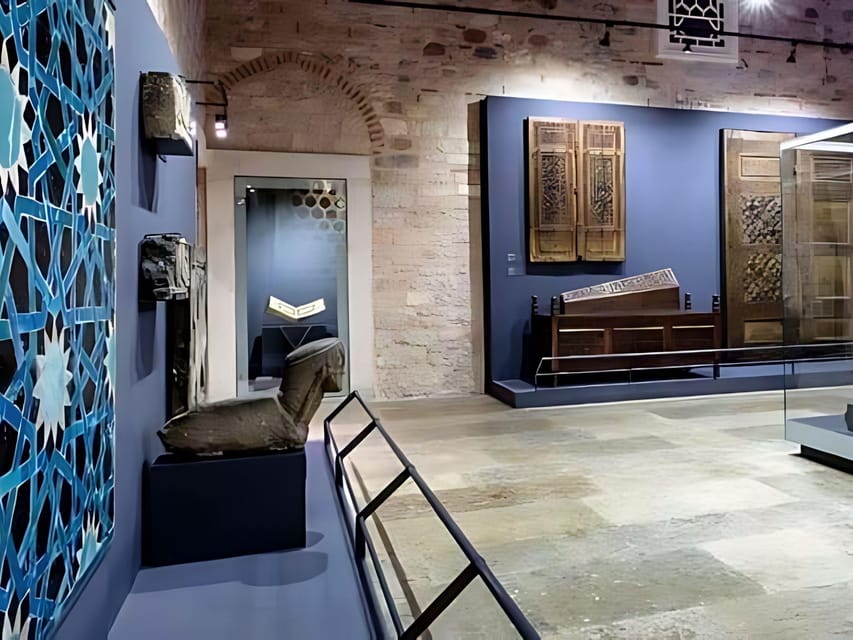
- Hands-on-feeling categories like calligraphy, ceramics, glass, and metalwork make browsing easier
- Relics section includes a beard fragment and footprint, so go in with respect and a quiet pace
- 25 languages on the audio guide means you can match your comfort level without needing a guide
Turkish and Islamic Art in Ibrahim Pasha Palace
This museum is located in Sultanahmet Square, close to the Blue Mosque in Istanbul’s Fatih district. That matters because you’re not making a big separate outing, you’re adding a high-value indoor stop right where you’re already walking.
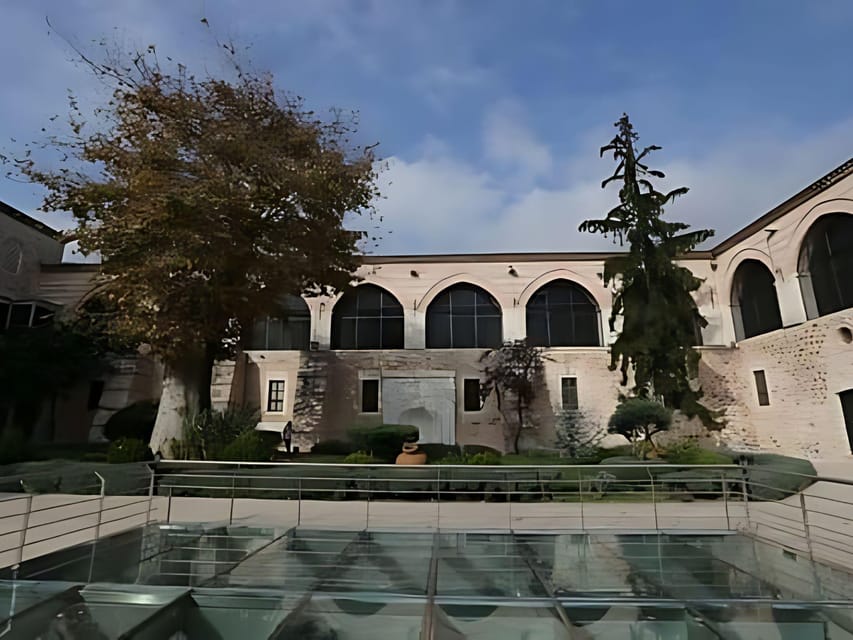
The museum sits inside Ibrahim Pasha Palace, a major 16th-century landmark. Even if you’re not a palace person, the setting helps. You feel like the artifacts belong to a real period and a real place, instead of being dropped into a modern hall. It also gives you an easy mental map: you can treat the visit like a heritage walk that happens indoors.
It’s a good choice for anyone who wants more than “pretty objects.” You’ll see Islamic art across centuries and regions, and the palace setting makes the whole experience feel more connected than a typical museum layout.
More Istanbul tours and experiences for the shortlist



Getting Your QR Entry Ticket and Audio Guide Link
This experience is self-guided. Your entry and your listening are tied to the tech delivery system the museum uses.
After booking, you receive both Entry Ticket QR codes and an audio guide link via separate email messages from the supplier. The big point: you should not assume everything will appear in one place. Check your email carefully before you leave.
Also, there’s an important expectation to set, even though the ticket line is handled with QR, you cannot skip security lines. There can also be a line at the entrance that is mandatory for everyone. Translation: go with a little buffer time at the door, especially on busy days.
Practical tip I’d follow: when you get the emails, open the audio guide link once, confirm it works, and get ready to download or access it ahead of your museum time. That keeps you from doing stressful troubleshooting while you are standing inside a gallery.
One more booking note worth knowing: the ticket includes free cancellation up to 24 hours in advance, and you can reserve now and pay later, which is useful if your Istanbul schedule is still shifting.
Plan Your Museum Walk: Carpets, Manuscripts, and Decorative Arts

You’re not dealing with a timed route, so the museum becomes about rhythm. I’d start with the areas that create the strongest “wow” understanding early, then move into the more detailed categories afterward.
A sensible flow goes like this:
- Begin with the carpet and rug displays to train your eye on pattern logic, color choices, and workmanship.
- Move into the sections showing manuscripts and other artifacts, where you can connect the art to the materials and ideas behind it.
- Then shift to the decorative arts groups, typically labeled by material or technique, like calligraphy, ceramics, glasswork, and metalwork.
- Save the religious relic portion for later in the visit, when you can slow down and absorb it without rushing.
The main challenge with any museum visit in Istanbul is pacing. You may feel “ready to go” right away, but the best experience comes when you stop trying to see everything and instead compare objects. In this museum, comparison is the secret sauce, especially with textiles and written arts.
Carpets and Rugs: Pattern, Color, and Craft You Can Actually Read
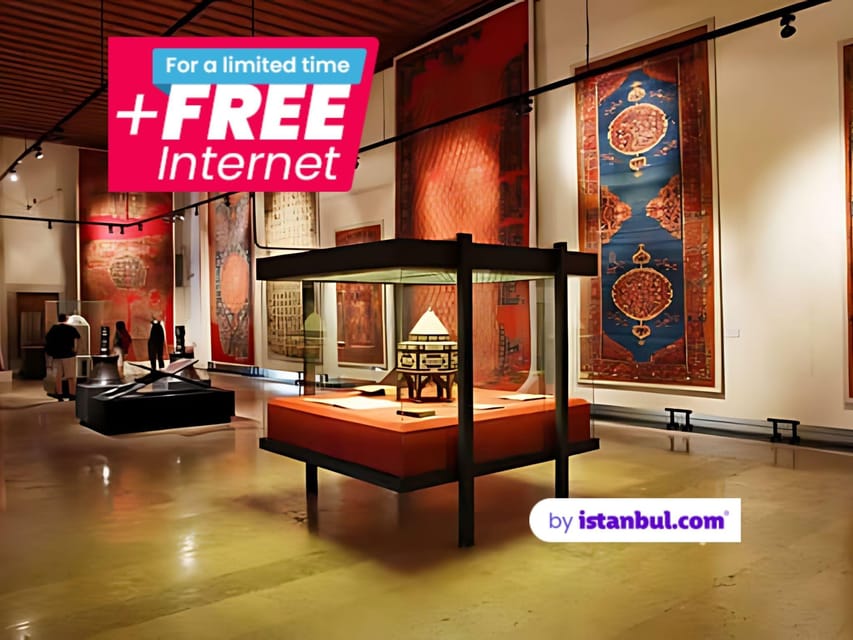
If there’s one reason this museum earns attention, it’s the carpets and rugs. The displays focus on intricate patterns and vivid colors, and that’s not just decoration, it’s information. You can spot motifs and design choices that reflect different periods and regions.
You’ll see styles ranging from Seljuk-inspired designs to Ottoman masterpieces. The value here is that you are not just looking at one “famous carpet.” You’re getting variety, and variety teaches your eye what to notice.
What I think you’ll enjoy most is slowing down for a few objects and asking basic questions:
- How do the borders frame the main motif?
- What repeats, and what changes across panels?
- Where does the pattern feel symmetrical, and where is it more fluid?
This is where an audio guide helps. Even if you only catch a few key points while you look, you’ll start relating the design to cultural and artistic traditions rather than treating it as pure color.
Manuscripts and Artifacts: From Writing to Woodwork
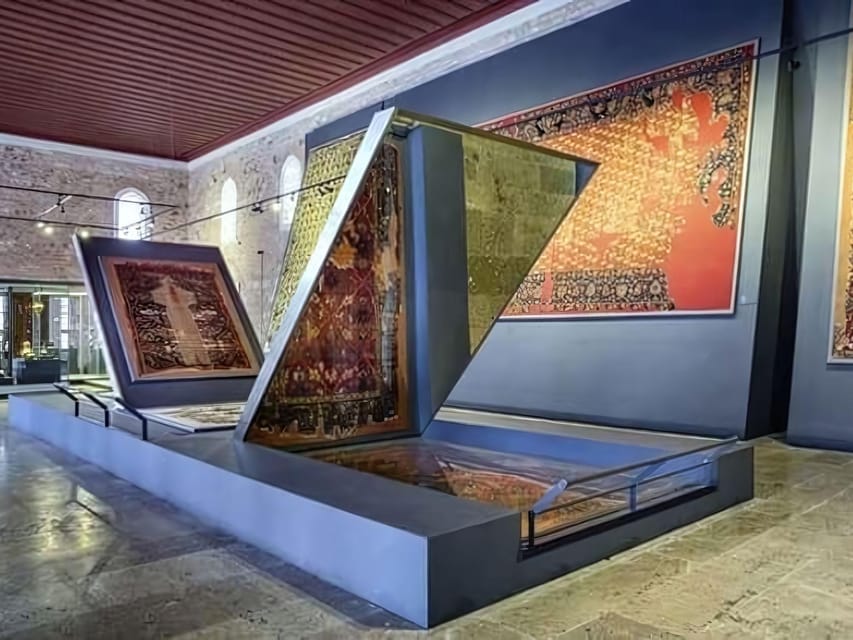
Beyond textiles, the museum brings you into a broader world of ancient manuscripts and artifacts. You’ll also encounter beautiful wooden relics, which help break up the visitor experience. Textiles can be overwhelming in a good way, then wood and manuscript materials give your senses a reset.
This is a “materials museum” as much as it is a “history museum.” You’ll see how art changes form depending on what it’s meant to do, explain, protect, decorate, or commemorate.
If you are the type who likes a clear category, you’ll likely appreciate how exhibits are arranged by creative traditions: you can jump from writing-based arts to craft-based arts. That makes it easier to tailor the visit to your interests, rather than getting dragged through a single long sequence.
You can also read our reviews of more guided tours in Istanbul



Calligraphy, Ceramics, Glasswork, and Metalwork Galleries
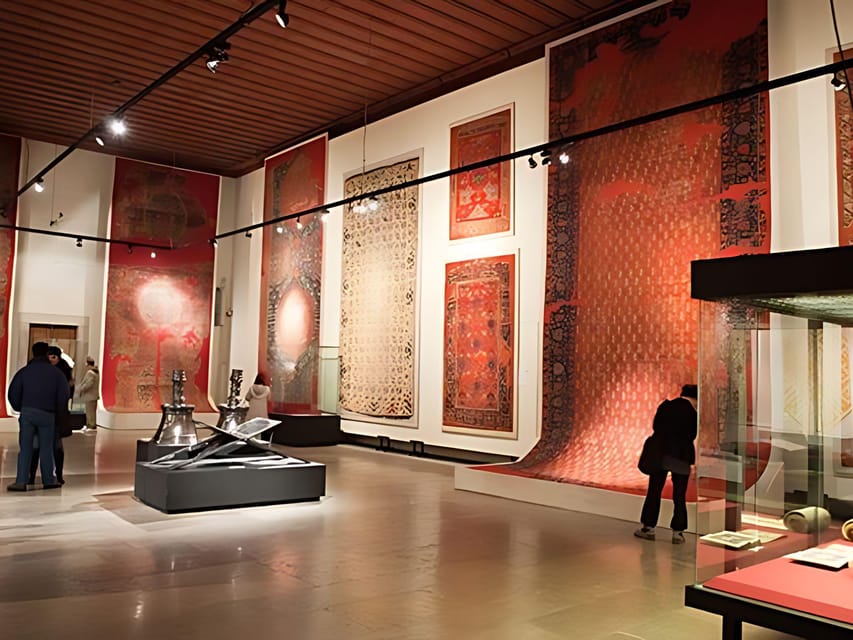
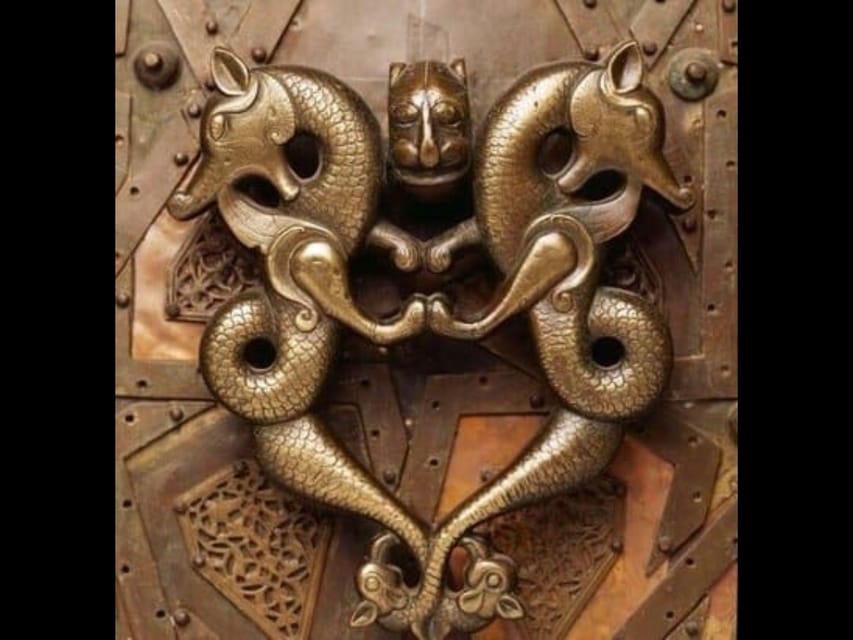
The museum organizes a lot of its appeal through technique. You’ll find areas that highlight calligraphy, ceramics, glasswork, and metalwork.
Here’s the practical payoff: this structure helps you keep track of what you are seeing. When you move room to room by material type, your brain stops trying to guess what an object is and starts comparing styles and methods.
For calligraphy, the key is to look beyond “pretty writing.” Try to notice how the letters form rhythms, curves, and weight. For ceramics, focus on surface treatment, glazing, and how decoration is balanced with shape. For glasswork and metalwork, it helps to notice how light interacts with the finished pieces, because that’s a major part of how these works were experienced in real life.
You won’t need a guided tour to benefit here. With an audio guide, you can get just enough context to make your looking more meaningful.
Religious Relics: Beard Fragment and Footprint
One section worth treating with care is the collection of religious relics, including a fragment linked to the Prophet Muhammad’s beard and a footprint. These items are significant on both religious and historical levels, and they naturally attract a lot of attention.
What I’d recommend is a slower pace around this area. Even if you are secular or just curious, the respectful mood helps you absorb the meaning of why people value these objects.
Also, plan to stand back for a moment before stepping in close. The museum layout and crowd levels can shift your ability to focus, so giving yourself a short pause helps you avoid rushing through something that people take seriously.
How the 25-Language Audio Guide Works With Your Pace
This ticket includes an audio guide in 25 languages, including English, German, Russian, Persian, Arabic, French, Italian, Chinese, Dutch, Spanish, Hindi, Romanian, Ukrainian, Korean, Turkish, Bulgarian, Polish, Swedish, Japanese, Indonesian, Greek, Hungarian, Portuguese, Urdu, and Croatian.
The best part is flexibility. This isn’t a fixed-group schedule. You control how long you linger at each carpet, manuscript, or craft display. If a room feels slow, you can shift. If you find an object that grabs you, you can stay.
A practical warning: I’d rather you plan to access the audio before you arrive. One common problem comes from trying to download or access the guide on the spot with Apple security settings, especially if you do not have Wi-Fi inside the museum. The workaround can take time, and time is the one thing you don’t get back.
So my “do this, not that” approach:
- Test the audio guide link at home or on hotel Wi-Fi.
- Save anything you can for offline use if your phone allows it.
- Bring your charging cable, because museum days add up.
If everything works smoothly, the guide is what turns “I saw carpets” into “I understood why these designs matter.”
Price and Time: Is $28 Good Value Here?
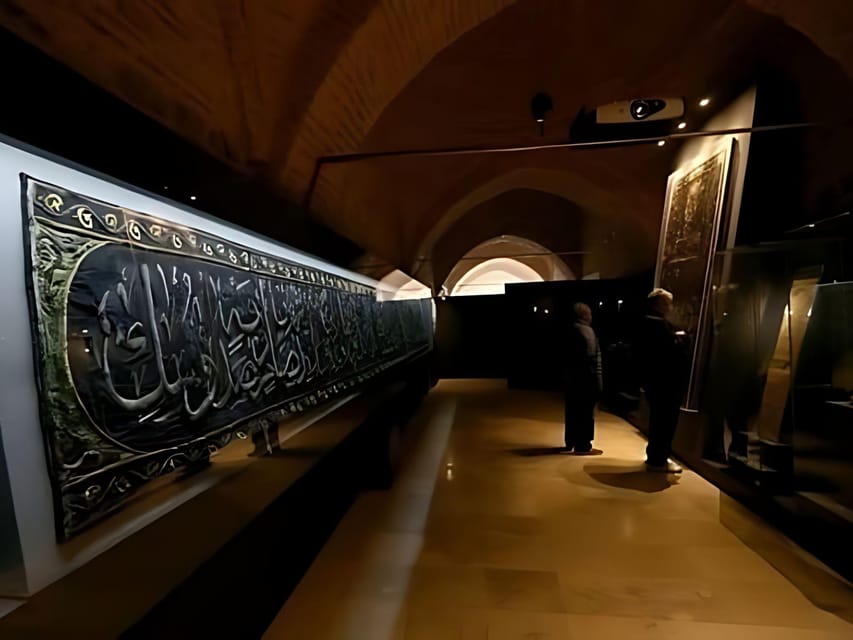
At $28 per person for a 1-day visit, this is priced like a focused entry ticket plus audio. The value question is simple: are you the kind of visitor who uses self-guided context to enhance your looking?
If you love art details, this price can feel fair fast because the museum’s strengths are visual and interpretive. The audio guide helps you read objects without needing a human guide.
It’s also worth knowing what’s not included. A guided tour is not part of this option, and transportation fees are not included. That’s not a problem if you like to explore on your own. But if you need someone to explain every step in a group setting, you might prefer a different format.
For time, the museum is a strong “add-on” day trip if you are already sightseeing around Sultanahmet. You’ll be close to the Blue Mosque and the rest of the historic core, so you won’t lose time commuting.
Getting There From Sultanahmet: Tram and Ferry Options
The museum is in Sultanahmet Square, so it’s easy to orient yourself near the Blue Mosque. For public transit, one efficient route is the Kabatas to Bagcilar tramway. Get off at Sultanahmet station, then plan on a 5-minute walk.
If you’re starting on the Asian side, use ferries to reach Eminonu from either Kadikoy or Uskudar, then connect as needed toward Sultanahmet. This can be a scenic way to move, and it often feels simpler than complicated transfers.
My advice: pick the route that minimizes uncertainty on the day. Istanbul transit works best when you know exactly where you’re getting off and how long your walk will be.
Who Should Book This Self-Guided Ticket
This ticket makes the most sense if you want:
- A self-paced museum visit
- A strong focus on carpets, manuscripts, and Islamic decorative arts
- A way to get context in your own language, using the built-in audio
It also suits couples, solo travelers, and families who can manage their own museum timing. Since a guided tour is not included, you are not locked into anyone else’s pace, and you can spend more time where your curiosity pulls you.
If you strongly prefer face-to-face commentary, this format might feel incomplete. But if you like reading, listening, and comparing objects, the audio guide is enough to make the visit satisfying.
Should You Book It?
Yes, I’d book it if you’re spending time in Sultanahmet and you want a high-quality indoor experience that explains what you’re seeing. The carpets and rugs, the decorative arts like calligraphy and ceramics, and the respectful look at religious relics make it a museum day with real substance, not just photos.
I’d think twice if you hate tech dependencies. This experience relies on QR codes and an audio guide link delivered by email, and you may have issues accessing the guide if you wait until the last minute and your phone runs into security barriers.
If you plan ahead and test the audio guide before you go, it’s a good use of a single day near the Blue Mosque, with value that comes from how you look, not just where you stand.
FAQ
How long is the ticket valid for?
It’s valid for 1 day. You’ll want to check availability for the starting times offered.
Is a guided tour included with the ticket?
No. A guided tour is not included. This is a self-guided museum entry with an audio guide.
What do I receive after booking?
You receive both Entry Ticket QR codes and an audio guide link via separate email messages from the supplier.
Can I skip security lines with this QR ticket?
No. You can skip the ticket line, but it is not possible to skip security lines. Entrance security is mandatory for all visitors.
Where is the museum located?
The museum is in Sultanahmet Square, very close to the Blue Mosque, in Istanbul’s Fatih district.
How do I get there using public transport?
A common option is the Kabatas to Bagcilar tramway, getting off at Sultanahmet station, then walking about 5 minutes. From the Asian side, you can use ferries to Eminonu from Kadikoy or Uskudar.
What languages are available on the audio guide?
The audio guide is available in 25 languages, including English, German, Russian, Persian, Arabic, French, Italian, Chinese, Dutch, Spanish, and others listed for the full set.
What if I try to access the audio guide on the same day?
The audio guide is tied to a link sent by email. If you try to download or access it right before entry, you may run into issues with Apple security, especially if you do not have Wi-Fi at the museum. It’s safer to test access ahead of time.
More Guided Tours in Istanbul
More Tickets in Istanbul

More Tour Reviews in Istanbul


Not for you? Here's more nearby things to do in Istanbul we have reviewed










More Museums to consider.
 ★ 3.7Hagia Sophia Skip-the-Line Ticket & Museum OptionFrom $334,958 reviews
 ★ 4.4Hodjapasha Whirling Dervishes Show & ExhibitionFrom $324,790 reviews
 ★ 4.1Topkapi Palace & Harem Museum Ticket & Audio GuideFrom $613,977 reviews
★ 4.0Istanbul Hodjapasha Whirling Dervishes Show & ExhibitionFrom $32503 reviews
★ 4.1Topkapi Palace & Harem Museum Ticket & Audio GuideFrom $613,977 reviews
★ 4.0Istanbul Hodjapasha Whirling Dervishes Show & ExhibitionFrom $32503 reviews
 ★ 4.7Topkapi Palace and Harem Museum Tour with TicketFrom $94247 reviews
 ★ 4.0Official Museum Pass for 12 Most Popular MuseumsFrom $124181 reviews
 ★ 4.5Hagia Sophia Mosque and Museum Skip-The-Line ComboFrom $59136 reviews
 ★ 4.1Museum of Illusions TicketFrom $2083 reviews
Other ways to explore Istanbul