
Review · EPHESUS TRIPS FROM ISTANBUL
2 Days Ephesus & Pamukkale Tours From Istanbul
Aegean ruins in two days, with smart pacing. This Istanbul-based trip lines up the big hitters of Ephesus and Pamukkale, plus guided stops like the House of Virgin Mary and the white travertine terraces. What makes it work is the logistics, from early-morning pickup to airport handoffs in Izmir and the ride back through Denizli.
I especially like the way the day is structured around walking, not just bus rides. Ephesus gets a full guided circuit, then you add the Ephesus Experience Museum so the scale makes sense. I also love that the guide can help you shape your pace, and the reviews highlight how people felt heard, even with kids. The main drawback to watch is timing: you must arrange a morning domestic flight to Izmir, since flight tickets are not included.
Key Takeaways
- Izmir flight timing matters: you need a morning arrival around 08:00 to 08:30 to start the Ephesus portion smoothly.
- Ephesus is guided, then reinforced: you walk major sights, then see a 360-degree digital reconstruction.
- Several add-ons are optional: Terrace Houses, Cleopatra Pools swimming, and the Hierapolis museum can be skipped if you want lighter days.
- Small group size: maximum 15 travelers keeps the experience from feeling like a cattle drive.
- Two different landscapes of wonder: Roman marble streets one day, then calcium-white terraces and thermal pools the next.
Why This 2-Day Ephesus and Pamukkale Tour From Istanbul Works
If you want the classic Aegean highlights without doing the whole thing as a DIY marathon, this format is practical. You fly from Istanbul to Izmir early, then you work your way south to Selcuk, Ephesus, and Kusadasi on Day 1. Day 2 shifts inland to Pamukkale and Hierapolis, then returns you to Denizli Cardak for your onward flight.
The best part is that your time at the ruins is guided and chunked. You are not just dropped near a ticket booth and left to guess what matters. The route pairs big-name sites with perspective builders. For instance, after walking Ephesus, you also visit the Ephesus Experience Museum, which uses a 360-degree digital setup to show how the city looked at its height. It is one of those rare add-ons that feels useful, not ornamental.
My one caution is physical pace. This is a moderate-walking plan, and you are doing it in heat much of the year, so comfy shoes and a steady hydration plan matter.
More Istanbul tours and experiences for the shortlist



The Istanbul Morning Start, Airport Handoff, and Why the Flight Time Is Non-Negotiable
The tour begins with hotel pickup in Istanbul early in the morning. From there, you get a private transfer to the airport departure terminal. Then you fly domestically to Izmir.
Here is the key detail: domestic flight tickets are not included. You need to book a morning flight that arrives in Izmir around 08:00 to 08:30. That timing is what keeps the rest of the schedule realistic, because the moment you land you are meeting the representative and going straight to the Ephesus area.
Once you arrive, your meeting is simple. You exit the domestic terminal, then a representative holds a sign with your name. After that, you ride in a comfortable, air-conditioned vehicle (about 45 to 60 minutes) to the Ephesus region, passing peach orchards and olive groves along the way. Even the drive feels like part of the experience, because it sets the Aegean Coast mood.
Selcuk, the Real Gateway to Ephesus, and the Guide Meet-Up Moment
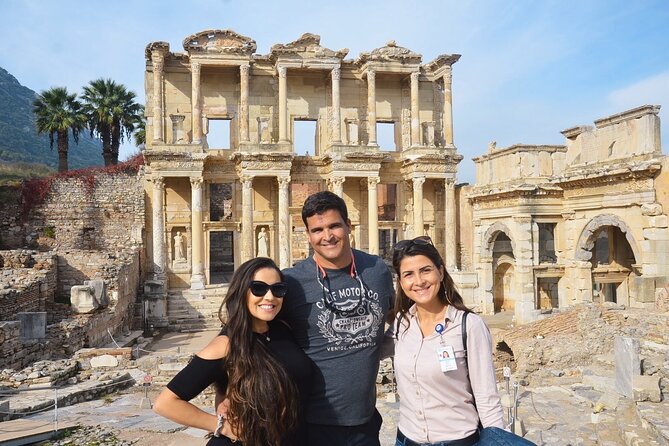
You arrive in Selcuk, which acts like the gateway for Ephesus. This is where you meet your professional tour guide and connect from the airport transfer vehicle to the tour bus. For many people, it is the first moment the trip feels truly guided.
This is also where you can start mentally switching from Istanbul mode to Aegean mode. The day is about ancient sites, but the flow is designed to keep you moving in the right order. You are not bouncing around trying to figure out transport links while everyone else is sightseeing.
Based on the guide names and roles mentioned in feedback, guides like Güfte or Darya are often credited for explaining what you are seeing in a way that helps you picture life back then, not just read plaques. Drivers like Salih are also repeatedly mentioned for making the ride smooth and the day manageable, especially on hot days.
House of the Virgin Mary on Nightingale Mountain, Quiet Time Before the Roman City
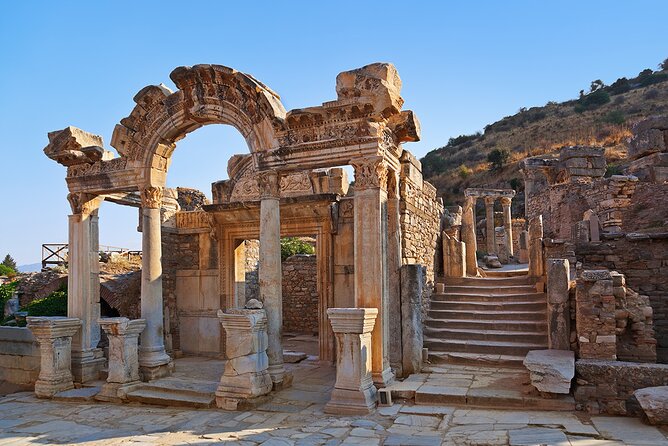
Before you hit the main ruins, you go to the House of Virgin Mary. The drive climbs toward Nightingale Mountain, and that alone changes the feel of the day. It is not the same kind of monumentality as the Roman streets. It is more about a calm pilgrimage setting.
You typically get about 45 minutes. That is enough time to visit the chapel, see the holy water fountains, and leave a wish on the famous wishing wall. Whether you are deeply spiritual or just curious, this stop gives your brain a breather. Then you step from that peaceful atmosphere into the louder world of ancient Ephesus.
The practical tip here is timing and comfort. This is usually a slower, more reflective stop than the city ruins. So use it to reset. If you have any mobility limitations, this is also a good moment to slow down and decide how you want the rest of the day to go.
Ephesus Ancient City: Celsus, Marble Streets, and the Theatre Connection
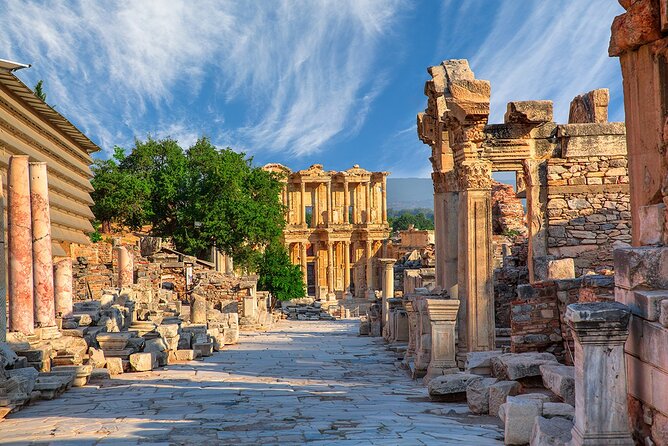
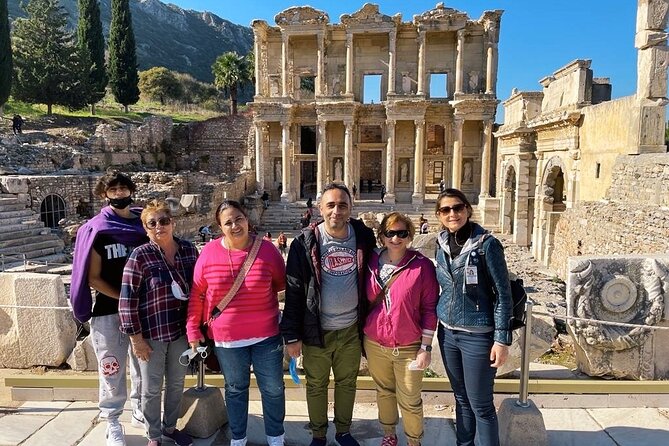
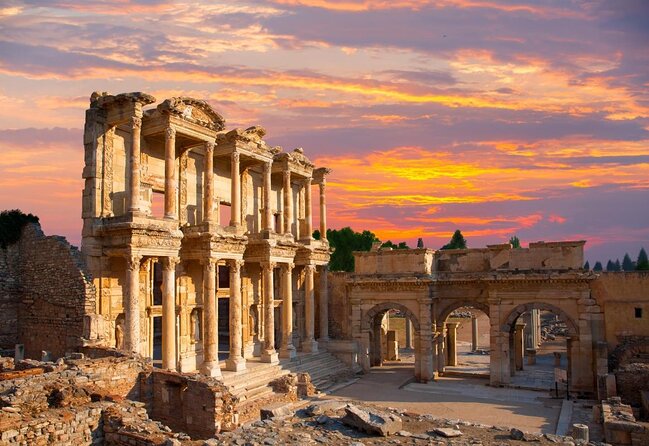
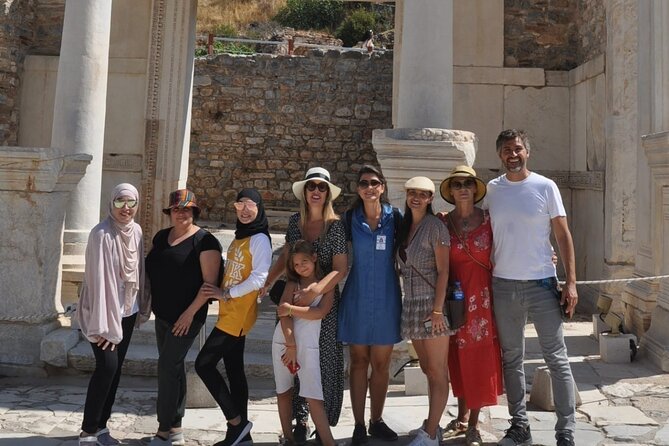
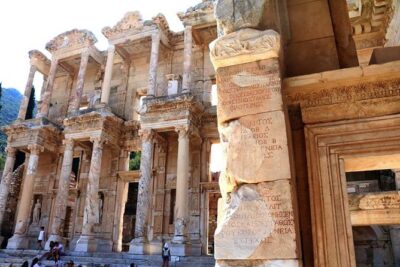
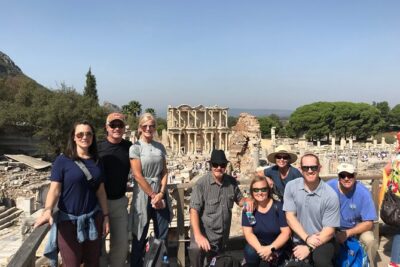
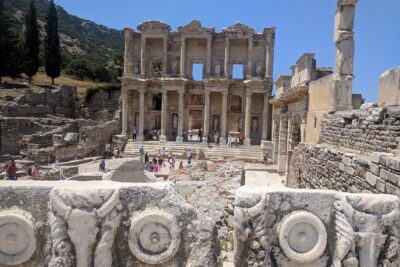
Ephesus is the star of Day 1. You walk through the original marble streets of one of the best-preserved Roman cities in the world, with about 2 hours allocated for the guided circuit.
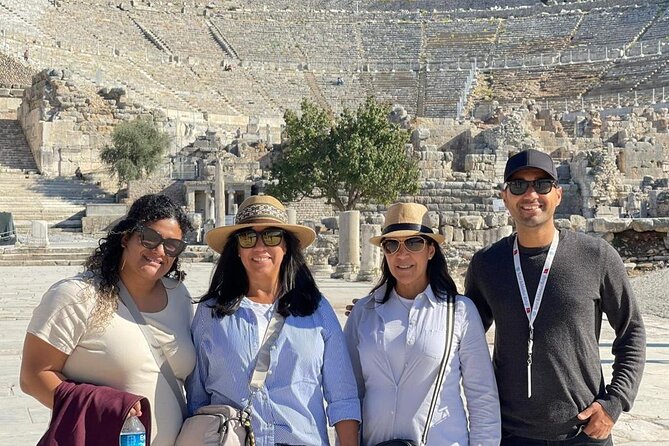
Expect the most famous highlights, explained in context. Your guide points out key structures like Celsus Library, the Temple of Hadrian, and the Trajan Fountain. Then you finish at the massive Great Theatre, a site associated with St. Paul preaching to the Ephesians.
What I like about this stop is the pacing. Two hours is long enough to feel like you did more than skim, but short enough that you are not exhausted before lunch. Also, you are not stuck trying to interpret everything on your own. A good guide helps you connect buildings to the culture that created them.
A small realism note: Ephesus can be hot and open-air. Bring water and plan to take shade breaks when you can. You will get more out of the history if you are comfortable enough to notice details.


Terrace Houses and the Ephesus Experience Museum, Two Ways to Understand the City
After the main Ephesus walk, you have two different options for adding depth.
First are the Ephesus Terrace Houses, which are an optional visit. These sit on the slopes of Bulbul Mountain and show the private lives of Roman elites. The big draw is the preservation, including mosaics and colorful frescoes that were once part of everyday house life. You get about 30 minutes if you choose it, and you purchase that ticket at the entrance. Your guide accompanies you to explain what you are seeing.
Then there is the Ephesus Experience Museum, an included stop on the plan. This is about understanding the ruins in their full-city context. It uses an award-winning 360-degree digital experience to show how Ephesus looked during the Roman era. You usually spend about 30 minutes here.
I think the museum is a smart pairing. The ruins are impressive, but they can also feel like puzzles, especially if you do not have a feel for what stood where. The digital layer helps you connect what is left on the ground with how the space likely functioned back then.
Selcuk Lunch and the Artemis Viewpoint That Stays in One Frame
You get lunch in Selcuk at a traditional local restaurant, with about 1 hour set aside. Lunch is not included in the package list, but this is one of those practical moments where you avoid decision fatigue. You sit down, eat regional food, and recharge before the afternoon sights.
A helpful detail here is that the guide often recommends food and what to do next when you have free time. In feedback, people specifically liked how guides made suggestions for days you are not traveling with them.
After lunch, you stop at the Temple of Artemis site. Only a single column remains today, but the significance is huge since it was once considered one of the Seven Wonders of the Ancient World. You also get a panoramic view where the ancient Temple, the Isa Bey Mosque, and the Byzantine Basilica of St. John come together visually.
The value of that viewpoint is perspective. You see how layers of history overlap in one geographic spot, which is a major theme in Turkey’s Aegean region.
Kusadasi Hotel Transfer and Your Unstructured Evening by the Sea
At the end of Day 1, you drive toward Kusadasi, a coastal town, and drop you at your accommodation for check-in. The plan leaves your evening open so you can enjoy the sea breeze and do your own thing, often with sunset in mind.
This is a real advantage. After a full day of ancient walking, you do not want another mandatory activity. You want time to shower, eat dinner at your own pace, and sleep like a human.
You will also feel the next day starting to take shape. Pamukkale is a different kind of wonder, and being able to rest before the drive helps a lot.
Road to Pamukkale: Inner Aegean Valleys, Story Stops, and a Leg Stretch
Day 2 begins with a drive away from the coast toward Pamukkale, taking about 3 hours. The ride is not just transit. The guide shares stories about local culture and how the landscape changes as you travel inland. You pass through areas with olive, fig, and cotton trees.
There is also a short break for leg stretching and views. That matters because Pamukkale day includes walking on uneven ancient sites and then barefoot time on travertine terraces.
If you tend to get travel stiff, treat that break as non-optional. Use it to hydrate, adjust your socks and shoes plan, and set yourself up for a smoother day.
Hierapolis Ruins and the Necropolis Walk, Plus the Roman Theatre View
At Pamukkale, you explore the ruins of Hierapolis, the ancient Holy City located above the white terraces. You usually start with the Necropolis, one of the largest cemetery complexes in Anatolia. This section includes monumental gates and a walk that feels more expansive than just a quick set of ruins.
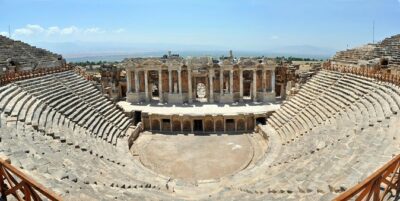
From there, you reach the Roman Theatre, with a view over the valley below. The guide explains how Hierapolis became a world-famous center for healing and thermal baths during the Roman Empire.
What makes this stop memorable is the combination of scale and scenery. You are walking among structures meant to last, then you look out and realize the geography did the selling. It helps you understand why people returned here over centuries.
Hierapolis Arkeoloji Muzesi and Optional Cleopatra Pools Swimming
Next you have options, and this is where the tour stays flexible.
The Hierapolis Arkeoloji Muzesi is optional. It is located inside the restored Roman Bath and houses artifacts from Hierapolis, Laodicea, and the Lycus Valley. Expect things like marble sarcophagi, Roman statues, and rare coins. This is about a 30-minute addition if you choose it.
Then comes the Cleopatra Pools. This is a thermal pool area with warm mineral water, surrounded by gardens and ancient marble columns submerged in the pool. The swim portion is optional, and you pay the entrance fee at the pool office if you want to get in. The tour gives about 45 minutes for the stop.
I like having optional choices here because Pamukkale day can get intense. If you are traveling with kids or you just want to focus on terraces and soaking your feet, you can skip the swim and still feel you did the main highlights.
Pamukkale Thermal Pools and Travertine Terraces, Barefoot Time Done Right
Now you reach the heart of the Pamukkale experience: the white terraces that look like a cotton castle. These travertines form over thousands of years as calcium-rich thermal water cascades down the hill.
You get about 45 minutes for the thermal pools portion, including time to walk barefoot on the soft travertine and soak your feet in warm, turquoise thermal pools. This is the moment most people remember, mainly because it feels unreal in photos and even more so in person.
A practical tip: treat the ground gently and plan your route. Travertine can be slick, and the sensation can surprise you even if you expect it. Wear the right footwear when you are not barefoot, and bring a small towel if you have one. The goal is to enjoy the moment without rushing.
Lunch in Pamukkale Village, Then Back to Denizli Cardak Airport
After the terraces and ancient pools, you take a break for lunch at a local restaurant in the Pamukkale village area, usually about 1 hour. Lunch is not included, but the tour uses this time to let you sit down, eat regional dishes, and cool off before the final transfer.
After lunch, you head to Denizli Cardak Airport, with about 1 hour for the transfer. Your tour guide and driver help with luggage and drop-off so you can catch your flight.
Then, when you arrive back in Istanbul, your team meets you again for a private transfer to your accommodation. It closes the loop so you do not end up hunting for taxis at your end time.
Price and Value: Is $614.52 Fair for Two Days?
At $614.52 per person, the value comes from what is bundled, not from the sightseeing alone. You are getting accommodation in local hotels, breakfast, a professional English-speaking guide, and airport transfers with air-conditioned vehicles plus hotel pickup and drop-off.
The big extra cost you should budget for is food and entrance fees, because the package notes that lunch, dinner, drinks, personal expenses, tips, flight tickets, and entrance fees to sites and museums are not included. That said, the day plan marks several key stops as included in the schedule. To avoid surprises, confirm what entrances are covered versus what you might pay at the gate.
When it feels like good value is when you would otherwise pay for flights, a private driver, and a guide separately. This trip gives you the structure. You spend less time organizing, and more time actually seeing. Reviews are strongly positive on guides and drivers, especially on how well the day flows and how easy it feels to manage hot conditions.
Who This Tour Fits Best, and Who Might Want a Different Plan
This tour is a strong match if you want:
- Guided highlights in Ephesus and Hierapolis without complicated transport planning
- Small group energy, max 15 travelers
- A plan that mixes major ruins with perspective stops like the Ephesus Experience Museum
- Optional extras so you can decide how intense each day should be
It may be less ideal if:
- You hate early starts and must avoid morning flights
- You want fully independent timing with zero structure
- You are very sensitive to walking in sun and heat, since you will be outdoors for major portions
Good shoes, sunscreen, and a basic water plan will make a noticeable difference.
Should You Book This Ephesus and Pamukkale Tour?
I would book it if your priority is seeing the core sights with a guide, and you want Istanbul to Aegean logistics handled for you. The two-day rhythm is well balanced: one day for Ephesus and its context, a second day for Pamukkale terraces and Hierapolis ruins. The optional pieces, like Terrace Houses and Cleopatra Pools swimming, let you tailor the intensity.
I would think twice only if you cannot comfortably handle a morning domestic flight to Izmir, or if you are likely to struggle with moderate walking in warm weather. If you can meet that timing, this is one of the cleaner ways to get both Ephesus and Pamukkale without turning your trip into an operations project.
FAQ
What time should my flight arrive in Izmir?
You are advised to book a morning flight arriving in Izmir around 08:00 to 08:30 AM.
Are domestic flight tickets included?
No. Flight tickets are not included in this package.
Is hotel pickup in Istanbul included?
Yes. Pickup from your hotel in Istanbul is offered.
Are meals included?
Breakfast is included. Lunch, dinner, and drinks are not included.
Do I need to pay entrance fees at each stop?
The tour package lists entrance fees to the sites and museums as not included. Some stops are marked as included in the day plan, so it is worth confirming which entrances you will be covered for.
Which parts are optional during the tour?
Ephesus Terrace Houses is optional. The Hierapolis Arkeoloji Muzesi is optional. Swimming at Cleopatra Pools is optional.
What group size should I expect?
The tour has a maximum of 15 travelers.
Is the guide in English?
The tour is offered in English, and a professional tour guide is included.
Where do you take me after Pamukkale, and how do I return to Istanbul?
You are transferred to Denizli Cardak Airport, then upon arrival in Istanbul you get a private transfer back to your accommodation.
How late can I cancel for a full refund?
You can cancel up to 24 hours in advance for a full refund. Less than 24 hours usually means no refund.
More 2-Day Experiences in Istanbul


More Tours in Istanbul




More Tour Reviews in Istanbul
Not for you? Here's more nearby things to do in Istanbul we have reviewed






More Ephesus Trips from Istanbul to consider.
 ★ 5.04 Days Turkey Tour – Cappadocia, Ephesus and Pamukkale TourFrom $1,571138 reviews
 ★ 5.0Ephesus Day Trip from Istanbul incl Domestic FlightsFrom $475128 reviews
 ★ 5.06 Days Turkey Tour Cappadocia, Pamukkale, Ephesus, Gallipoli TroyFrom $2,122109 reviews
 ★ 4.0Daily Ephesus & House of Virgin Mary from Istanbul – Small GroupFrom $86095 reviews
 ★ 5.07 Days Best of Turkey Tour: Istanbul-Cappadocia-Ephesus-PamukkaleFrom $1,71391 reviews
 ★ 4.55-Day Aegean Tour – Gallipoli, Troy, Ephesus, Kusadasi, PamukkaleFrom $1,54386 reviews
 ★ 5.0Istanbul, Ephesus, Pamukkale and Cappadocia 8 Day PackageFrom $1,05083 reviews
 ★ 5.0Private 4 Days Turkey Tour from Istanbul to Cappadocia, Ephesus, PamukkaleFrom $1,90080 reviews
Other ways to explore Istanbul