Review · ISTANBUL
Istanbul to Seven Churches of Asia Minor 4 Nights in 4 Star Hotels
Seven churches in five days. That is the whole deal. You get a Bible-connected route through western Turkey, starting with a flight from Istanbul to Izmir and ending with private transfers back in Istanbul. Along the way, you visit major ruins tied to Revelation, led by a professional Bible-oriented guide in English.
I love how much is actually included, especially entrance fees handled with pre-paid tickets so you are not stuck waiting in lines. I also like the comfortable pacing and bases in 4- and 5-star hotels, with breakfasts and two dinners already built in.
One consideration: the days are full, with early departures and long stretches in the car, and lunch is not included. If you hate tight schedules, you may feel it on days with multiple sites back-to-back.
Key highlights to know before you go
- Bible-linked guiding at every stop helps you connect verses to what you see on the ground
- Pre-paid entrance tickets mean less line time, more time at the sites
- Four nights with solid hotel bases in Izmir, Pamukkale, and Kusadasi
- Flights plus private transfers reduce the usual stress of moving between cities
- Small group size (max 15) keeps the experience calm enough for real questions
Price and logistics: what $1,189 includes, and what it does not
At $1,189 per person, this is not a cheap ticket, but you also avoid a lot of typical add-ons. Your package includes round-trip domestic flights (Istanbul to Izmir and back), four nights in hotels rated 4- and 5-star, and 4 breakfasts plus 2 dinners. It also covers entrance fees and private transfers in Istanbul (hotel-airport-hotel) plus the airport to hotel transfer in Izmir.
Transportation is handled with a brand new air-conditioned minivan or minibus, which matters when your itinerary is spread out across western Turkey. The tour is capped at 15 travelers, and that small size is part of the value. You get the benefits of a group schedule without the chaos of a big bus.
Now, the part to plan for: lunch is not included, and drinks are also not included. So you will want to budget extra for midday meals and any water or snacks you prefer. Another practical note is luggage: the flight allows 15 kg check-in and 8 kg cabin.
If you like clean logistics, reliable timing, and you want your Bible route organized without spreadsheets, this package makes sense. If you want total freedom, this is more structured than independent travel.
You can also read our reviews of more tours and experiences in Istanbul.
Day 1 travel day: Istanbul to Izmir, then into the tour rhythm
You start with pickup from your Istanbul hotel, either on the European or Asian side. The pickup time is sent after booking, but the key point is that it is private. Then you fly from Istanbul Airport to Izmir, about an hour in the air.
When you land, an Izmir representative meets you, and you get a private transfer to your hotel in Izmir. This matters because it gets you settled fast, not stuck navigating buses after a flight. Your first day is about starting smoothly, not cramming.
Even though your sightseeing begins in earnest on Day 2, this travel sequence is part of why the tour works. It positions you close to the ancient sites you will visit next.
Pergamon and Thyatira: Acropolis views, the purple-dye story, and Revelation on the map
Day 2 is built around two major church stops in the area, with a strong mix of big-picture ruins and verse-based context.
Pergamon Ancient City
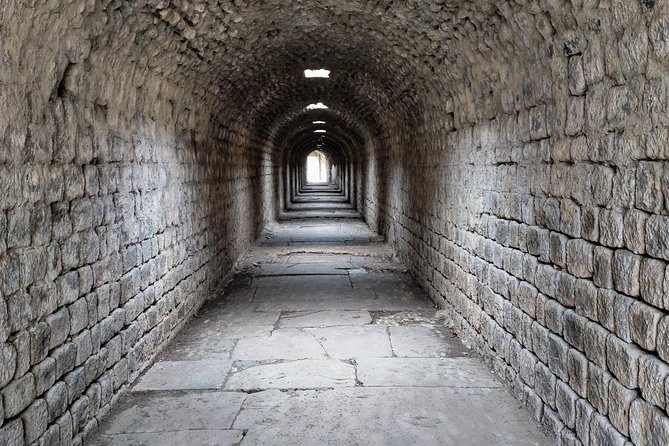
Pergamon is your first big hit, and you get about 3 hours here. The guide ties the visit directly to Revelation themes linked to the Seven Churches of Asia. On the ground, you explore the Acropolis, the Asklepieion, and the Altar of Zeus.
This is one of those places where the guide makes a difference. Ruins can feel like random stones if you do not know what to look for. With the verse connection and on-site pointing, you can better understand why certain locations get named and discussed.
Tepe Mezari, then a panoramic Smyrna moment
Next you continue to Tepe Mezari, visiting the Thyatira area, known today as Akhisar. The schedule includes time for remains of a basilica and Roman-period architectural fragments. You also get the thematic connection to purple dye and Lydia, the seller of purple, which helps you connect daily life to the text.
After that, you get a panoramic ride of Smyrna, another church stop. The word panoramic here is important. You will get views, but it is not the same as a long, deep wander through ruins. Still, it is a smart way to keep the route efficient.
You end the day with dinner and overnight, so you do not spend the evening scrambling for food after a busy site day.
Sardis, Philadelphia, and Laodicea: churches in different moods
Day 3 has more stops, but it also feels like a guided storytelling arc. You depart early for Sardis, then keep moving through Philadelphia and Laodicea, before you finish with Hierapolis and Pamukkale.
Sardis (Sardes)
Sardis is described as picturesque, and the site choices match that idea. You get about 1 hour here. The tour includes the Temple of Artemis and the Temple of Cybele, plus the restored gymnasium and reconstructed synagogue.
One detail I really like from this plan: you also see the “last several meters” of the royal Persian Road from Susa to Sardis built by Cyrus the Great. You will also pass through the story of the Pactolus river, tied to the golden theme. This is not just church ruins, it is trade and travel infrastructure, which makes the church setting feel more real.
Philadelphia (Alasehir)
Next comes Philadelphia, and you get about 1 hour. The tour highlights that it is the only church not censured. On-site, you see remains of a Byzantine brick basilica, with some 11th century frescoes.
This stop can be emotionally different from the others, because the site is small and specific. It is the kind of place where you slow down just a bit, watch how remnants sit in the landscape, and let the guide’s interpretation do the work.
Laodicea
Finally, you reach Laodicea, also about 1 hour. The city story here is tied to Seleucid times and its name, then you get its geographic reason for importance: it sat at the crossroads of two important roads, with commercial and logistical weight.
Laodicea tends to land well for visitors who like practical context. When you understand the city’s position, the text connection feels less abstract.
Hierapolis and Pamukkale: the Apostle Philip stop plus the white mineral pools
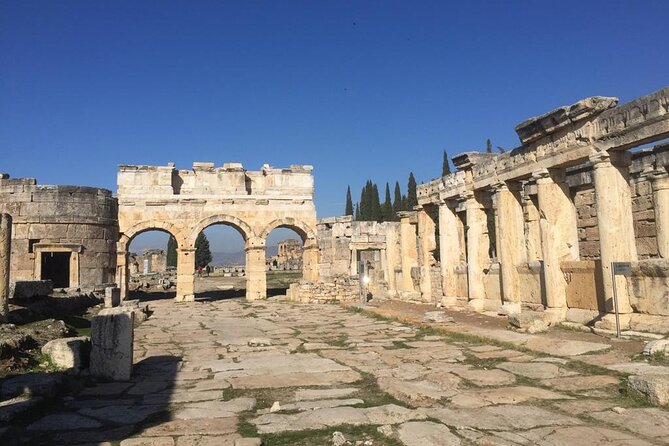
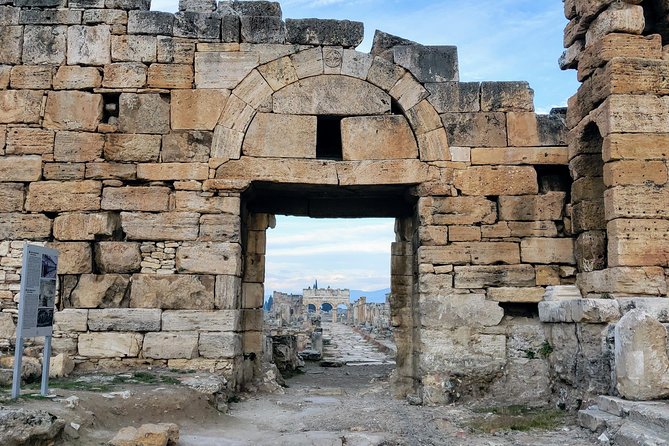
After Sardis and Laodicea, you drive to Hierapolis and Pamukkale for about 2 hours. Hierapolis is linked to the Apostle Philip, with a visit to the Martyrium of the Apostle Philip where the tour says he was martyred during persecutions ordered by Domitian.
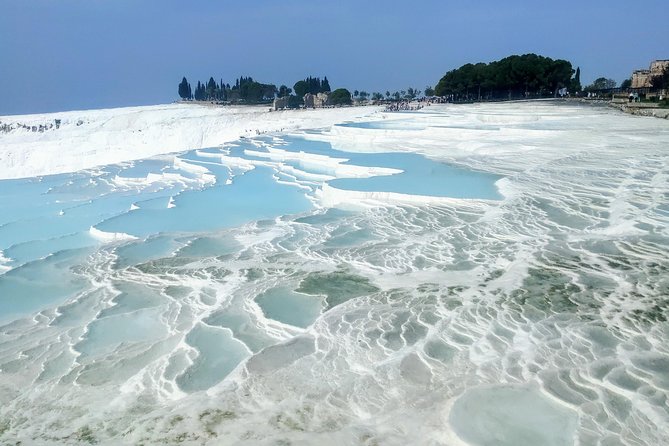
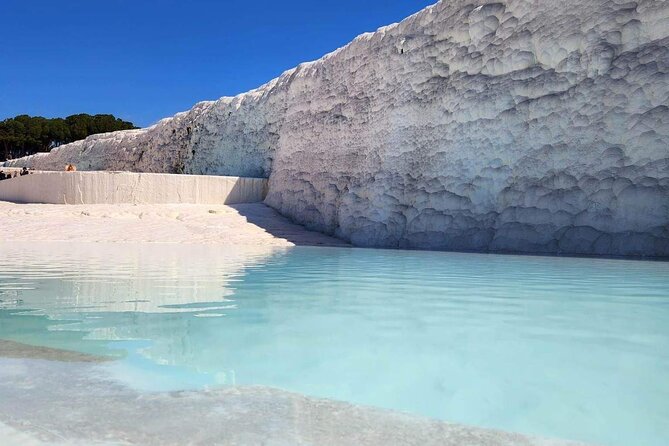
Then you see Pamukkale, the famous white cotton fortress of hot mineral water cascading over cliffs into pools, channels, and stalactite-like formations. The tour description is straightforward here, and it matches what most people picture, but what you really get is a moment of sensory contrast after hours of archaeology.
Practical note: this is still a tour stop, not a free day. You will have time to enjoy the views and the site, but you are not here to linger for hours on personal exploration.
If your feet are tired by Day 3, this is still worth it. It gives the trip a visual payoff, and the Philip connection adds meaning.
Ephesus: St. John’s Basilica, the Library of Celsus, and the scale test
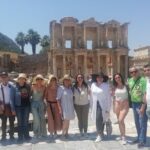
Day 4 is your Ephesus day, and it is a big one. You get about 2 hours in the ancient city, visiting key highlights including the Basilica of St. John.
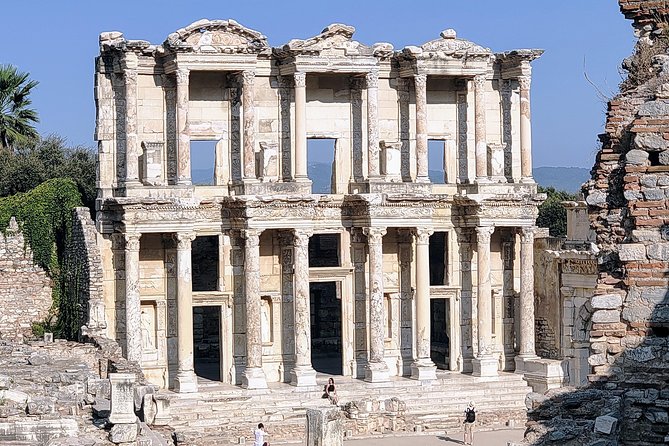
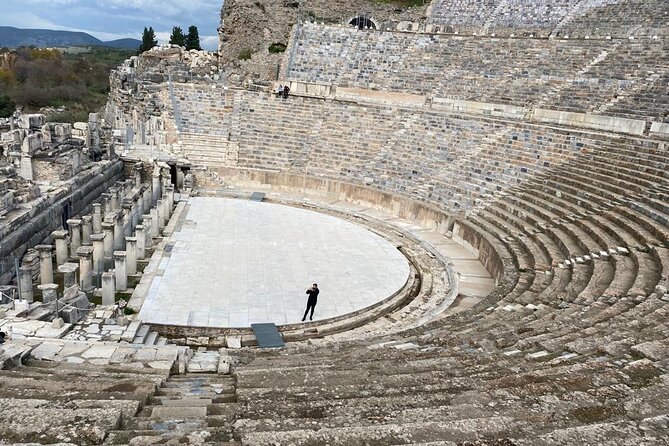
The tour frames Ephesus through the lens of Paul, with reference to preaching and a multi-year stay, and it notes an epistle sent to the Ephesians. On the ground, you tour marble streets lined with major public buildings, including the Baths of Scholastica, the Library of Celsus, the Temple of Hadrian, and the Theatre.
There is also a stop note for the Temple of Diana of the Ephesians, which the itinerary links to the seven wonders theme. Even if you have seen photos, Ephesus can still hit you with scale. The guide helps you keep your orientation so you do not just wander into big open areas without context.
One small caution: Ephesus can feel like a lot of names in a short time. If you have a favorite building, tell your guide early. A good Bible-oriented guide (this tour uses one) can help you focus your attention during the walk.
Virgin Mary’s House at Meryemana: a quieter stop between big ruins
After the Ephesus ruins, you drive to Meryemana, the Virgin Mary’s House, for about 45 minutes. The tour includes the story of Mary’s association with Ephesus, references to the third Ecumenical Council in 431 AD, and the claim that she lived in the area until her death.
You also get details that make this pilgrimage stop feel anchored in modern history: the itinerary notes a discovery, a declaration of pilgrimage in 1892, and a papal visit by Pope Paul VI on July 26, 1967.
This stop works well as a mental reset. You have time to step back from crowds of ruins and spend a little quiet time with the spiritual tone of the visit. The setting here is more reflective than architectural.
Then the tour heads to St. John’s Basilica again for about 30 minutes. The schedule includes it as part of Ephesus earlier and then again right after Meryemana, so expect some overlap in themes or repeated orientation. That repetition can be helpful, especially if you want to confirm what you noticed the first time.
Artemis Temple and Kusadasi evening: short photo stop, real downshift
Before you drive back to Kusadasi, you have a quick Artemis Temple stop for about 20 minutes, and it is listed as free admission in the schedule. This is the kind of stop that is best for quick context photos rather than a deep read.
Once you arrive in Kusadasi, you check into your hotel. Dinner and overnight follow, and this is one of your two included dinners for the trip.
This evening matters because you are not back-to-back with ruins all night. You have a place to reset, unpack, and take a slower pace with your group.
Day 5: Kusadasi to Izmir Airport, then back to Istanbul
Your last day is straightforward. You get hotel pickup in Kusadasi, then a private transfer to Izmir airport. After that, you fly back to Istanbul, and you finish with a private transfer to your Istanbul hotel.
The tour ends where it started, with minimal stress. You are not scrambling to figure out local transport on your final day, and that is a big deal if you want your trip to feel controlled from beginning to end.
Who this tour fits best (and who should think twice)
This is a great fit if you want a Christian, Bible-focused route with guided interpretation, and you prefer not to piece everything together yourself. It is also ideal if you like comfortable hotels and included meals so you can spend your energy on the sites, not logistics.
It is especially well suited for people who value structure but still want a human guide to connect verses to real places. In the past, guides named Melih and Mustafa show up in the same kind of feedback pattern: clear explanations and a friendly group dynamic with the driver also keeping things running on time.
You might want to think twice if you hate an itinerary with multiple stops each day, especially when you have early departures and a lot of driving. Also, since lunch and drinks are not included, you will need to plan your spending.
If you are traveling with a vegetarian preference, the tour notes that vegetarian options are available when you advise during booking. That is worth taking seriously early.
Should you book this Istanbul to Seven Churches of Asia Minor tour?
Yes, consider booking if you want a guided, Bible-connected circuit with entrance fees handled, comfort-focused hotels, and private transfers that cut down real-world hassle. The value comes from the package structure: flights, hotels, meals, entrances, and a Bible-oriented guide all in one plan for a single price.
I would book this over piecing together public transport if you have limited time and you want to feel confident each day is moving you to the next key stop. I would not book it if you plan to use Turkey as a flexible, self-paced road trip and you want fewer scheduled stops.
FAQ
Is pickup included in Istanbul?
Yes. You get pickup from your hotel in Istanbul, either on the European or Asian side. A suggested pickup time is sent in the confirmation message.
Are entrance fees included?
Yes. Entrance fees are included, and your guide carries pre-paid tickets to help you skip lines.
What meals are included?
The package includes 4 breakfasts and 2 dinners. Lunch is not included, and dinners in Izmir are not included.
Are flights included?
Yes. The tour includes domestic flights from Istanbul to Izmir return, with the listed luggage limits of 15 kg for check-in and 8 kg for cabin.
What hotel areas will you stay in?
You stay in Izmir (DoubleTree By Hilton Alsancak or Hilton Garden Inn Bayrakli or similar), Pamukkale (Colossae Thermal or Pam Thermal Hotel or similar), and Kusadasi (Efe Boutique or similar).
How large is the group?
The tour has a maximum of 15 travelers, and the minimum required booking is 2 people.
Is a vegetarian option available?
Yes. Vegetarian options are available if you advise at the time of booking.