
Review · GUIDED
Istanbul: Byzantine and Ottoman Relics Tour with Local Guide
Old City Istanbul is easier when it has a plan. This tour strings together Byzantine and Ottoman power in a way that feels logical, not random. You get a live English guide and a walking route through some of the city’s top UNESCO sights.
I especially like the built-in flow: Hagia Sophia first, then the Blue Mosque, and then the Hippodrome and Topkapi Palace. The big win is that you’re not just looking at buildings, you’re getting the “why” behind each one, from church to mosque to imperial residence.
One drawback to think about: it’s a true walking day. You’ll also need comfortable shoes, no luggage or large bags, and it isn’t suitable for wheelchair users.
Key Highlights That Matter
- Small group, up to 10: less time waiting, more time asking questions.
- Express security check: you lose less time before you reach the big sites.
- Topkapi Palace with Harem grounds: you see the courtyards and chambers that explain Ottoman rule.
- Grand Bazaar time: you get the best chance to shop without getting totally turned around.
- Lunch included at a local restaurant: you don’t have to hunt while you’re tired.
How This Walking Route Keeps Old City Istanbul Understandable
Istanbul’s history can feel like a blur, mainly because the city layers empires on top of each other. What I like about this tour is that it walks you through the story in the right order, starting with the most recognizable Christian-to-Islamic transformation and then moving into Ottoman architecture and palace life.
You’ll spend your time in the “Old City” zone on foot, which is the only way to connect the dots between monuments that are close but still culturally worlds apart. The small group size, limited to 10 people, also helps. You move as a unit, but your guide can still slow down when something is worth your attention.
If you’re traveling with kids, this can work because the main stops are visual and dramatic. If you’re an art or architecture fan, you’ll like the way the guide points out the building design instead of only reading facts.
You can also read our reviews of more guided tours in Istanbul

Pickup, Timing, and What You Need to Bring for a Smooth Day
This experience is built around hotel pickup and drop-off in several central areas, including Sultanahmet, Sirkeci, Beyazıt, Aksaray, and Taksim. That matters because many Old City tours waste time on the first and last mile, especially when people meet late or change plans.
You’re looking at about 7 hours on the ground, and the route is the kind where comfortable shoes are non-negotiable. The tour also includes entrance fees and lunch, so you can budget your time without having to keep pulling out your wallet at every stop.
Plan to travel light. The tour notes that luggage or large bags are not allowed, so bring a daypack, not a suitcase. If you’re the type who wants camera gear, keep it compact, because you’ll be carrying it all day.
Hagia Sophia Mosque (Aya Sofya): The Big Architecture Story, Not Just a Photo Stop
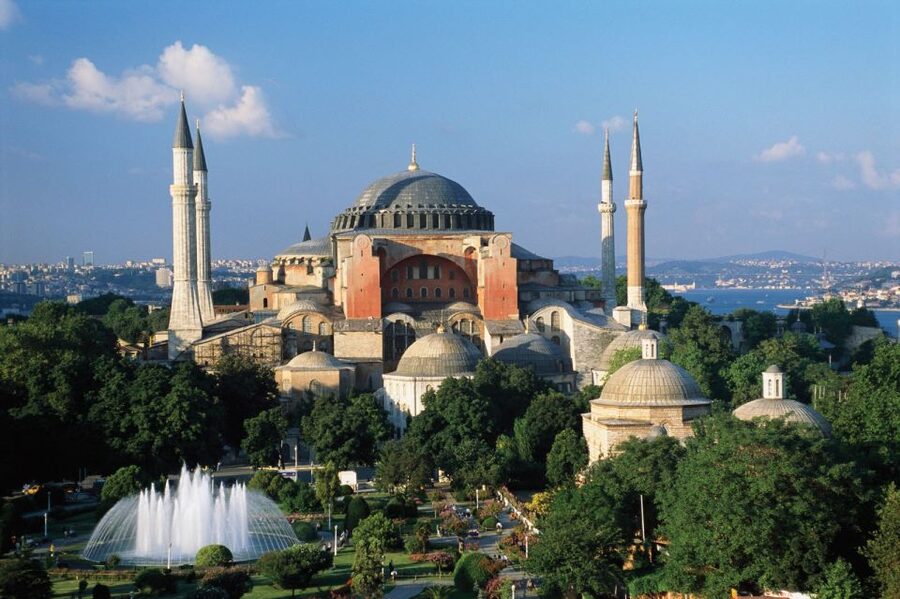
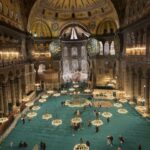
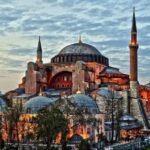
Hagia Sophia is the centerpiece of this whole day for a reason. The tour focuses on the fact that this UNESCO-listed cathedral-mosque contains both Ottoman and Byzantine work, and it’s one of the most important buildings in architecture history.
Here’s what makes the visit practical: your guide doesn’t only tell you what it is, they walk you through what you’re seeing. You’ll compare the layers of time, including the shift from a Christian church to an Ottoman mosque. The tour also specifically notes that it’s not an entrance from outside, which usually means you’re routed in a way that keeps things moving and reduces wasted time.
You’ll be studying the architecture together with a professional guide. In other words, it’s not just “look up at the dome,” it’s “here’s why the space feels the way it does,” and how the building reflects the religious and political changes around it.
When the Schedule Changes
The planning notes mention potential itinerary swaps around closures. Hagia Sophia is listed as closed on Mondays with a switch to the Basilica Cistern, but there is also a line saying Hagia Sophia is open every day. Either way, you should expect some adaptation on the day you travel, with the Basilica Cistern used as the alternative option.
Blue Mosque With Six Minarets: Ottoman Design You Can Actually See
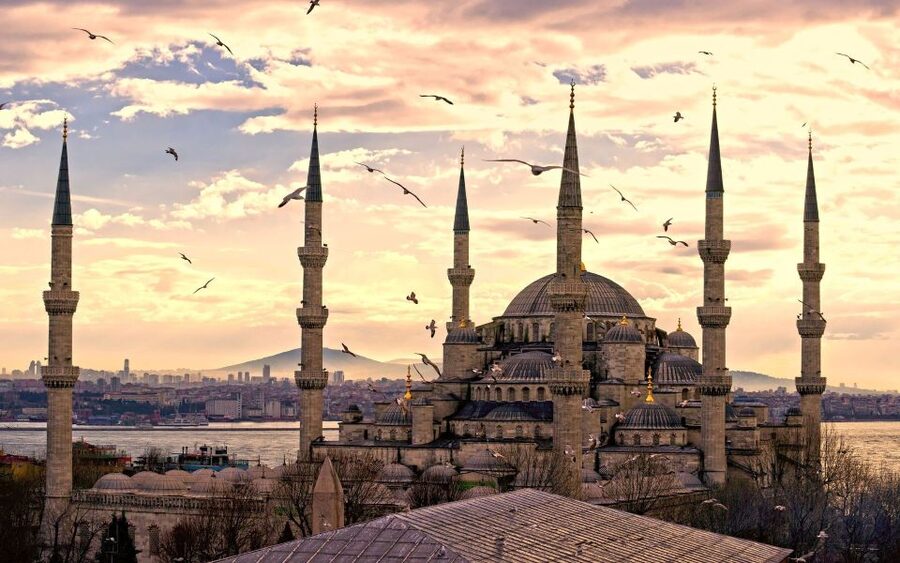
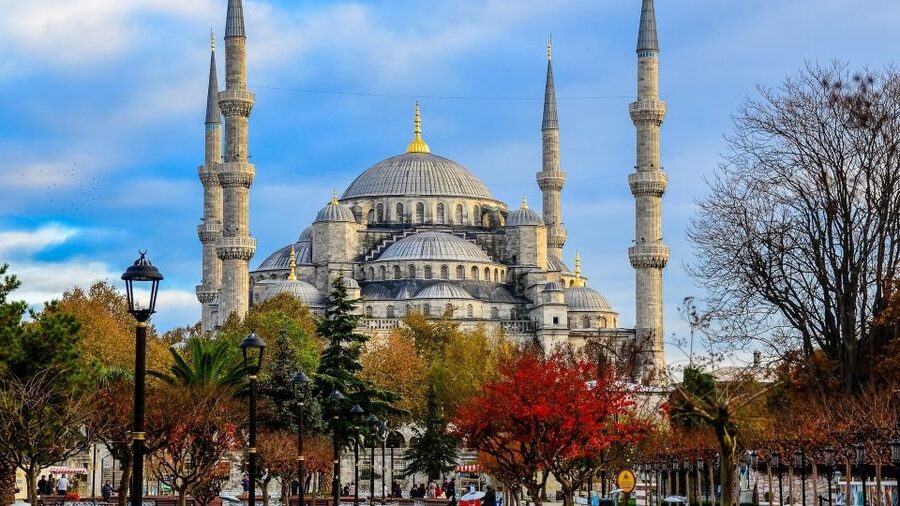
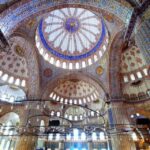
After Hagia Sophia, you’ll head to the Blue Mosque, one of the best-preserved examples of Ottoman architecture. The tour highlights that it was built on the bequest of Sultan Ahmet I, and that the mosque has six minarets.
This stop is more than a second landmark. It’s a contrast lesson. Hagia Sophia shows the “before and after” of the same monumental idea, while the Blue Mosque shows the Ottoman approach to space, power, and worship as a finished statement.
What you’ll likely appreciate is that a guide frames the design so you know what to notice. When you’re standing in a major mosque, it’s easy to miss the details that make it special. With a guide, you’ll be pointed toward the parts that explain the style instead of just admiring scale.

The Roman-Era Hippodrome: Where Power Played Out for 1,400 Years
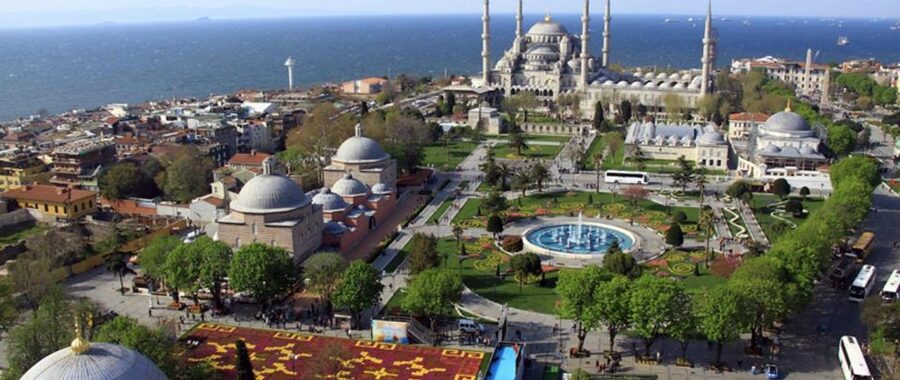
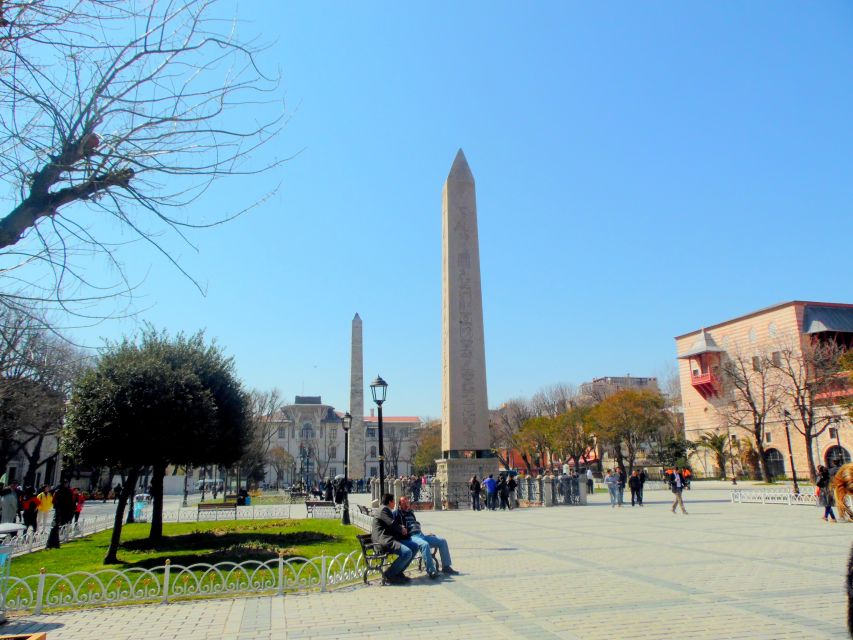
Then you’ll move to the Hippodrome, described as the center of Byzantium’s life for 1,000 years and of Ottoman life for another 400 years. That timeline alone makes the place feel important, because it shows how political and public spaces can outlast the empires that built them.
The Hippodrome was where chariot races took place in Roman-era Istanbul. But by the time Byzantines and later Ottomans were using the space, it was also the backdrop for countless political dramas.
This is one of my favorite kinds of stops on an Old City tour because you can stand in a real public square and think about a public audience. Even if you’re not focused on sports, you’ll get the idea that these crowds weren’t just there to watch. They were there to take sides, signal support, and push the politics of the day.
Grand Bazaar: Shopping With a Route, Not a Maze
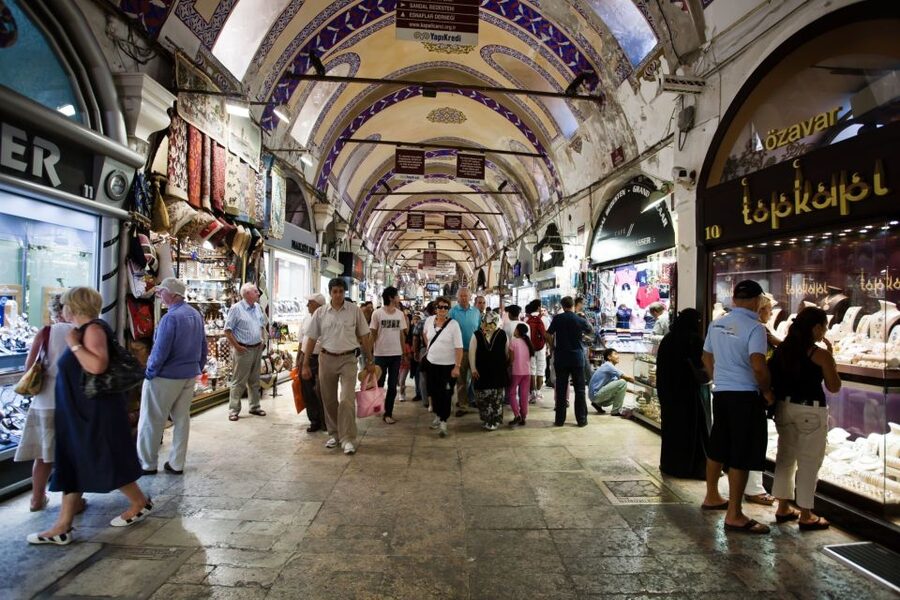
The Grand Bazaar is one of the oldest and largest covered markets in the world, and your guide gives you enough structure to enjoy it. You’ll wander through shop-lined streets where you can find everything from jewelry and silk clothing to copper ware and imported goods.
The practical value of having a guide here is simple: markets can be fun and exhausting at the same time. With a planned visit, you’re more likely to find things you actually want, instead of getting pulled into random side stalls and losing your bearings.
Also, the tour gives you time to explore rather than only “pass through for pictures.” That’s important because the Grand Bazaar’s real appeal is in the slow browsing, the different textures of goods, and the way the place changes as you walk deeper into it.
If the Grand Bazaar Is Closed
If you travel on a Sunday, the Grand Bazaar is closed. In that case, the tour notes that you’ll spend additional time at Arasta Bazaar. So you can still expect a covered market vibe, even if the famous main halls are shut.
Lunch in a Local Restaurant: A Real Break in the Middle of the Day
A lot of Istanbul tours either skip lunch or give you something that feels like a detour. Here, lunch is included at a local restaurant serving typical Turkish dishes.
I like this because it protects your afternoon. After Hagia Sophia, the Blue Mosque, and the Hippodrome, you’ll need a reset. A included meal means you’re not trying to solve lunch while your feet are aching and your group schedule is moving on.
I also think lunch is a cultural checkpoint. Even if you don’t go adventurous, it gives you a chance to eat Ottoman-era inspired comfort food close to where the story of the city is happening.
Topkapi Palace With Harem: Courtyards and Chambers That Explain Power
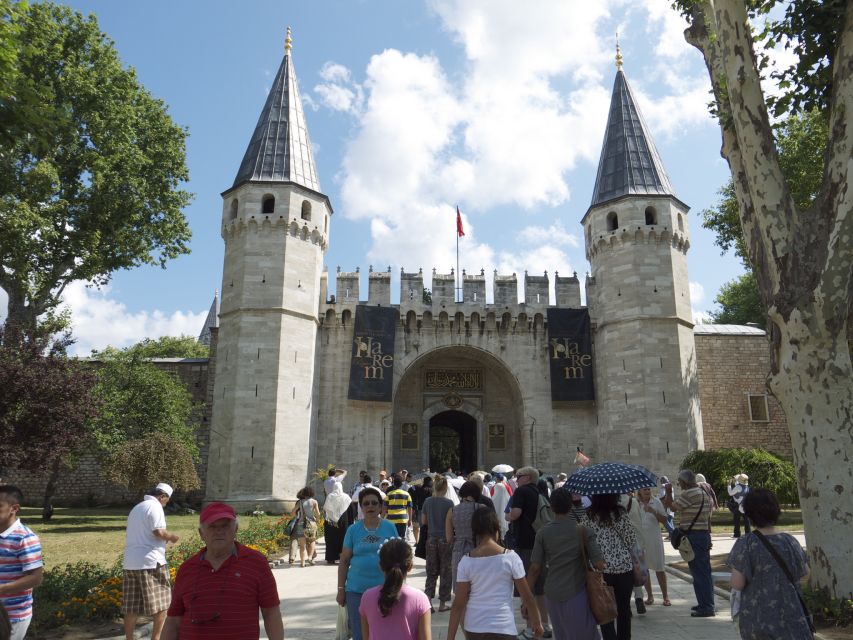
Topkapi Palace is the kind of place where you can easily rush and miss the point. That’s why this tour spends time wandering the grounds, courtyards, and chambers, including the Harem area.
The tour describes Topkapi as the largest and oldest palace in the world to survive to our day, and it also served as the primary residence of the Ottoman sultans for around 400 years. When you’re standing inside those spaces, you can feel that it was not a quick visit palace. It was a functioning world, with daily life, authority, and ceremony built into the layout.
The guide makes the difference here. Without context, palace visits turn into “pretty buildings, lots of doors.” With a guide, you’re more likely to understand why the courtyards matter, how movement through the palace works, and how power is organized spatially.
If Topkapi Is Closed
Topkapi Palace is closed on Tuesdays. If your tour day falls on Tuesday, the tour notes that you’ll visit the Basilica Cistern instead. That swap is useful because you still get a major UNESCO-linked experience, even if Topkapi itself is off-limits.
Hagia Irene Church: The Quiet 4th-Century Neighbor in Topkapi Grounds
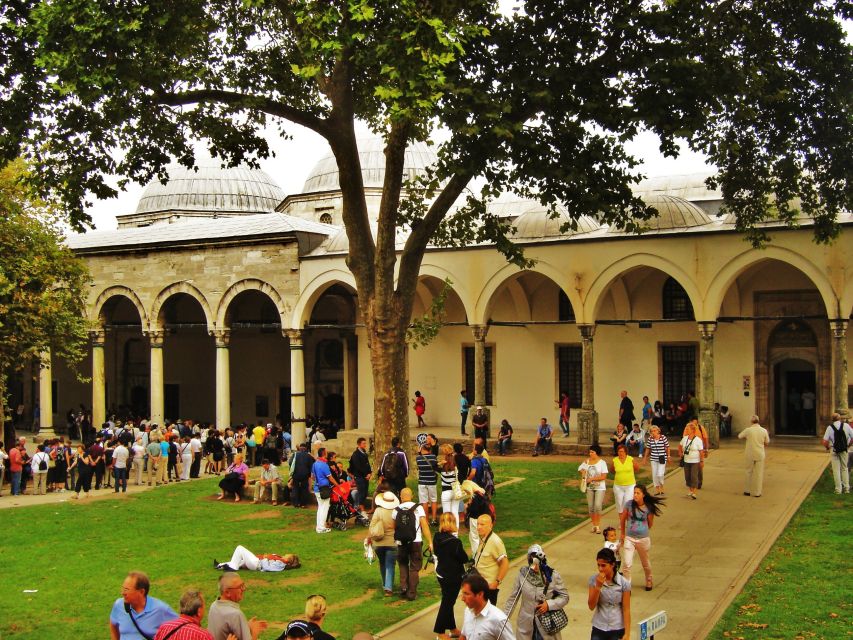
One of the more interesting add-ons here is Hagia Irene Church. It was built during the same period as Hagia Sophia, the 4th century, and its name is given as meaning Godly or Holy Wisdom in Greek.
After the conquest of Istanbul, it was incorporated into the grounds of Topkapi Palace, and like many churches it was converted into a mosque. The key detail in this tour description is that there were no major changes made to the building structure. That gives this stop a different feel from places where the building was heavily altered.
This is a great contrast moment after the big, high-profile monuments. Hagia Irene is quieter on most itineraries, and that can actually be a benefit. You get time to appreciate the structure without the same crowds and without feeling like you’re sprinting to the next photo.
Price and Value: Is $152 a Fair Deal for This Lineup?
At $152 per person for a 7-hour guided day, this price looks reasonable once you separate what you’re actually getting.
You’re not just paying for a guide. Entrance fees are included, and lunch is included. You also get hotel pickup and drop-off in multiple central areas, plus express security screening so you can spend more time at the sites and less time stuck in queues.
The tour also limits the group size to a small group of up to 10 people. That usually means less waiting and better guide access, especially inside places like Topkapi where movement is naturally slower.
What’s not included is personal expenses, and gratuities for your guide are not included in the cost. If you want to tip, plan for that. If tipping isn’t part of your normal routine, you may want to budget a small amount so you’re not caught off guard later.
Who Should Book This Tour, and Who Might Want Another Plan
This tour is a smart match if you want a structured, first-time-friendly walk through major Old City highlights. It’s also good for people who care about architecture and want explanations, not just landmarks.
If you’re traveling with limited time, this is the kind of day that stacks the big hits: Hagia Sophia Mosque, the Blue Mosque, the Hippodrome, Grand Bazaar, Topkapi Palace with the Harem, and Hagia Irene Church. You get a coherent storyline across both Byzantine and Ottoman periods.
It’s not suitable for wheelchair users, and you should also expect that it’s not an easy pace for anyone who struggles with long walking days. If you’re managing mobility issues, you’ll likely find the route harder than the average museum day.
Final Thoughts: Should You Book This Istanbul Byzantine and Ottoman Relics Tour?
I’d book this tour if you want the Old City to feel understandable by the end of the day. The combination of Hagia Sophia, the Blue Mosque, the Hippodrome, and Topkapi gives you the city’s power story in a way that you can actually connect while you walk.
You should skip it or consider an alternative if you hate walking, need wheelchair access, or prefer to wander entirely on your own without a set rhythm. Also plan to travel light since luggage or large bags are not allowed.
If your goal is maximum meaning per hour, this is a strong choice. You’ll leave with clearer mental maps of how Istanbul shifted from Byzantine to Ottoman rule, and you’ll have eaten lunch in the middle of it instead of rushing through hunger.
FAQ
How long is the Istanbul Byzantine and Ottoman Relics Tour?
The tour duration is listed as 7 hours.
What sights are included in the tour?
You’ll visit Hagia Sophia Mosque, the Blue Mosque, Istanbul Hippodrome, the Grand Bazaar, Topkapi Palace with the Harem, and Hagia Irene Church.
Is hotel pickup included?
Yes. Pickup and drop-off are included from hotels in the Sultanahmet, Sirkeci, Beyazıt, Aksaray, and Taksim areas.
Does the price include entrance fees and lunch?
Yes. Entrance fees and lunch are included, along with a local English-speaking guide.
What is the group size?
The group is limited to 10 participants.
What should I wear or bring?
Bring comfortable shoes for walking. You should also avoid bringing luggage or large bags.
Which days do the main sites close?
Topkapi Palace is closed on Tuesdays, and Hagia Sophia is listed as closed on Mondays in the planning notes. The Grand Bazaar is closed on Sundays.
What happens if Topkapi or Hagia Sophia is closed?
If Topkapi is closed, the tour notes a switch to the Basilica Cistern. If Hagia Sophia is closed, the tour also notes the Basilica Cistern as the alternative. If the Grand Bazaar is closed on Sunday, you’ll spend additional time at Arasta Bazaar.
What languages are available for the tour?
The tour is available in English.
Is the tour wheelchair accessible?
No, it is not suitable for wheelchair users.
More Guided Tours in Istanbul



More Tours in Istanbul



More Tour Reviews in Istanbul
Not for you? Here's more nearby things to do in Istanbul we have reviewed




More Guided to consider.
 ★ 4.8Daytime or Sunset Sightseeing Cruise & Audio GuideFrom $814,430 reviews
 ★ 5.0Best of Istanbul 1, 2 or 3-Day Private Guided Istanbul TourFrom $1008,922 reviews
 ★ 4.6Basilica Cistern Fast-Track Entry and Audio GuideFrom $447,521 reviews
 ★ 4.1Topkapi Palace & Harem Museum Ticket & Audio GuideFrom $613,977 reviews
 ★ 4.8Blue Mosque & Hagia Sophia Guided Tour w/ TicketsFrom $393,600 reviews
 ★ 4.9Bosphorus Sunset Cruise on Yacht with Live GuideFrom $192,845 reviews
 ★ 4.6Bosphorus Sightseeing Cruise Tour with Audio GuideFrom $82,694 reviews
 ★ 4.3Hagia Sophia Skip-the-Line Ticket and Audio GuideFrom $352,246 reviews