Review · ISTANBUL
Colors of Turkey – 8 Days
A packed Turkey loop can still feel fun. I like the guided stops that connect the big sights to real stories, and I also like that internal flights and hotels are handled so you are not constantly managing logistics. One possible drawback is service quality can vary, so with a premium price like this, it pays to confirm pickup timing and be ready to advocate if something is off.
You get a strong “greatest hits” mix, from Roman ruins and Ottoman architecture to fairy chimneys and a final Bosphorus cruise. This is also set up as a private tour for your group, so the rhythm should match your pace better than a free-for-all city day. Still, it is a lot of moving parts, so you will want comfortable shoes, modest clothing for religious sites, and patience when schedules tighten.
Key Points Worth Knowing Before You Go
- Two-city flights inside the trip help you skip long overland transfers and keep the eight days on track.
- Multiple major Ottoman and Byzantine landmarks in Istanbul on the same day means efficient sightseeing, but also a lot of walking.
- Pamukkale plus Hierapolis gives you both the mineral “Cotton Castle” look and UNESCO ruins in the same region.
- Ephesus in depth pairs Roman monuments with the nearby Temple of Artemis and the House of the Virgin Mary area.
- Cappadocia in two halves covers top viewpoints and churches, then adds underground history.
- Entrance fees are separate for several highlights, so your final cost depends on what you choose to purchase.
Price and Logistics: What You Are Paying For
This tour costs $2,890.40 per person, and the value is tied to how much is already arranged. You get an air-conditioned vehicle, internal flight tickets, accommodations, and 7 breakfasts, which removes the biggest headache of a multi-region trip.
What you still need to budget for are several major entrance fees and select paid items, since many of the big Istanbul and site stops are not included. That does not make the trip bad, it just means the total cost is not only the headline price.
You can also read our reviews of more tours and experiences in Istanbul.
Istanbul in One Sweep: Hippodrome, Hagia Sophia, Blue Mosque, Topkapi, and the Grand Bazaar
Day 2 is an all-timer for Istanbul’s historic core. You start at the Hippodrome, once the sporting heartbeat of Constantinople, with monuments like the German Fountain, the Egyptian Obelisk, the Serpentine Column, and the Column of Constantine. It is short, but it gives you context for why this area mattered.
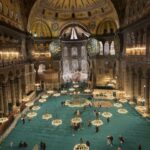
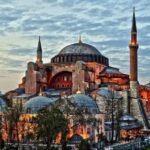
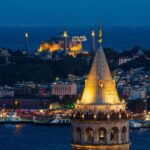
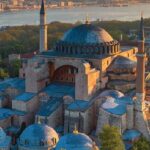
Then comes Hagia Sophia Grand Mosque, a site with multiple identities. It was built as a church in the 6th century by Emperor Justinian, converted into a mosque after 1453, and later used as a museum in 1935, all before it became a mosque again. Plan for practical realities: there is a head covering requirement, you need your own headset/scarf, and entry can be restricted during praying times.
Next is the Blue Mosque (Sultanahmet Mosque), famous for its six minarets and Ottoman scale. Note the timing and closure, because it is closed on Friday, so your schedule could shift if your dates fall in that window. If it is open, this is one of those buildings where you feel the volume before you even understand the details.
Topkapi Palace follows, and this is where “administration and imperial life” becomes physical. You see parts of the palace used for administration and art, plus the imperial treasury sacred Islamic relics, palace kitchens, and weapons. It is closed on Tuesday, and if it falls on your day, you will need to roll with the tour’s adjustment.
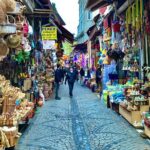
Finally, you end at the Grand Bazaar and add the Hagia Irene Museum stop. The Grand Bazaar is the shopping engine of the Old City, with carpets, leather, jewelry, Turkish delight, and tiles, but it closes on Sunday. Hagia Irene is one of the oldest Byzantium churches in Istanbul, but it is closed on Tuesday, and it is not typically the same “wow-factor” as Hagia Sophia, so treat it as a bonus if it is running.
Istanbul day hacks that actually help
Wear comfortable shoes, because this day stacks multiple monuments in walking order. For religious sites, dress modestly and expect rules to be enforced at the door.
Arrival Day: A Transfer, Then Sleep in Istanbul
Day 1 is straightforward: you land at Istanbul Airport and get transferred to your hotel. You get an overnight, so you are not starting with a sprint the moment you arrive.
This matters more than it sounds. If you arrive jet-lagged, a first night buffer can make the next day feel like sightseeing instead of survival.
Pamukkale and Hierapolis: Cotton Castle Baths Plus UNESCO Ruins
On Day 3, you head to Pamukkale, the “Cotton Castle.” The look comes from the mineral-rich thermal waters that deposit calcium and create white terraces.
Pamukkale is a spa town idea dating back to Roman times, and the appeal is simple: you get a visual spectacle plus the chance to slow down. The tour allots several hours, so you are not only snapping photos, you have time to take in the site’s strange beauty.
Right after, you also cover Hierapolis, the Holy City connected with the Apostle Paul and Epaphras, plus the Apostle Philip. What makes it different is that it sits on limestone deposits above the springs, and the UNESCO value comes through in the ruins scattered across the city, including the necropolis with sarcophagi of important figures like Marcus Aurelius.
After the Pamukkale region, you stay overnight in Kusadasi. This sets you up for Ephesus and the Aegean side of the trip.
Ephesus and the Artemis Temple: Roman Power in Walking Form
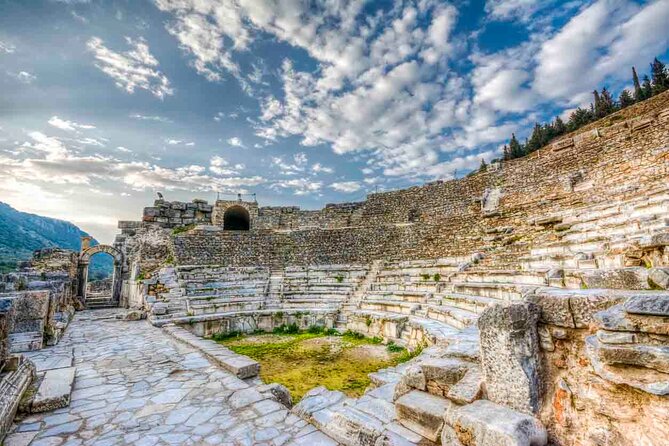
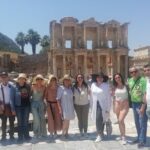
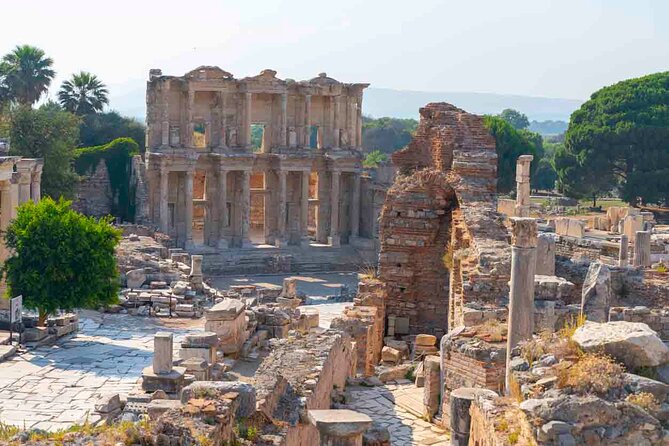
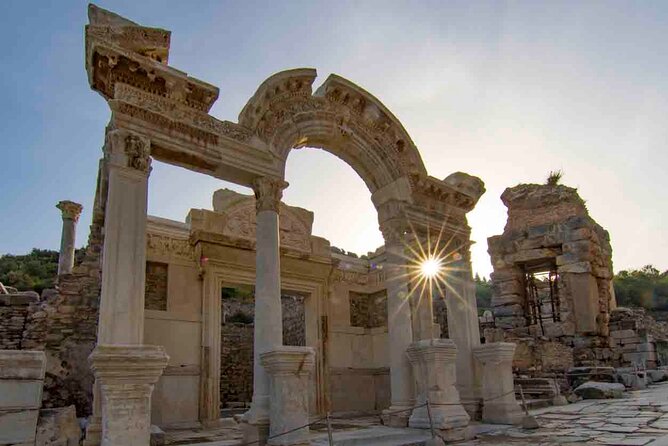
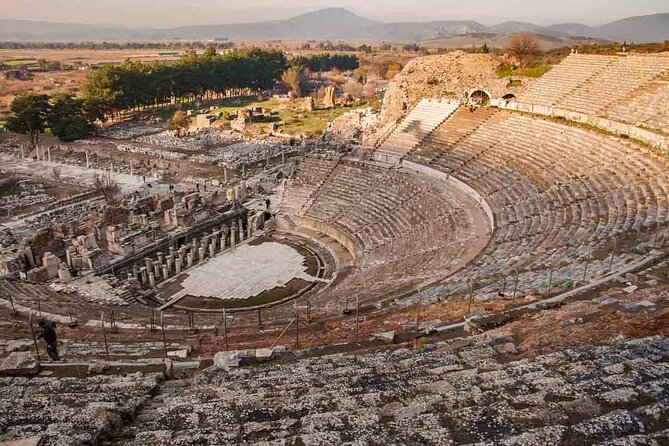
Day 4 starts with Ephesus, and you really do feel how big it was. Once the second largest city in the Roman Empire, Ephesus had a population over 250,000 in the 1st century BCE, and it was a major harbor city. The tour emphasizes the scale, including an amphitheater that held over 25,000 seats.
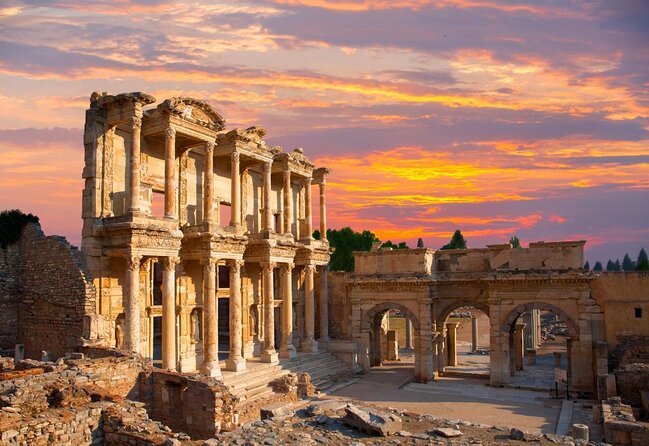
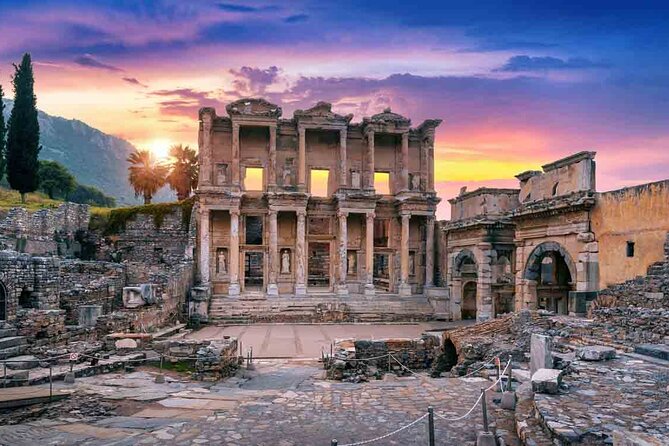
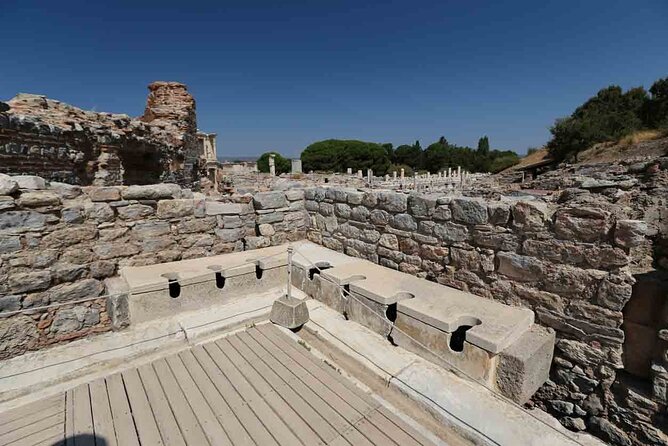
You get the classic highlights: Goddess Nike, Hadrian Gate, the Library of Celsus (called out as the third largest library), Marble Street, Harbour Street, and stops connected to the ancient pharmacy concept. You also visit the Temple of Artemis nearby, built in the 6th century and remembered as one of the seven wonders.
Ephesus is the kind of place where timing matters. If you like your sightseeing with breathing space, focus on the major monuments first, then wander within reason, because it is easy to over-plan and feel rushed.
House of the Virgin Mary: A Quiet, Green-Lit Side Trip
After Ephesus, you head to the House of the Virgin Mary, described as being on top of the Ephesus area and about 9 km away. The tone here is different from the Roman monuments, with a more reflective vibe tied to the story of Mary’s final days and the green setting around the shrine.
It is also a time-holder stop at 45 minutes, so treat it as a reset. You leave with something spiritual and calm, before heading back toward your hotel in Kusadasi.
Cappadocia Day 1: Fairy Chimneys at Devrent, Pasabag, and Uchisar
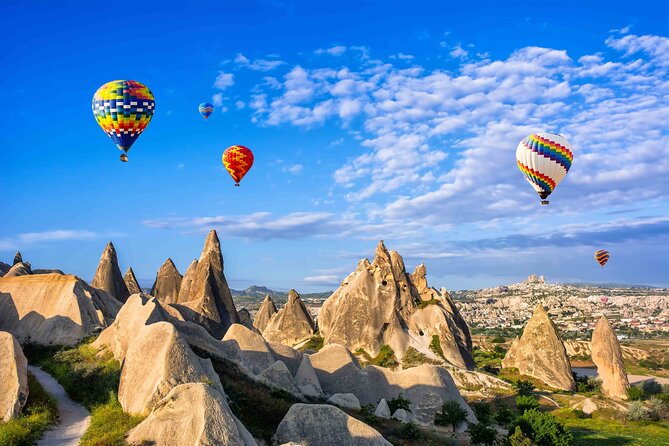
Day 5 is a full-day Cappadocia tour with a strong visual theme. You start at Devrent Valley, also called Imagination Valley, where fairy chimney formations are the main show. The formations are described as having formed nearly 30 million years ago, which helps you frame why the shapes look like creatures and characters.
Next is Pasabag, where the most interesting fairy chimneys show up and you get that Hobbit and Smurfs comparison from the tour style. Then you stop in Avanos for a pottery workshop style moment, including how pottery practices connect back to the Hittite period.
Uchisar Castle and Pigeon Valley add photography value. Uchisar gives you high ground and quick views, and Pigeon Valley is a pleasant add-on when you want a break from the rock formations without losing the drama of the landscape.
Cappadocia Day 2: Underground City, Caravanserai Stops, and Goreme Panorama
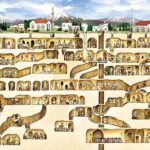
Day 6 starts with an underground city experience, specifically Ozkonak Underground City, also noted alongside Kaymakli in the details. The focus is on how Christians sheltered and defended themselves from persecutions and invasions for centuries.
This is where Cappadocia stops being only a photo spot. Underground spaces carry a sense of human problem-solving, and even if the tour is time-limited, you still get the emotional weight of the idea.
You then pass by Sarihan Caravanserai, a 13th century merchant residence, to see how trade life worked in that region. After that, you reach Goreme Panorama, described as the best place for photos and background on Cappadocia, with churches and Christian history remnants.
Pigeon Valley wraps things up again, this time with a practical detail: pigeons supported local life because their manure fertilized vineyards. It is one of those facts that turns a viewpoint into a living history lesson.
By the end of the day, you transfer to the Kayseri airport and fly back to Istanbul, then you have an overnight in the city.
Istanbul Farewell With a Bosphorus Cruise and Misir Carsisi
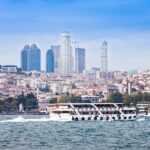
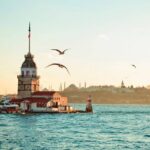
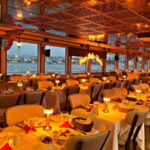
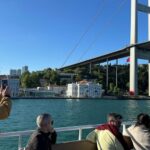
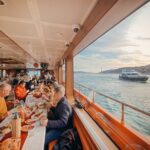
Day 7 is a smart closing day, because it mixes views and taste without piling on too many major ruins. You start with a shared boat cruise along the Bosphorus between Europe and Asia, passing near Dolmabahce Palace and Beylerbeyi Palace. The tour calls out the full-circle feeling of water views and palace edges from the river.
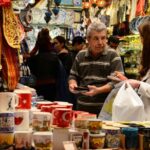
Then you go to Misir Carsisi, the L-shaped spice market. The scent description is spot on: stalls with baharat herbs and spices, plus nuts, honeycomb, Turkish delight, dried fruit, matured hard cheese, caviar, and pastırma. It is a great last stop because you can pick edible souvenirs that survive travel.
You finish back in Istanbul with another overnight, then Day 8 is departure time plus some free hours until you head to the airport.
Where the Tour Really Delivers
The strongest advantage here is not any single landmark. It is how the route strings together major Ottoman sites in Istanbul, Aegean ancient cities and Christian sites, then Cappadocia in two different formats.
The tour is also designed to cut down time lost to planning. Internal flights are included, and the itinerary is built so you do not backtrack unnecessarily between regions. On top of that, the tour uses guided visits at each location, which matters when you want the “why it looks like that” explanation.
And the service signal looks positive overall. The review summary shows a 5 rating with 99 percent recommendation, which usually points to good organization and a route that hits what most people want to see.
Where You Should Be Careful
I would not ignore the one serious caution raised in the review data: some past bookings reported late pickups, poor hotel conditions, and weak engagement from a guide on at least one day. That does not mean it will happen to you, but it does mean you should take control early.
If you can, confirm your pickup time the day before, and make sure your hotel is acceptable immediately after check-in. For special situations like pregnancy or any mobility constraints, communicate needs in advance, because a tight schedule can be harder to manage when plans change.
Also, watch closures and museum restrictions in Istanbul. Blue Mosque is closed on Friday, Topkapi Palace is closed on Tuesday, Hagia Irene is closed on Tuesday, and the Grand Bazaar is closed on Sunday. On top of that, Hagia Sophia can be restricted during praying times.
Entrance Fees and What to Budget for
Many of the “wow” stops have separate entry costs, and you can pay through the guide for skip-the-line options.
From the info provided, expect extra fees such as:
- Hagia Sophia Grand Mosque entrance (listed as 25 €)
- Topkapi Palace entrance (listed as 2750 TRY)
- Ephesus entrance (listed as 40 €)
- Pamukkale entrance (listed as 30 €)
- Goreme Open-Air Museum entrance (listed as 20 €)
- Pasabag entrance (listed as 12 €)
- Kaymakli Underground City entrance (listed around 13 € to 15 €, depending on the note)
- House of the Virgin Mary entrance (listed as 500 TRY)
If you want tight budgeting, add these up early and decide which optional shopping or workshop stops you will actually do.
Practical Tips for a Smoother Trip
For Istanbul religious sites, bring a head covering and expect modest dress rules. The tour specifically mentions you will need your own headset/scarf for Hagia Sophia, and you should plan to follow the cover requirements on site.
For sightseeing, pack for walking. Istanbul tours are described as walking tours, and the rest of the route still mixes stairs and uneven surfaces.
For Cappadocia, temperatures and sun can swing fast, so plan for layers even if you pack for a mild day. You will spend time outdoors at viewpoints like Uchisar Castle, Pigeon Valley, and Goreme Panorama.
If you like shopping, know that the Grand Bazaar is large and selective depending on what you want, carpets, leather, jewelry, Turkish delight, gold, or antique tiles. But it closes on Sunday, so align it with your schedule.
Who This Tour Fits Best
This works best for you if you want a planned, guided route that moves you through Istanbul, the Aegean, and Cappadocia without the hassle of building connections. It is also a strong match if you like the idea of seeing big names, then getting enough context from guides to feel less lost in the stone.
It may feel less ideal if you dislike fast daily pacing, or if you are very sensitive to hotel standards. In that case, you should be ready to check conditions quickly and push for corrections.
Should You Book Colors of Turkey: 8 Days?
Book it if you want a high-coverage itinerary with major sights in Istanbul, UNESCO-level ruins at Hierapolis, Ephesus scale and storytelling, and Cappadocia views plus underground history all in one trip. The fact that internal flights, accommodations, and most guidance are bundled is a real value for people who do not want to manage every connection.
I would think twice if your priority is absolute luxury service consistency or slow travel. The route is packed, and the extra entrance fees can make your final total higher than the headline price. If you do book, confirm pickup timing early, plan your clothing for religious sites, and budget for entrances so nothing feels like a surprise.
If you want, tell me your travel dates and whether you prefer early mornings or slower starts. I can help you spot which Istanbul closures are likely to matter for your specific week.