
Review · ISTANBUL PRIVATE TOURS
Istanbul: 1 or 2 -Day Private Guided City Tour
One day, four legends of empire. This private Istanbul tour stitches together Byzantine icons and Ottoman power in a way that helps you read the city instead of just ticking off photos. You’ll also hit the Grand Bazaar and the Bosphorus, so the day has both “monument” moments and street-level energy.
I especially like the private, licensed guide format. When I’m standing inside places like Hagia Sophia and Topkapi, having someone explain what I’m actually looking at changes everything. I also love that you get the Basilica Cistern on the route, because it’s atmospheric in a totally different way than the big churches and palaces.
One possible drawback: timing and flow can make or break value. The Blue Mosque, for example, can have closing hours that affect how much you get to see, and a tour that runs short or turns too sales-heavy will feel overpriced.
Key highlights that make this tour work
- Private licensed guide on the big monuments, so you get context as you walk, not just signs and audio
- Basilica Cistern first-hand, including the ancient underground water storage experience
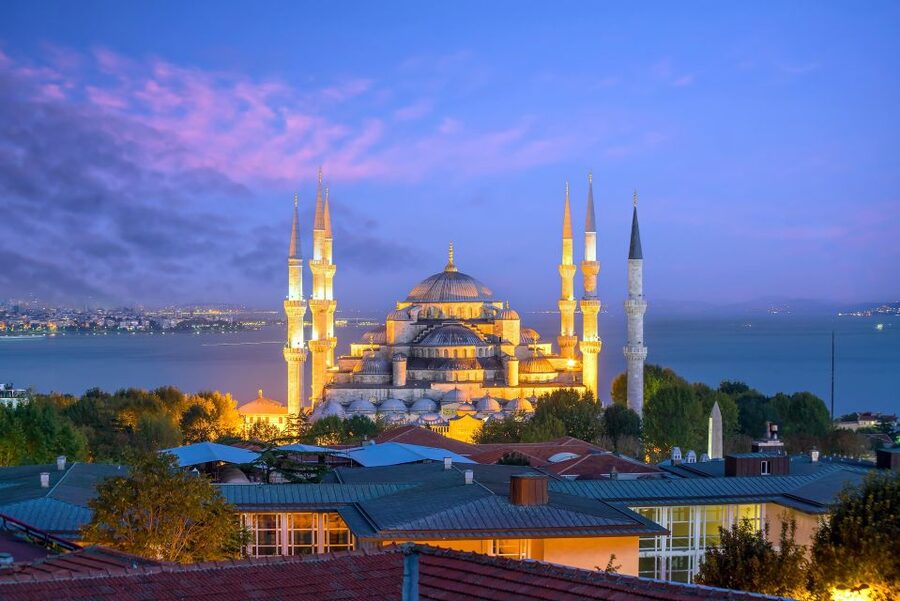
- Hagia Sophia and the Blue Mosque in the same overall circuit, letting you compare Byzantine mosaics with Ottoman blue tile work
- Topkapi Palace with stateroom and tiles focused visits, including the ornate Harem areas and Iznik tile highlights
- Grand Bazaar time with guided orientation, so you don’t get lost in the maze and miss the best browsing lanes
- Dolmabahçe Palace plus Beyoğlu and Bosphorus views, giving you a second side of Istanbul beyond Sultanahmet
A private Istanbul hit list, without the usual confusion
This is a smart choice if you want the classic Istanbul sights in a single plan, but you hate spending half your day figuring out logistics. The tour is built around walking between nearby landmarks in the historic core first, then expanding outward toward Beyoğlu, Taksim, and the Bosphorus area. And because it’s private, your guide can adjust the pace to your group and your questions.
What makes the experience feel valuable is how the stops connect. Hagia Sophia helps you understand how religious architecture shaped the skyline across empires. The Blue Mosque answers the same question in Ottoman language, with its famous blue tile identity. Topkapi Palace then flips the perspective to power, wealth, and daily life at the center of Ottoman rule.
The tour also tries to solve a real problem: Istanbul attractions can be overwhelming on your own. Even if you love guidebooks, the layout and crowd flow can make you miss details. A guide helps you get your bearings fast and keeps you focused on what’s worth your time.
You can also read our reviews of more guided tours in Istanbul
Grand Bazaar time: browsing smart, not just wandering
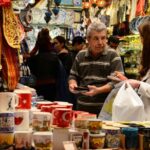
The Grand Bazaar visit is set up as a guided orientation plus time to shop and roam on your own. You get a photo stop and guided tour, then real browsing time, so you can test your bargaining style without feeling rushed. It’s easy to treat the bazaar like one big blur, but a good guide helps you notice what you’re actually looking at, from handmade crafts to the general “rules” of stalls.
Why I like this as an early stop: it’s a good warm-up for the sensory overload that’s coming later in the day. You’ll learn the layout logic, then later when you’re in museums and palaces, your brain is already tuned to how Istanbul organizes space and objects.
A note on expectations. The bazaar is shopping by nature, and that can be either fun or frustrating depending on your priorities. If you prefer pure sightseeing over sales pressure, you’ll still enjoy it, but you should remind yourself that this is part market, part labyrinth. A strong guide will keep you moving toward worthwhile stalls and help you avoid getting stuck in the most sales-forward corners.
Also, if your timing fits and you want spice shopping, there’s an Egyptian Market concept tied to the Fatih area, known historically as a place for Egyptian exports. Even if you do not plan it in advance, it’s a good mental bookmark for what “another bazaar experience” can feel like in Istanbul.
Basilica Cistern: the underground stop that changes your mood
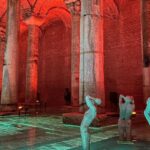
The Basilica Cistern visit gives you a pause from sunlight and crowds. This ancient water storage site feels like a whole different Istanbul, mostly because it’s dim, echoing, and built to make you slow down. You’ll get a guided segment and then time to look on your own, which is perfect here because your best photos and best observations usually come after the initial explanation.
What makes it special is the contrast. After the Grand Bazaar’s noise and surfaces, Basilica Cistern is calm and slow, with stone columns and that deliberate atmosphere. It’s also a great place to learn how Byzantine-era infrastructure shaped daily life, long before today’s monuments existed.
Practical tip: wear shoes that can handle uneven stone. You’ll be walking and standing in a place where your footing matters. In the heat, this stop can be a relief too, so it helps your energy for Hagia Sophia and Topkapi afterward.
Hagia Sophia: from mosaics to the biggest dome feeling
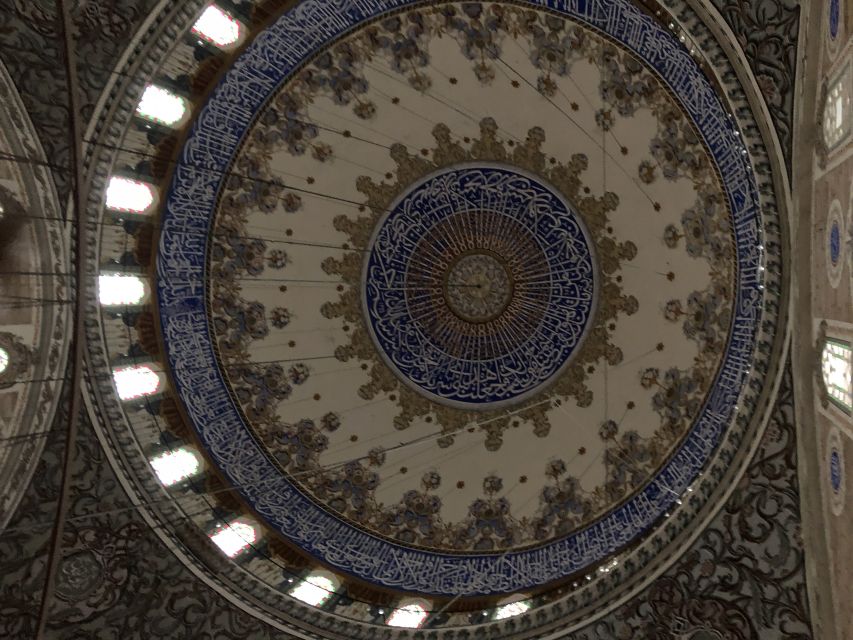
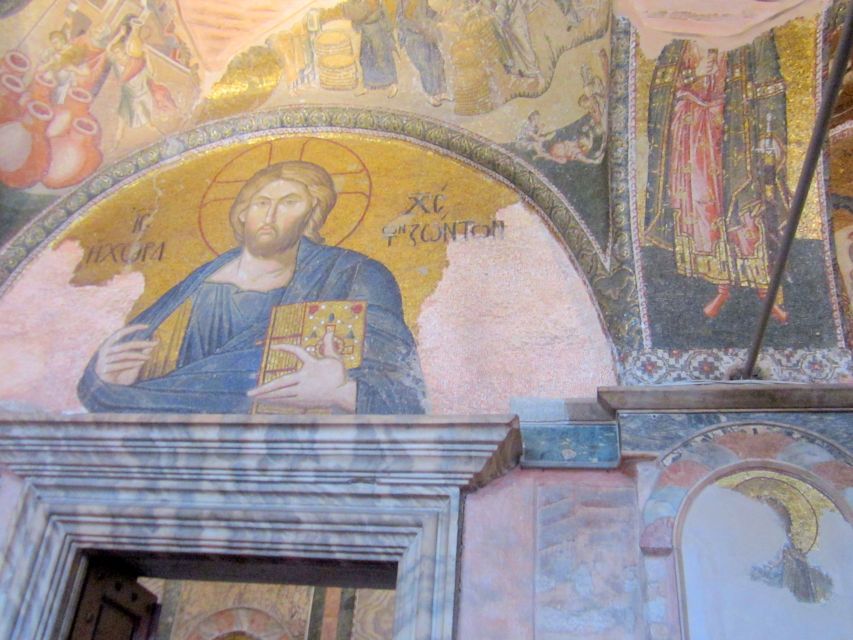
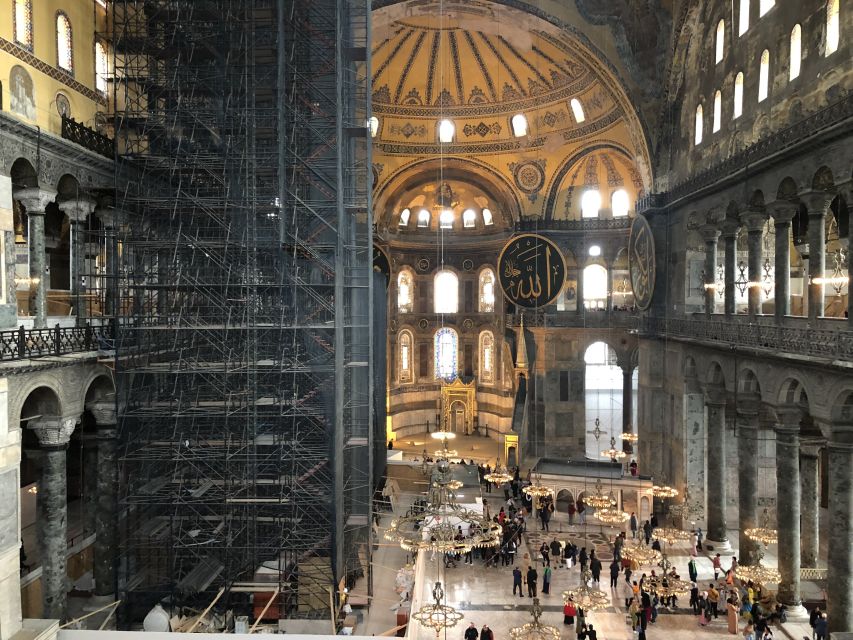
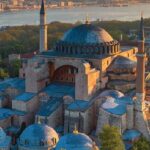
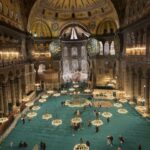
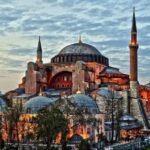
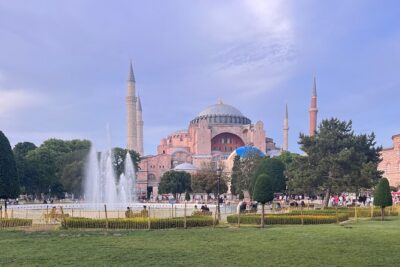
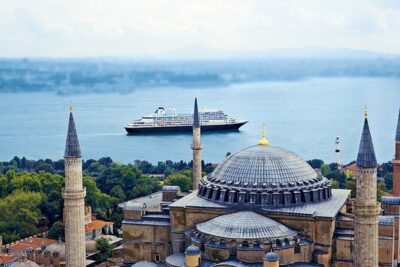
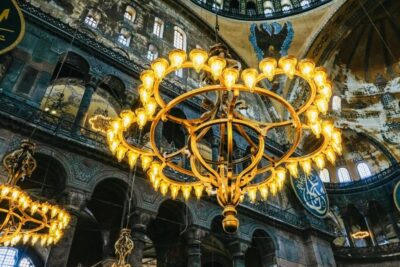
Hagia Sophia is one of those sites where you either feel lost or you feel carried. A guided visit helps you do the second one. You’ll focus on the museum experience, including the mosaics and the massive dome scale that makes you crane your neck without realizing you’re doing it.
I love how Hagia Sophia works as a “story anchor.” The building served as the largest church in the world for centuries, and it carries Byzantine and later Ottoman layers in its design. Even when you strip away the political labels, the architecture still tells you where power wanted to show itself.
Plan for it to be a highlight that deserves attention, not a quick walk-through. If your guide is strong, you’ll spend your time looking at the details that make it feel alive, not just admiring the outside.
One thing to watch for: the dome is huge, so crowd flow can push you into short lines of sight. Your best strategy is to accept that you cannot see everything from one angle, then lean into the guide’s suggested viewpoints, especially early.
Blue Mosque and Hippodrome monuments: the walkable history zone
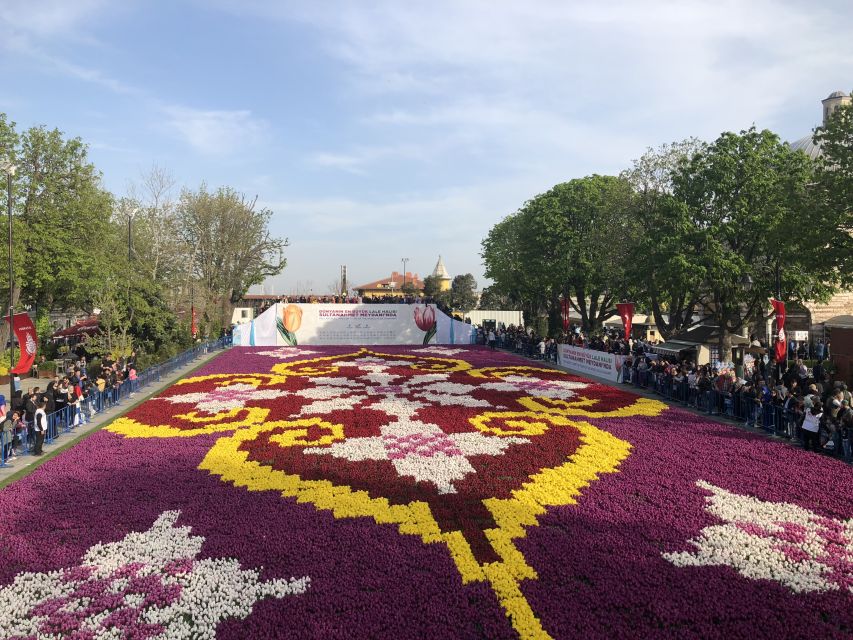
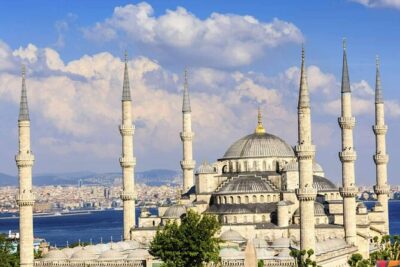
The Sultanahmet Mosque visit is the Blue Mosque moment most people picture first, and it lives up to the hype because of the blue tile work on the interior surfaces. The guide-led time is ideal here since the mosque is active as a religious site, so your behavior and pacing matter.
Right nearby is the Hippodrome of Constantinople area, where several monuments from the original Roman circus survive. You’ll encounter key pieces like the Egyptian Obelisk, the Serpentine Column, and the Constantine Column, plus a German Fountain of Wilhelm II. The meeting point is also described as being in front of the German fountain, so your tour start connects directly to what you’ll later see in that square.
This is one of the best parts of the experience for “connective tissue.” You’re not just entering a building, you’re walking through a historical public space that once hosted spectacle. Even without the full storyline, the physical presence of surviving monuments makes the past feel concrete.
A consideration: if the Blue Mosque’s hours or access conditions shift on the day you go, you might get less time inside than you planned. One past booking had a situation where the Blue Mosque was closed until 14:30 on a Friday, which affected the value of the visit for that day. You cannot control day-of conditions, so I’d build flexibility into your expectations and rely on your guide to adjust.
You can also read our reviews of more city tours in Istanbul


Topkapi Palace: tiles, tiles, and the center of Ottoman life
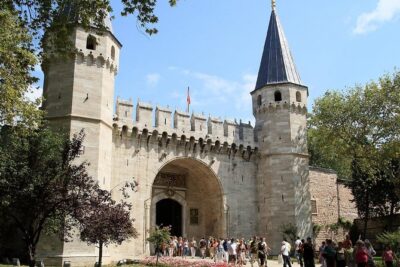
Topkapi Palace is where the tour becomes more than a photo marathon. You’ll get time that includes key displays and rooms connected with Ottoman sultans, plus a chance to see Iznik tiles and ornate interior areas associated with palace life. The palace is described as once having a large population at its peak and spanning centuries of sultan residence, so it’s not a small museum. It’s a complex site, and a guide helps you understand what mattered and why.
The palace is also set on a promontory overlooking the Golden Horn, and the surrounding gardens can provide a breather from the heat and crowd pressure. In other words, you’re not only “looking at objects,” you’re experiencing how the palace was positioned for view and control.
Two ways a guide improves Topkapi:
1) They help you choose which rooms to prioritize.
2) They point out visual details you would otherwise miss, like how tilework creates color rhythms that guide your eye through a room.
If your goal is to understand Ottoman aesthetics and how the empire organized life, this is the stop that tends to deliver most consistently. It also tends to be where strong guides shine, with past participants specifically praising guides for their explanations of Topkapi and how it relates to Istanbul’s larger story.
Dolmabahçe Palace, Beyoğlu, and Taksim: the Istanbul after the monuments
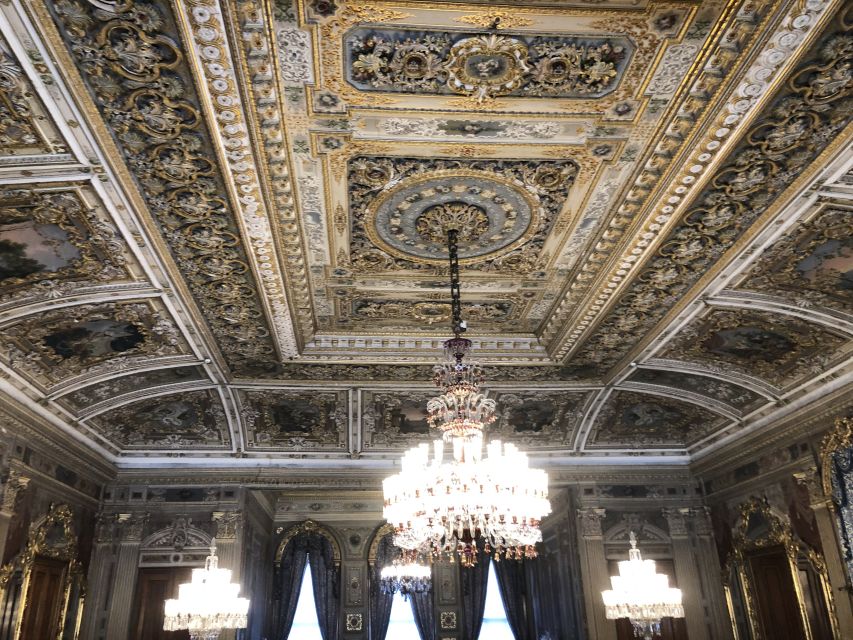
If you book the 2-day option, or if your schedule allows extra time, Dolmabahçe Palace and the Beyoğlu and Taksim zone add a modern pulse to the story you started in Sultanahmet. Dolmabahçe served as the administrative center of the Ottoman Empire and housed some of the last Ottoman sultans, and it was created by filling in a small bay on the Bosphorus. That detail matters because you feel the water connection in how the site works.
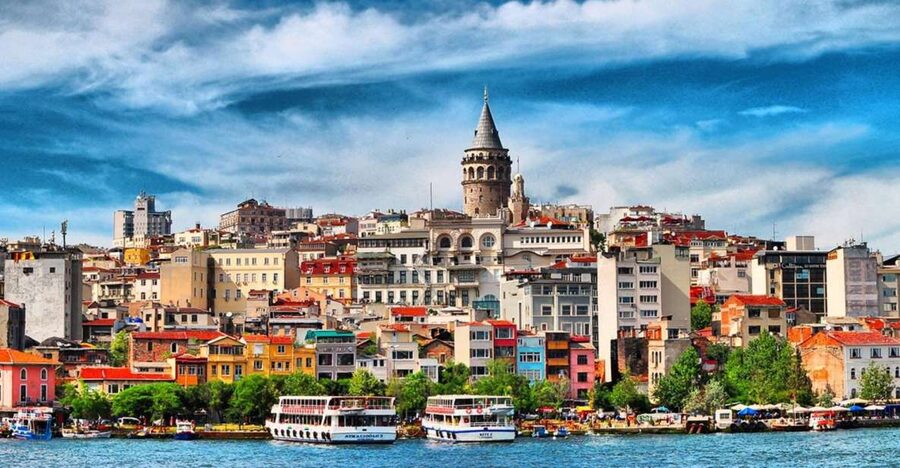
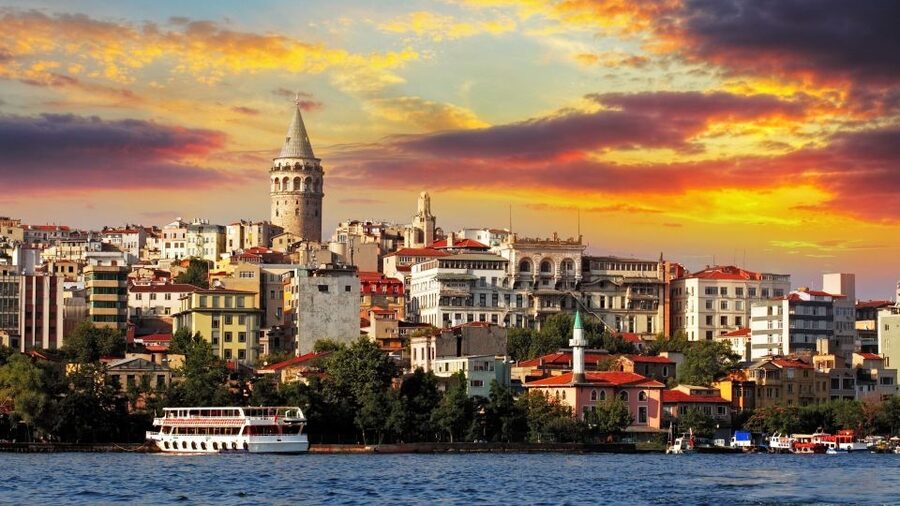
You’ll spend guided time plus free time for browsing and photos. This is also a good segment for shopping and street-life exploration, since Beyoğlu is where you’ll find lively streets, shops, restaurants, and bars. There’s an easy scenic walk described from Istiklal Street toward the Tunel Galata Tower area, roughly two kilometers, so you can get a classic “Istanbul street” feel without needing to map every turn.
Then comes Taksim Square, a focal point for city life and movement. On your own, Taksim can feel like traffic and noise. With a guide, you’re more likely to use it as a perspective stop: a reminder that Istanbul’s story continues after the empire-era monuments.
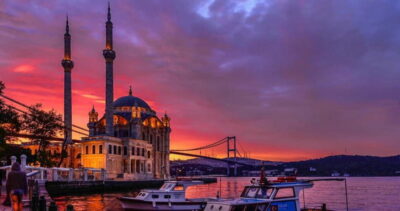
Bosphorus Strait photo stops: where Europe meets Asia
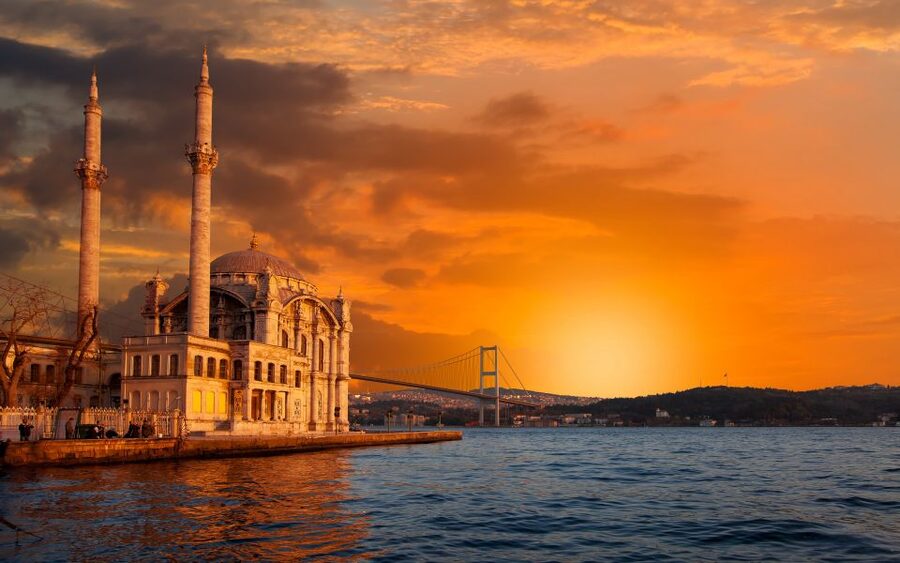
The Bosphorus Strait is the long, narrow waterway connecting the Black Sea to the Marmara Sea. You’ll make photo stops and get guided context, plus time to explore on your own. This is one of those experiences where your enjoyment depends on your attitude toward views, not just buildings.
The tour notes that at the narrowest point you can see Rumeli and Anadolu Fortresses. You can also watch for Ottoman palaces and mosques along the shoreline. That’s where the guide’s job matters: they help you recognize what you’re looking at when the coastline is packed with details.
Why this works after palace and mosque visits: it widens your mental map. Istanbul is not only a set of monuments in a square, it’s a city shaped by geography, trade routes, and political borders. The Bosphorus gives you that bigger picture quickly.
Practical approach for the Bosphorus: treat photo stops like short lessons, not long hangouts. If you keep moving with the group, you’ll get more viewpoints and better timing without feeling like you are standing in one spot waiting for the perfect shot.
Price and value: why $35 can be either smart or risky
At around $35 per person, the tour can be good value because you’re paying for one thing that’s hard to recreate on your own: guided interpretation at high-demand sites. Hagia Sophia, the Blue Mosque, and Topkapi are exactly where time and context matter most. Skip-the-ticket-line is also included, and that can save you stress when crowds are thick.
But value depends on execution. Reviews include strong praise for guides like Ebru, who reportedly delivered deep cultural context and clear explanations at Topkapi Palace, Dolmabahçe Palace, Hagia Sophia, and Sultan Ahmed Mosque. Another highlight was Naje, praised for lots of historical knowledge. These are the types of outcomes you are paying for.
Other reviews show the downside. One experience described a guide who did not offer good suggestions and the tour ended after about four hours, with too much focus on shops. Another described an early finish and frustration with guidance back toward the hotel. A fourth booking mentioned a closure timing issue for the Blue Mosque and felt the price-to-time ratio was high because of limited access.
So here’s the balanced takeaway: the price can be fair if your guide leads well and the day runs to plan. If a site is closed or your tour time gets cut short, you may feel the cost more sharply. If you book, set your expectations that this is a guided interpretation tour, not just a transport service.
How the guide experience changes everything (Ebru, Ayla, Naje, Melek)
Because this is a private tour, your guide is a major part of the product. Past participants praised Ebru for going beyond site facts, bringing cultural and historical context, and keeping the experience smooth from start to finish. Ayla was described as speaking good German, being punctual, and adjusting to personal wishes for a small group walking pace.
Naje was credited with lots of historical knowledge, which is exactly what you want for Hagia Sophia and Topkapi because those places are layered. Another guide experience mentioned frustration when advice shifted toward shopping and when the guide’s plan felt unclear, with the guide leaving early.
You cannot predict which guide you will get, but you can make your booking decision smarter by thinking about what kind of guidance you want. If you’re happy to ask questions and you want an explanation-driven tour, you’re more likely to enjoy it. If you want very structured sightseeing with minimal shopping influence, consider setting that expectation early with your guide at the meeting point.
Who should book this tour, and who might prefer to DIY
This tour is best for you if you:
- want a structured route through the big Istanbul heavy hitters
- appreciate explanation as much as photos
- don’t want to wrestle with crowd flow and entry timing on your own
- like walking between nearby historic landmarks and learning how they connect
It may not be the right fit if you:
- hate shopping zones like the Grand Bazaar
- need fully barrier-free mobility support, since the operator information includes both wheelchair accessibility and a note that it is not suitable for people with mobility impairments
- prefer a very slow pace and long independent museum time, because the plan is built to cover several major sites in one session
Your best way to get the most out of it is to come prepared for walking. Bring comfortable shoes, sunscreen, and a sun hat, because shade is limited and you will spend time outdoors between indoor stops.
Should you book this Istanbul private guided tour?
I’d book this if you want a classic Istanbul “greatest hits” day with a guide who can explain what you’re seeing, especially for Hagia Sophia, the Blue Mosque, and Topkapi Palace. The route also pays off if you care about variety, because Basilica Cistern and the Bosphorus add different moods and perspectives.
I’d pause and think harder if you know you are sensitive to schedule changes or if you strongly dislike shopping-heavy stops. In that case, you can still love the monuments, but you’ll want to go in with realistic expectations about how much time is spent in market areas.
If you do book, make it easy for your guide to succeed. Ask for recommendations on what to prioritize inside Topkapi and what viewpoints matter most for Hagia Sophia and the dome area. That small effort usually turns a good day into a memorable one.
FAQ
How long is the tour?
The experience is listed as a 7-hour option, and it also offers a 1 or 2-day private tour option depending on what you choose.
Is this a private tour?
Yes, it’s a private tour with a private group available.
Does the tour include entrance tickets?
No. Entrance tickets are not included.
Does it skip the ticket line?
Yes, skip-the-ticket-line is included.
Where is the meeting point?
The meeting point is in front of the German fountain.
Will I be picked up from my hotel?
Pickup is optional. Your hotel pickup or the meeting point in Istanbul can be used, depending on the option booked.
Is transportation included?
Transportation is included if you book the option that includes it.
What languages are offered?
The live guide is available in English, French, German, Spanish, and Portuguese.
What should I bring for the tour?
Bring comfortable shoes, and a sun hat. Sunscreen is recommended because shade is limited.
Is the tour accessible for wheelchair users or mobility needs?
The information says wheelchair accessible, but it also says it is not suitable for people with mobility impairments. If this affects you, double-check with the provider before booking.
Can I cancel and get a refund?
Free cancellation is available up to 24 hours in advance for a full refund.
More Guided Tours in Istanbul


More Tours in Istanbul


More Tour Reviews in Istanbul

Not for you? Here's more nearby things to do in Istanbul we have reviewed



More Istanbul Private Tours to consider.
 ★ 5.0Best of Istanbul 1, 2 or 3-Day Private Guided Istanbul TourFrom $1008,922 reviews
 ★ 5.0ISTANBUL BEST: Iconic Landmarks Full Day PRIVATE Guided City TourFrom $801,032 reviews
 ★ 5.0Istanbul Highlights Private Tour: Hotel Pick-Up & Drop-OffFrom $90672 reviews
 ★ 5.0Skip-the-Line Istanbul: Private Tour from Cruise Ship & HotelFrom $280536 reviews
 ★ 4.71 or 2-Day Private Guided Tour with Hotel TransferFrom $188438 reviews
 ★ 5.0Best Of Istanbul: 1, 2 or 3 Day Private Guided TourFrom $85435 reviews
 ★ 4.7Full Day Istanbul 1, 2 or 3-Day Private City Guided TourFrom $98411 reviews
 ★ 4.8Best of the City 1, 2 or 3-Day Private Guided TourFrom $102373 reviews
Other ways to explore Istanbul