Review · ISTANBUL
Istanbul Essentials For First Timers
Old Istanbul hits hard on day one. This route gives you first-timer essentials with a licensed English guide, linking big-name sights like the Blue Mosque and Hagia Sophia to the calmer, older layers around Topkapi. I like the small-group feel, and I also like the way the guide slows down for details that most people miss. The trade-off is time: Hagia Sophia queues can stretch to 1 to 2 hours, and some entry tickets are not included.
You also get a practical day structure: a smooth start at 9:00 am, then a steady climb through Sultanahmet’s main monuments and nearby neighborhoods. In real-world terms, you spend less time guessing and more time understanding what you are looking at, plus you get help planning food and next stops.
Finally, the tour runs about 6 to 9 hours, which is great for packing in the essentials, but it is not a sit-down, low-walking half-day. If you want a relaxed pace with long breaks, you may have to ask for adjustments, or add extra time outside the tour.
Key points worth knowing
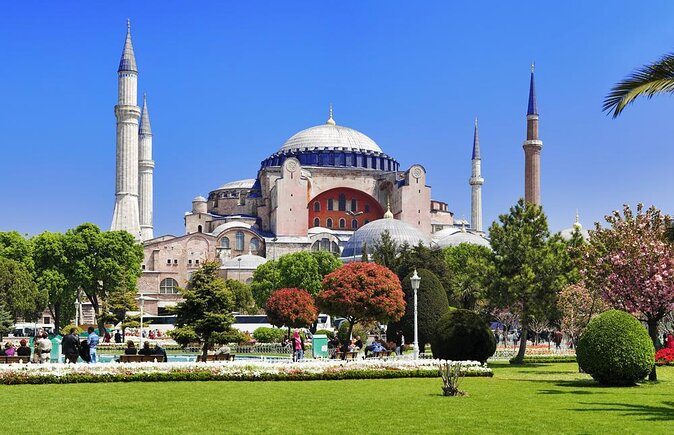
- A tight Old City loop built for first-timers: Sultanahmet landmarks plus a couple of quieter Ottoman highlights.
- Tulip-era atmosphere at Gulhane Park and nearby monuments: seasonal color changes from tulips to roses.
- Basilica Cistern’s column forest: a top sight, with possible wait time on busy days.
- Blue Mosque details you can actually spot: tiles, penwork, and sightlines from courtyard to inner corners.
- Hagia Sophia with queue-smart options: you can choose inside versus outside if lines feel too long.
- Grand Bazaar time plus a lesser-known mosque: shopping energy, then colorful decoration at Beyazit Mosque.
Why this Istanbul first-timer route makes sense for your first day
If your Istanbul trip is short, you need a plan that does two things. It should hit the headline monuments, and it should also explain how they connect across time.
This tour does that by grouping places that sit close together, starting from the Topkapi area zone and moving through Sultanahmet. You get the Ottoman story at the Blue Mosque and Beyazit Mosque, the Roman and Byzantine layers around the Hippodrome and Hagia Sophia, and the underground wonder of the Basilica Cistern. You are not just sightseeing, you are building a mental map fast.
The small group size, up to 5 people, also matters. It helps the guide adjust pace and attention, so you are not stuck with one speed for everyone.
You can also read our reviews of more tours and experiences in Istanbul.


Starting at Merhaba Pastaneleri in Sirkeci, then moving into Old City
The meeting point is at Merhaba Pastaneleri, Sirkeci (Hoca Paşa, Ankara Cd., 34112 Fatih/İstanbul). The tour begins at 9:00 am, and it ends back at the meeting point, so you do not have to worry about a complicated drop-off.
Because the start is near public transportation, you are usually able to get there without a long taxi hunt. Still, give yourself a little buffer, because on busy mornings Old City streets can feel slow even before you begin sightseeing.
What I like about this setup is that it puts you in motion early. You can hit the major sites while the day is still fresh, and you have time later for shopping at the Grand Bazaar.
Gulhane Park and the Topkapi area: where seasons change the vibe
Gulhane Park is the kind of stop that makes the rest of the day click. It is tied to the former Topkapi Palace area, but it works as a breathing space, not just another photo stop.
What makes it special is the seasonal cycle. In April, Gulhane Park is known for tulips, and in May, roses replace tulips. Every season shifts the feel, so your experience can be different even if you visit in a neighboring month.
You also get historical framing here. This is not just a pretty park, it is tied to crucial moments in Istanbul’s long story, including the Turkish Republic era. Admission is free, so it is a low-cost, high-impact way to start.
Quick tip: wear something light enough for walking, but bring a layer if you are there in cooler months. Parks can be lovely, then windy, then surprisingly chilly once the sun dips.
Sultan Ahmed III Fountain: a detail stop that pays off later
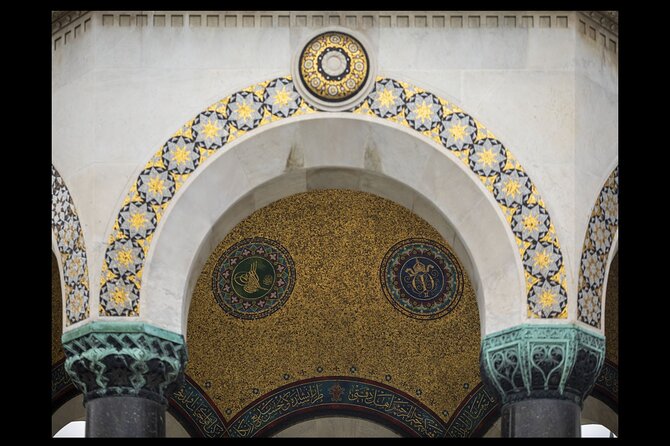
Right in the shadow of major landmarks, you will find the Fountain of Sultan Ahmed III. It is an elegant monument, but the real value is what the guide helps you notice.
This is the fountain that comes with a specific theme, including Tulip Period ornaments. Once you see that type of decoration here, you start spotting similar design ideas elsewhere around the city. It helps you connect the dots between architecture, art, and period styles, instead of treating each building as a separate postcard.
Admission is free, and the stop is short, about 10 minutes. That makes it a smart palate cleanser between the park and the heavier sights that follow.
Basilica Cistern: 1 hour underground, plus possible waiting time
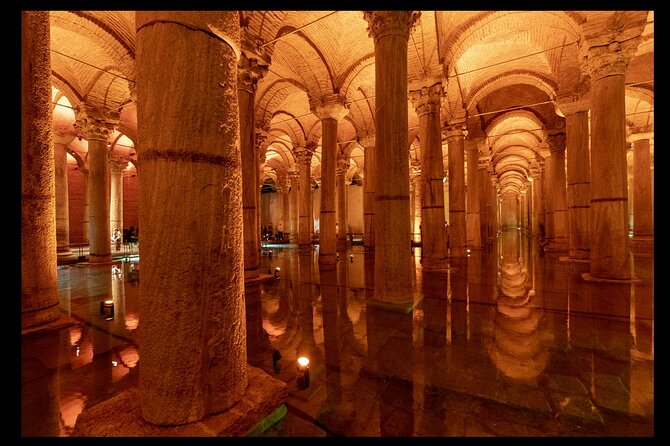
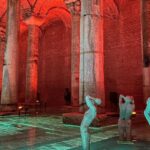
Yerebatan, also known as the Basilica Cistern, is a 6th-century Roman water structure and one of the largest of its kind in Istanbul. You walk into a space that feels theatrical even before you get your bearings.
The standout feature is visual repetition. You will see endless rows of columns, which create a forest-like atmosphere in an underground setting. It is exactly the type of place where a guide’s context helps you understand what you are looking at, beyond just the wow factor.
One practical note: on busy days, there may be up to a 30-minute waiting time. The visit block is about 1 hour, and entrance tickets are not included.
Quick tip: if you are sensitive to delays, plan your day mood around this. A wait outside the cistern is normal here, so pack patience. Once you step inside, it is worth it.

Blue Mosque and Sultanahmet Square: Ottoman artistry plus Roman stadium bones
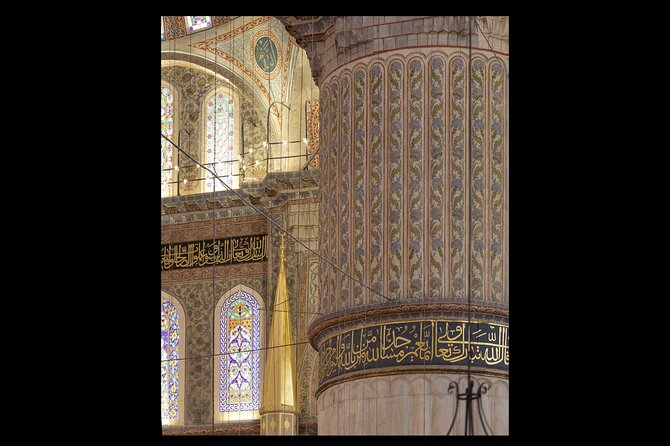
The Blue Mosque is a 17th-century Ottoman masterpiece, and it is one of those sights where you can understand the hype quickly. The exterior sets the stage, but the interior is where it gets truly memorable.
Inside, you will see thousands of tiles and extensive penwork. The difference here is not subtle. The guide helps you look in the right directions, from the outer courtyard toward the inner corners, so you get the best views of the decoration rather than wandering randomly.
Then you step into Sultanahmet Square, the ancient Roman Hippodrome. This is another stop where a guide matters, because many of the features are not obvious at first glance, even though they are some of Istanbul’s oldest and most important remnants.
You will also get context for key objects in the square, including the Egyptian Obelisk, the Serpent Column, the Masonary Obelisk, and the German Fountain. Each has its own story, and the fun is hearing what you might otherwise walk past without noticing.
Admission for both the Blue Mosque area and Sultanahmet Square stops is listed as free.
Quick tip: bring a small bottle of water and plan for mosque etiquette. Even if you are not covering everything fully right this second, having the basics ready keeps you from getting rushed later.
Hagia Sophia Grand Mosque: the must-see, the long line, and a smart plan
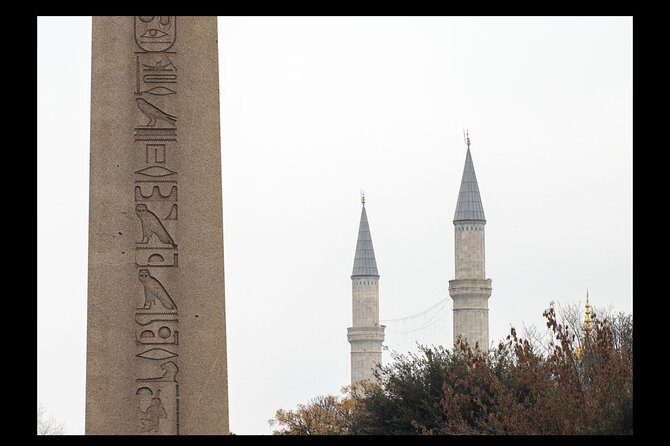
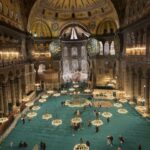
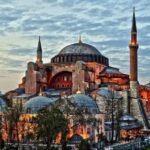
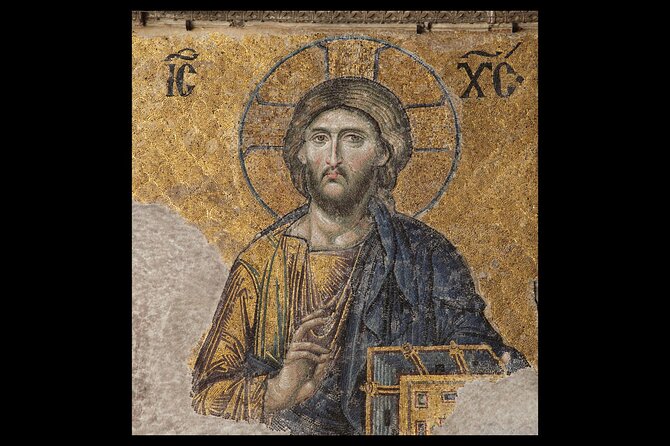
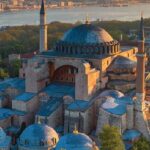
Hagia Sophia is a UNESCO World Heritage Site and one of the most important buildings in world architecture. It also carries layered history, with artistic items and architectural features from Roman, Byzantine, and Ottoman civilizations. You are not looking at one era, you are looking at a palimpsest of empires.
This is why the line can be painful. Expect queues that may lead to 1 to 2 hours of waiting time. Entrance tickets are not included, so you also need to budget for entry.
Here is a valuable flexibility point: if you prefer seeing the building mostly from outside to avoid a long queue, the tour can add an alternative destination. That is a big deal if you have limited energy, limited time, or you simply hate standing in lines.
Quick tip: if you decide to go inside, arrive ready for a slower pace. If you decide to skip the line, you still get the big picture and can channel your time into another nearby stop without losing the day.
Grand Bazaar and Beyazit Mosque: shopping energy and a calmer Ottoman finish
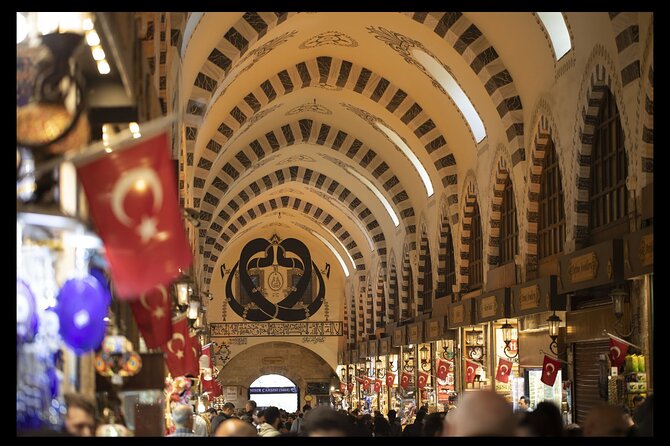
After the heavyweights, the day turns into street-level Istanbul.
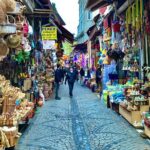
Grand Bazaar is tied to Istanbul as a key city on the Silk Road and the Spice Road. It is still one of the most lively medieval bazaars in the city. The tour includes about 1 hour here, and the guide can adjust based on what you want most.
Depending on interest, you may also look at the Egyptian (Spice) Bazaar as part of the plan. One important scheduling detail: Grand Bazaar is closed on Sunday.
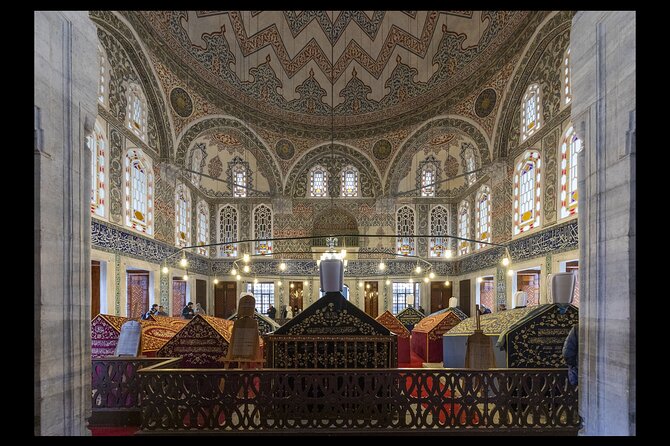
Then the itinerary finishes with Beyazit Mosque, a lesser-seen Ottoman mosque that is worth it for its history and design. It has colorful decoration dated 1505, and it gives you a different look than the Blue Mosque, even though both are central Ottoman landmarks.
Admission for Grand Bazaar and Beyazit Mosque is listed as free.
Quick tip: set a small shopping budget before you arrive. Bazars are fun, but they can also turn into a spending sprint. If you want souvenirs, pick them early, then spend the last part of the hour browsing instead of bargaining under pressure.
Price and value: what $120 really buys you in Istanbul
At $120 per person, you are paying for more than walking from place to place. You get a professional licensed tourist guidance service, in English, for roughly 6 to 9 hours, with a maximum group of 5 people. You also get a mobile ticket and potential group discounts, which can help if you are traveling with companions.
The part to plan for: entry tickets are not included for museums. The listed estimate is €40 per person for museum entries, and the Basilica Cistern and Hagia Sophia are exactly the kinds of places that usually require paid admission. Lunch is also not included, and public transportation is listed as about €2 per person.
So the real cost picture is this: you will likely pay the tour price plus museum entries, plus food. For many first-time visitors, paying for a guide still ends up being good value because you save time, avoid confusion, and get context that makes the monuments feel coherent instead of random.
The main “value risk” is if you hate lines. Hagia Sophia and the cistern can mean waits, and if you decide to tackle every queue, your day can run longer.
The guide factor: what you can expect from Unsal-style storytelling
A standout pattern in how this tour runs is the guide’s tone and pacing. The itinerary can be tailored depending on how much you want to hear and how you want the day to feel, including adjusting pace for comfort.
The best practical advantage is attention to detail. The guide tends to point out things you might miss on your own, especially in visually complex interiors like the Blue Mosque and in big, layered buildings like Hagia Sophia. There is also a strong emphasis on recommendations after the main stops, including where to eat.
You may also benefit from extra help that goes beyond narration, like getting tickets smoothly for the next sight and helping with ordering at lunch. If you are the type who likes photos, the guide is also described as being good at photography and sharing images after the tour.
Who should book this tour, and who should pass
This tour is a great fit if you:
- want a first day that covers the main Old City icons without overthinking the route
- like learning as you walk, especially about Ottoman and Byzantine-era details
- appreciate a small group pace, up to 5 people, instead of a crowd script
- want flexibility around Hagia Sophia if the queue feels too long
You might want to consider something else if you:
- hate waiting lines no matter what, since Hagia Sophia can be a big time sink
- want a fully self-guided day with no guidance
- have very limited walking stamina for a 6 to 9 hour outing
Should you book this Istanbul Essentials for First Timers tour?
If it fits your dates and your tolerance for lines, I think this is a strong booking. It hits the highest-priority monuments in a logical order, and it also includes calmer places like Gulhane Park and Beyazit Mosque so your day does not feel like nonstop crowds and concrete.
Book it if you want your Istanbul to feel connected. The guide approach here is less about checking boxes and more about helping you see patterns across architecture, art, and empire transitions.
If you are truly line-avoidant, decide before you start how you feel about Hagia Sophia queues. The option to shift toward outside viewing and add an alternative destination can be the difference between a great day and a frustrating one.
Either way, plan your budget for museum entries (around €40 per person) and think of lunch as part of the day’s adventure, since it is not included.
FAQ
What is the duration of the Istanbul first-timer essentials tour?
It runs about 6 to 9 hours, depending on how the day goes and how much time you spend at each stop.
When does the tour start, and where do I meet?
It starts at 9:00 am, and the meeting point is Merhaba Pastaneleri in Sirkeci (Hoca Paşa, Ankara Cd., 34112 Fatih/İstanbul). The tour ends back at the meeting point.
Is the tour offered in English?
Yes. The tour is offered in English.
Are museum and monument entry tickets included in the price?
No. Entry tickets to museums are not included, and the listed estimate is €40 per person. Some stops have admission tickets included (like Gulhane Park, Blue Mosque, Sultanahmet Square, Grand Bazaar, and Beyazit Mosque), but Hagia Sophia and Basilica Cistern are listed as not included.
Is lunch included?
No. Lunch is not included.
Is Grand Bazaar open every day?
Grand Bazaar is closed on Sunday, so the schedule may need to account for that.
Can I cancel for a full refund?
Yes. You can cancel for a full refund up to 24 hours before the experience start time. The tour can also be canceled due to poor weather, with a different date offered or a full refund.