Review · ISTANBUL
Istanbul Unveiled: A Quest for the Unique and Unusual Jewels
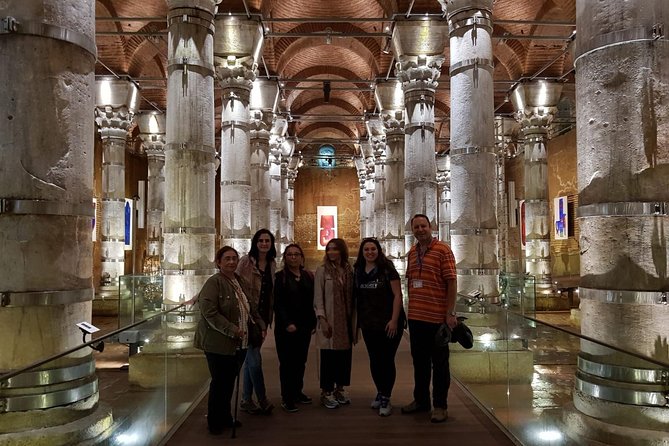
Istanbul below street level is the star. This tour makes that true, with planned time for permission-only cisterns and less-visited Byzantine spaces you will not easily find on your own. Do bring comfortable shoes and expect plenty of walking, because the day is built around short stops plus some stairs underground.
I love the way the breaks feel real, not rushed. You start with Turkish tea in a garden setting, you get lunch at a lokanta, and you finish with boza at Vefa Bozacısı, so the historic route stays human-scale.
Your guide, Serif Yenen, runs the day in clear English and keeps the pace steady enough for a full half-day that can run close to 7 hours.
Key moments you will remember
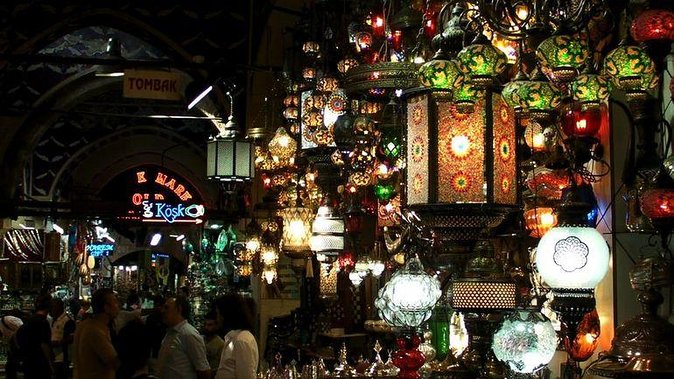
- Permission-only cisterns and Byzantine ruins that add surprise value to the classic sights.
- Tea, lunch, and boza included, so you spend less time hunting and more time seeing.
- Three layers of power in one route: Byzantine, Roman, then Ottoman, all within walking distance.
- Short terrace and monument pauses that help you orient quickly in Sultanahmet and Fatih.
- Two cistern styles: one famous by name, one often missed, both worth comparing.
Where Istanbul’s Underground Story Starts
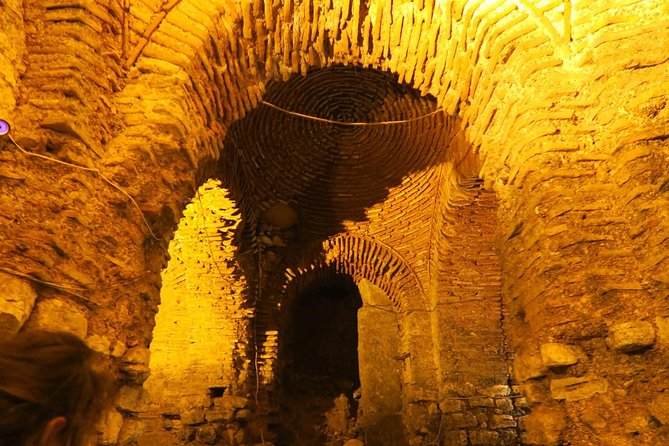
This is not a straight line of big monuments. It is a route that teaches Istanbul by taking you under the city, then back up into forums, churches, mosques, and viewpoints.
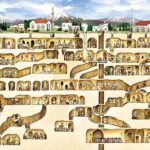
The underground focus is the main reason I like this style of tour. Istanbul’s cisterns are not just atmospheric photos. They explain how Constantinople worked, how water was stored, and why architecture mattered to daily survival and power.
You’ll spend a good part of the day moving between sites that require special access. That means you are paying for more than “entry tickets,” you are paying for getting into places most visitors never see.
You can also read our reviews of more tours and experiences in Istanbul.
Stop 1: Küçük Ayasofya, Tea in the Garden, and the Pre-Hagia Sophia Connection
You begin at the Küçük Ayasofya Mosque area, in the garden cafe. Before you even start walking, you get traditional Turkish tea and a relaxed start. It is a smart way to get your bearings, because you are about to learn how geography and history overlap in Istanbul.
Küçük Ayasofya is often described as a precursor to the famous Hagia Sophia. That is the point. You see Byzantine architecture thinking in action before it reaches its most famous form. The stop is about 1 hour, and the admission ticket here is free.
Why this works for you: a garden cafe start makes the day feel less like a sprint. You also get context early, so later stops about emperors and capitals make more sense.
The only real consideration is time. Because the group has a packed route, you should enjoy the tea, then stay ready to move when it’s time.
Stop 2: Eresin Hotel Sultanahmet and the Private Great Palace Ruins
Next is an unexpected stop tied to the Byzantine Great Palace ruins. You visit a private location accessible with special permission, which is rare in Istanbul. You spend about 30 minutes here, with admission ticket included.
The value is not only the setting. It is the contrast. You are standing near a part of the city where the scale of royal life was enormous, yet what you see now is fragments. Your guide helps connect what remains to what once ran the empire’s image and routines.
Practical note: since this is a permission-based stop, you may not have long for photos. Plan to listen first, then capture a few solid angles.
Stop 3: Nakkas and a Byzantine Cistern with an Exhibition Link
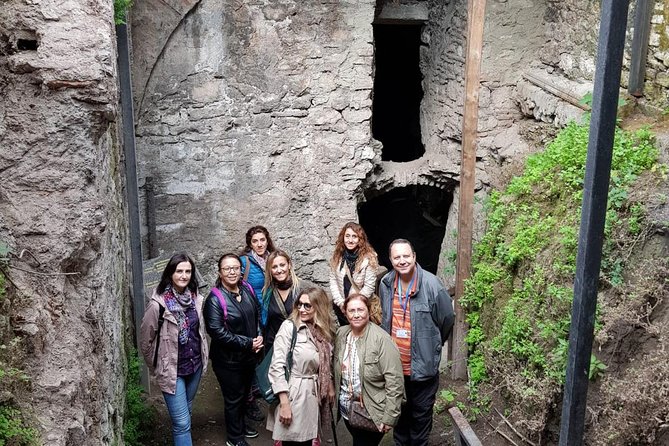
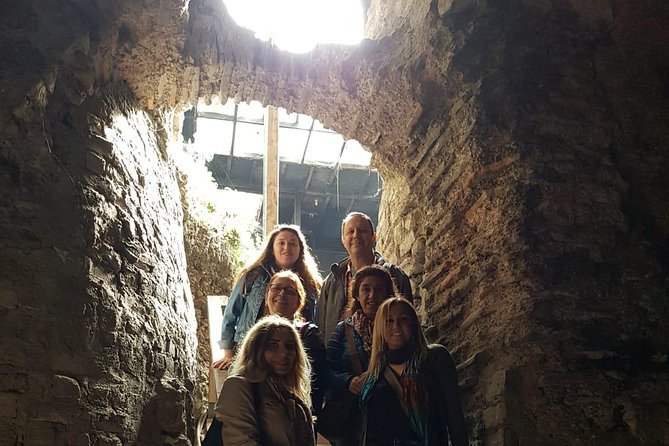
At Nakkas Oriental Rugs & Textiles, the tour uses the shop area as a bridge to something more interesting. You go underground to a Byzantine cistern that requires special access permission. Admission is included, and you spend about 45 minutes.
This cistern also hosts an exhibition dedicated to the ancient Hippodrome. That matters because the Hippodrome shows up later in the day. You get an under-city preview first, then you connect it to what you will see above ground.
Why you will like this stop: comparing the underground cistern space to the later public entertainment center makes the history feel less abstract. The underground pieces stop being spooky decorations and become part of how the city functioned.
Watch for one thing: underground spaces can feel cooler and damp, and walking surfaces may be uneven. If you are sensitive to that, dress in layers.
Stop 4: The Hippodrome, Where Constantinople Watched the World
The Hippodrome stop is about 20 minutes, and admission ticket is free. This is the main public entertainment and political stage for ancient Constantinople.
You can think of it as Istanbul’s old media room, minus the screens. Chariot races and major gatherings helped shape public mood. Even if you only see parts today, the stories attached to the site are huge.
The tradeoff: it is short. This tour is designed to stack several high-value stops, so you’ll get the highlights rather than a long sit-down exploration.
Stop 5: Seven Hills Hotel Panoramic Terrace Views
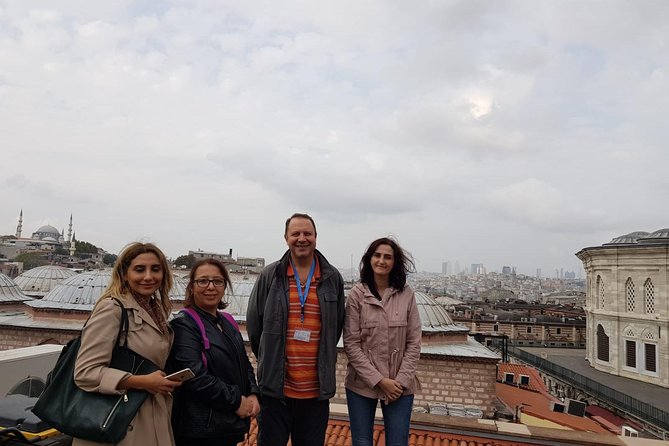
From there, you head to a panoramic terrace at Seven Hills Hotel for about 20 minutes. Admission is free.
This is a practical stop. After underground and ruins, you get elevation and sightlines. You will quickly understand how the old city neighborhoods sit on hills, and it makes later monument viewing feel less random.
Bring your phone, but also take a moment to look without it. A quick roof-top orientation can do more for your memory than dozens of close-ups.
Stop 6: Binbirdirek Cistern, Also Called the Cistern of Philoxenos
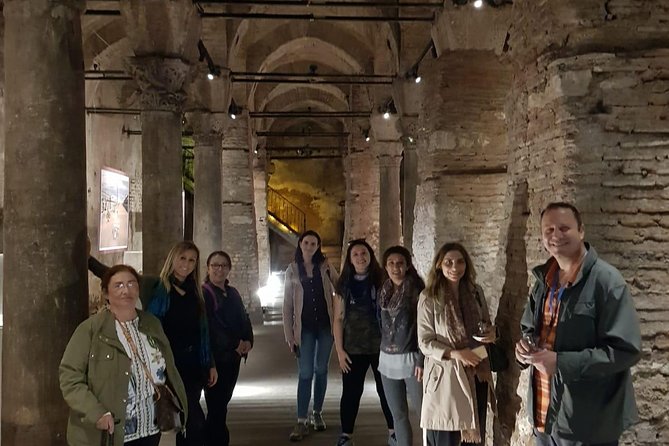
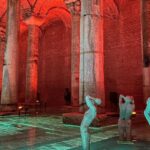
Now comes another underground standout: the Binbirdirek Cistern, also known as the Cistern of Philoxenos. You spend about 30 minutes, and admission is included.
This cistern is often compared to the famous Basilica Cistern. The difference is that Binbirdirek tends to get overlooked. It is also the second largest cistern in Istanbul, according to the tour description. That scale changes the feel of the space.
A bonus detail you will appreciate: Mark Twain visited here, and his impressions are part of the cistern’s story. It’s a nice reminder that these places have had star visitors long before Instagram.
Consideration: because it is a less commonly visited cistern, it can feel more enclosed. Give yourself a few minutes to adjust, then focus on the guide’s explanations about construction and water storage.
Stop 7: Column of Constantine at Cemberlitas Sutunu
Back above ground, you visit the Forum of Constantine area and see the Column of Constantine. Admission is free, and you spend about 20 minutes.
This column was erected by Emperor Constantine to commemorate Istanbul becoming the Roman Empire’s new capital around 1700 years ago. That time marker is the point. You’re looking at a physical reminder of when old Rome shifted its center of gravity.
For you: even if you do not memorize dates, the column gives you a way to anchor the story of the city’s transformation from Roman to Constantinople identity.
Stop 8: Lunch at a Local Lokanta
You break for lunch at a nearby lokanta, with about 45 minutes allotted. Lunch is included.
The tour’s description emphasizes fast service and a menu that caters especially to local shopkeepers. In other words, you’re likely to get solid home-style food without the tourist theater.
This is a key moment in a long day. After hours of history talk and standing in stone-heavy sites, you need a reset for your feet and your head.
If you have dietary needs, be vocal when you order. Serif Yenen has been noted as attentive to choices like vegetarian meals, so make sure you share your preferences early.
Stop 9: Forum of Theodosius and Its Column-Driven Remains
After lunch, you visit the Forum of Theodosius. This stop is about 15 minutes and is free.
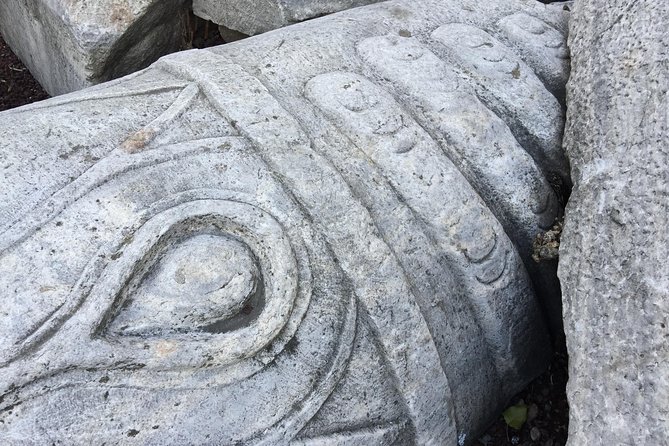
You learn that it was originally constructed by Emperor Theodosius I in the late 4th century. The column that dominated the skyline was covered with reliefs tied to the emperor’s military victories, spiraling upward toward the heavens.
You likely will not see everything, since so much has been lost. Still, what remains helps you picture processions, marketplaces, and the public push-pull between politics and daily life.
The upside is the speed. In 15 minutes, you get enough to keep the story thread going without draining your energy before the next mosque.
Stop 10: Kalenderhane Camii, Byzantine and Islamic in One Structure
The tour then brings you to the Kalenderhane Camii. This stop is about 15 minutes and is free, but your visit is outside only.
It was originally the Theotokos Kyriotissa Church, and the building shows a mix of Byzantine and Islamic architectural styles. You will notice features like domes and detailed brickwork, which help you see how architecture changed with new rulers and faith traditions.
Why this stop is worth it: it helps you understand Istanbul as an evolving city, not a museum of locked-in time periods.
Stop 11: Vefa Bozacısı and a Real Taste of Boza
Next is Vefa Bozacısı for about 15 minutes, with boza tasting included.
Boza is a fermented Turkish drink. It has a sweet-tang mix and a thick texture, and it is deeply tied to local tradition. For me, this is one of those food stops that works even if you do not usually drink fermented beverages, because it’s offered as a cultural snack, not a party challenge.
The practical point: plan to sip slowly. Boza can be filling, and you still have more walking after.
Stop 12: Şehzade Mehmet Mosque by Mimar Sinan
You then visit the Şehzade Mehmet Mosque, about 30 minutes, free.
This is where Ottoman architecture enters the day in a big way. The mosque was designed by Mimar Sinan and commissioned by Sultan Süleyman the Magnificent in memory of his son. You see domes and calligraphy tied to that 16th-century creative peak.
If you like architectural details, this is one of the best stops on the route. It gives your eyes a break from ruins and underground spaces, and it feels calm.
Stop 13: Valens Aqueduct, the Roman Waterline Finale
You finish at the Valens Aqueduct, also called Bozdogan Kemeri. The tour ends around here after about 10 minutes at the stop.
This Roman aqueduct was built in the 4th century to supply water to Constantinople. It stretches across the valley between Istanbul’s hills, and it is still visible enough to help you picture how a city moved water from far away.
This ending works well because it loops back to the cistern theme. You start underground with stored water, then end with a water system built to deliver it. The day becomes one coherent story.
Price, Value, and the Real Cost of Getting Into Places Like This
The price is $490 per person for a 6 to 7 hour tour, offered in English. On paper, it can sound steep until you break down what you actually get.
In your price, you have entrance costs, a professional guide, coffee or tea, an Istanbul map, boza tasting, and lunch. The stops that require special permission are also the kind of thing that often costs extra or never happens with general sightseeing.
What you do not get is private transportation. That matters if you were hoping for a car to pick you up from your hotel and drive you all day. This tour does include hotel drop-off at centrally located accommodations, but the meeting point starts at the Little Hagia Sophia area, so you will still need to reach the start point on your own.
This is a private tour/activity, meaning only your group participates. Practically, that usually means less waiting and more flexibility around pacing, as long as your group is ready to keep moving.
Who this fits best:
- You care about Byzantine and Roman layers, not just Ottoman Istanbul.
- You want underground access without spending hours trying to arrange it.
- You prefer a guide who connects sites with stories, so you do not leave with a pile of landmarks but no thread.
Who might want to think twice:
- If walking and stairs are hard for you, the cistern sections and the overall route might feel like too much for one day.
Should You Book Istanbul Unveiled?
If you want Istanbul in layers, and you like the idea of seeing the city’s water storage and imperial infrastructure as part of the same story, I think this tour is a strong choice. The best reason to book is the mix of permission-based underground stops plus major landmarks, all wrapped in meal breaks like Turkish tea, lunch at a lokanta, and boza.
I would book it if you are a history-minded traveler who also appreciates practical structure. The route helps you connect Constantine, Theodosius, Ottoman architecture by Mimar Sinan, and Roman engineering at the aqueduct, without turning the day into a nonstop lecture.
Skip it only if your priority is a slow pace with lots of free time. This tour is built to move, and it rewards people who are ready to stay engaged for the full 6 to 7 hours.
FAQ
How long is the Istanbul Unveiled tour?
It runs about 6 to 7 hours.
How much does the tour cost?
The price is $490.00 per person.
Is the tour offered in English?
Yes, the tour is offered in English.
Where do I meet, and where does the tour end?
You meet at the Little Hagia Sophia Mosque (Küçük Ayasofya) area at Küçük Ayasofya Camii Sokagi No:20, 34122 Fatih, Istanbul. The tour ends around the Aqueduct of Valens at the European Side, Kalenderhane, 34083 Fatih, Istanbul.
What is included in the price?
Included are entrance costs, a professional guide, coffee and/or tea, an Istanbul map, boza tasting, and lunch.
What is not included?
Private transportation is not included.
Is it a private tour?
Yes. It is listed as a private tour/activity, with only your group participating. There is also a minimum of 2 people per booking.
What is the minimum age to join?
The minimum age is 8 years old.
Do I need a certain fitness level?
Yes, the tour description says you should have a strong physical fitness level, and comfortable walking shoes are recommended.
Can I cancel and get a full refund?
Yes, free cancellation is available. You can cancel up to 24 hours in advance for a full refund, and cancellations made less than 24 hours before start time are not refunded.