Review · ISTANBUL
Pearl’s of Turkey – 8 Days
One route, a lot of Turkey’s headline scenes. What makes Pearl’s of Turkey appealing is how efficiently it links Istanbul, Gallipoli, Ephesus, Pamukkale, and Antalya without feeling like you’re stuck in a train window all day. I like that hotels and key logistics are handled for you, including airport-to-hotel pickup and internal flights.
I especially like the mix of big-name landmarks and real place-based history. On Day 2, you cover Hagia Sophia, the Blue Mosque, and the Grand Bazaar in a single old-city block, which saves you time and gets you into the atmosphere fast. Then you pivot to ANZAC country at Gallipoli, where the sites are specific and unforgettable.
One consideration: entry tickets for historical sites are not included in the price. Your guide may have pre-paid skip-the-line tickets, but you still need to budget for the actual site fees you pay to your guide in cash.
Key highlights to look for in this tour
- Small group cap (max 12), which keeps it easier to hear your guide and move at a human pace
- Central, “special class” hotels in Istanbul, Kusadasi, and Antalya, so you are not commuting forever
- Skip-the-line support, since historical sites have tickets handled in advance by your guide
- Gallipoli day is built around real locations, including ANZAC Cove, Lone Pine, and Turkish allied trenches
- Ephesus time travel, with the city’s major monuments and enough time to actually walk the streets
- Pamukkale plus Hierapolis, pairing the thermal terraces with Roman-era ruins and the Sacred Pool
What you’re really buying with Pearl’s of Turkey
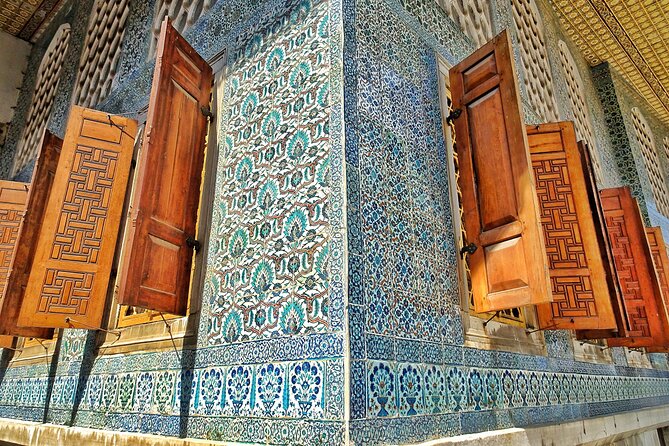
For $1,400 per person, you’re not just paying for sights. You’re paying for the stuff that usually burns your energy: hotel handoffs, guided visits, and transportation between regions.
This tour is built around a classic Turkey “greatest hits” arc. You start in Istanbul with the Byzantine and Ottoman core. Then you swing to the Dardanelles for Gallipoli and Troy. After that, you head through the Aegean for Pergamon and the Roman-era city of Ephesus, then finish at Pamukkale and Antalya. It’s a lot of ground, but the structure matters. It keeps the trip from turning into a series of random bus transfers where you never see the place beyond the stop sign.
Two value points stand out in how the tour is described. First, hotels are in good locations, not out in the suburbs. Second, it uses a combination of drives and internal flights, which is exactly what you want on a route this long.
You can also read our reviews of more tours and experiences in Istanbul.
The price question, answered simply
Think of your $1,400 as: guided access + selected meals + lodging + transport between regions. What you still have to handle is site admission fees for most major attractions.
If you hate ticket lines, you’ll like the approach where your guide has pre-paid skip-the-line tickets and you pay the cost to them in cash (Lira, USD, or Euro). That can turn a half-day of standing in line into actual sightseeing time. If you prefer paying everything online yourself, just know the tour works differently.
Istanbul Airport to hotel: getting in, getting oriented
Day 1 is straightforward. You land at Istanbul airport (the tour specifically mentions SAW, Sabiha Gökçen) and someone greets you, then drives you to your hotel for check-in. One hour is allowed for that transfer.
This matters more than it sounds. If you’ve ever arrived in a foreign city tired and jet-late, you know how quickly the first day can go sideways when you have to figure out buses, taxis, and the right stop. Here, you step out of the airport, get shuttled to where you’ll sleep, and you can save your energy for the sights starting next day.
Day 2 old Istanbul: Hagia Sophia, Topkapi, Blue Mosque, and the Grand Bazaar
Day 2 is built like a tour of Istanbul’s “great landmarks in close orbit.” You’re not spending the day bouncing across the city. You’re moving through a dense historic zone where the names themselves basically tell you the story.
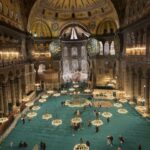
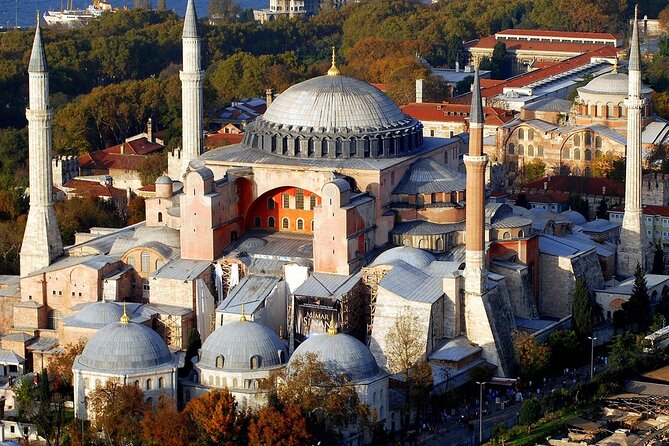
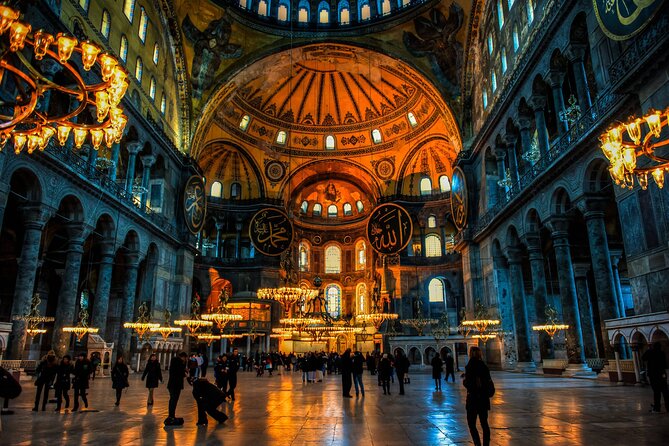
Hagia Sophia Grand Mosque: the city’s gravity well
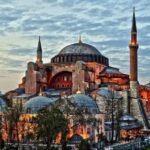
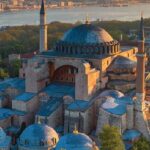
You’ll visit Hagia Sophia Grand Mosque with a one-hour slot, and the tour notes it as the largest building on Earth aside from the Egyptian Pyramids or the Great Wall of China. It also frames Hagia Sophia as the religious center during the Byzantine period.
Practical note: Hagia Sophia’s admission is not included. Your plan should include a little cash budgeting. Also, go in expecting a strong visual impact, not a quick photo stop. This is one of those places where you naturally slow down because there’s just too much to look at.
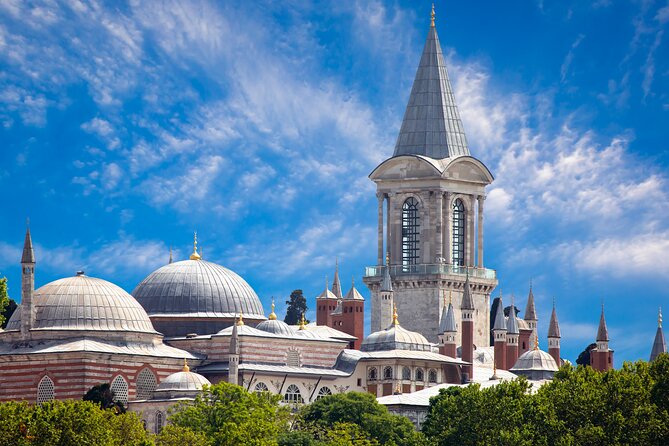
Topkapi Palace: Ottoman power, government in one place
Next up is Topkapi Palace, described as the Ottoman imperial residence and also the seat of government for nearly 400 years. You get about two hours here.
Again, admission is not included. But here’s the benefit: if you’ve seen palace videos online, you might think the site is all halls and courtyards. With two hours, you can actually get the rhythm. Wander, read a few key things, then step back outside to absorb the setting.
Hippodrome and the Blue Mosque: Roman leftovers and Ottoman drama
You’ll pass through the Hippodrome, originally built under Roman Emperor Septimius Severus in the early 3rd century. The tour labels it as the civil center with huge crowds in its time.
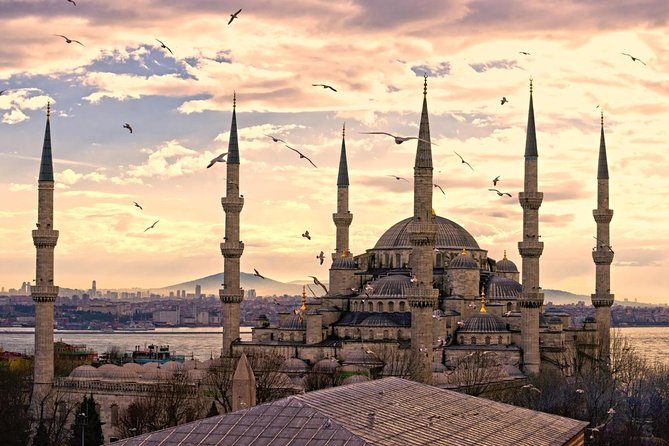
Then you visit the Blue Mosque. It’s one of the most famous landmarks of the old city, known for its six minarets and magnificent dome, built in the early 17th century under Sultan Ahmed I.
The good news: the tour lists both Hippodrome and the Blue Mosque as free entry. Free entry sites won’t replace paid ones, but they do help you pace your budget without losing major stops.
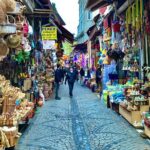
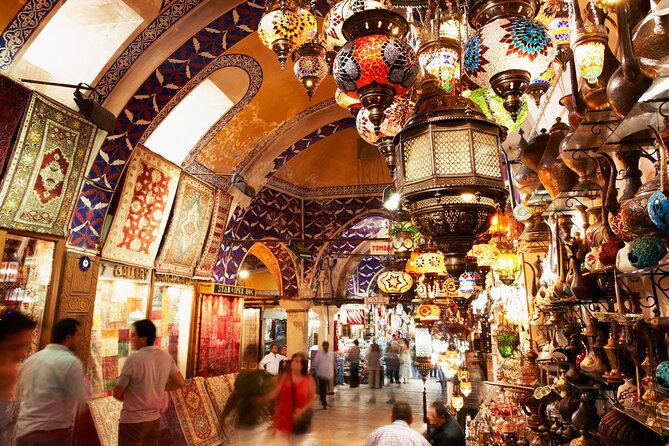
Grand Bazaar: chaos with structure
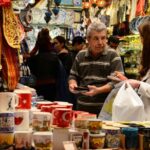
You finish with the Grand Bazaar, described as having 18 entrances and over 4,000 shops. It’s two hours, and entry is listed as free.
Here’s how to make Grand Bazaar worth your time instead of tiring you out. Treat it like a market district, not a single shopping stop. Pick one direction, slow down near the craft stalls, and look for handmade, locally made items rather than the same factory souvenir repeated everywhere. If you only rush, you’ll miss the texture and end up with bag-heavy regret.
Day 3 Gallipoli and Troy: ANZAC country plus myth turned archaeology
This day is emotionally heavy and historically specific in a way that’s hard to replicate with a generic city tour.
You start with a 4-hour drive from Istanbul to Canakkale. Then you spend time at Gallipoli, visiting named places such as Brighton Beach, ANZAC Cove, Beach Cemetery, Lone Pine Australian Memorial, Johnston’s Jolly tunnels and trenches, plus the 57th Regiment Turkish Memorial and the Chunuk Bair New Zealand Memorial.
That list is important. These are not vague “battlefield views.” You’re walking through exact locations that helped define the campaign.
A note on how to approach Gallipoli
You don’t need to become a military historian. But do come ready to pay attention. The scenery can look serene from a distance, then you read the site markers and the story hits you. I’d set aside your shopping brain and keep your phone use light.
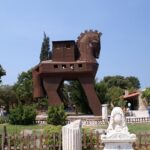
Troy (Truva): where the Trojan Horse comes from
After Gallipoli, you transfer to Troy, an archaeological site with UNESCO recognition. You’ll stroll through the ruins connected to stories and terms people still use today: the Trojan War, Trojan Horse, Helen of Troy, Prince Paris, and the battle themes between Achilles and Hector.
The tour mentions areas such as the Walls of Troy, the Megaron House, Roman bath, Odeon, the Temple of Athena, and more.
The entry is not included for Troy. Still, two hours is a good window. You can see the main outlines without feeling pressured to sprint. If you love myths, you’ll get why these ruins matter. If you don’t, you’ll still appreciate the layered civilization feeling when you realize multiple eras overlap in the same place.
Day 4 Pergamon and Asklepion: ancient medicine and palace-scale ruins
Day 4 shifts from battlefields to archaeology with an education angle. You drive to Pergamum and spend time at the ancient city and the Asklepion.
Pergamon Ancient City: a city that kept changing hands
Pergamon is framed as having been a capital for almost four hundred years, moving through eras from early prehistoric periods to archaic and classical times. The tour also points out that John wrote his letter here, which gives you another lens on how early Christian texts link to place.
The site includes temples, palaces, and agoras, plus big named highlights like the Zeus Altar and the Parchment Library, along with the Asclepion complex.
Admission is not included for these stops, but you get about two hours in Pergamon.
Asklepion: The Pergamum god of health
Then you visit the Asklepion, described as the Pergamum God of Health, tied to diet, medicine, and care over several hundred years. The tour says famous medical scholars like Hippocrates and Galenus were born in Pergamum and worked there.
Even if you treat the names as anchors rather than exact proof, the experience is still cool. Asklepion is where you start to see how the ancient world understood wellness. It also gives you a nice mental reset after the intensity of Gallipoli and the myths of Troy.
You finish the day by driving to Kusadasi, with time for lunch along the way.
Day 5 Ephesus and the Temple of Artemis: the Roman city you can walk
Ephesus is the kind of place where guided time feels worth it. Without a guide, you can still enjoy it. With a guide, you get a sharper sense of why things were where they were and how the city functioned.
House of the Virgin Mary: quiet faith site, big meaning
You start with the House of the Virgin Mary, described as having a church built from the 6th century AD on the foundations of an earlier house from the 1st century AD. It’s presented as Mary’s final house.
Admission is not included here. The hour is reasonable, since it’s a reflective stop.
Ephesus Ancient City: big size, unusually preserved
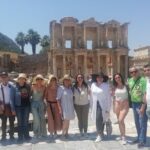
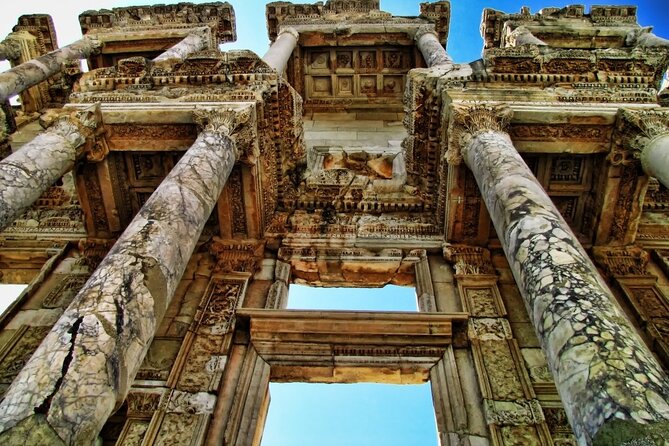
Next is Ephesus, described as the best-preserved classical city in the Eastern Mediterranean. The tour notes it was second-largest after Rome during the 1st century, with more than 250,000 citizens. The big point for you is preservation. You’re walking among monuments like the third-largest library of the ancient world and the largest Roman theatre on the Asia continent.
The stop is about two hours, and admission is not included.
If you want this to feel like more than photos, wear comfortable shoes and accept that you will walk more than you expect. Ephesus rewards you when you slow down at key structures instead of trying to collect every stone in one pass.
Temple of Artemis: wonder in fragments
You finish with the Temple of Artemis, described as one of the Seven Wonders of the Ancient World, with a famous cult dedicated to Artemis that made Ephesus a major pilgrimage destination.
Entry is listed as free. That’s a helpful budget win, and it also gives you a good contrast: you can see the shape of what once was, even if you’re looking at remnants rather than a fully intact temple.
Day 6 Pamukkale Thermal Pools and Hierapolis: Pools of Heaven meets Roman ruins
Day 6 is where Turkey’s scenery goes off-script. You leave Kusadasi area, then focus on Pamukkale, described as a UNESCO World Heritage site and a “Pools of Heaven on Earth” stop.
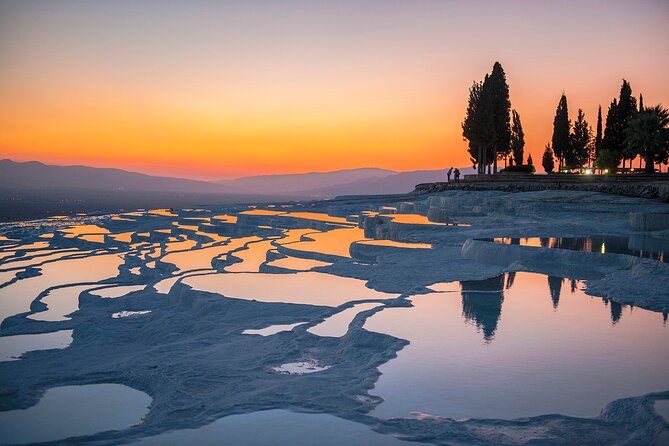
Pamukkale Thermal Pools: white terraces from warm springs
You get about three hours at Pamukkale. The tour says the terraces formed from warm spring water around 35 C, containing calcium bicarbonate. It also frames Pamukkale as one of the earliest spa destinations, with people traveling for healing powers in the past.
Admission is not included for Pamukkale.
Even if you’ve seen pictures, the real thing hits differently because of the way light bounces off the calcium deposits. Bring swimwear if you’re comfortable with water, and expect surfaces to be slippery. Also, plan for changing conditions, since the weather can shift and the ground can feel hot or cold depending on the sun.
Hierapolis and the Sacred Pool: history under the surface
Then you visit Hierapolis, described as having a big necropolis with 1,200 gravestones in Anatolia. The tour also highlights the Sacred Pool, with shallow thermal waters rippling over ancient Roman ruins beneath.
This stop is listed at a very short time, but it’s a memorable payoff: you feel how water and archaeology are physically intertwined here.
Entry for Hierapolis and the Sacred Pool is listed as free in this tour description.
After that, you drive to Antalya, and you have your base for the last two days.
Day 7 Antalya: sea-to-sky views, Duden Falls, and Kaleiçi old town
Antalya is the “end of the line” feel in a good way. You get less intense archaeology and more scenery and local texture.
Tunektepe Teleferik: cable car from sea to sky
You ride the Tunektepe cable car, described as sea-to-sky, with views from the top of Tunektepe at 1,365 meters above sea level. You’ll see the coastline, mountains, pine forests, and the turquoise Mediterranean.
Admission is not included for this stop.
This is one of the best times to think about photos and pacing. You might not want to do this on day one in Istanbul, when you’re still adjusting. Here, near the end, you can enjoy the views with less pressure.
Upper Duden Waterfalls: a simple walk with big sound
Then you visit Upper Duden Waterfalls, described as one of the most beautiful and most visited in the region. You walk through a park and hear the sound of falling water, about one hour, with entry listed as free.
No special strategy needed here beyond good shoes and a light layer if it’s breezy.
Kaleiçi old town: your best last-day souvenir hunt
After lunch at a local restaurant with a panoramic view, you get 1 to 1.5 hours of free time in Kaleiçi. The tour points out landmarks such as Hadrianus Gate, the Clock Tower, Kesik Minare (Truncated Minaret), and city walls dating to the 2nd century.
Entry is listed as free. You’re in narrow stone streets, and there are boutiques, art galleries, and museums. The tour also nudges you to buy souvenirs from authentic shops before leaving Kaleiçi.
This is where a small group is useful, even on a “free time” block. You can still ask your guide where to go fast, and you won’t feel lost.
Day 8 farewell Antalya: one last morning and a clean exit
On the final day, the tour ends after breakfast. Check-out is at noon, and the service finishes shortly after.
This is a good structure because it gives you time to pack without racing. It also means you can plan your airport departure without the stress of a late sightseeing finish.
What the guides and small-group size really change
The tour caps group size at 12 travelers, and that changes the feel in practical ways.
- You spend less time repeating yourself during Q and A.
- The guide can slow down for questions and faster for transitions when people are ready.
- Your day doesn’t feel like a long line of strangers being herded into the next photo angle.
If you get a guide like Hati, the route is reported to run especially well, with a helpful tone and strong explanations. Even without knowing who you’ll have, the guiding approach is clearly part of the value. They also handle ticket logistics through those skip-the-line arrangements.
Who should book this 8-day Turkey tour
This tour is a great match if you want:
- A first-timer Turkey route that covers Istanbul, Gallipoli, Ephesus, Pamukkale, and Antalya without building it from scratch
- A trip that balances headline sights with location-specific stops like ANZAC sites and major archaeological cities
- A small-group experience, not a big-coach crowd
- Convenience, because hotels are set and airport pickup is included
It might not be your best fit if:
- You hate paying separate site fees while traveling
- You want lots of free time in each city to wander alone, since the structure is guided and scheduled
- You are sensitive to long travel days, since the route includes several hours of driving between regions
Should you book Pearl’s of Turkey?
If you want a guided, efficient route through Turkey’s biggest classics, I’d say this is a strong option. The value comes from how it combines lodging in central areas, guided stops at major sites, and transport that uses internal flights to cut the slog. Add in small-group size and skip-the-line support, and you get a trip that feels organized without killing the sense of place.
My “yes, but plan smart” advice is simple: budget for entry tickets and bring cash for your guide when needed. If you do that, you can focus on what matters most, walking through the real Ephesus streets, seeing Pamukkale’s terraces, and standing at named Gallipoli locations where history isn’t abstract.
If your dates include a major religious or national holiday, double-check that specific sites are open, since closures can happen. Then book with confidence and enjoy the fact that, in eight days, you’ll see a surprising range of Turkey without turning it into a logistics job.