
Review · TOURS
Tour to Byzantium
Istanbul has a Byzantine side many miss. This half-day tour strings together the big ideas of the empire that ruled for more than 1,000 years, from the Golden Horn harbor to the Byzantine city walls. I especially like how the route connects sacred places with military architecture, and how you get a guided explanation that makes the ruins feel organized instead of random.
One thing to think about first: you get real context, but not everything is an inside visit. You stop at the Church of Panagia of Blachernae and you’ll see St. Savior in Chora (the Kariye Museum) from the outside only, so this is about understanding the sites as much as seeing their interiors.
Key points to know before you go
- Golden Horn start: the tour begins at the Byzantine natural harbor, the horn-shaped bay known for its reflective shine.
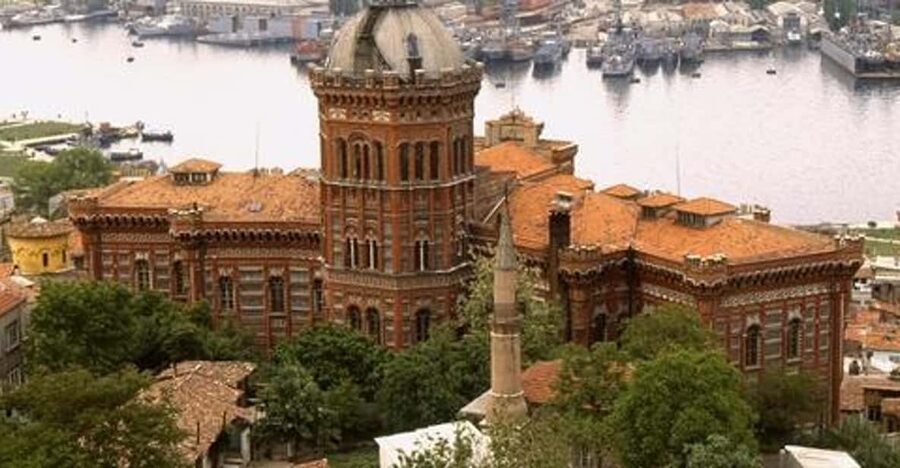
- Orthodox roots at Fener: you’ll see the Patriarchate at Fener, tied to Constantine’s era and the later seat of Orthodox Christianity.
- Blachernae holy-water lore: Panagia of Blachernae is linked with Hagiasma holy water and Hagion Lousma sacred bath traditions.
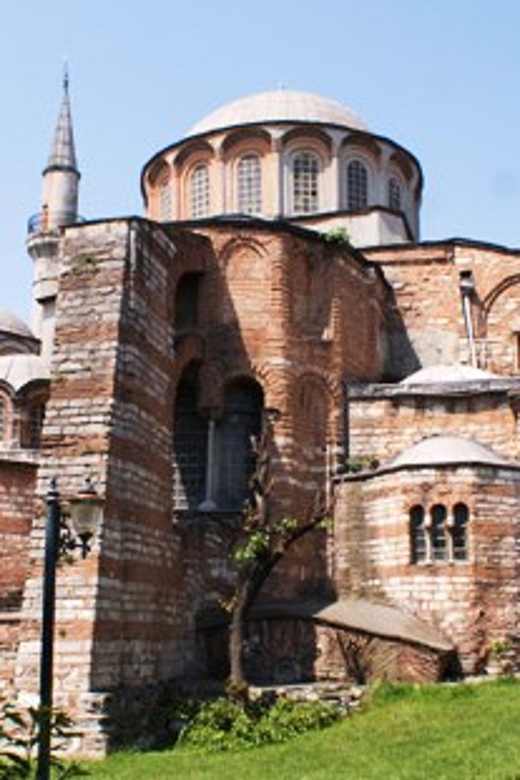
- Chora from outside: St. Savior in Chora (Kariye Museum) is an exterior viewing stop, so plan for photos and explanation, not a mosaic ticket.
- Stone prison history: Anemas Dungeons are described as a rare architectural prison complex, including basements below sea level.
- City walls remains: you’ll finish with 5th-century wall remnants tied to the acropolis of Byzantium and its towers and gates.
Byzantium in Four Hours: the tour’s pace and what you’ll actually see
This is a short, focused tour that works well if you want “big picture history” without spending a whole day in museums. The timing is listed as 4 hours, and the visit itself is described as a 3-hour experience, which usually means you spend a bit of time traveling and then a solid block of walking and stops.
The route is built around five themes. First, the geography of Constantinople, especially the harbor at the Golden Horn. Second, the religious power of Orthodox Christianity, especially around Fener and Blachernae. Third, the Chora area, known for religious art in Byzantine times, even if you view from the outside here. Fourth, the Blachernae complex as a mix of palace life and prison architecture. Fifth, the defensive city walls, which are still visible today in surviving sections.
Because it’s organized for a half-day, you do not get time to wander. That’s a plus if you want clarity fast. It’s a minus if you hate group pacing or you want slow, repeat photo stops.
Also note the structure of the day: museum entrance fees are included, and you skip the ticket line. If you’ve ever dealt with ticket queues in Istanbul, you know why that matters.
You can also read our reviews of more tours and experiences in Istanbul.


Golden Horn to Fener Patriarchate: where Orthodox Istanbul begins
Most first-time Istanbul days start with the obvious landmarks. This one starts with a maritime view of how Byzantium understood the city. You begin at the natural naval harbor called the Golden Horn, named for its hornlike shape and the way it reflects gold under sunshine when you look from higher ground.
That opening matters because it sets up the idea that Constantinople was a power built on movement, trade, and control of waters. Even if you don’t get panoramic views at every step, the explanation helps you read the city like a map.
From there you head to the Patriarchate at Fener. The tour frames it as the seat of Orthodox Christianity after Constantine the Great declared Christianity the official religion of the Roman Empire. Whether you’re religious, curious, or just history-driven, I like this stop because it anchors the tour in something still living. It’s not just ruins and “then and now,” it’s a place tied to ongoing tradition.
If you like to understand why religions spread and how institutions get established, this stop gives you a direction. You’re not just seeing buildings. You’re learning the logic behind the empire’s religious identity.
Panagia of Blachernae: Hagiasma holy water and Hagion Lousma bath traditions
Next comes one of the tour’s most distinctive spiritual stories: the Church of Panagia of Blachernae. This is described as the best known and most celebrated shrine of the Holy Virgin, with a specific connection to “Hagiasma” holy water and “Hagion Lousma” sacred bath traditions.
Even if you don’t go looking for a religious experience, this is a smart stop for travelers. In Byzantine Istanbul, sacred sites were not only about devotion. They were also about how people gathered, how healing claims spread, and how the city’s power was expressed through religious ritual.
Practically, you’ll get time to see and learn here, but it is still part of a tight schedule. Wear comfortable walking shoes, and if you’re sensitive to noise or crowds, keep your expectations realistic. Istanbul’s historic areas can be active even when the sites themselves feel quiet.
Also, because the tour focuses on explanation, bring a curious mindset. This is the kind of stop where a good guide turns a name you’ve heard into something you can actually picture.
St. Savior in Chora (Kariye Museum): why outside views can still be worth it
One of the biggest “gotchas” with this tour is also one of its quirks: you visit St. Savior in Chora, now the Kariye Museum, but only from the outside.
The upside is that you still get the story. You learn it was originally a Byzantine monastery and that it’s famous for fantastic mosaics and frescoes showing scenes from the Bible. Even without entering, you can treat the exterior as your orientation point for what made Chora special.
I like this approach for certain travelers because it helps you decide what you want more of later. If you later decide you must see those mosaics close-up, you’ll know exactly what to target. If you’re here mainly for the Byzantine city fabric and not for museum time, the outside stop gives you the cultural payoff without changing your whole day into an art marathon.
If you’re the kind of traveler who hates even short periods of “from the outside,” you might feel you’re missing the main course. But if you’re trying to see a range of Byzantine sites in one go, this makes the tour fit.
Anemas Dungeons and Tekfur Palace: power, punishment, and the Blachernae complex
This part of the route is where Byzantium feels physical, even in ruins.
You’ll go to Anemas Dungeons, described as part of the Blachernae Palace and unique for its architectural structure. The tour explains that the complex used 14 separate dungeons, each with two basements below sea level. That’s the kind of detail that turns an ordinary “old stone site” into a specific system, designed for confinement and control.
From a traveler’s viewpoint, I think this is a great stop if you like political history. High-ranking statesmen were imprisoned there, so it’s tied to the empire’s internal power struggles, not just crime and punishment. It also makes the idea of the palace more complete. Palaces are not only about ceremony and comfort. In empires, they also guard secrets and restrict movement.
Then you move to Tekfur Palace, built in the 12th century. It’s adjacent to the city walls, and the tour frames it as the only surviving pavilion of the Blachernae Palace. That last point is key for understanding why it matters: you’re not looking at a generic “palace area,” you’re looking at one of the best remaining fragments of a larger complex.
If you enjoy how architecture reflects function, you’ll probably enjoy the shift from dungeon design to palace survival. One is heavy and hidden. The other is more visible, standing as a leftover piece of status.
The Byzantine city walls: walking the line of an acropolis that lasted 13 miles
The tour ends with something practical and awe-inducing: surviving sections of the Byzantine city walls. The description places these as 5th-century remnants that once surrounded the acropolis of Byzantium.
Here are the numbers the tour gives, and they help you feel the scale. The walls were 13 miles (22 kilometers) long, with 96 towers and 9 main gates. Even if you’re only seeing fragments today, those totals make your brain stop treating the walls as background.
This is also a great “connect the dots” stop. Once you’ve been told about Golden Horn power, religious institutions at Fener and Blachernae, and the palace area, the walls finally click into place. This is the empire trying to control access, defend key spaces, and protect its center.
If you like walking tours that give you orientation, this one delivers. You’ll leave with a clearer mental map of where the city’s most important areas were concentrated.
Air-conditioned transport, skip-the-line entries, and the $85 value
Let’s talk value, because $85 is not a bargain price, but it can be a fair one if the day is run efficiently.
What you get included:
- Air-conditioned transportation
- Museum entrance fees
- Pick-up service from centrally located hotels
- Skip the ticket line
- A live tour guide in English or Spanish
What you do not get:
- Hotel drop-off
For $85, I think the best part is not just “seeing sites,” it’s the bundled time savings. Skip-the-line entry and hotel pickup both reduce the most annoying parts of Istanbul logistics, and a half-day format means you’re not paying for hours you’d rather spend elsewhere.
Is it worth it if you’re the type who likes to self-tour with a guidebook? Maybe not. You could cobble together a similar circuit by using public transport and building your own plan. But this tour is built to connect the dots between sites that are close enough to route and distinct enough that explanation makes them click.
Also, this tour has a minimum of 6 people required to operate. If it’s a day with low demand for you, plan for flexibility, or pick Tuesday afternoon since departures are guaranteed then.
One more practical value point: the guide quality. People highlighted guides such as Umut as a true historian and someone who adds extra context, even adding an additional site when possible. That kind of guide can turn “I saw buildings” into “I understand what I saw,” and that’s the real return on spending.
Logistics you should plan around, including pick-up timing
Here’s where the tour either feels smooth or slightly annoying, depending on where your hotel is.
Pick-up is only for centrally located Istanbul hotels. If your hotel is not accessible, the supplier advises alternative meeting points when you confirm. This can matter a lot because the free shuttle pick-up is offered between 13:00 and 14:00, and the ride takes about 45 to 60 minutes depending on location.
After booking, you’re told to call the local supplier to learn the exact time and whether there’s shuttle availability for your hotel. If you skip that step and show up late, you risk missing the group. So I suggest you confirm early and set a reminder.
As for your own packing: bring a passport or ID card. Pets and smoking are not allowed.
One more schedule note: the free cancellation window is up to 24 hours in advance for a full refund. That’s useful if your plans are still shifting, especially if you are balancing multiple half-day activities.
Who should book this Byzantine tour, and who should consider alternatives
This tour fits best if you want:
- A guided explanation of Byzantine Istanbul, not just photos
- A half-day route that covers religion, palace life, and defense in one plan
- Comfort with short stops and group pacing
It may not be the best choice if you’re chasing only museum interiors. The Kariye Museum stop is explicitly outside only. If your dream day is about spending long hours inside mosaics and frescoes, you may be happier building a full Kariye visit day separately.
It’s also not ideal if you strongly dislike waiting for group pickup. The tour includes shuttle time, and you may spend up to an hour traveling to and from pickup locations depending on your hotel.
That said, for many people in Istanbul, the biggest win is time. You get multiple major Byzantine anchors without burning a whole day.
Should you book Tour to Byzantium with Gray Line Turkey?
Yes, if you want a well-paced overview that ties together the city’s Byzantine identity. The mix of the Golden Horn, Orthodox institutions at Fener and Blachernae, Chora’s famous art story (even from the outside), the prison architecture of Anemas Dungeons, and the surviving wall remnants gives you a connected picture instead of scattered stops.
Book it especially if:
- You like explanations and want someone to help you make sense of names and structures
- You want a short activity that still feels meaningful
- You value included transport and skip-the-line entry
Skip or rethink it if:
- You mainly want inside access, especially for Kariye
- Your hotel is far from central areas and you prefer simpler meetups
- You want lots of free time for wandering
If you’re in Istanbul for a few days and you’re trying to understand the Byzantine layer under the modern city, this is a practical way to do it. Confirm your pickup details with the supplier, wear comfortable shoes, and show up ready to connect the dots.
FAQ
How long is the Tour to Byzantium?
The tour is listed as 4 hours, with the experience described as a 3-hours tour.
What is the price per person?
The price is $85 per person.
What sites are included in the tour?
You’ll see the Byzantine city walls, the Kariye Museum area (St. Savior in Chora) from the outside, the Church of Panagia of Blachernae, Anemas Dungeons, and Tekfur Palace. The route also includes the Golden Horn and the Patriarchate at Fener.
Is there an interior visit at the Kariye Museum?
No. St. Savior in Chora, now the Kariye Museum, is visited from the outside only.
Is hotel pickup included?
Yes. Pick-up is included from centrally located Istanbul hotels. Hotel drop-off is not included.
When does the free shuttle pick-up run?
Free shuttle pick-up is offered between 13:00 and 14:00, depending on your hotel, and it takes about 45 to 60 minutes.
What does the tour include?
Included items are air-conditioned transportation, museum entrance fees, and pick-up service from centrally located hotels. You also skip the ticket line.
What languages are available for the live guide?
The live guide is available in English and Spanish.
What do I need to bring?
Bring a passport or ID card.
Are there restrictions on pets or smoking?
Pets are not allowed, and smoking is not allowed.
More Tours in Istanbul




More Tour Reviews in Istanbul
Not for you? Here's more nearby things to do in Istanbul we have reviewed




More Tours to consider.
 ★ 5.0Best of Istanbul 1, 2 or 3-Day Private Guided Istanbul TourFrom $1008,922 reviews
 ★ 4.8Blue Mosque & Hagia Sophia Guided Tour w/ TicketsFrom $393,600 reviews
 ★ 4.6Bosphorus Sightseeing Cruise Tour with Audio GuideFrom $82,694 reviews
 ★ 4.4Princes Islands Tour with Heybeliada and BuyukadaFrom $182,305 reviews
 ★ 4.5Blue Mosque Guided TourFrom $191,910 reviews
 ★ 4.1Bursa & Uludag Tour with Lunch & Cable Car OptionFrom $301,879 reviews
 ★ 4.7Blue Mosque, Hagia Sophia, & Basilica Cistern TourFrom $581,806 reviews
 ★ 4.4Hagia Sophia Skip-the-Line Ticket with Audio TourFrom $421,767 reviews