
Review · PRIVATE
Turkey Biblical Tour (Private)
Seven churches, one nonstop story. This is a private 10-day route that strings together major biblical sites from Istanbul to Ephesus and then down into Cappadocia, with a local guide handling the details and adding all entrance fees to the price. I love how the day-to-day travel stays simple, with pickup and a dedicated guide/driver for your party, and I also love that you are not constantly figuring out tickets at the door.
One thing to consider: the itinerary is packed, and you will make at least one internal flight plus multiple long drives, so you need to be comfortable with a full schedule and moderate walking time.
Key Highlights That Make This Tour Work
- Private guide-led touring with just your party, so your questions about Acts and Revelation can actually get answered.
- All entrances included, including major stops like Topkapi Palace, the museum portion of Hagia Sophia, and Ephesus highlights.
- Scripture-focused interpretation tied to Western Turkey locations connected to Paul and the Seven Churches.
- Airport and hotel pickup to keep Day 1 and the flight transitions low-stress.
- Big-region variety in 10 days, with Istanbul, the Aegean coast, Pamukkale, then Cappadocia cave country.
- Included lunches (8 total), which matters when days start early and keep moving.
Private Biblical Touring, Done With Fewer Headaches
This tour is built around the idea that biblical travel is more meaningful when someone explains what you are looking at, not just where to stand for a photo. Because it is private, you are not squeezed into a larger group schedule, and your guide can adjust pacing when a site needs more time or when your questions run long.
The other big win is the “less mental load” approach. Entrance fees and parking are included, plus a lunch plan and intercity transport. You still get the freedom of a custom-feeling day, but you are not constantly doing logistics math while your feet hurt.
If you like structure, this fits. If you prefer total spontaneity, you might find it a bit scheduled, but the balance is that you get fewer surprises and more time spent on the sites themselves.
You can also read our reviews of more private tours in Istanbul
Day 1 in Istanbul: Airport-to-Hotel Setup That Sets the Tone
Day 1 is straightforward: you get a transfer from the airport to your hotel, then you overnight in Istanbul. That matters more than it sounds. After travel, you want a clean start, not a scavenger hunt for directions or train routes.
I also like that the tour includes pickup details that meet you where you already are, either in the hotel lobby or at the airport. That cuts down on stress, especially if your arrival is not at a convenient time for public transport.
This first night is also your buffer. By the next morning, you are ready to take in Istanbul’s big historic sights without rushing to catch the start of the first guided segment.
Day 2 Istanbul Sights: Hippodrome, Blue Mosque, Hagia Sophia, Topkapi, and the Grand Bazaar
This day is Istanbul’s greatest hits, but it is still designed as a guided circuit rather than a chaotic checklist.
You start at the Byzantine Hippodrome, known for public entertainments organized by emperors. Even if you only see parts of the area, the site helps you picture how the city functioned before the Ottoman era reshaped the skyline.
Next comes the Blue Mosque (Sultan Ahmed Mosque). You are there for the famous handmade blue ceramic tiles inside. It is one of those places where details reward a slow glance, not just a quick snapshot.
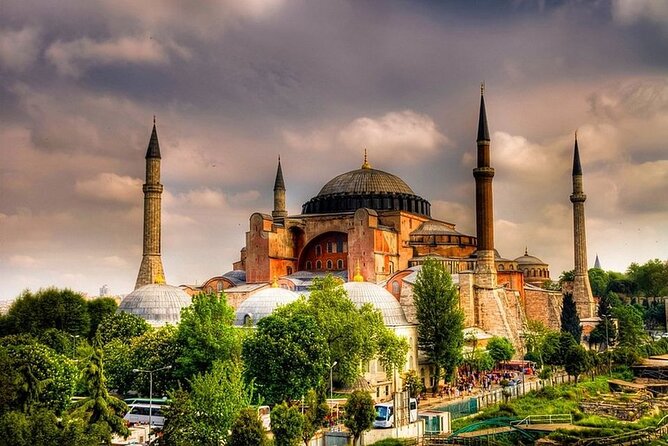
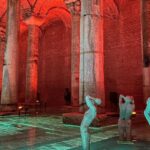
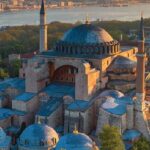
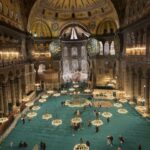
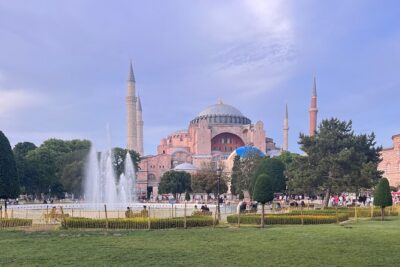
Then you move to Hagia Sophia Grand Mosque. It is described as both museum and mosque, which is exactly what you should expect on the ground: a landmark where layers of Christian and Islamic history overlap, and where the artwork and architecture do most of the talking.
From there, you go to Topkapi Palace, Ottoman imperial residence and one of the largest palaces in the world. This is where your “Istanbul photos” turn into “Istanbul understanding.” Palaces are less about a single building and more about how power worked.
The day ends at the Grand Bazaar, with time to walk and shop in a covered market with thousands of shops. The practical value here is that it is a controlled, guided end to a long historic day, so you can shop without being dropped in the middle of traffic and crowds.
Day 3 Bosphorus Boat + Spice Market, Then Flight to the Aegean Coast
If Istanbul Day 2 is about monuments, Day 3 is about moving in a different rhythm.
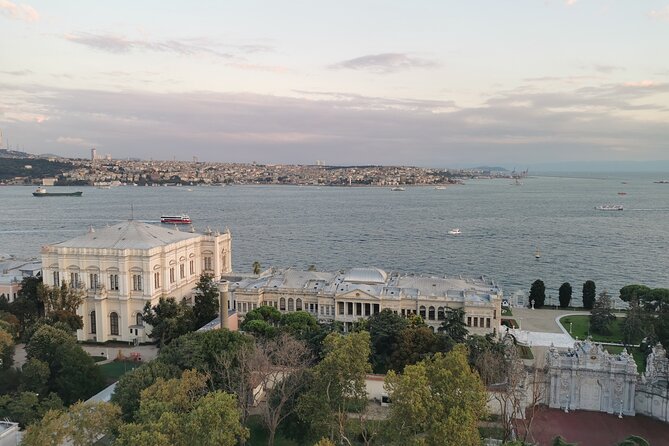
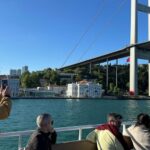
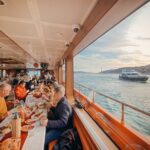
You start with a 2-hour Bosphorus Strait boat trip. From the water you get a cleaner view of the bridges of Istanbul, the Dolmabahce and Beylerbeyi Palaces, fortresses, and the houses that line the strait. This is also a good day to reset your brain after the dense historic touring from the day before.
Then you hit the Spice Market (Misir Carsisi), a covered market structure tied to the city’s spice trade. This is not just a stop to buy souvenirs. It is a sensory pause that makes Istanbul feel like a living trading hub, not just a museum city.
After that, the tour transitions to flying to Izmir, then transferring to a hotel in Kusadasi for an overnight stay. You do have a flight, so your day planning should assume it will be busy, but the value is that you save time and reach the next biblical region faster.
Day 4 Troy, Alexandria Troas, and Assos: Walking the Paul-Referenced Coast
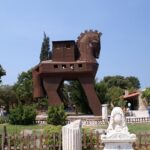
Day 4 stretches from legend to early Christian geography. You start with Troy (Truva), tied to Homer’s stories, and you will also see a replica of the wooden horse. Even if you are not chasing myth, Troy is visually powerful because it sits on the kind of terrain that makes ancient stories feel real.
Next is Alexandria Troas Antik Kenti, where the Acts references connect this coast to Paul’s journeys (including Acts 16:8 and Acts 20:5-12, as stated in the tour framing). Seeing a site like this with a guide helps you understand why these travel routes mattered to the spread of early Christianity.
Your final stop is Assos, connected to Paul’s third missionary journey and the route described in Acts. The practical reason I like Assos as a closing note is that it shifts you from large, crowded historic sites into a calmer, more contemplative pace.
Day 5 Pergamon to Smyrna: The Seven Churches Thread Becomes Real Places
Day 5 is where the tour’s biblical focus starts to feel like a map, not just a theme.
You begin at Pergamon Ancient City, visiting major structures such as the Acropolis, Temple of Athena, the Library of Pergamon, Theatre, Zeus Altar, and more. Pergamon is also one of the Seven Churches of Asia in the Revelation framework used here, and the guide connections can help you see why these cities were spiritually important to early believers.
Then you drive to Akhisar, described as Thyatira. The tour framing also includes Lydia, the seller of purple dyes, and the biblical links tied to Revelation and Acts.
After that, you reach Izmir (Smyrna), tied to Revelation’s letters. Smyrna is often a name people recognize from the Bible, so pairing the text with the geography is where the experience starts to click.
This day can feel long because you are moving between cities, but the tradeoff is that you get continuity. You are not randomly bouncing across sites. You are following a route.
Day 6 Sardis, Philadelphia, and Pamukkale: Ruins, Ruptured Roads, Mineral Water
Day 6 keeps the Seven Churches route moving, and then hands you a reset through nature.
First up is Sardis (Sardes), which includes early Christian remains such as a gymnasium, Jewish synagogue, and Diana Temple. The tour also positions Sardis as part of the Revelation context, which helps you connect the archaeology to the spiritual messages.
Next comes Alasehir, identified here as Philadelphia. Even though it is not as famous as some other sites, the biblical connection is clear in the way the tour presents it, and that makes the city feel meaningful even if the ruins are quieter.
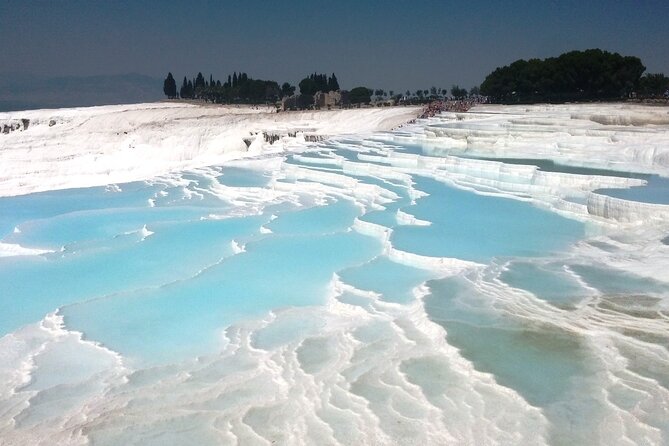
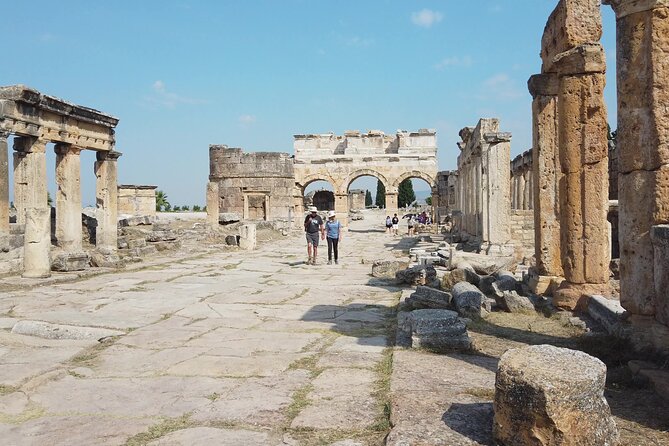
Then you reach Pamukkale, the mineral terraces and the nearby ancient spa area of Hierapolis. You visit key parts like the Gate of Domitian, the Arcadian Way, the Necropolis, Apostle Philip’s tomb, and the area connected to submerged Roman columns.
This is a smart break in the schedule. After days of temple ruins and city walls, Pamukkale gives you white travertines and thermal pools. It gives your legs a change of pace, even though you still walk.
Day 7 Laodicea and Colossae: Unexcavated Quiet, Ruins That Still Tell Stories
Day 7 is all about the later cities in Revelation’s seven-city arc.
You start at Laodicea, connected here to the Lukewarm Church theme. You visit Christian ruins and other Roman-period features like the Statue of Emperor Augustus, aqueduct, stadium, and Ephesian Gate. This mix helps you see how the region looked in more than one era.
Then you move to Colossae, described as an unexcavated city in Honaz. Since it is unexcavated, you might find that you are seeing a lighter footprint than in more developed ruins, but that can also be the point. Some biblical travel is about understanding absence and uncertainty, not just finding perfectly preserved buildings.
The day ends with a drive back toward Kusadasi and an overnight stay. That return matters because it sets you up for Ephesus the next day.
Day 8 Ephesus Full Day Plus Mary and St John: The Bible Meets Big Archaeology
Ephesus is the center of gravity for Western Turkey biblical travel, and this tour devotes a full day to it with multiple stops.
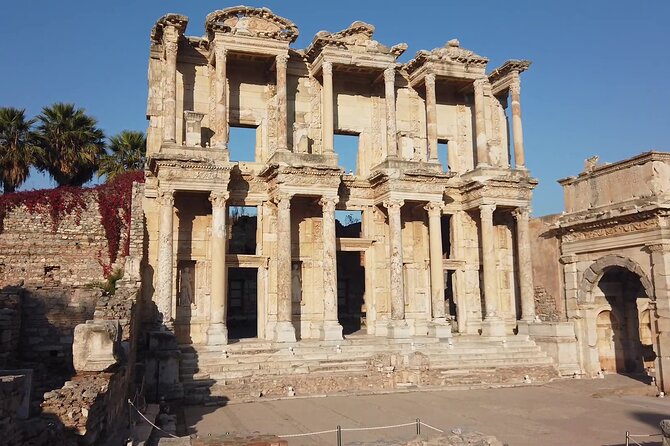
You start with the Ephesus Museum and classic highlights around the area, including the Baths of Scholastica, the Library of Celsus, the Temple of Hadrian, the Theatre, and the Temple of Artemis (one of the Seven Wonders listed in the tour framing). This is where the scale is hard to ignore. Even if you have seen Ephesus pictures, seeing the buildings in person is a different experience.
Then you visit Meryemana (The Virgin Mary’s House), the house where it is believed Mary lived her last years. In a tour like this, the guide connections can help you understand why this site became important to Christian devotion over centuries.
Finally, you go to the Basilica of St. John, built by Justinian I and described as modeled after a lost Constantinople church. The connection here is to the believed burial site of John the Apostle.
After Ephesus, the tour transfers you to Izmir airport for your flight to Cappadocia. This is a fast pivot from Mediterranean archaeology to otherworldly rock country, and it is exactly why Cappadocia works as a final chapter.
Day 9 Goreme to Avanos and Devrent Valley: Cappadocia Views Without Waiting Around
Cappadocia days tend to feel long, but this itinerary is paced so you get the main sights without doing the same thing twice.
You start with Goreme Panorama, which gives you a view over Goreme town. Even a short viewpoint stop helps you “place” everything you will see later.
Next is the Goreme Open-Air Museum, a UNESCO site focused on monastery life between the 4th and 13th centuries. It is the kind of place where timing matters. If you go too fast, you miss the way the churches fit into the rock.
Then you visit Pasabag (Monks Valley), famous for its fairy chimneys and sculpted rock forms. If you like hiking, this is the area where you can actually see the geometry up close.
You also stop in Avanos, known for pottery made from local red clay and overlooking the Kızılırmak river. There is time for a pottery workshop experience, so you can connect the finished souvenirs to the process.
The day ends with Devrent Valley (Imaginary Valley), where rock formations can resemble animal shapes. It is a playful contrast to the ruins from earlier days.
Day 10 Kaymakli Underground City and the Valley Walks That Close the Loop
Your final day is about protection history underground and scenic walking above.
You visit Kaymaklı Underground City, with multiple defense floors, and note that only some floors are open to the public. Even with limited access, it is a startling look at how people planned for safety in harsh conditions.
Then you head to Red Valley, described as good for walking with vineyards and gardens. You also visit Cavuşin, a Greek village with a 5th-century church of Saint John and views toward the Rose and Red Valleys.
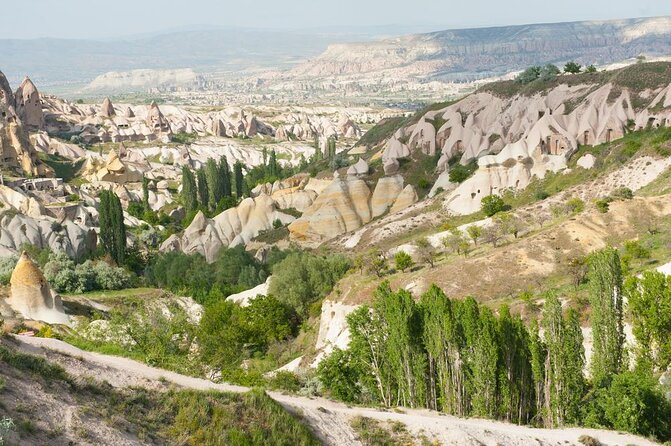
Next is Pigeon Valley (Guvercinlik Vadisi), named for dovecotes carved into volcanic tuff. That detail is the kind of thing a good guide catches, because it turns a valley stop into a story about local building traditions.
You end with Love Valley, known for scenic sunset views and its tower-like rock formations. After the tour you transfer to Kayseri airport for your flight back to Istanbul.
Price and Value: What You Really Get for $3,604.57 per Person
At $3,604.57 per person for roughly 10 days, this is not a budget tour. But it is priced like the kind of trip where you stop thinking about dozens of individual costs and start thinking about the experience.
Here is what you are paying for, based on what is included:
- Private transport and guiding, plus parking fees
- All entrance fees included
- 8 lunches included
- Domestic flight coverage connecting Cappadocia and Istanbul in the tour structure
- Choice of different hotel options (you control some of the comfort level)
This is where the value becomes clear. If you tried to build this yourself, you would spend a lot of time on ticketing, timing, and internal flights between regions. You would also need a plan for meal stops and transit breaks. This tour does that for you.
What is not included matters too:
- Hot air balloon in Cappadocia
- Dinners
- Gratuities
So your real all-in cost depends on your balloon decision and your dinner style. If you want balloon photos, you should budget for it.
Who Should Book This Turkey Biblical Tour, and Who Might Not
Book this if:
- You want biblical sites connected to Acts and Revelation, not just general sightseeing.
- You like the comfort of private guiding where questions can come up naturally.
- You want Istanbul plus the Aegean coast plus Pamukkale and Cappadocia, without managing domestic logistics yourself.
You might rethink it if:
- You dislike tight schedules. This tour is clearly a “see a lot” trip with multiple major zones and a flight transition.
- You want lots of free, unscripted time in one city. Here, time is spent on moving between stops and covering key sights.
If you do have moderate physical fitness, and you are okay with a full day of touring even on ruins-heavy days, this can be a very satisfying way to experience Turkey through a biblical lens.
Should You Book This Tour?
I think this is a strong choice if your goal is connection, not just collection of monuments. The private guide format, the included entrances, and the way the route ties locations to biblical references makes it feel like you are traveling with a story guide, not a driver with a map.
I would book it if you want Istanbul’s giants, Ephesus at full scale, and Cappadocia’s rock country to land as your final act, all without you handling tickets and timing. If that sounds like your style, go for it.
If you are more of a slow traveler who wants extra downtime in fewer places, you may find the pace heavy. In that case, consider a shorter version or a less packed route.
FAQ
Is this a private tour?
Yes. It is a private tour/activity, and only your group participates. The tour is operated with just your party and a guide/driver.
What does the tour include?
Included are the private tour (transport, guiding, entrances, parking fees, and lunch), Cappadocia to Istanbul flight tickets, and different hotel options. Lunch (8) is included.
What is not included?
Hot air balloon in Cappadocia, dinners, and gratuities are not included.
How long is the tour?
The duration is 10 days (approx.).
What language is the tour offered in?
The tour is offered in English.
Where do you meet the group?
Pickup is available from the hotel lobby or at the airport.
Is free cancellation available?
Yes. Free cancellation is available, and you can cancel up to 24 hours in advance for a full refund.
More Private Tours in Istanbul

More Tours in Istanbul
More Tour Reviews in Istanbul
Not for you? Here's more nearby things to do in Istanbul we have reviewed


More Private to consider.
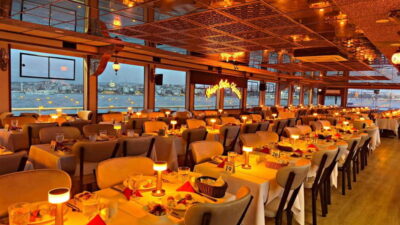 ★ 4.8Bosphorus Dinner Cruise & Show with Private TableFrom $3444,561 reviews
 ★ 5.0Best of Istanbul 1, 2 or 3-Day Private Guided Istanbul TourFrom $1008,922 reviews
 ★ 4.6Private Turkish Bath, Massage, and Spa in Old CityFrom $533,225 reviews
 ★ 4.5Bosphorus Dinner Cruise with Show and Private TableFrom $302,021 reviews
 ★ 5.0Private Transfer from Istanbul Airport to Fatih, Beyoglu and BesiktasFrom $601,793 reviews
 ★ 4.8Private Turkish Bath, Sauna, and MassageFrom $591,306 reviews
 ★ 4.6Acemoglu Historical Turkish Bath w/Private OptionsFrom $421,190 reviews
 ★ 5.0ISTANBUL BEST: Iconic Landmarks Full Day PRIVATE Guided City TourFrom $801,032 reviews