Review · ISTANBUL
Istanbul Street Art Experience with Local Artists at Home Garden
Graffiti is usually something you spot, not something you get to make. This Istanbul workshop brings you into a home garden with local artists to learn letter structure and spray techniques step by step. I like that the teaching goes past just art jargon, it covers basics like how letters are built and how styles work. I also like the hands-on payoff: after sketching your idea, you’ll use spray cans on a real wall. One thing to consider, it relies on good weather since the main wall painting happens outdoors.
You’ll start with coffee or tea and a clear run-through of graffiti’s history and how it evolved in Turkey. Then the pace shifts into practical tools and practice, from caps and masks to paper sketches before you commit to the wall. The group stays small, with a maximum of 15 people, so you’re not just watching other people paint.
Key things I’d plan around before you go
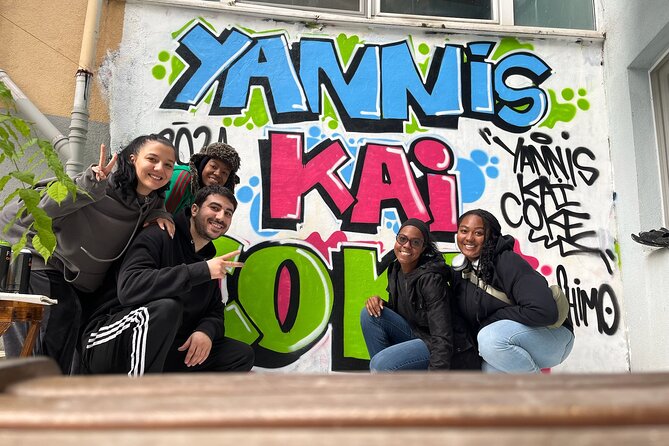
- A small group of up to 15 helps you actually get instruction, not just a seat and a spray can
- History to lettering to wall painting keeps the workshop structured instead of chaotic
- Your own graffiti nickname means you can personalize the piece you’ll design and paint
- Tool education is part of the lesson, including spray caps/headers plus brushes, masks, and gloves
- The main act is outdoors in a garden, so plan for weather and dress for paint
A hands-on graffiti workshop in Istanbul, not just a photo stop
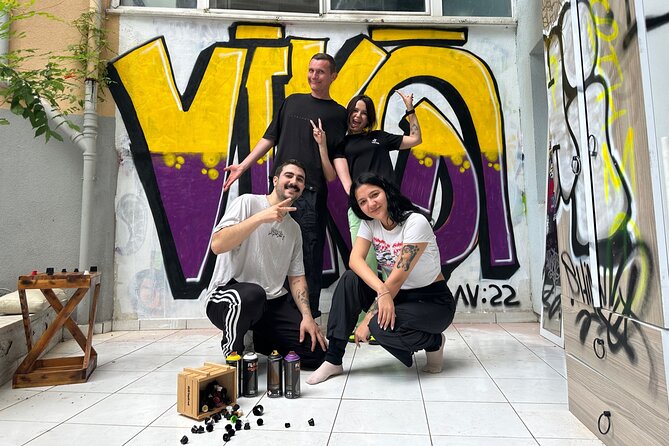
If you want street art without the “pose and leave” vibe, this is a better fit. You’re not only looking at graffiti in Istanbul, you’re learning the fundamentals from local artists in their home garden. That setting changes the tone. You get time to ask questions, make mistakes on paper, and then get help when it’s time to paint.
The focus is on basic principles and expression, especially lettering structure. That matters because most first-time attempts fail for the same reason: people spray fast, but the letterforms are weak. Here, you work on structure before paint hits the wall.
The format is also social in a real way. You meet the artists, share coffee or tea, and then you all get moving together through history, technique, and practice. It’s not just a lesson, it’s a group activity where you leave with a piece you made.
More Istanbul tours and experiences for the shortlist
Price and pacing: what $80 buys you in 2.5 hours
At $80 per person for about 2 hours 30 minutes, you’re paying for something that can be hard to replicate on your own: guided instruction plus a real surface to paint on. You’re also paying for the access component. Local graffiti artists are inviting you into a home garden, teaching you tools and techniques, and staying with you through the full process.
This is typically booked about 41 days in advance on average, which tells me it’s popular during peak weeks. It’s also limited, with a maximum of 15 travelers, which helps keep the learning personal.
The workshop runs long enough to feel like you did more than a quick taste. You’ll cover history, tools, lettering structure, techniques, and then the full wall-painting stage. That sequence is what makes the price feel more reasonable than a generic walking tour, because you’re not only getting information, you’re producing something.
Meeting at Yıldız, then moving to Yıldız Park and Besiktas
The meeting point is in Yıldız, Müvezzi Cd. No:67, 34349 Beşiktaş/İstanbul. You’ll start there and the activity ends back at the same spot, so you’re not left trying to navigate after you’re done painting.
The day is organized around two main areas: Yıldız Park first, then Besiktas. In practice, that means you get a calm start before the workshop turns into active making.
Here’s how I’d think about the timing. Early on, you’ll get oriented, meet the artists, and get the background and tool introduction. Later, you shift into lettering structure, technique practice, nickname selection, and then the wall work. If you’re the type who likes to warm up your mind before you act, this flow will feel natural.
Since the experience is near public transportation and most people can participate, it should also be manageable to fit into a sightseeing day. Still, keep in mind it’s a workshop, so arrive ready to participate, not just observe.
Yıldız Park: coffee or tea, graffiti history, and the basics
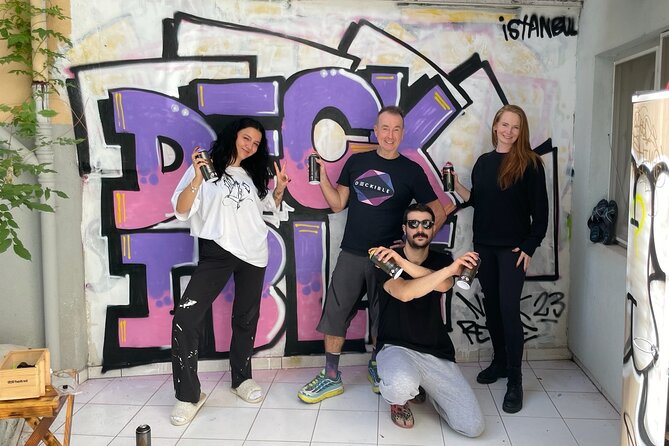
The workshop starts with getting to know each other over coffee or tea. That simple start matters because it lowers the intimidation factor. Graffiti can feel like a closed world if you only ever see it from the sidewalk. Sitting together with local artists changes that.
From there, you get an introduction to the history of graffiti art, including how it spread and evolved, plus how that story plays out in Turkey. Even if you already know some names and dates, the value here is the framing. It helps you understand why techniques look the way they do, and why lettering is such a big deal in graffiti culture.
Then the workshop starts to get practical. You’ll be introduced to materials and tools, including spray paint, spray headers or caps, brushes, and protective items like masks and gloves. This is a smart sequence. Before you touch a wall, you learn what each tool is for and how it affects the outcome.
One drawback of a structured start is that it asks you to focus for a bit before you create. If you’re the kind of person who hates classroom energy, plan to treat this as “prepping time.” It’s the part that makes your wall attempt more likely to look like what you imagined.
Besiktas: lettering structure, techniques, and your first nickname
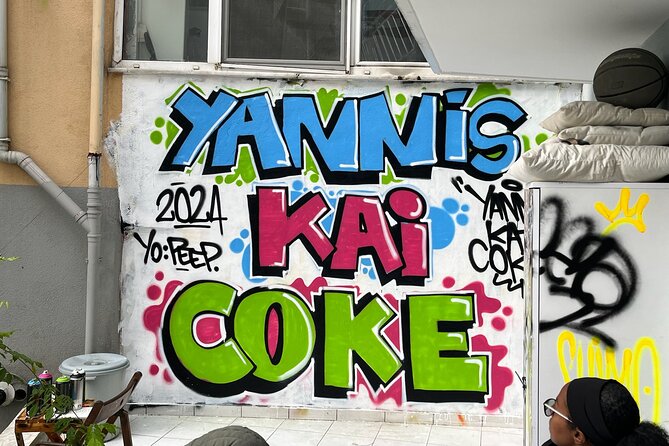
Once the workshop moves toward Besiktas, it turns into creation mode. The key teaching moment is letter structures. Instead of telling you to copy whatever you’ve seen online, you learn how letterforms are built.
After that, you get instruction on different graffiti techniques and styles. This is where you can start thinking like an artist. You’re not just spraying shapes, you’re learning how different approaches create different textures, edges, and visual rhythm.
Then comes a highlight: each guest selects a graffiti nickname for their graffiti. That’s not just a fun branding exercise. It gives your piece a purpose, and it helps the artists coach you more effectively. A nickname also makes your design more personal, which is why beginners tend to feel proud when the final wall piece comes together.
Before paint, you practice on drawings on paper with the artists. That paper stage is a quiet superpower. You can test how your letters flow, adjust your style, and get feedback before the permanent surface.
If you’ve ever had a hobby fail because you jumped straight into “the hard part,” this step is what helps you avoid that. You’re building confidence first, then moving to the wall.





The wall painting moment: spray cans, caps, and real practice
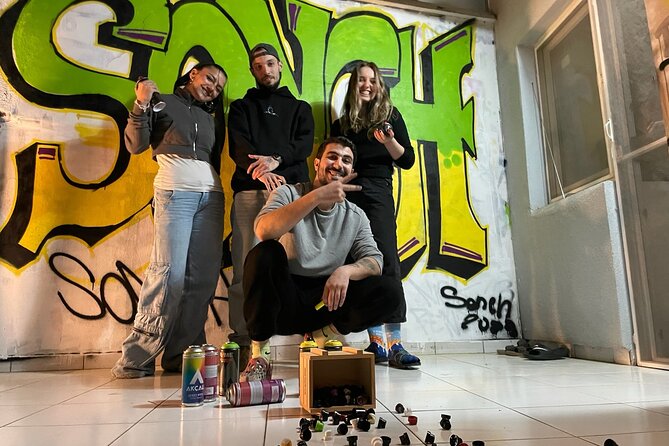
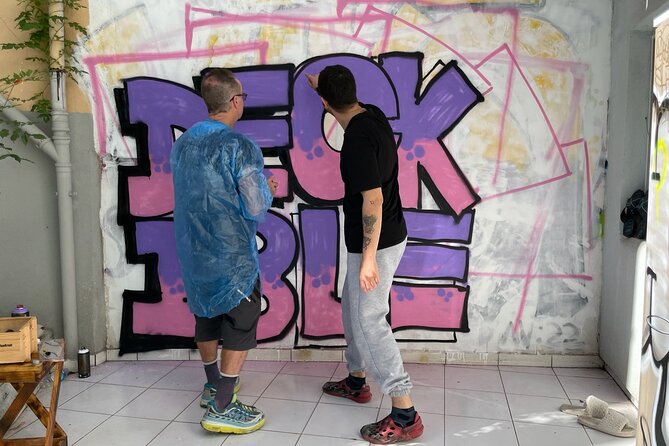
The best part of the workshop is the payoff stage, when you perform your art on the wall of the garden using spray cans. This is the part that turns the lesson into a real memory, because you’re responsible for the line decisions.
Your instruction doesn’t stop at “go do it.” It’s tied to what you learned earlier: lettering structure, tool use, and technique choices. Since you already picked a nickname and worked through paper sketches, you’re not starting from zero on the wall.
The spray cap or header is a big deal in graffiti. Different caps can change how thick or sharp your marks look. Since the tour includes an introduction to these tools, you’re more likely to get the lettering you want instead of random paint blobs.
Also, because you’re in a small group, you typically get more direct help when your first passes do not look like the picture in your head. That matters for beginners. It’s the difference between feeling lost and feeling guided.
What you’ll learn, and why each step is worth it
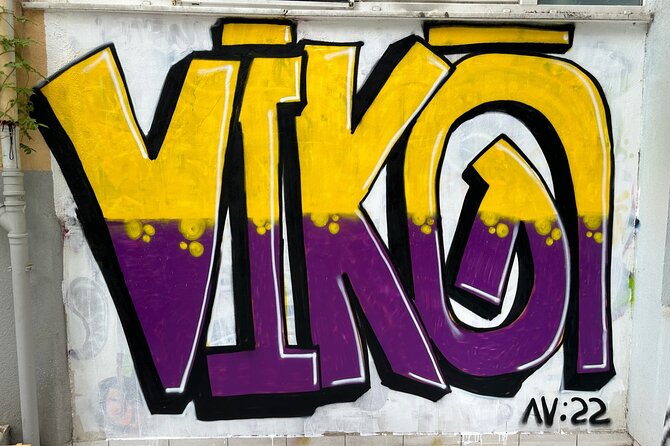
This workshop covers more than one “level” of skill. Here’s how the teaching stack fits together.
First, you learn history and evolution, including how graffiti art expanded and how it developed in Turkey. That context helps your brain connect technique to purpose, rather than treating graffiti like a random spray style.
Second, you learn tools. Spray cans are not one-size-fits-all. Even basic differences like cap type and brush use can change the look of your letters. Protective items like masks and gloves are part of the tool conversation too.
Third, you learn lettering structure. Graffiti is letter-driven. If your letters make sense, your piece looks like you meant to do it. If not, it can feel messy even if the colors are nice.
Fourth, you practice techniques and styles, so you can choose what fits your nickname and your comfort level. That choice is important. You’re not forced into one exact look.
Finally, you put it all together on a real wall. That’s the step that turns skill into confidence.
Who this graffiti experience suits best
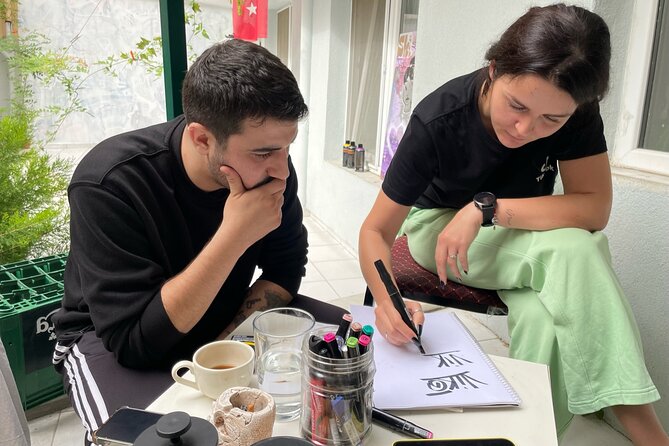
This is a great match if you want something creative and social, with clear instruction. You don’t need to be an artist. The workshop is built around basic principles and practice stages, so beginners can follow along.
It also works well for people who are curious about street art culture, but don’t just want to look. If you like Istanbul neighborhoods and want to understand the local art scene through hands-on learning, this gives you a direct entry point.
Because it’s in a garden and involves spray painting, it’s best for travelers who are comfortable participating fully. If you prefer to keep things strictly observational, you might find the hands-on format a little intense.
Practical value: small-group access to local artists
One of the strongest parts of this experience is access. Local graffiti artists are hosting you at home and teaching you their craft. That’s not something you usually get from bigger group tours.
With a maximum of 15 travelers, you’re less likely to feel ignored. And because the artists walk you through tools, letter structures, technique options, nickname selection, and wall painting, you’re not left to figure it out yourself.
The coffee or tea start also builds rapport fast. Even if you speak only basic English, the workshop relies on demonstration and guidance as much as words.
Should you book Istanbul Street Art at a Home Garden?
Book it if you want to go beyond sightseeing and actually make something in Istanbul. For the money, the combination of guided instruction plus a real wall painting session is the value engine. You’ll leave with a piece you created, not just pictures of someone else’s work.
Skip it if you strongly dislike hands-on activities, or if you’re planning around tight outdoor time in unpredictable weather. Since the workshop requires good weather, a cloudy or rainy day can change plans.
If you’re curious about graffiti and want a friendly, structured way to try it, this is one of the more practical creative tours you can add to a Besiktas or Yıldız day.
FAQ
How long is the Istanbul Street Art Experience with local artists?
It lasts about 2 hours 30 minutes.
What does it cost?
The price is $80.00 per person.
Is the tour offered in English?
Yes, it is offered in English.
Where is the meeting point?
You start at Yıldız, Müvezzi Cd. No:67, 34349 Beşiktaş/İstanbul, Türkiye.
Where does the experience end?
It ends back at the meeting point.
How big is the group?
The maximum group size is 15 travelers.
What will I do during the workshop?
You learn basic principles, techniques, and expression of graffiti art, practice on paper, then paint your art on the garden wall.
What materials and tools will be introduced and used?
You’ll be introduced to and work with spray paint, spray headers (caps), brushes, masks, and gloves.
What happens if the weather is bad?
The experience requires good weather. If it is canceled due to poor weather, you will be offered a different date or a full refund.
What is the cancellation policy?
Free cancellation is available. You can cancel up to 24 hours in advance for a full refund, and cancellations less than 24 hours before the start time are not refunded.